

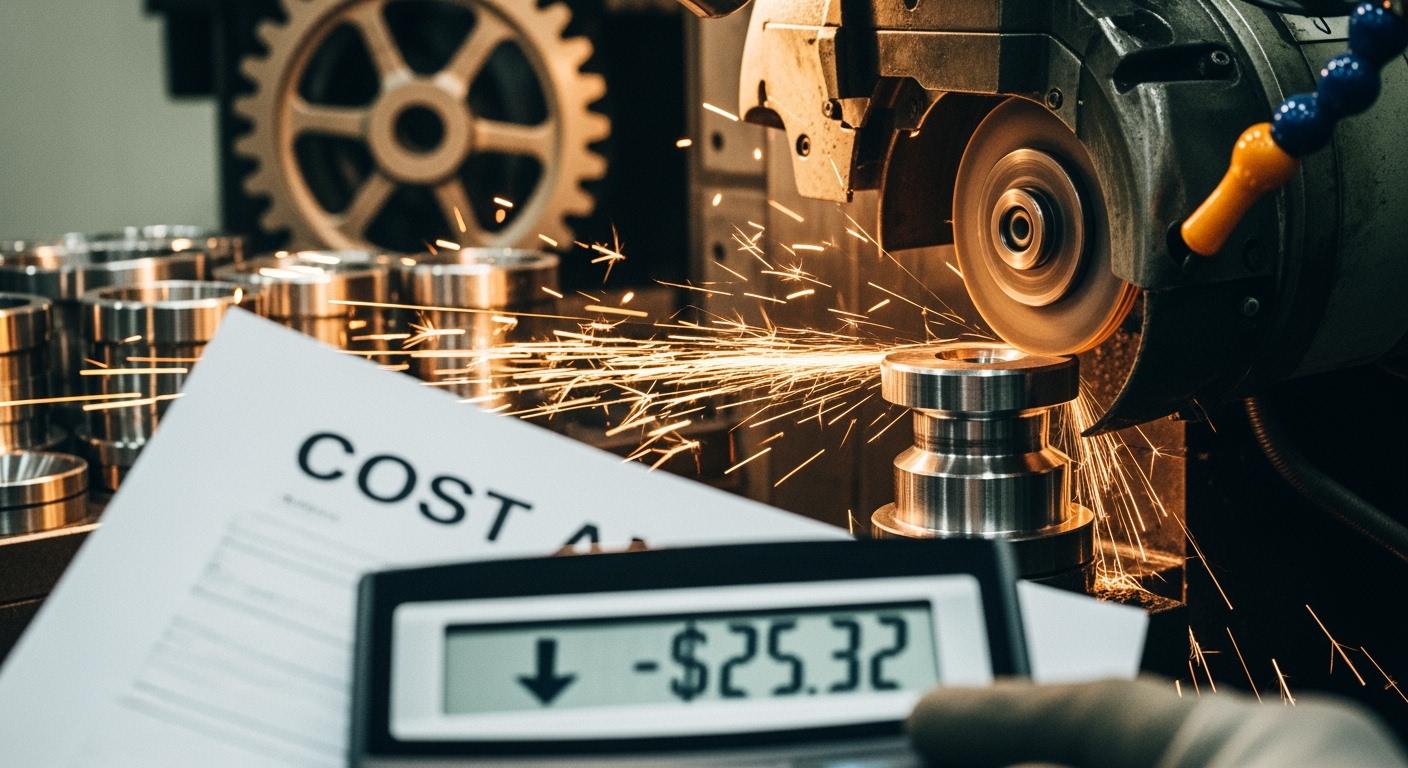
You can reduce grinding cost per part by evaluating every aspect of your grinding process and making smart changes. When you check your grinding costs, you spot inefficiencies and find ways to save money. Aimgrind gives you customized grinding solutions and diamond grinding wheels that boost performance. If you focus on practical improvements, you get measurable savings. Many factories see lower maintenance costs, less energy use, and faster payback when they invest in better grinding tools.
Key Takeaways
- Evaluate your grinding process to identify inefficiencies. Small changes can lead to significant savings.
- Use Aimgrind’s diamond grinding wheels for longer life and faster material removal. This reduces downtime and costs.
- Optimize your tooling and clamping setups. Stable setups prevent damage and improve production efficiency.
- Regular maintenance and inspections can prevent costly breakdowns. Train your team to recognize early warning signs.
- Consider bundling services for stump grinding. This can lower overall costs and improve efficiency.
Grinding Process Costs Overview
Understanding grinding process costs helps you make smart decisions and save money. You need to look at every cost, not just the price of the grinding wheel. Costs come from many sources, including dressing tools, machine downtime, wheel replacement, labor, and quality rejection rates. Aimgrind’s experts can help you diagnose grinding problems and match the right tools to your process.
| Cost Component | Description | Cost Range |
|---|---|---|
| Dressing Tool Consumption | Costs for using dressing tools during grinding. | $15-50 per dressing cycle |
| Machine Downtime | Costs when machines stop during dressing cycles. | $200-500 per hour |
| Wheel Replacement | Costs for changing worn wheels. | $500-5000 per wheel |
| Indirect Costs | Labor and emergency maintenance expenses. | N/A |
| Quality Rejection Rates | Extra costs from poor wheel conditions. | 15-30% increase |
| Total Cost of Ownership | Savings from optimized dressing strategies. | 20-35% reduction over 12 months |
Identifying Cost Drivers
You can find the main cost drivers in your grinding process by following these steps:
- Compare your current grinding process costs with past data to spot trends.
- Fix obvious grinding problems that lower quality or slow production.
- Adjust dressing methods to improve efficiency and reduce costs.
- Check if your grinding wheels and dressing tools are still the best choice.
- Start with the easiest changes to get quick savings.
Aimgrind’s service process helps you identify these drivers and solve problems fast.
Calculating Cost Per Part
You can calculate cost per part using simple tools and methods. The total cost calculation tool lets you see all grinding process costs and find ways to reduce them. The dress calculation tool helps you set the best parameters for dressing diamond and CBN wheels, lowering cost per part. Material type, machine type, and grinding parameters all affect cost per part. For example, grinding harder materials or using multi-axis machines increases costs. Running parts in batches can lower cost per part by sharing setup time. You get the best results when you track every detail and optimize your process with Aimgrind’s help.
Reduce Grinding Cost with Aimgrind Solutions
Fixing Common Grinding Issues
You can reduce grinding cost by fixing common problems in your process. Many factories face issues like dimensional defects, surface finish problems, and setup-related defects. Dimensional defects make parts the wrong size. Surface finish problems cause marks or roughness. Setup-related defects happen when machines are not set up right. These problems increase waste and slow down production.
Aimgrind offers customized grinding wheels and expert problem diagnosis services. You get help to spot and fix these issues fast. When you use Aimgrind’s grinding solutions, you can address wheel wear, improve part quality, and keep your machines running longer. Here are some common grinding issues that increase cost per part:
- Dimensional defects: Parts do not meet size requirements.
- Surface finish problems: Parts have visible marks or rough surfaces.
- Setup-related defects: Machines are not aligned or positioned correctly.
You can also face roundness issues. These problems cause more friction and vibration. Keeping roundness within limits is important for good part performance. Irregular grinding can make roundness worse.
Aimgrind’s grinding wheels last longer and work better than conventional wheels. The table below shows how Aimgrind’s wheels compare:
| Feature | Aimgrind’s Wheels | Conventional Wheels |
|---|---|---|
| Wheel Life | Longer wheel life | Shorter wheel life |
| Material Removal Rate | Higher material removal rates | Lower material removal rates |
| Heat Resistance | Superior heat resistance | Limited heat resistance |
| Suitable Applications | Demanding applications | General applications |
| Bond Types | Various (Resin, Vitrified, Electroplated) | Limited options |
You can see that Aimgrind’s grinding wheels help you reduce grinding cost by lasting longer and removing material faster. You spend less time changing wheels and more time making parts.
Machine downtime is another big cost. Many factories lose time because of operational inefficiencies. These include staffing gaps, micro-stops, and maintenance scheduling. A machine monitoring system gives you real-time data. You can see where you lose time and fix it quickly. Studies show that fixing these issues can improve machine runtime from 22% to 30%. This means you make more parts with the same machines and reduce grinding cost per part.
Optimizing Tooling and Clamping
You can reduce grinding cost by improving your tooling and clamping setups. Good tooling and clamping keep your parts stable during grinding. This prevents damage and helps you make more good parts in less time.
Aimgrind’s solutions include advice on the best tooling and clamping for your process. When you use the right setups, you protect thin or brittle parts from damage. You also lower per-part costs by making your process more efficient. Stable setups mean you spend less time making adjustments. Skilled operators can focus on other important tasks.
Here is a table showing the benefits of better tooling and clamping:
| Benefit Description | Measurable Impact |
|---|---|
| Reduced distortion of delicate components | Protects thin-walled or brittle parts from damage during grinding |
| Lower per-part costs through efficiencies | Increases production output and reduces waste, leading to cost savings |
| Stable setups requiring minimal adjustments | Maintains consistent quality and reduces downtime, allowing skilled operators to focus on other tasks |
You can see that better tooling and clamping help you reduce grinding cost by making your process smoother and more reliable.
Tip: Review your tooling and clamping setups often. Small changes can lead to big savings in your grinding process.
Aimgrind’s team can help you choose the right grinding wheels, fix common issues, and optimize your setups. You get practical solutions that reduce grinding cost and improve your results.
Diamond Grinding Wheels for Cost Efficiency
Product Advantages
You can achieve better cost efficiency by using Aimgrind’s diamond grinding wheels. These wheels last much longer than conventional wheels. You spend less time changing wheels and more time grinding parts. Diamond wheels also help you finish each part faster. You get higher productivity and lower costs per part.
Here is a table that shows how diamond wheels compare to conventional wheels:
| Metric | Conventional Wheel | Diamond Wheel | Advantage |
|---|---|---|---|
| Wheel Life | 8 – 16 hours | 800 – 1,200 hours | ~100x Longer Life |
| Cycle Time per Part | 90 seconds | 60 seconds | 33% Faster |
| Downtime for Changes | High (Frequent) | Very Low (Infrequent) | Increased Uptime |
You can see that diamond wheels last about 100 times longer. You finish parts 33% faster. You also reduce downtime for wheel changes. These advantages help you lower grinding costs and improve process stability.
Diamond wheels also improve part quality. You get fewer defects and less scrap. The table below shows how these advantages translate into lower cost per part:
| Factor | Impact on Cost per Part |
|---|---|
| Greater productivity | Lower cost per part |
| Better quality | Reduced scrap rate |
| Longer wheel life | Lower abrasive costs |
You can rely on Aimgrind’s diamond wheels to boost productivity and save money.
Choosing the Right Bond Type
You need to choose the right bond type for your grinding wheel. Aimgrind offers resin, metal, and vitrified bonds. Each bond type affects performance and cost efficiency.
- Resin bonds give you fast material removal and smooth finishes.
- Metal bonds provide high durability and keep the wheel shape longer.
- Vitrified bonds offer strong structure and resist heat well.
The bond type influences how quickly you remove material, the quality of the surface finish, and the wheel’s durability. Different bonds also change operational costs and efficiency. You can match the bond type to your material and process needs.
Tip: Ask Aimgrind’s experts for help choosing the best bond type. You get the right wheel for your process and save money on every part.
You can use Aimgrind’s diamond grinding wheels with the right bond to achieve the best results. You lower grinding costs, improve quality, and keep your machines running smoothly.
Stump Grinding Cost Comparison
Bundling Services for Savings
You can save money by bundling grinding services. When you combine stump grinding with other services, you avoid extra setup costs and reduce travel time. This approach lowers the overall stump grinding cost. Many companies offer discounts when you bundle, making it easier to manage your budget.
- Bundling eliminates the hassle of working with multiple contractors.
- You get the job done in one visit, which saves time and money.
- Setup costs, travel time, and minimum charges are lower when you bundle.
- A single crew can protect your property better and avoid damage.
Bundling multiple tree removals with stump grinding provides even greater efficiency benefits and economies of scale, especially for large projects or after storms.
When you look at stump grinding prices, you see that bundling can make a big difference. Here is a table showing average stump grinding cost by stump size:
| Stump Diameter | Average Cost |
|---|---|
| Up to 12 in | $24 – $60 |
| 24 in | $48 – $120 |
| 36 in | $72 – $180 |
| 48 in | $96 – $240 |
| 60 in | $120 – $300 |
| 72 in | $144 – $360 |
The national average for stump grinding cost is about $313, with most jobs ranging from $150 to $450.
Evaluating Stump vs. Part Grinding
You can compare stump grinding prices with the cost of grinding parts in a factory. Both processes benefit from bundling and process optimization. In stump grinding, combining several stumps in one job reduces the cost per stump. In part grinding, running batches of parts lowers the cost per part.
Process optimization helps in both cases. You can schedule work during off-peak times for discounts. Clearing the area before grinding also saves time and money. These steps lower costs and improve efficiency.
- Bundling services provides technical support, training, and better inventory management.
- Companies that bundle can protect their profits and offer better value.
You can use these strategies to reduce costs, whether you grind stumps or parts. Process optimization leads to savings and better results in both areas.
Quick Wins to Reduce Grinding Cost
Adjusting Parameters
You can achieve immediate cost reduction by making simple changes to your grinding process. Adjusting parameters like dressing methods, abrasive technology, and fixing grinding problems leads to measurable savings. When you fine-tune these settings, you boost productivity and improve part quality. Aimgrind’s sample optimization service helps you test and select the best parameters for your equipment. You get support to match grinding wheels and process settings for maximum efficiency.
Here is a table showing how different adjustments impact grinding cost per part:
| Adjustment Type | Impact on Cost per Part |
|---|---|
| Dressing Methods | Improves productivity, reduces costs |
| Abrasive Technology | Enhances quality, lowers scrap rates |
| Fixing Grinding Problems | Increases wheel life, reduces abrasive costs |
You see cost reduction impacts when you optimize these parameters. Aimgrind’s experts can guide you through sample testing and help you achieve the best results.
Tip: Small changes in grinding parameters often deliver big savings. You can test different settings and track results for quick wins.
Improving Maintenance
You can lower grinding costs by improving maintenance routines. Regular inspections help you spot issues before they become expensive. Proper lubrication reduces wear and tear on machine parts. Timely replacement of worn components prevents unexpected breakdowns. Keeping dust levels low protects your equipment from damage. Controlling humidity avoids rust and corrosion. Stable temperature ensures accuracy and prevents extra wear.
- Teach safe operating procedures to avoid machine overload.
- Educate operators on basic maintenance routines for regular care.
- Help your team recognize warning signs for early intervention.
Aimgrind offers operator training support to help your staff maintain machines and grinding wheels. You get practical advice that keeps your process running smoothly. When you invest in maintenance and training, you see efficiency improvements and fewer interruptions.
Note: Quick wins in maintenance lead to lasting cost reduction. You can prevent downtime and extend the life of your grinding tools.
You can apply these strategies to both part grinding and tree stump grinding. Process optimization and maintenance improvements deliver fast results and help you manage costs.
You can lower your grinding cost per part by checking your process, fixing common issues, and choosing the right grinding wheels. Aimgrind gives you custom solutions and diamond wheels that help you save money and improve quality. Try simple changes, track your results, and see the difference.
For more tips or a custom plan, contact Aimgrind’s experts or visit aimgrind.com.
FAQ
What factors affect the cost to grind a tree stump?
You see different costs for grinding because of stump size, tree type, location, and how many stumps you need removed. If you bundle stump grinding service with tree removal, you often save money. Always ask for a full quote before work begins.
How does the cost of tree removal and stump grinding compare?
Tree removal usually costs more than stump grinding. Removal includes cutting down the tree, hauling away debris, and sometimes grinding the stump. If you combine both services, you often get a better price. Always check if the quote covers both tree and stump work.
Why do stump grinding costs vary so much?
Stump grinding costs change based on stump diameter, tree species, and how hard the stump is to reach. If you have many stumps, the cost per stump drops. Some companies charge extra for roots or deep grinding. Always ask what is included in the price.
Can I lower the cost to grind out tree stump by preparing the area?
Yes, you can save money if you clear rocks, branches, or debris around the stump before the crew arrives. Easy access helps the team finish faster. If you remove obstacles, you may pay less for the stump grinding service.
What should I expect after stump removal?
After stump removal, you see a hole where the stump was. Some companies fill the hole with mulch or soil. You can plant grass or another tree in that spot. Always ask if cleanup is included in the cost.
Contact Us
For More Grinding Solution or Customized Abrasive Tools