

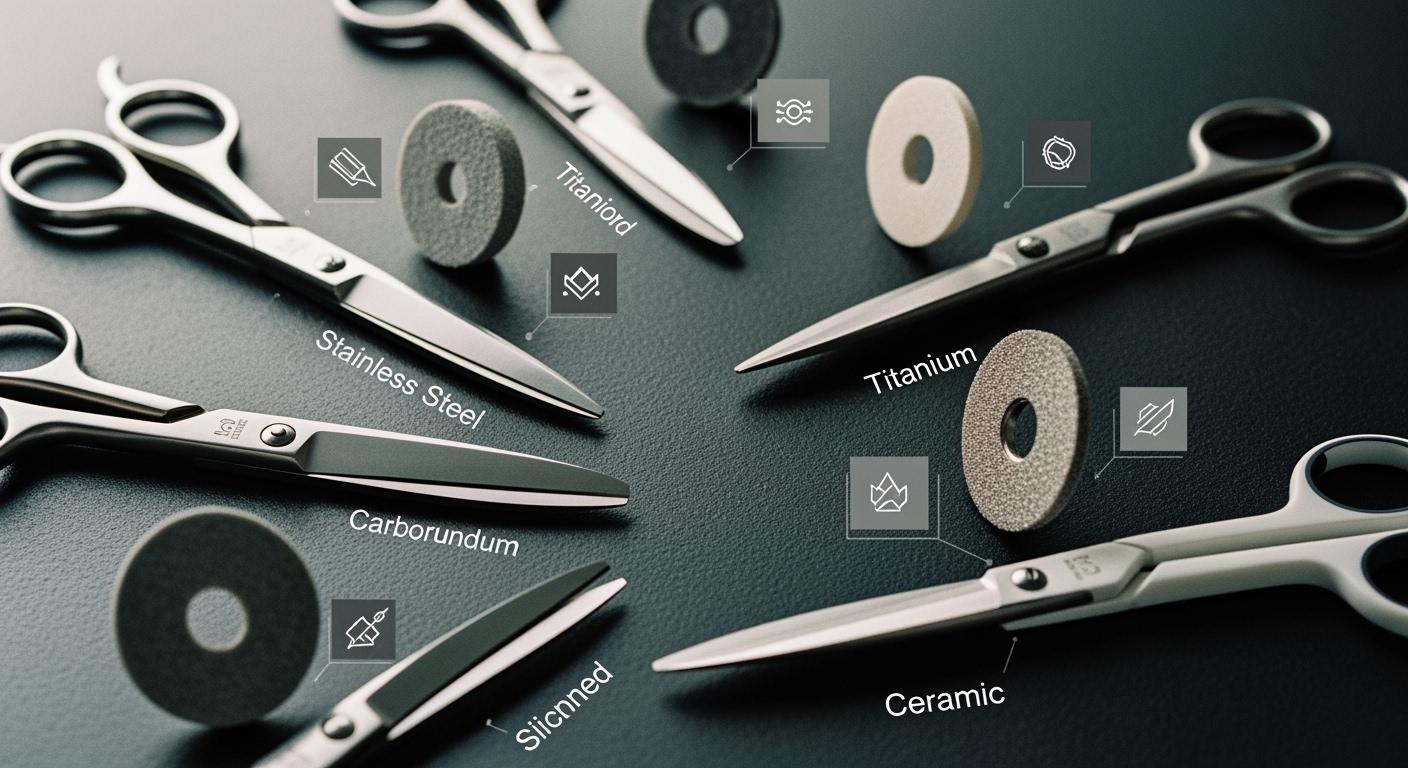
You need the right grinding wheels for each type of scissor material if you want the best results. Using the correct wheels improves grinding speed, finish quality, and tool life. When you match wheels to materials, you can cut average process time by up to 52% and reduce dressing frequency, as shown in the table below.
| Previous Setup | New Setup | Avg Time Reduction (%) | Dressing Frequency Change |
|---|---|---|---|
| Generic 200×10×30 mm | 200×12×40 mm @ 500 | -38% | Reduced from twice/day |
| Imported Indian resin-bonded | Same | -41% | Dropped from hourly |
| Homemade sandpaper drum | Identical | -29% | Eliminated need |
| Cheap-branded 8′ wheel | Identified variant | -52% | Cut frequency by ⅔ |
Aimgrind helps you choose and design the right grinding solutions for your scissors. You get expert advice and custom wheels for your unique needs.
Key Takeaways
- Choose the right grinding wheel for each scissor material to improve grinding speed and finish quality.
- Use aluminum oxide wheels for stainless steel scissors and silicon carbide wheels for carbon steel scissors.
- Select the appropriate grit size: coarse for shaping and fine for finishing to achieve the best results.
- Consider the bond type; medium or soft bonds work well for stainless and carbon steels, while resin bonds are ideal for titanium.
- Always consult with experts like Aimgrind for custom solutions tailored to your specific grinding needs.
Stainless Steel Scissors Grinding Wheels
Aluminum Oxide Grinding Wheels
You need to choose the right grinding wheels for stainless steel scissors. Stainless steel is a tough material. It resists heat and wears down tools slowly. Aluminum oxide grinding wheels work best for this job. These wheels have a strong structure. They can handle the hardness of stainless steel. You get a smooth finish and a long tool life.
Tip: Always check the wheel label before you start grinding. Make sure it says “aluminum oxide” for stainless steel.
You can find many types of grinding wheels in the market. Not all wheels work well with stainless steel. Aluminum oxide grinding wheels give you the best balance of cutting speed and surface quality. You avoid burning the steel. You also reduce the risk of chipping the edge.
Grit and Bond Selection
You must pick the right grit size and bond for your grinding wheels. For rough grinding, use a coarse grit like 36 or 46. This grit removes material fast. For sharpening or finishing, use a finer grit such as 80 or 120. Finer grits give you a sharper edge and a smoother surface.
The bond holds the abrasive grains together. For stainless steel, a medium or soft bond works well. This bond lets the wheel release worn grains and stay sharp. You get better control and less heat during grinding.
- Use coarse grit for shaping.
- Use fine grit for finishing.
- Pick a medium or soft bond for best results.
You can always ask Aimgrind for help if you feel unsure. Aimgrind offers expert advice on types of grinding wheels for all materials. You get custom solutions that match your needs.
Carbon Steel Scissors Grinding Wheels
Best Grinding Wheel Types
You often work with carbon steels when sharpening or shaping scissors. These steels are common in many cutting tools because they offer good hardness and edge retention. To get the best results, you need to choose the best grinding wheel for these materials.
Silicon carbide wheels work well for carbon steels. They cut quickly and keep the edge cool. You can also use aluminum oxide wheels if you want a smoother finish. Both types of grinding wheels help you avoid overheating the steel, which can damage the blade.
Note: Always check the manufacturer’s label to confirm the wheel is suitable for carbon steels. Using the wrong wheel can lead to poor results or even damage your scissors.
You can find many types of grinding wheels in the market. Each type has its own benefits. Silicon carbide wheels remove material fast. Aluminum oxide wheels give you a finer finish. You should pick the wheel that matches your needs.
Grit and Bond Options
You must also think about grit size and bond type when working with carbon steels. Coarse grits, such as 36 or 46, help you shape the blade quickly. Fine grits, like 80 or 120, are better for sharpening and finishing.
The bond holds the abrasive grains together. For carbon steels, a medium bond works best. This bond lets the wheel stay sharp and release worn grains at the right time. You get a clean cut and a smooth finish.
- Use coarse grit for fast material removal.
- Use fine grit for a sharp edge.
- Choose a medium bond for balanced performance.
If you feel unsure about which wheel to use, you can ask Aimgrind for advice. Aimgrind offers expert help and custom solutions for all types of grinding wheels. You get the right wheel for your carbon steel scissors every time.
Titanium Scissors Grinding Wheels
Titanium scissors need special attention during grinding. Titanium is a tough material. You must use the right wheels to avoid damage and get a smooth edge. Many types of grinding wheels work for titanium, but some perform better than others.
Resin Bond Grinding Wheels
Resin bond grinding wheels give you excellent results when working with titanium scissors. These wheels help you achieve a smooth finish and keep the blade sharp. You get less vibration and more control during grinding. The resin bond holds the abrasive grains firmly, so you can grind titanium without losing wheel shape.
You can see the main advantages of resin bond wheels in the table below:
| Advantage | Description |
|---|---|
| Superior surface quality | Preferred for smoother grinding |
| Better surface finish | Reduces grinding marks |
| Increased tool life | Enhances longevity of the wheel |
You get a cleaner edge and longer wheel life. You also reduce the risk of overheating the blade. Resin bond wheels work well for both rough and fine grinding.
Grit Recommendations
You must choose the right grit size for titanium scissors. Coarse grits, such as 36 or 46, help you shape the blade quickly. Fine grits, like 80 or 120, are best for sharpening and finishing. You get a sharper edge and a smoother surface with fine grit.
Other types of grinding wheels also work well for titanium. You can use the following wheels:
- CBN (Cubic Boron Nitride) wheels offer high hardness and wear resistance.
- Metal bond diamond wheels handle high-hardness materials effectively.
You get fast material removal and a quality finish. You should always match the wheel type and grit to your grinding needs. Aimgrind can help you select the best wheels for titanium scissors. You get expert advice and custom solutions for every grinding job.
Ceramic Scissors & Hard Alloy Grinding Wheels
Diamond Grinding Wheels by Aimgrind
You face a tough challenge when you grind ceramic scissors or hard alloy blades. These materials are very hard and brittle. You need the right tools to avoid cracks and chips. Diamond grinding wheels from Aimgrind give you the best results for these jobs. The diamond layer cuts through hard materials with ease. You get a smooth edge and a precise shape every time.
Aimgrind offers superabrasive grinding wheels that last longer and work faster than regular wheels. You can choose from many types of grinding wheels, but diamond grinding wheels stand out for ceramics and hard alloys. The diamond abrasive gives you high cutting speed and keeps the temperature low. You avoid burns and surface damage. You also get a cleaner finish.
You can ask Aimgrind for custom diamond grinding wheels. You get wheels made for your machine and your process. Aimgrind helps you pick the right grit size and bond type. You get expert support from start to finish.
Tip: Use superabrasive grinding wheels for ceramics and hard alloys. You will see better results and less downtime.
Metal and Vitrified Bond Choices
You must pick the right bond for your diamond grinding wheels. Metal bond and vitrified bond are the top choices for ceramics and hard alloys. Each bond type has special strengths.
| Feature | Metal Bonded Wheels | Vitrified Bonded Wheels |
|---|---|---|
| Durability | Exceptional strength and wear resistance | Good longevity but more brittle under impact |
| Precision | High precision capability, maintains form | Excellent form retention, ideal for fine tolerances |
| Thermal Control | Limited coolant penetration, heat can build up | Superior thermal control, better coolant flow |
| Application Suitability | Best for ceramics and carbides | Ideal for tool and automotive grinding |
You should use metal bond wheels when you need high durability and shape accuracy. Choose vitrified bond wheels if you want better cooling and a fine finish. Both types of superabrasive grinding wheels help you get the best results for ceramic scissors and hard alloy blades.
Aimgrind can customize the diamond content, grit size, and wheel shape for your needs. You get a perfect match for your grinding job. You also get support from Aimgrind’s experts at every step.
Material Type Determines Grinding Wheel Type
Matching Wheel to Material
You need to know that the material to be ground decides which grinding wheel type you should use. Each material has its own hardness, toughness, and structure. These features affect how the grinding wheels perform. For example, stainless steel needs a different wheel than ceramic or titanium. If you use the wrong wheel, you can damage the blade or get a poor finish.
You must always check the hardness of the material before you start. Harder materials need wheels with stronger abrasives. Softer materials need wheels that do not cut too aggressively. The material to be ground also affects how much heat builds up during grinding. Some materials burn easily, while others can handle more heat.
Many people make mistakes when they pick grinding wheels. You might see burn marks, a rough surface, or a brittle finish. These problems often come from using the wrong abrasive or wheel. Here is a table that shows common grinding problems and how to fix them:
| Common Grinding Problem | Primary Root Cause | Recommended Abrasive Solution |
|---|---|---|
| Severe Burn Marks | Grains are dulling and rubbing | Switch to White Fused Alumina (WA) |
| Rapid Profile Loss | Grains are fracturing too easily | Switch to Brown Fused Alumina (A) |
| Poor Brittle Finish | Grains are plowing instead of cutting | Switch to Silicon Carbide (SiC) |
You can avoid these mistakes by matching the wheel to the material. Aimgrind helps you with this process. You get expert advice on parameter matching. Aimgrind looks at your equipment, the material to be ground, and your desired finish. You receive a custom solution that fits your needs.
Factors: Finish, Removal Rate, Cost
You must think about three main factors when you choose a grinding wheel: finish, removal rate, and cost. The finish is how smooth the surface looks and feels after grinding. If you want a mirror-like surface, you need a fine grit and a wheel that gives a gentle cut. If you only need to shape the blade, you can use a coarse grit for a faster removal rate.
The removal rate tells you how quickly the wheel takes away material. A high removal rate saves time, but it can leave a rough surface. A low removal rate gives you a better finish, but it takes longer. You must balance these two factors based on your goal.
Cost also matters. Some wheels last longer and need less dressing. Others are cheaper but wear out faster. You should pick a wheel that fits your budget and your quality needs.
You also need to think about safety and the environment. Grinding can create sparks, dust, and even chemical hazards. You must use the right safety systems and dust extraction. Here is a table that lists important safety and environmental points:
| Consideration | Description |
|---|---|
| Chemical Hazards | Grinding operations may involve materials that present chemical hazards, requiring specialized safety protocols. |
| Spark Control Systems | Essential in environments with flammable materials to prevent ignition and ensure safety during grinding. |
| Material Compatibility Assessment | Ensures grinding wheels are suitable for specific materials to avoid hazardous reactions or byproducts. |
| Airborne Particulate Control | Critical for operator health, addressing dust and debris generated during grinding operations. |
| Integrated Dust Extraction Systems | Captures debris at the source, balancing suction power with operational convenience for effective control. |
Aimgrind supports you through every step. You get help with problem diagnosis, parameter matching, and sample optimization. You can trust Aimgrind to help you choose the right grinding wheels for any material. This way, you get the best finish, the right removal rate, and a safe work environment.
Wheel Selection Table
Quick Reference by Material
You can use this table to find the best grinding wheel for your scissor material. This quick reference helps you choose the right grit size and grade for your grinding job. Many users say that a table like this saves time and reduces mistakes. You get better results when you match the wheel to your material.
| Grit Size | Grinding Wheel Grades | Suitable Materials | Typical Application |
|---|---|---|---|
| 10-24 | Soft-Medium | Stainless steel, cast iron, hard steel | Rough grinding, heavy stock removal |
| 30-60 | Medium-Hard | Mild steel, aluminum, general metals | General purpose, shaping |
| 70-220 | Medium-Hard | Carbide, high-speed steel, ceramics | Precision grinding, tool sharpening, finishing |
Tip: Always use wheels that are free of iron, sulfur, and chlorine when grinding stainless steel. This prevents discoloration and keeps your scissors safe from contamination.
Best Grinding Wheel Summary
You need to pick the best grinding wheel for each material to get the best finish and tool life. For stainless steel, use a soft to medium grade with a coarse grit for rough work. For carbon steel, a medium-hard grade works well for shaping and sharpening. When you grind hard alloys or ceramics, choose a medium-hard grade with a fine grit. Coarser grits remove more material, while finer grits give you a smoother edge.
You should remember that the best grinding wheel is not always the most expensive one. It is the one that matches your material and your grinding needs. Softer grades help release dull grains, which keeps the wheel sharp. Harder grades last longer but may not cut as cleanly on tough materials.
You can always ask Aimgrind for help if you feel unsure. Aimgrind offers custom grinding wheels and expert advice for every grinding job. You get the best grinding wheel for your scissors, every time.
You get the best results when you match grinding wheels to your scissor materials. Each type of wheel works differently, so picking the right one helps you achieve a sharp edge and smooth finish.
- The choice of abrasive grain changes grinding efficiency and surface quality.
- Different wheels show unique wear patterns, which affect sharpening.
- Picking the right grinding parameters for each material is key.
Aimgrind supports you with custom wheels and expert advice. To learn more, explore topics like resin bond wheels, grit size, and wheel wear. You can also read helpful guides from Norton on wheel selection and surface finish.
FAQ
What is the best grinding wheel for ceramic scissors?
You should use a diamond grinding wheel for ceramic scissors. This wheel gives you a smooth edge and prevents chips. You get better results and longer tool life.
How do I choose the right grit size for sharpening?
Pick a coarse grit for shaping. Choose a fine grit for sharpening and finishing. Fine grits make the edge sharper and smoother.
Can I use one grinding wheel for all scissor materials?
You should not use one wheel for every material. Each material needs a special wheel. Using the wrong wheel can damage your scissors or give a poor finish.
Why does my grinding wheel wear out quickly?
You may use the wrong bond or grit size. Check if the wheel matches your material. Ask Aimgrind for advice if you are unsure.
Contact Us
For More Grinding Solution or Customized Abrasive Tools