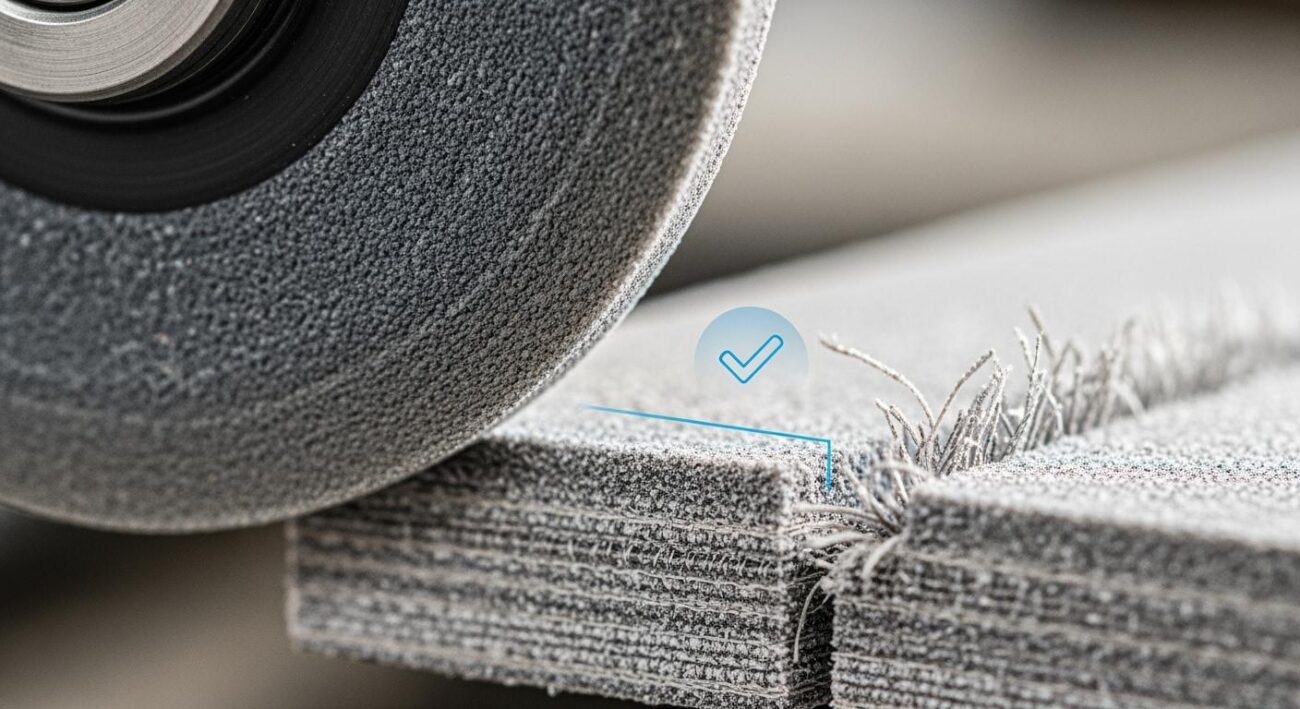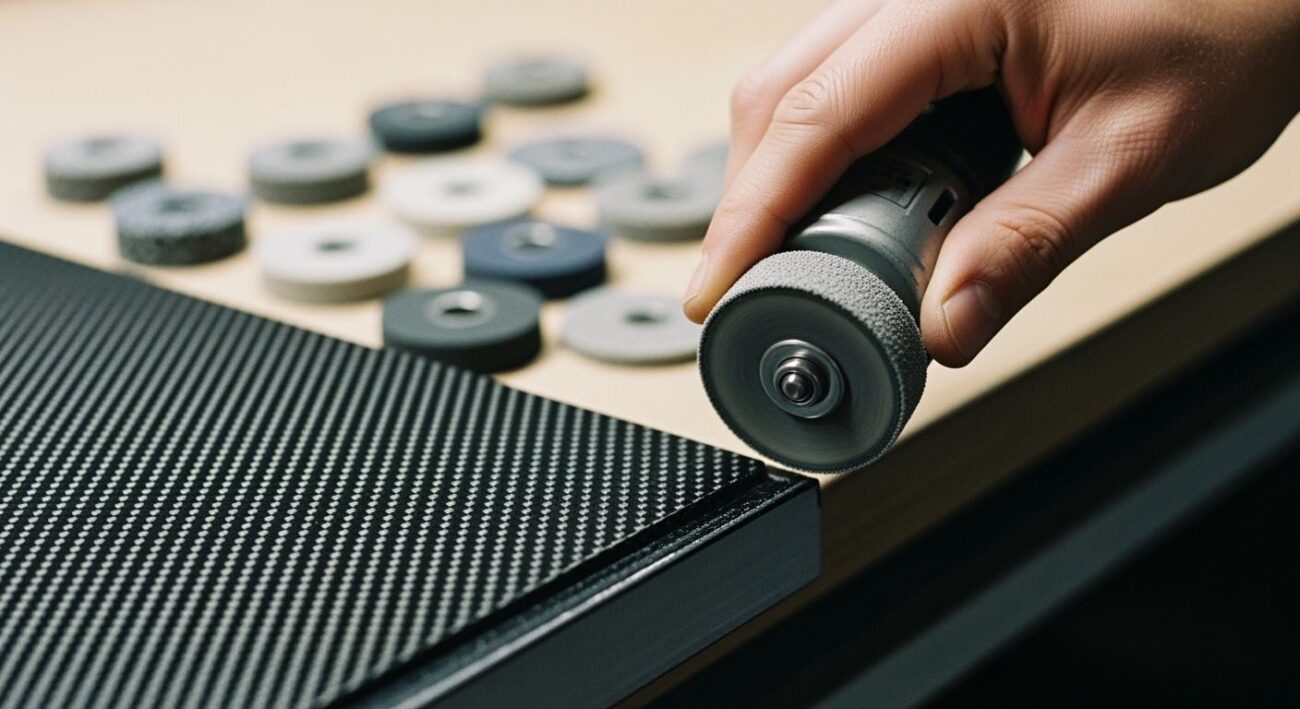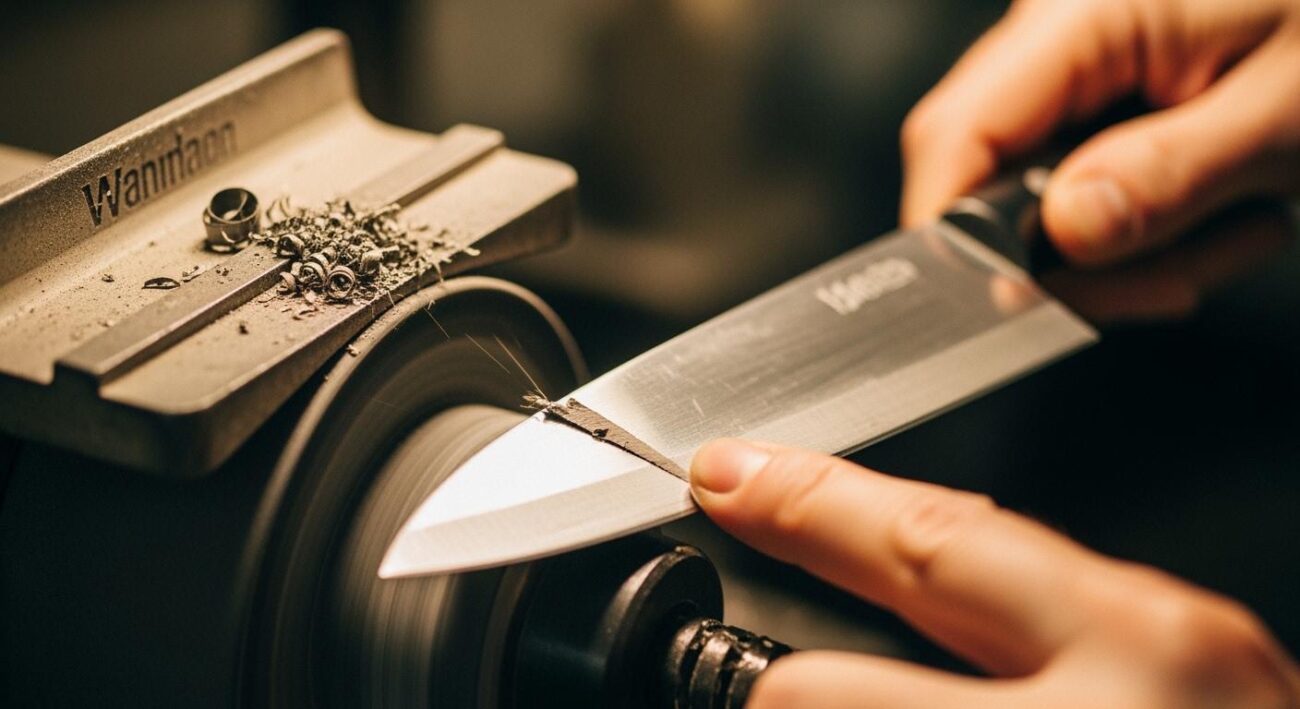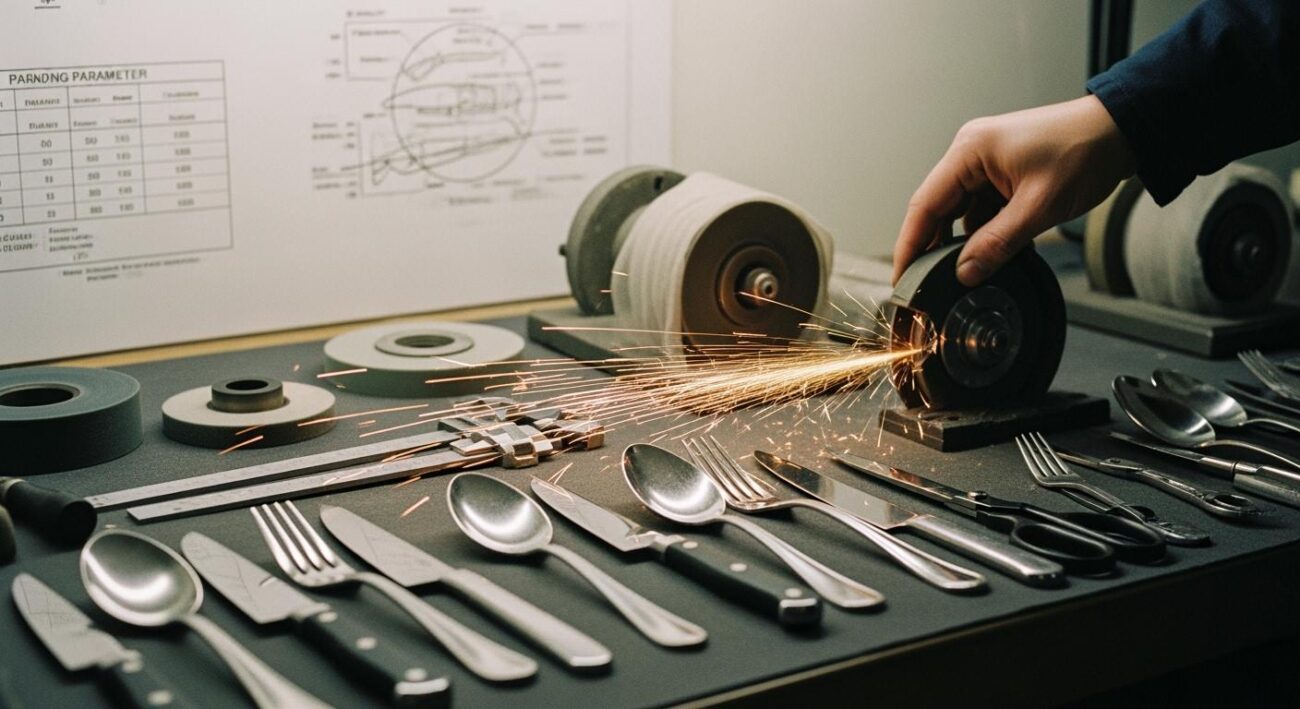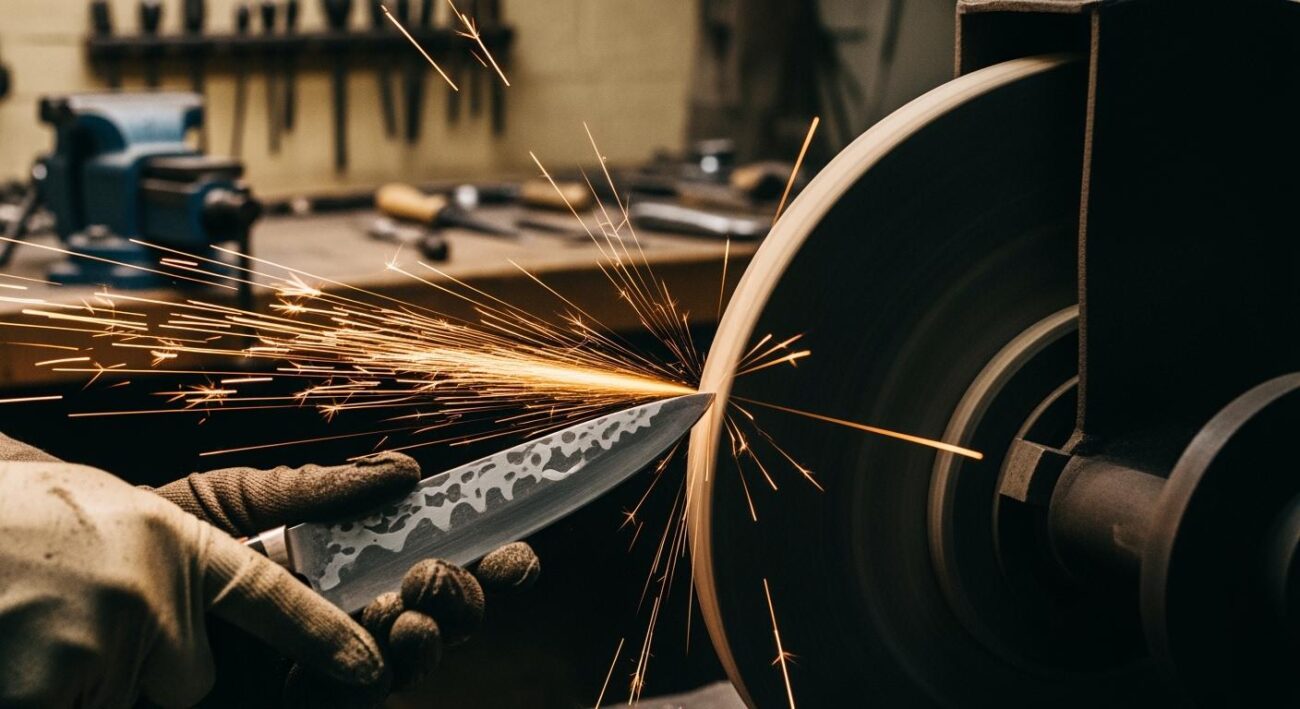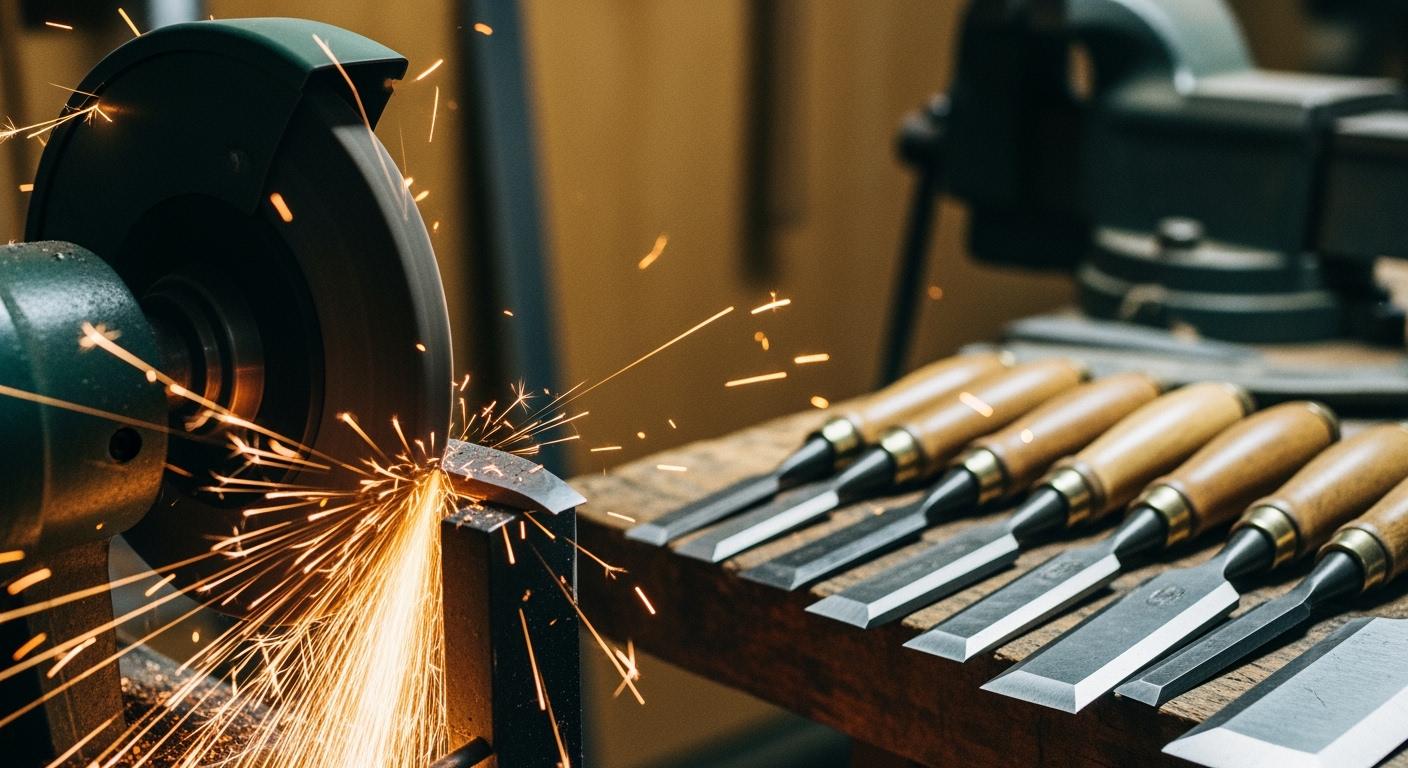
You need the right grinding wheel when sharpening wood tools. For steel wood tools, use aluminum oxide. For carbide-tipped wood tools, pick a diamond grinding wheel. Aimgrind gives you custom grinding wheel solutions for every wood tool. The grinding wheel you choose affects wood tool performance, wood finish, and wood tool life.
- The grinding wheel must match the wood tool’s hardness and desired wood finish.
- Adjusting grinding wheel speed and pressure helps your wood tools last longer.
Key Takeaways
- Choose aluminum oxide wheels for steel tools and diamond wheels for carbide-tipped tools to ensure effective sharpening.
- Select the right grit size: start with coarse grit for shaping and finish with fine grit for a sharp edge.
- Regularly inspect and maintain your grinding wheels to enhance performance and ensure safety during sharpening.
Key Factors for Choosing a Grinding Wheel
When you select a grinding wheel for sharpening woodworking tools, you need to look at several important factors. Each factor affects how well your grinder works and how long your tools last.
Grit Size for Sharpening
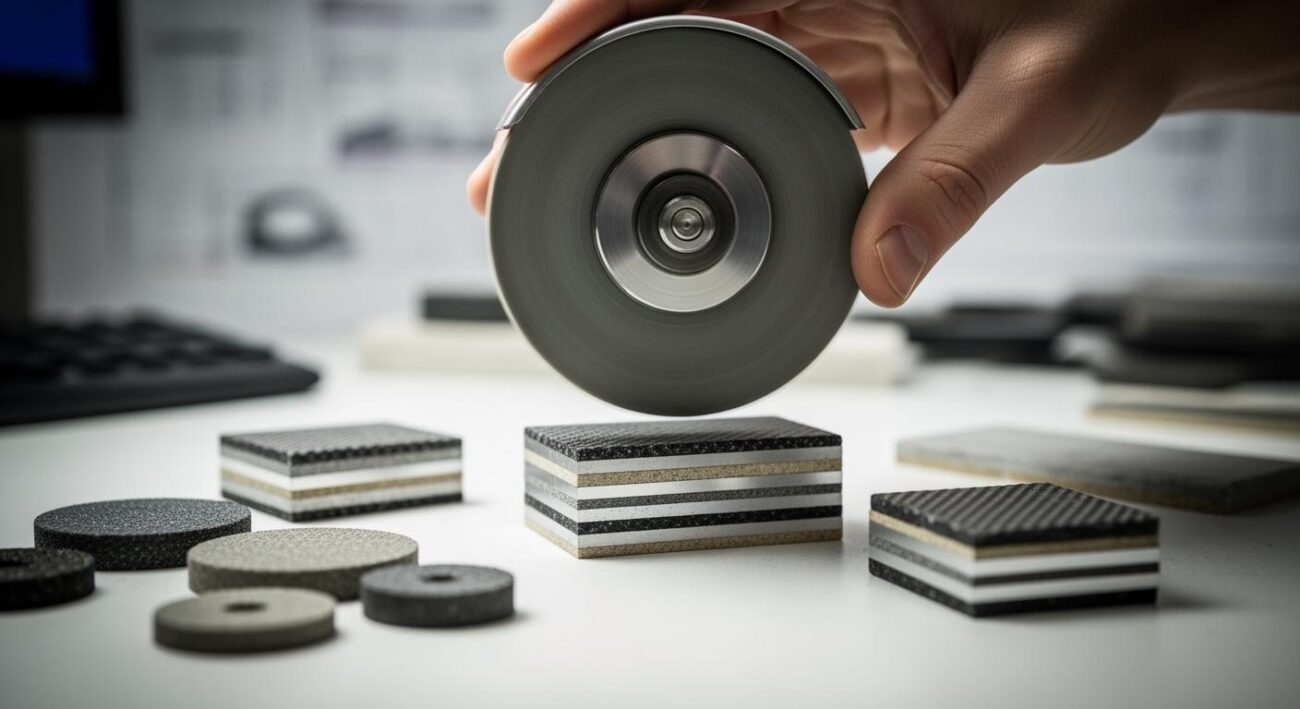
Grit size tells you how rough or smooth the grinding wheel feels. Coarse grits remove material quickly, which helps when your tools are very dull. Fine grits give a smoother finish, which is better for final sharpening. You should match the grit to the type of sharpening you need.
| Criteria | Description |
|---|---|
| Grit Size | Determines how aggressive the grinding action is. Coarse, medium, and fine grits serve different sharpening needs. |
| Grade | Shows the hardness of the bond. Soft grades expose fresh abrasive, while hard grades last longer. |
Wheel Material and Bond Types
The material and bond type of your grinding wheel matter a lot. Aluminum oxide wheels work well for steel tools. Diamond wheels are best for carbide-tipped tools. The bond holds the abrasive in place. Vitrified bonds are rigid and give high precision, which is good for CNC grinders. Resin bonds are more flexible and make it easier to change wheels.
- Vitrified bonds hold their shape and work well at high temperatures.
- Resin bonds are flexible and good for frequent wheel changes.
| Feature | Vitrified Bond | Resin Bond |
|---|---|---|
| Rigidity | Superior for form holding and accuracy | More flexible for adaptability |
| Thermal Stability | Handles high heat well | May degrade at high temperatures |
| Coolant Delivery | Better coolant and chip clearance | Limited coolant flow |
Hardness and Shape
The hardness of the abrasive is key for effective grinding. Harder abrasives cut better and last longer. Softer abrasives wear down fast and can cause more tool wear. You also need to pick the right wheel shape for your grinder and tools. For example, a concave grind works well for woodturning tools, while a flat grind is good for carving knives.
| Wheel Shape | Recommended For | Advantages |
|---|---|---|
| Flat grind | Carving knives | Stable cutting action |
| Concave grind | Woodturning tools | Easy honing on flat stones |
| Convex grind | Axes | Flexible, but less anchoring |
| Micro-bevel | Tools needing frequent honing | Extends tool life and performance |
Aimgrind can customize your grinding wheels to fit your grinder, your sharpening needs, and your woodworking tools. You get the best match for your equipment and process.
Grinding Wheel Types Compared
Aluminum Oxide Wheels for Steel Tools
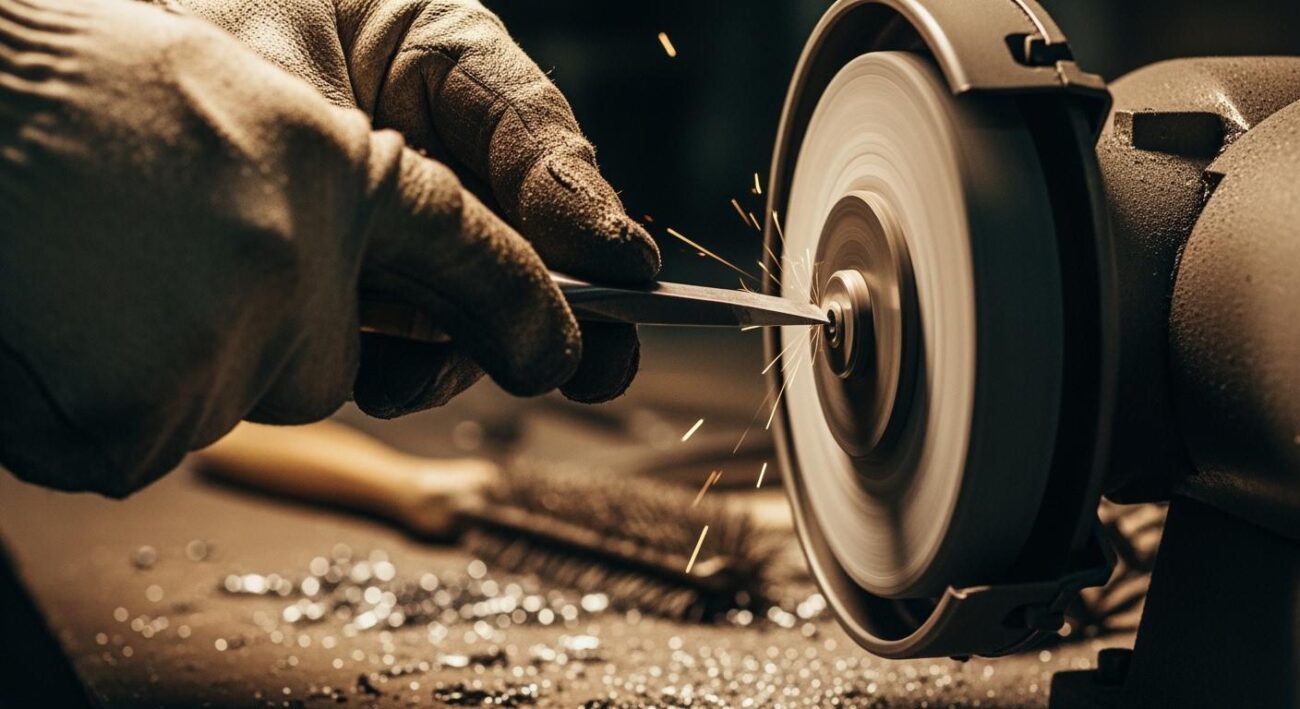
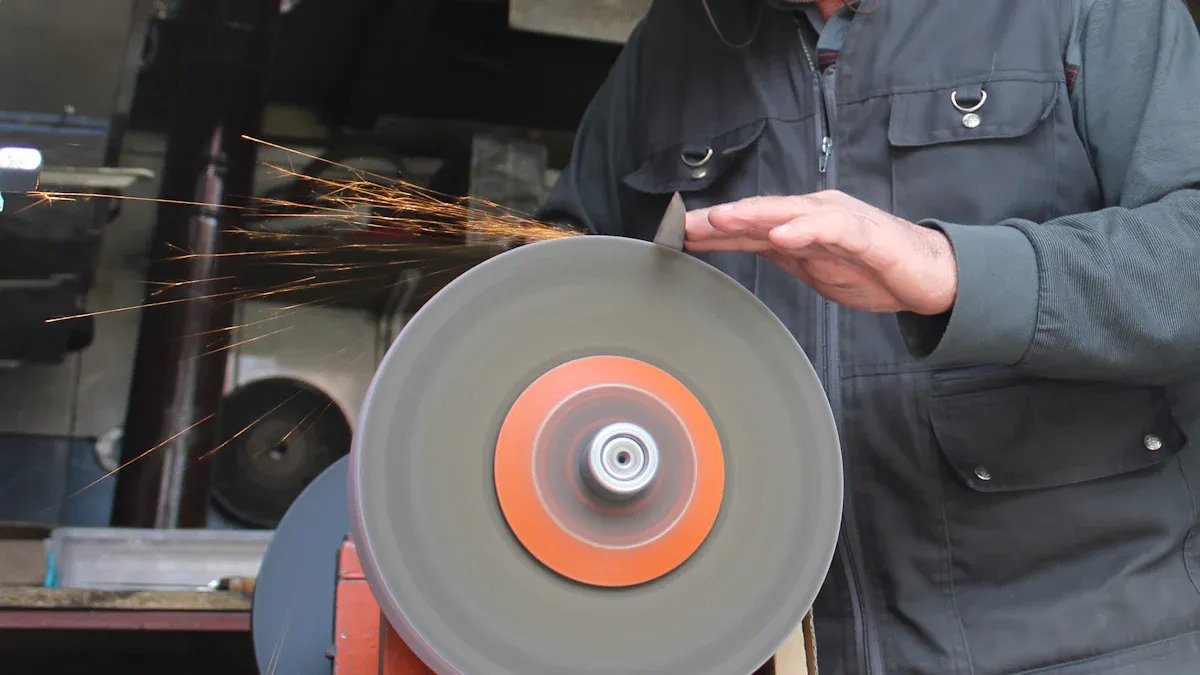
You can use aluminum oxide grinding wheels for sharpening steel woodworking tools. These wheels work well for chisels, plane irons, and carving knives made from high-carbon or tool steel. Aluminum oxide wheels give you a good balance between cutting speed and surface finish. You will find them easy to dress and maintain. They are also affordable and widely available. If you sharpen steel tools often, these grinding wheels offer reliable performance.
Diamond Grinding Wheels for Carbide Tools
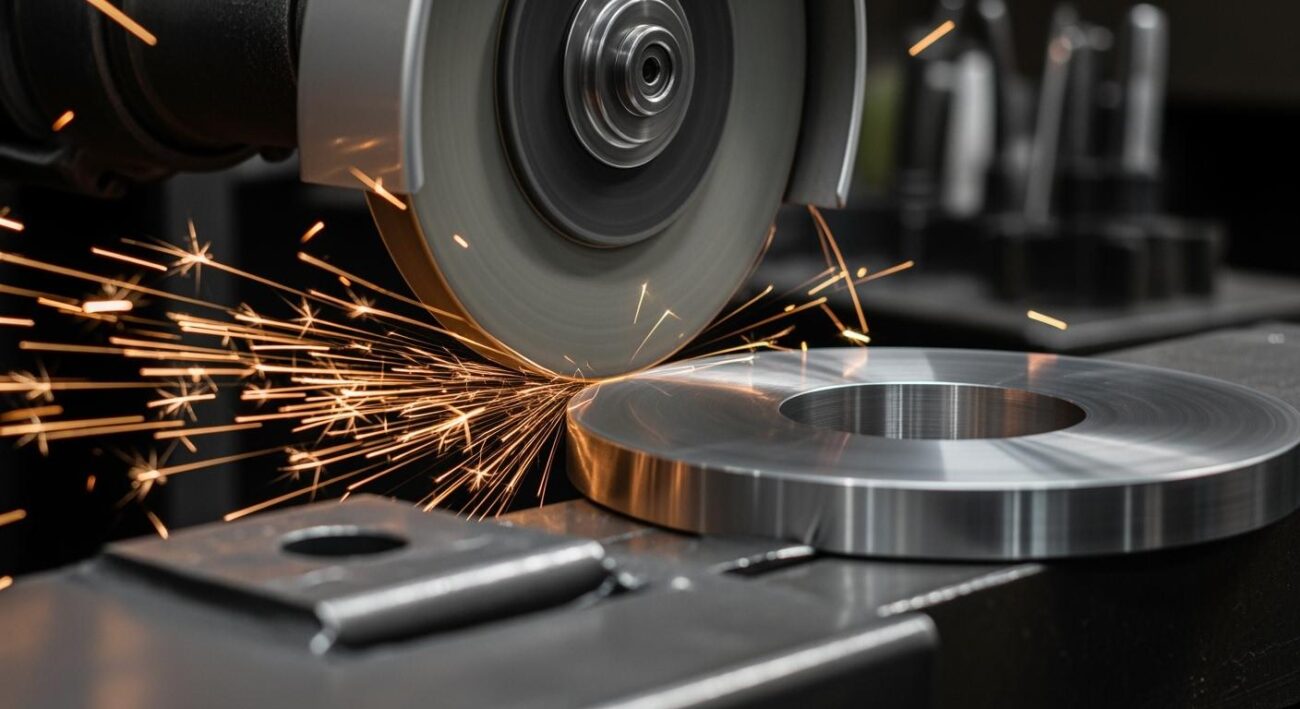
You need diamond grinding wheels when you sharpen carbide-tipped woodworking tools. Carbide is much harder than steel. Only diamond abrasives can cut carbide efficiently. When you use a diamond wheel, you get a sharper edge and longer tool life. Tests show that a #1k diamond disc gives the best edge endurance for carbide tools. You will notice that diamond grinding wheels remove material quickly and keep their shape. They also reduce the need for frequent dressing. Compared to green silicon carbide wheels, diamond wheels require less maintenance and give you better results. Aimgrind offers diamond grinding wheels with different bonds and grit sizes. You can choose a wheel that matches your sharpening needs. Aimgrind’s diamond wheels help you achieve high efficiency and precision. You will spend less time sharpening and more time working with your tools. Diamond grinding wheels also have a long lifespan, which lowers your total cost over time.
Tip: If you sharpen carbide-tipped saw blades or router bits, always choose diamond grinding wheels for the best results.
| Wheel Type | Hardness | Efficiency | Maintenance Needs |
|---|---|---|---|
| Diamond | High | High | Minimal |
| Silicon Carbide | Moderate | Low | Frequent dressing needed |
| CBN | High | Moderate | Occasional cleaning |
Other Wheel Types (Silicon Carbide, CBN)
You may see silicon carbide and CBN grinding wheels in woodworking shops. Silicon carbide wheels can shape carbide tools, but they work slowly and need regular dressing. You will find them less efficient than diamond wheels. CBN wheels are best for sharpening high-speed steel tools. They grind ferrous metals quickly and last a long time. However, you should not use CBN wheels on carbide tools. CBN wheels improve grinding efficiency for steel tools, but diamond grinding wheels remain the top choice for carbide-tipped woodworking tools.
Why Choose Aimgrind Diamond Grinding Wheels
Performance and Durability
You want your woodworking tools to have a sharp edge every time you use them. Aimgrind diamond grinder wheels help you achieve this goal. These wheels use high-quality diamond abrasives that keep the edge of your tools crisp and clean. When you use diamond grinder wheels, you notice that the edge stays sharp for a longer time. You do not need to sharpen as often, so your tools last longer.
Diamond grinder wheels from Aimgrind give you a consistent angle on every edge. This means you get the same cutting edge each time you sharpen. You can trust that your tools will perform well with every use. The diamond layer on these wheels resists wear, so the angle of your edge does not change quickly. You get a smooth finish on the edge, which helps your tools cut wood cleanly.
Note: A sharp edge at the right angle makes woodworking easier and safer. You reduce the risk of slips and mistakes.
Aimgrind diamond wheels also run cool. This helps you avoid overheating the edge of your tools. When you keep the temperature low, you protect the hardness of the cutting edge. You do not lose temper or damage the angle of the edge. This is important for both steel and carbide-tipped tools.
You can use Aimgrind diamond wheels for both wet and dry sharpening. The wheels keep their shape, so you always get the correct angle on your edge. You spend less time dressing the wheel and more time sharpening. The long life of these wheels means you save money over time.
| Feature | Benefit for Sharpening Tools |
|---|---|
| Diamond Abrasive | Maintains sharp edge and angle |
| Cool Grinding | Protects edge from heat damage |
| Shape Retention | Consistent angle and cutting edge |
| Long Service Life | Fewer replacements, more sharpening cycles |
Applications in Woodworking Sharpening
You can use Aimgrind diamond grinding wheels for many woodworking sharpening tasks. These wheels work best for carbide-tipped tools, but you can also use them for other hard materials. When you sharpen saw blades, router bits, or chisels, you want a perfect edge and angle. Aimgrind wheels help you get that result every time.
You need to match the angle of the edge to the tool’s purpose. For example, a chisel needs a different angle than a saw blade. Aimgrind diamond wheels let you control the angle with precision. You can create a fine cutting edge that slices through wood with ease. The edge stays sharp, so you spend less time sharpening and more time working.
Here are some common woodworking sharpening applications for Aimgrind diamond wheels:
- Sharpening carbide-tipped saw blades to restore the original edge and angle.
- Honing router bits to achieve a crisp cutting edge.
- Grinding chisels and plane irons to a precise angle for a smooth edge.
- Maintaining carving tools with a fine edge for detailed work.
- Creating a micro-bevel on the cutting edge for extra durability.
You can choose from different grit sizes to match your sharpening needs. A coarse grit shapes the edge quickly, while a fine grit polishes the cutting edge to a mirror finish. Aimgrind offers custom options, so you get the right wheel for your tools and sharpening style.
Tip: Always check the angle of your edge before and after sharpening. A consistent angle gives you the best cutting edge and tool performance.
Aimgrind stands out because you get more than just a wheel. You get expert advice, custom solutions, and high-quality products. The team at Aimgrind helps you select the right wheel for your sharpening needs. You can trust their experience and commitment to quality. When you use Aimgrind diamond grinding wheels, you get sharper edges, better angles, and longer-lasting tools.
Selecting Grit and Wheel Size for Sharpening
Grit Recommendations for Different Tools
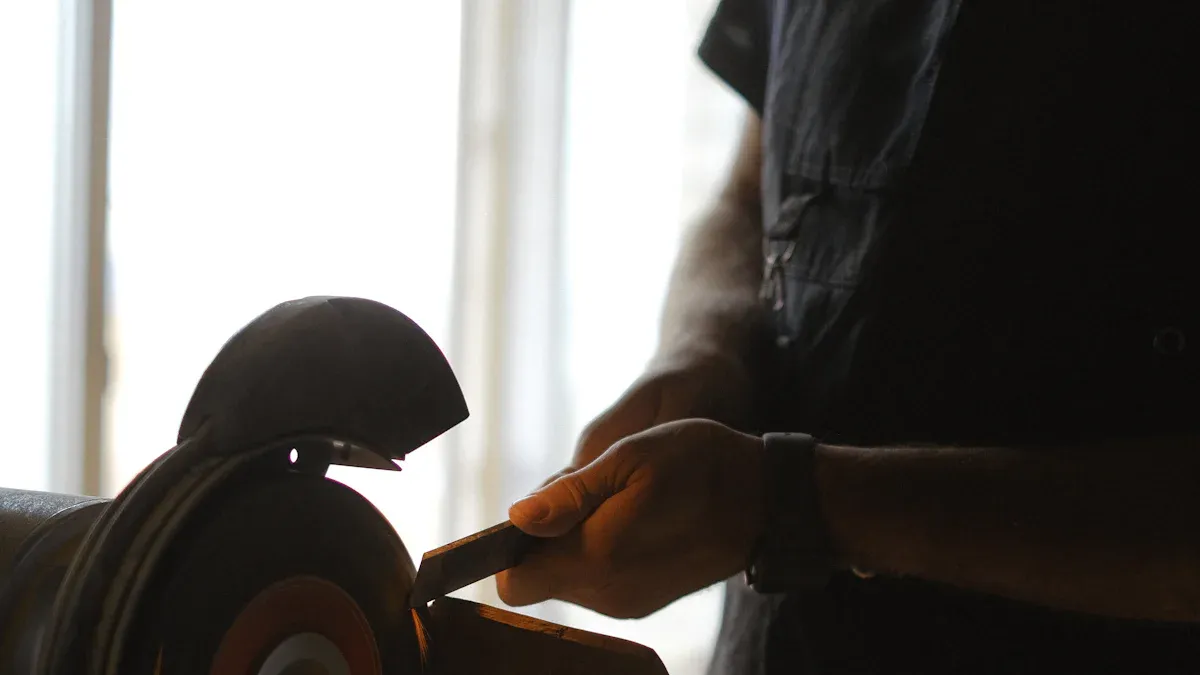
You need to pick the right grit for sharpening your woodworking tools. For chisels and plane irons, start with a coarse grit, such as 250, to remove damage or reshape the edge. Most of your sharpening time happens on these coarser grits. After shaping, move to finer grits like 12000 or 13000 for honing. This step gives your tools a sharp edge and helps them last longer. Saw blades and carbide-tipped tools also benefit from a similar process. Use a coarse grit to restore the edge, then finish with a fine grit for smoothness.
Many people make mistakes when choosing grit. Some use only a fine stone, which wears out quickly and does not sharpen well. Others use only a coarse stone, which leaves the edge rough. You should always use both coarse and fine grits for the best results. This method keeps your tools sharp and ready for work.
Tip: Always check your grind angle before and after sharpening. A consistent grind angle helps your tools cut cleanly and safely.
Wheel Size and Compatibility
Wheel size matters for sharpening. Large wheels cover more surface and make sharpening faster, especially for wide tools like plane irons. Small wheels work well for detailed sharpening or smaller tools. You should match the wheel size to your grinder and the size of your tools. Using the wrong size can make sharpening harder and less effective.
Aimgrind offers many wheel sizes to fit your needs. You can choose standard sizes or ask for custom options. This flexibility helps you get the best sharpening results for every tool in your shop.
| Tool Type | Recommended Grit Range | Suggested Wheel Size |
|---|---|---|
| Chisels | 250 – 13000 | Medium to Large |
| Plane Irons | 250 – 13000 | Large |
| Saw Blades | Coarse to Fine | Custom/Depends on blade |
You can trust Aimgrind to help you select the right wheel for your sharpening needs. The right grit and size keep your tools sharp and your grind angle perfect.
Sharpening Tips and Safety
Setup and Technique
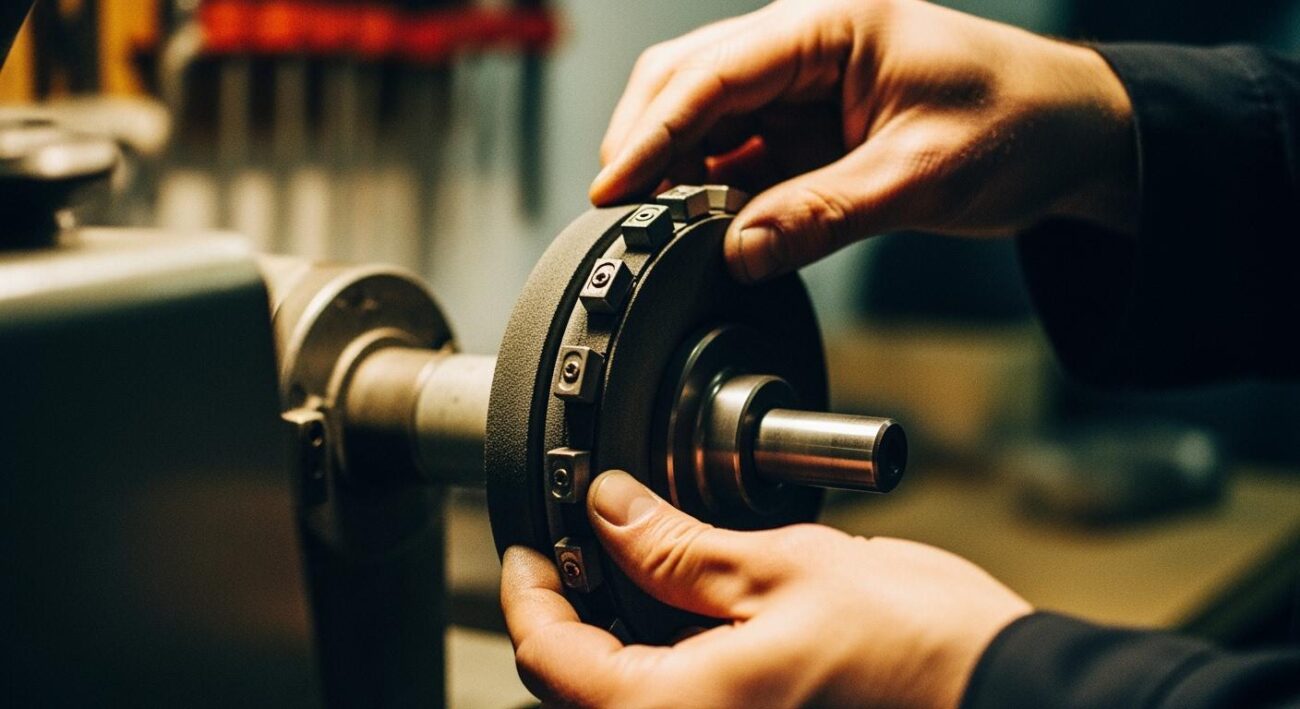
You need to set up your sharpening systems correctly to get the best results. Start by checking your grinding wheel for cracks or chips. Use a ring test to make sure the wheel is safe. Mount the wheel carefully and make sure it is tight. Always keep the wheel concentric to the axle. This step helps you avoid vibration and tool bounce. Use a wheel truing device to keep the wheel surface smooth and even. This tool also helps you de-glaze the wheel.
Professional woodworkers use these setup techniques to get the most from their sharpening systems:
| Technique | Description |
|---|---|
| Wheel Truing Device | Use to keep the wheel round and clean, which stops vibration. |
| Proper Wheel Mounting | Check for cracks and do a ring test before putting the wheel on. |
| Wheel Concentricity | Make sure the wheel spins evenly to avoid tool bounce. |
| Wheel Hardness and Grit Selection | Use a ‘K’ hardness wheel for woodturning tools; 80-120 grit for sharpening, 46 grit for rough shaping. |
Choose the right wheel for your sharpening systems. Use 80-120 grit for most sharpening jobs. Pick 46 grit for rough shaping. Always match the wheel to your tool and sharpening systems.
Maintenance and Safety Practices
Keep your sharpening systems in top shape with regular care. Clean your grinding wheel often to remove metal chips and dust. Use a dressing tool to expose fresh abrasive particles. This step keeps your wheel sharp and ready for use.
Follow these safety practices every time you use sharpening systems:
- Never let the wheel’s exposure exceed the safe angle. For most machines, keep it under 180°.
- Always use safety guards. Adjust them as the wheel gets smaller.
- Make sure side guards cover 75% of the wheel diameter.
- Keep the work rest close—within 1/8 inch of the wheel.
- Adjust the tongue guard to within 1/4 inch of the wheel.
- Check that the wheel’s RPM matches your grinder.
- Inspect and test new wheels before mounting.
- Keep your sharpening systems area clean.
- Use dust collectors if you make a lot of dust.
- Always wear goggles or a face shield.
- Make sure grinders are mounted firmly.
- Connect grinders to power with a permanent method.
Regular inspection prevents damage and keeps your sharpening systems efficient and safe.
Check your grinding wheel for reduced cutting ability, vibration, or cracks. Dress and true the wheel often. Make an inspection plan for your sharpening systems. Clean and maintain your Aimgrind diamond grinding wheels to get the best performance every time you sharpen.
You get the best results when you choose aluminum oxide wheels for steel tools and diamond wheels for carbide-tipped tools. Aimgrind supports your sharpening needs with expert advice and custom solutions. Using the right grinding wheel for sharpening gives you these benefits:
- Faster cutting with less pressure
- Long-lasting sharpness
- Safer, balanced performance
The right wheel helps you work smarter and keeps your tools ready for every project.
FAQ
What grit should you use for sharpening chisels?
You should start with a coarse grit like 250 for shaping. Use a fine grit like 12000 for finishing and getting a sharp edge.
Can you use a diamond grinding wheel on steel tools?
You can use diamond wheels on steel, but aluminum oxide wheels work better for sharpening steel woodworking tools. Diamond wheels are best for carbide-tipped tools.
How do you know when to replace your grinding wheel?
Check for cracks, chips, or reduced cutting ability. If you see vibration or uneven wear, you should replace the wheel for safety.
Tip: Always inspect your grinding wheel before each use to keep your sharpening safe and effective.