What do you use to dress a grinding wheel?
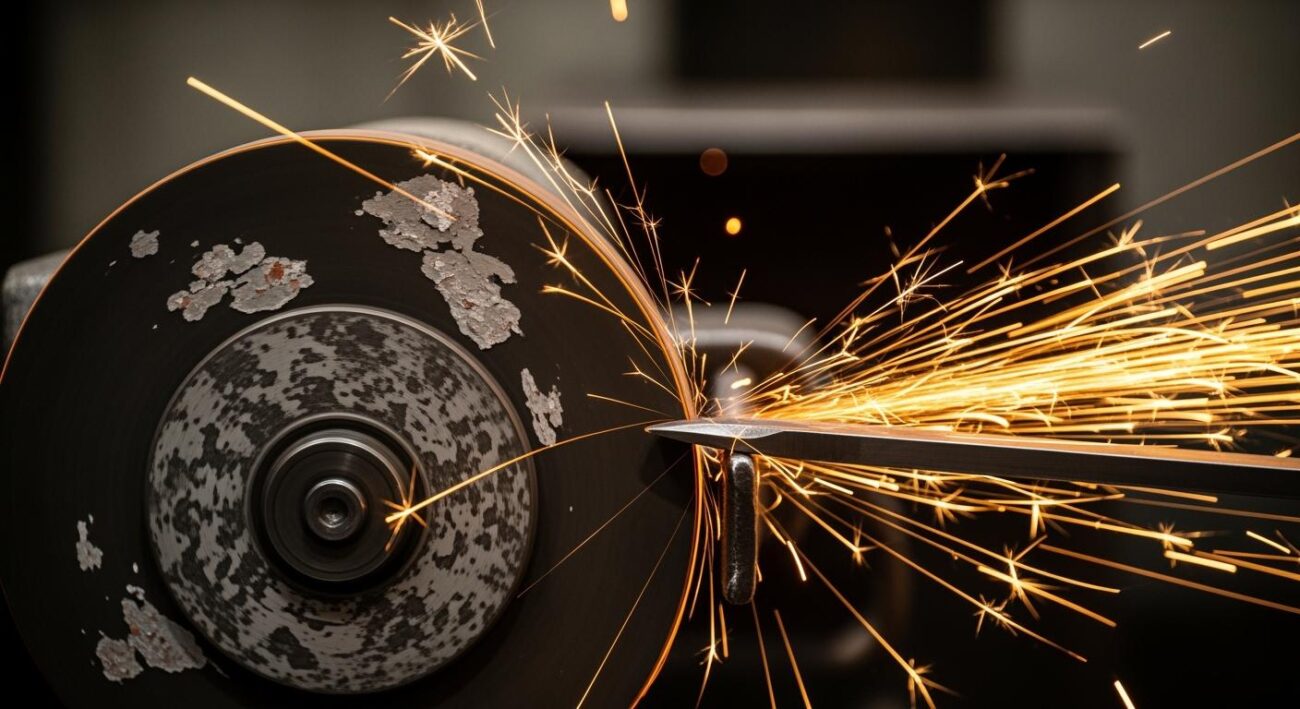
To dress a grinding wheel, use a specialized tool like a diamond dresser for precision, a dressing stick for cleaning, or a star dresser for coarse work.
Improve surface finish in grinding by selecting a finer grit wheel, reducing workpiece speed, and using a light depth of cut for the final pass with a spark-out.
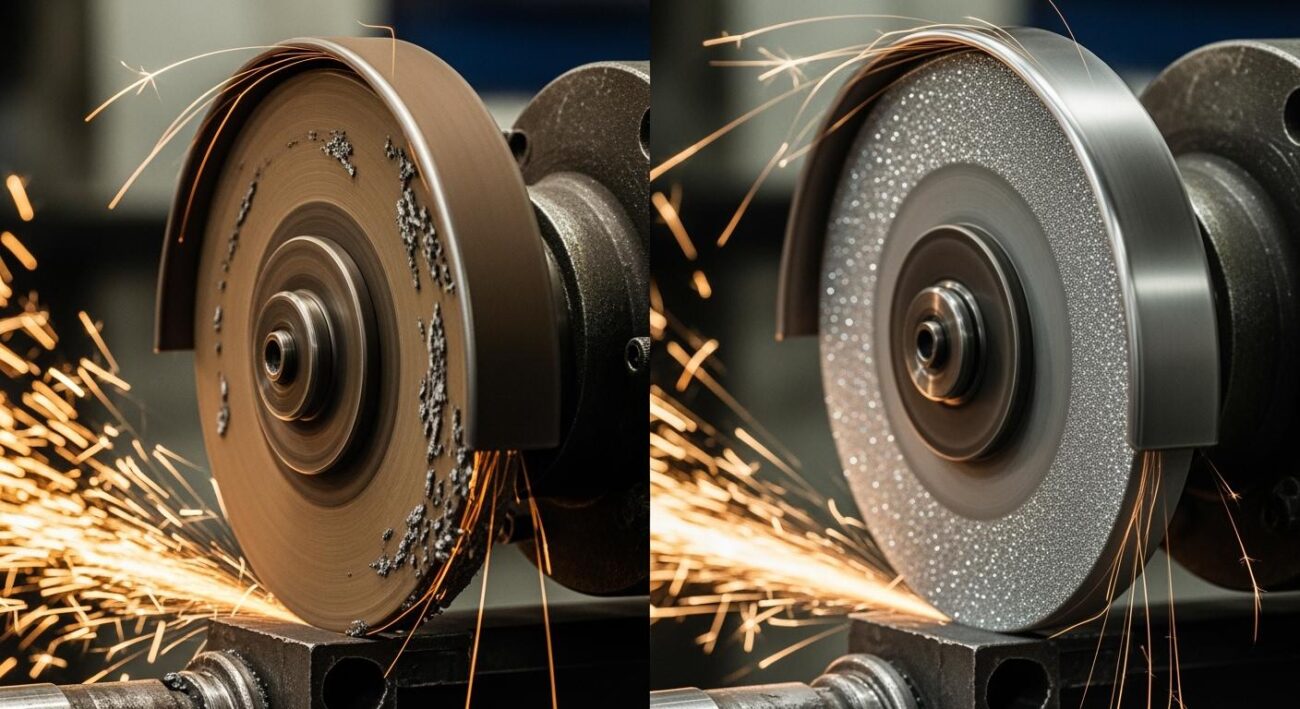
The main difference between a diamond and CBN grinding wheel is material application. Diamond wheels are for hard, non-ferrous materials like carbide and ceramic.
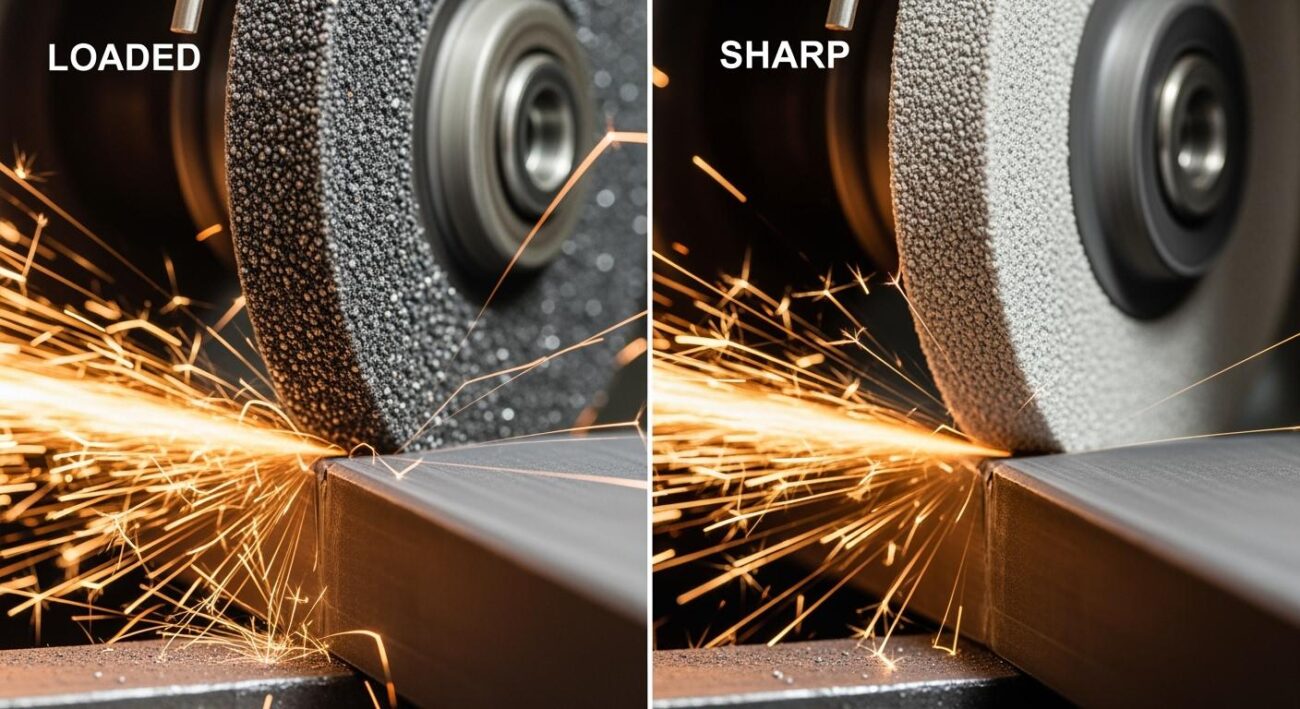
As a grinding wheel wears, its diameter shrinks, reducing surface speed and making it act softer. This causes faster breakdown, glazing, and poor surface finish.
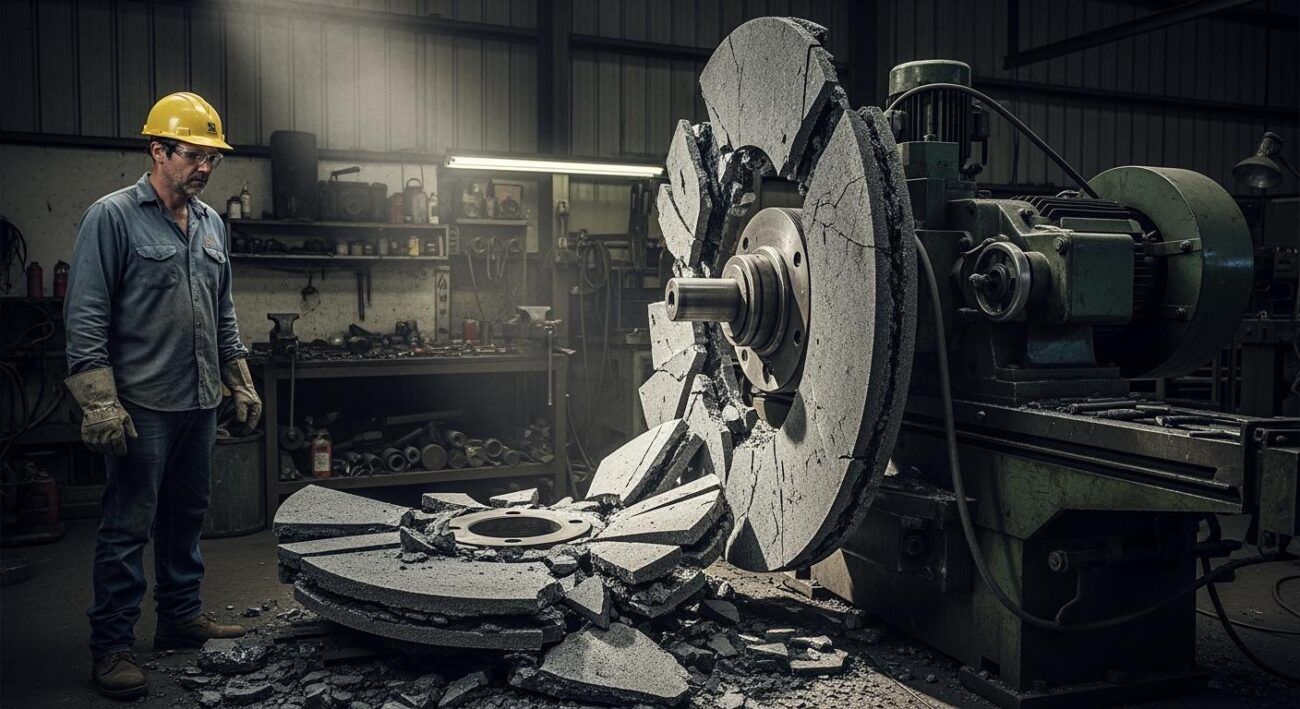
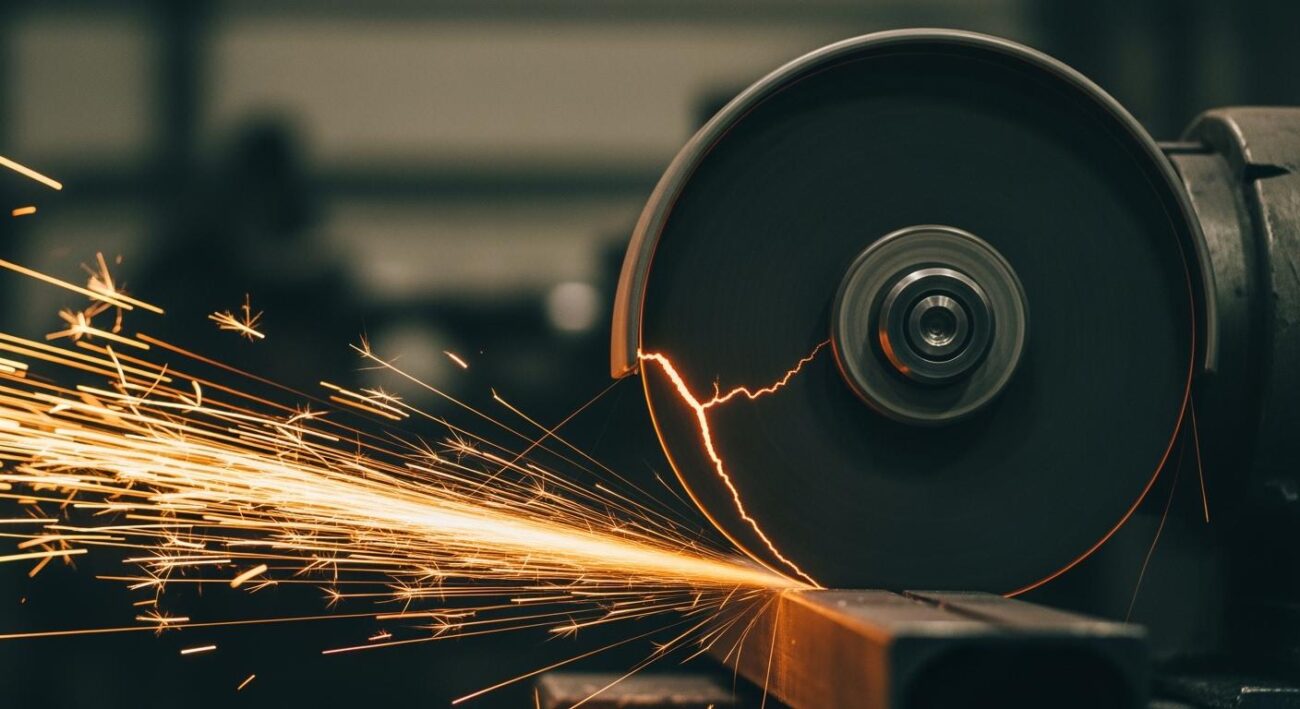
A grinding wheel is worn out if it has cracks or chips, causes excessive vibration, or has been ground down to its minimum usable diameter. Timely replacement is vital.
Rough grinding rapidly removes large amounts of material, while precision grinding is a meticulous process used to achieve exact dimensions and a fine surface finish.
Before installing a grinding wheel, visually inspect it for cracks, perform a ring test for hidden damage, and verify its RPM and size match your grinder.
A grinding wheel’s life is determined by its design, operating conditions, and maintenance. Key factors include abrasive type, bond, grain size, speed, and coolant.
Improve surface finish in grinding by selecting a finer grit wheel, optimizing speeds, reducing cut depth, and ensuring clean coolant and a stable machine setup.
Check grinding wheel quality with the ring test. A good wheel makes a clear, metallic ring when tapped, while a damaged one makes a dull thud. This simple test is essential for safety.
No account yet?
Create an Account