You often face problems when grinding steel products. You need a troubleshooting guide that helps you fix issues fast. Aimgrind gives you a troubleshooting guide that helps you spot defects and improve your work. You can use the troubleshooting guide to check for poor surface finish and other common problems. Shop floor technicians and engineers rely on a troubleshooting guide to solve grinding problems quickly. Aimgrind’s conventional bonded abrasives and troubleshooting guide help you achieve a smooth surface and boost your productivity.
Key Takeaways
- Identify surface imperfections like stains, scratches, and misruns early to maintain quality in steel grinding.
- Use visual and tactile inspections to detect defects. Good lighting and careful touch can reveal hidden issues.
- Select the right grinding wheel based on steel type and desired finish to avoid common defects.
- Regular maintenance and operator training are crucial for reducing defects and improving grinding efficiency.
- Aimgrind’s products and support can help you achieve a smooth surface and prevent recurring issues.
Quick Troubleshooting Guide for Grinding Problems
Common Surface Imperfections Overview
You may notice many types of surface imperfections when working with steel. These imperfections can include stains, misruns, indentations, edging, and scratches. Each type of imperfection has a unique look and cause. Stains often appear as random marks on the surface. Misruns usually show up at the edges of parts. Indentations create small pits, while edging happens when you grind too much at the edge. Scratches look like long, narrow lines. Understanding these surface imperfections helps you spot problems early and keep your grinding process under control.
Fast Identification Methods
You can use simple methods to find surface imperfections quickly. Start with a careful visual check. Run your fingers over the surface to feel for rough spots or pits. For more advanced detection, you can use the Barkhausen Noise method. This technique uses the micromagnetic properties of steel to find defects. It works well because it detects changes in the surface caused by grinding problems. You can use this method in real time during production, which helps you catch imperfections before they cause bigger issues.
Causes and Solutions Table
You can use the table below to match common surface imperfections with their causes and solutions. This table helps you solve grinding problems fast and improve your results. Aimgrind’s expertise in diagnosing and solving grinding problems ensures you get the right solution every time.
| Imperfection Type | Appearance | Main Causes | Solutions |
|---|---|---|---|
| Stain | Random marks on surface | Impurities in material | Use clean materials, check supply chain |
| Misrun | At part edges | Part collision | Adjust handling, improve setup |
| Indentation | Small pits | Residual material on die | Clean dies, inspect before grinding |
| Edging | At part edges | Excessive grinding | Control grinding depth, use proper wheel |
| Scratch | Long, narrow lines | Sharp objects, metal dust | Clean work area, use Aimgrind conventional bonded abrasives |
Tip: You can prevent most surface imperfections by choosing the right grinding wheel and keeping your equipment in good shape. Aimgrind offers support and high-quality products to help you avoid these defects.
Identifying Poor Surface Finish in Steel Grinding
Visual and Tactile Inspection
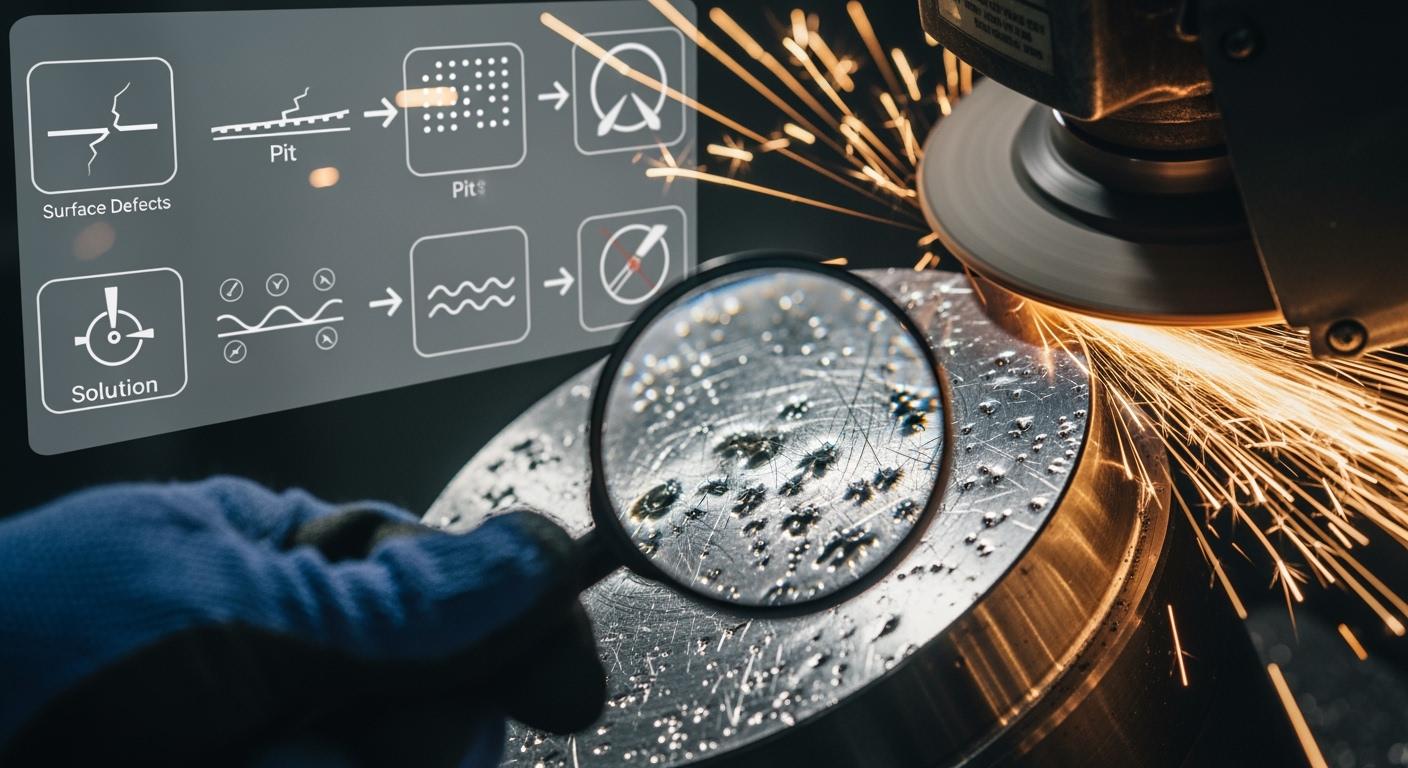
You can spot poor surface finish in steel grinding by using both your eyes and your hands. Start with visual inspection. Use good lighting and a magnifier to check the steel surface for irregularities. Look for uneven spots, stains, or lines. You can also use tactile comparators. Run your fingers gently over the surface. Feel for rough patches, pits, or bumps. Many shops follow standards like ANSI/ASME B46.1 to measure surface finish. These standards help you compare your results with industry requirements. The table below shows common inspection techniques:
| Technique | Description |
|---|---|
| Visual Inspection | Use lighting and magnification to find irregularities on the steel surface. |
| Tactile Comparator | Feel the surface to detect roughness or imperfections. |
| ANSI/ASME B46.1 | Use standardized procedures to measure surface finish quality. |
Aimgrind’s conventional bonded abrasives help you achieve a smoother surface. These abrasives remove unwanted material and reduce imperfections, making inspection easier and results more reliable.
Recognizing Chatter, Burns, and Scratches
You need to know how to identify common stainless steel imperfections. Chatter appears as wavy patterns across the steel surface. Burns show up as discoloration and may soften the metal underneath. Scratches look like straight lines and you can feel them with your fingernail. These defects affect the quality of the grinding process. You must check for these signs during inspection. Aimgrind’s conventional bonded abrasives help minimize chatter, burns, and scratches by providing consistent grinding action.
Spotting Pitting and Discoloration
You can find pitting and discoloration by looking for certain signs. Small holes or cavities may appear on the steel surface. Discoloration or staining often surrounds these pits. You might see white or colored corrosion products. Surface roughness changes in small areas. Sometimes tiny bubbles or blisters form in coatings. Microscopic depressions and changes in reflectivity also signal problems. You can use visual inspection, optical microscopy, or scanning electron microscopy to detect these defects. Stainless steel surface defects like pitting and discoloration reduce the quality of the finished product. Aimgrind’s abrasives help you avoid these issues by delivering a clean and uniform surface after grinding.
Tip: Always inspect the steel surface after grinding. Use both your eyes and hands to catch defects early. Aimgrind’s conventional bonded abrasives make it easier to achieve a high-quality finish and meet industry standards.
Root Causes of Surface Imperfections
Machine and Setup Issues
You can face imperfections in steel grinding when machines are not set up correctly. Loose parts, worn bearings, or misaligned spindles cause vibration and uneven movement. These issues lead to surface defects like chatter marks and rough patches. You must check machine stability and alignment before starting. Regular maintenance helps prevent imperfections and keeps your grinding process smooth.
Grinding Wheel Selection (Aimgrind Solutions)
Choosing the right grinding wheel is essential for avoiding surface defects. If you select a wheel with the wrong abrasive grain or grit size, you may see scratches and imperfections on steel. Wheels that are too durable need extra force to fracture, which can cause poor finishes. You should pick a more friable grain for effective grinding at small depths. Aimgrind’s conventional bonded abrasives offer a wide range of options. These wheels match your steel type and grinding needs, helping you achieve a smooth surface. Compatibility between the grinding wheel and the workpiece is crucial. Larger grit sizes produce a coarser finish, while finer grits give you a high-quality surface.
Tip: Always consider dressing and coolant needs when selecting a grinding wheel. Aimgrind experts can help you choose the best wheel for your application.
- Common mistakes in grinding wheel selection:
- Using grains that are too durable.
- Ignoring the need for dressing or coolant.
- Not choosing friable grains for shallow cuts.
Process Parameters and Coolant
You must control process parameters like speed, feed rate, and depth of cut. Incorrect settings cause imperfections and defects on the steel surface. Coolant selection and management play a big role. Proper coolant cools the grinding zone and improves surface quality. If you use the wrong coolant or let its pH drop, corrosion and defects can appear. Always monitor coolant flow and condition to keep your steel surface clean and smooth.
Material Factors
Steel hardness and composition affect grinding imperfections. Different alloys and heat treatments change how steel reacts during grinding. You can use the table below to see how material factors influence defects:
| Factor | Influence on Hardness and Grinding Defects |
|---|---|
| Chemical Composition | Alloying elements like carbon, chromium, and molybdenum alter mechanical properties, affecting grindability and defect occurrence. |
| Heat Treatment | Processes like tempering and annealing change hardness and brittleness, impacting surface integrity during grinding. |
| Mechanical Processing | Techniques such as forging and rolling enhance hardness, which can lead to increased defects if not managed properly. |
| Grain Size | Smaller grains improve hardness but can complicate the grinding process, leading to defects. |
| Unwanted Imperfections | Elements like sulfur and phosphorus can weaken steel, increasing the likelihood of defects during grinding. |
| Surface Condition | Variations in surface hardness post-processing can lead to different defect types during grinding. |
Batch-to-batch variations in steel also affect grindability. Microstructural differences, inclusions, and grain size changes can lead to imperfections and defects. You must check material properties before grinding to reduce surface issues.
Step-by-Step Troubleshooting Guide for Grinding
Systematic Diagnosis Steps
You can solve surface finish problems in steel grinding by following a clear process. Start with a careful inspection of the workpiece. Look for visible defects such as marks, scratches, or irregularities. Connect these symptoms to possible causes. Check the grinding wheel for proper dressing. Uneven dressing can create spiral marks on the steel surface. Inspect the coolant for contamination. Dirty coolant often leads to defects. Look for vibrations from nearby equipment. These vibrations can affect grinding quality. Balance the grinding wheel to prevent chatter marks. Maintain your equipment settings to keep grinding consistent.
Here is a simple step-by-step guide:
- Identify symptoms on the steel surface.
- Connect symptoms to possible causes.
- Check grinding wheel condition and dressing.
- Evaluate coolant quality.
- Assess external disturbances like vibrations.
- Balance the grinding wheel.
- Maintain equipment settings.
Tip: You can use this checklist every time you finish grinding steel. It helps you catch defects early and keeps your finish smooth.
Corrective Actions for Each Defect
You can fix surface finish defects in steel grinding by choosing the right corrective actions. Process control measures help you prevent defects. You can monitor grinding parameters and adjust them as needed. Material design approaches improve surface integrity. You can adjust chemical compositions or microstructure. Remediation techniques repair defects before shipment. You can use grinding, polishing, or welding to fix the surface.
| Corrective Action Type | Description |
|---|---|
| Process Control Measures | Monitor grinding parameters and adjust settings to prevent defects. |
| Material Design Approaches | Change chemical composition or microstructure to improve surface finish. |
| Remediation Techniques | Use grinding, polishing, or welding to repair surface defects before sending out the steel product. |
Note: You can combine these actions to get the best results. Always check the grinding wheel and process settings before making changes.
Preventing Recurrence with Aimgrind Products
You can prevent surface finish defects from coming back by using Aimgrind products and support. Aimgrind’s conventional bonded abrasives give you consistent grinding performance. These grinding wheels match your steel type and grinding needs. You get a smooth surface and fewer defects. Aimgrind experts help you select the right grinding wheel for your application. You can ask for advice on dressing, coolant, and process parameters. Aimgrind offers sample optimization and parameter matching. You get grinding wheels that fit your equipment and process.
Callout: Aimgrind’s service helps you keep your grinding process stable. You can rely on their products and support to achieve a high-quality finish every time.
You can use Aimgrind’s troubleshooting guide and products to maintain a smooth steel surface. Regular checks and proper grinding wheel selection help you avoid defects. You improve productivity and get reliable results.
Best Practices for Avoiding Grinding Problems
Maintenance and Routine Checks
You keep your steel grinding process efficient by following routine maintenance. Regular inspection and cleaning help you maintain the quality of the steel surface. Scheduled maintenance lets you detect defects before they become major issues. You should optimize coolant application to enhance grinding efficiency. Dressing wheels frequently keeps cutting edges sharp. Replace worn media before it glazes to maintain high cutting speed. Use a working angle of 5 to 10 degrees for balanced removal. Early detection of faults leads to proactive maintenance actions.
| Maintenance Type | Defect Rate Impact |
|---|---|
| Predictive Maintenance | Significantly reduces defects |
| Calendar-based Maintenance | Higher occurrence of defects |
Tip: Coolant condition monitoring helps you predict quality thresholds and avoid surface defects.
Operator Training and Checklists
You improve steel grinding results by training operators regularly. Well-trained operators maintain blade efficiency and reduce defects. Consistent inspections are vital for effective blade maintenance. Operators should assess edge straightness, surface cracking, and alignment. Neglecting these checks increases cutting resistance and defect rates. You can use checklists to ensure every step gets completed. Training helps operators understand how to spot surface imperfections and fix them quickly.
Note: Operator training directly impacts the frequency of surface defects in steel grinding shops.
Product Selection Tips (Conventional Bonded Abrasives)
You achieve the best steel surface finish by choosing the right conventional bonded abrasives. Surface roughness values serve as quality control benchmarks. Harder steels need specialized abrasives and higher energy input. Grindability and functional requirements matter, especially for high-volume production. Finer grain sizes improve grindability and surface finish. Medium carbon steels provide a good balance for grinding operations. Elements like chromium and tungsten increase energy requirements, so you need specialized techniques. Aimgrind offers a wide range of conventional bonded abrasives to match your steel type and grinding needs.
Callout: You can contact Aimgrind for expert advice on abrasive selection and process optimization.
You can improve steel grinding results by following a few key steps. First, always check for vibration sources and address runout issues to keep the steel surface smooth. Stabilize your equipment to avoid unwanted patterns on the surface. Choose the right grinding wheel and maintain your machines for the best steel finish. Regular monitoring and routine checks help you catch problems early. You should keep learning new grinding techniques. Studies show that multiple grinding passes increase steel grinding efficiency and improve the surface. For expert support and quality products, reach out to Aimgrind.
FAQ
What causes poor surface finish in steel grinding?
You often see poor surface finish from incorrect grinding wheel selection, improper machine setup, or wrong process parameters. You can fix these issues by choosing Aimgrind’s conventional bonded abrasives and checking your equipment regularly.
How do you choose the right grit size for steel grinding?
You select grit size based on your desired finish. Coarse grits remove material quickly. Fine grits give you a smoother surface. Aimgrind experts help you match grit size to your steel type and grinding needs.
Can you use conventional bonded abrasives for both wet and dry grinding?
Yes, you can use Aimgrind’s conventional bonded abrasives for wet and dry grinding. These abrasives work well in both environments and deliver consistent results.
What maintenance steps help prevent grinding defects?
You should clean machines, check coolant, and dress grinding wheels often. Regular maintenance reduces defects and keeps your grinding process efficient.
Tip: You can contact Aimgrind for advice on maintenance routines and abrasive selection.
Where can you get expert support for steel grinding problems?
You can reach out to Aimgrind for expert advice, troubleshooting, and product recommendations. Visit Aimgrind’s website or email brian@aimgrind.com for support.
Contact Us
For More Grinding Solution or Customized Abrasive Tools