

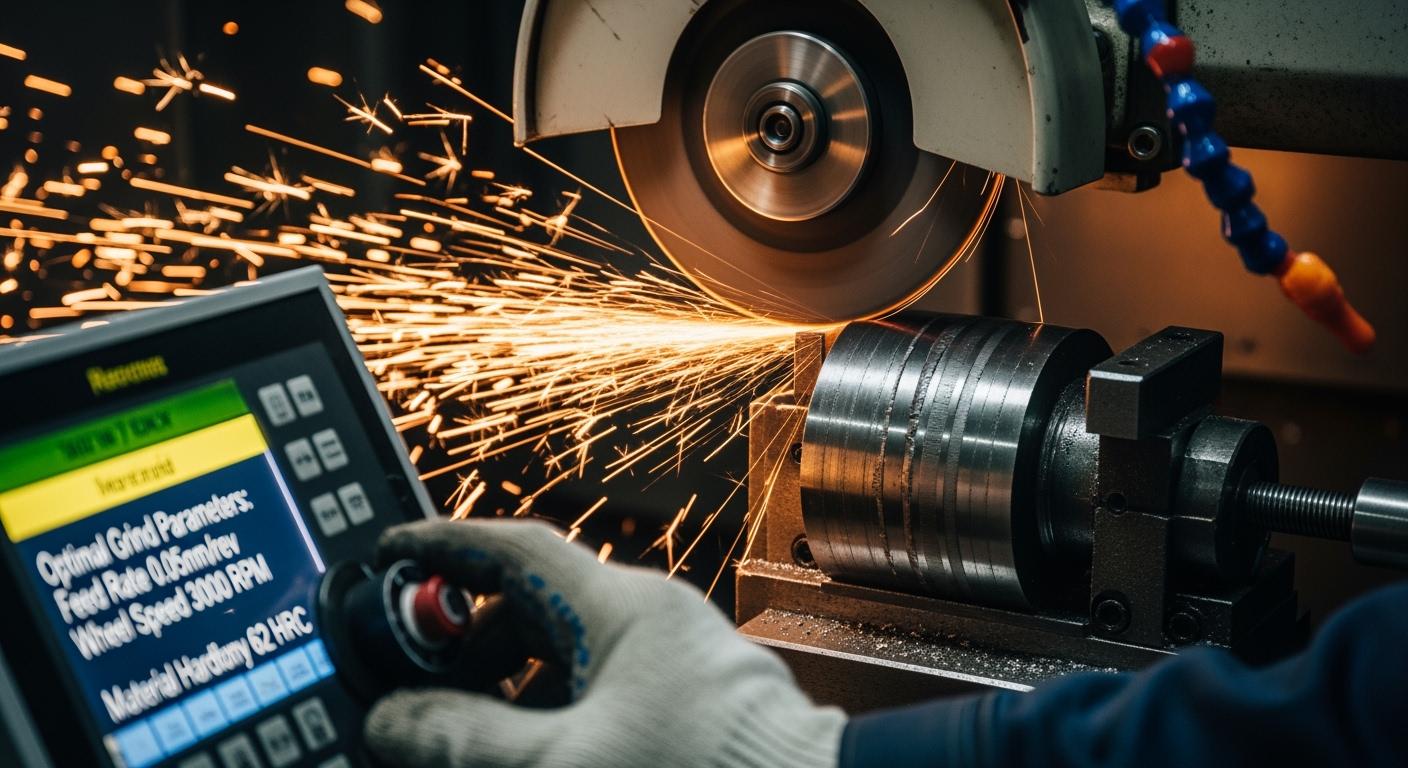
You achieve the best results in Grinding Hard Materials by combining precise tool selection, process optimization, and regular maintenance. Aimgrind helps you solve grinding challenges with customized solutions. You benefit from initial consultation, application review, conceptual design, and rigorous quality control. Super hard abrasives increase productivity because they stay sharp longer and reduce wheel changes. You produce more parts per wheel, save costs, and maintain surface quality. Grinding tough, adhesive materials becomes easier when you match the right tools and optimize grinding parameters.
Key Takeaways
- Choose super hard abrasives like diamond or CBN for grinding hard materials. These options enhance tool life and improve cutting efficiency.
- Regularly monitor and maintain your grinding tools. This practice helps prevent wear and ensures consistent performance.
- Optimize grinding parameters such as speed, feed rate, and depth of cut. Adjusting these settings can significantly improve surface quality and reduce tool wear.
- Use effective coolant strategies to manage heat and improve surface finish. Proper coolant application protects your workpiece and extends abrasive life.
- Implement regular dressing of grinding wheels to maintain sharpness and prevent wheel loading. This step is crucial for achieving high-quality results.
Challenges in Grinding Hard Materials
Grinding hard materials brings unique obstacles. You face high hardness, toughness, adhesion, heat, and tool wear. Each challenge affects your results and the life of your abrasives. Aimgrind helps you identify these issues early with a diagnostic approach. You can then choose the right abrasives and process for your needs.
Material Hardness and Toughness
When you grind hard and tough workpieces, you deal with several material properties that make the process difficult:
- High hardness increases cutting forces.
- Poor heat conductivity causes high temperatures during grinding.
- High strength leads to more wear on the cutting edge.
- Work hardening makes the material even tougher to grind.
- Adhesion hardening reduces cutting efficiency.
You need abrasives that can handle these properties. Aimgrind’s super hard abrasives give you the strength and durability you need for grinding hard materials.
Adhesion and Wheel Loading
Adhesion and wheel loading can stop your grinding process. When sticky materials build up on your abrasives, you lose cutting ability. The table below shows what happens during grinding:
| Evidence Description | Key Findings |
|---|---|
| Abrasive grains interact with workpiece materials like Inconel 718. | Microstructure and cutting parameters affect wheel loading. |
| Wheel and workpiece contact forms microwelds. | This causes the wheel to dull quickly and raises grinding forces. |
| Grinding mode changes wheel loading. | Up-cut grinding loads less than down-cut grinding. |
| Adhesive wear on the workpiece surface. | Metal can stick to abrasive grits, especially with softer materials. |
Aimgrind helps you spot and solve wheel loading issues before they affect your results.
Heat Generation and Surface Damage
Grinding creates heat. If you do not control it, you risk damaging your workpiece. High temperatures can change the microstructure and lower the hardness of the surface. Sometimes, grinding temperatures reach up to 290 °C. When temperatures get too high, you may see cracks or changes in the surface layer. This can weaken your part and reduce its life.
Tool Wear and Life
You want your abrasives to last as long as possible. Grinding tough and adhesive materials can cause several types of tool wear:
| Type of Wear | Description |
|---|---|
| Abrasive Wear | Impurities in the metal can break off and wear down your abrasives. |
| Adhesion Wear | High heat causes chips to stick to the tool, which can hurt accuracy and surface finish. |
| Thermal Cracking | Temperature changes can crack the tool, leading to failure. |
Adhesion wear is common when grinding sticky materials. Chips bond to the tool face, which can lower the quality of your work. Thermal cracking happens if you do not control temperature swings. Aimgrind’s diagnostic service helps you track tool wear and choose the best abrasives for your job.
Selecting Tools and Abrasives for Grinding
Choosing Super Hard Abrasives from Aimgrind
You need the right abrasives to tackle grinding hard materials. Aimgrind offers super hard abrasives that include both diamond abrasives and CBN (cubic boron nitride) options. Each type serves a specific purpose in your grinding process.
- Diamond abrasives work best on hard non-metallic materials. You can use them for ceramics, carbides, and glass. They deliver extreme hardness and cut through tough surfaces with ease.
- CBN abrasives excel when you grind hard ferrous metals like steel and cast iron. They resist chemical reactions at high temperatures, so they last longer than diamond abrasives in these applications.
The table below helps you choose the right abrasive for your job:
| Feature | Diamond Abrasive | CBN Abrasive |
|---|---|---|
| Material Types | Hard non-ferrous, ceramics, glass | Hard ferrous (steels, cast irons) |
| Applications | Carbide tools, ceramic components | Hardened steel gears, HSS cutting tools |
| Key Strength | Extreme hardness for non-metals | High thermal and chemical stability |
You get the most value when you match the abrasive to your workpiece. Diamond abrasives give you unmatched performance on non-metallics. CBN abrasives keep their edge when you grind iron-based materials. This targeted approach helps you achieve better results and longer tool life.
Bond Types and Wheel Structure
The bond type and wheel structure play a big role in your grinding results. Aimgrind lets you choose from several bond types to match your needs.
- Vitrified bonds give you rigidity and thermal stability. You use them for precision grinding where you need tight tolerances.
- Resin bonds provide a softer cutting action. They help you achieve fine finishes, but they may not handle high heat as well.
- Metal bonds work best for very hard materials. They hold abrasive grains tightly, so you get a long service life.
A more open wheel structure helps clear chips, reduces loading, and keeps grinding temperatures low. This is important for maintaining a good surface finish. You should pick a wheel structure that matches your material and grinding goals.
Tip: For tough materials, a vitrified bond and open structure often give you the best balance of precision and durability.
Grade and Grit Selection
You must select the right grade and grit size to get the best performance from your grinding wheels. Grit size controls how much material you remove and how smooth the finish will be.
- Coarse grits (10-24) remove material quickly. Use them when you need to shape or rough out a part.
- Medium grits (30-60) work well for general grinding tasks.
- Fine grits (70-220) are best for precision work and smooth finishes.
The grade tells you how hard the bond is. Softer grades (A-H) expose fresh abrasive grains quickly, which is good for hard materials. Harder grades (Q-Z) last longer on softer metals.
When you grind adhesive materials, use coarser grits and softer grades. This helps prevent wheel loading and keeps your grinding process efficient. For smaller contact areas, finer grits and harder grades give you better control and finish.
Note: Always match your wheel speed and area of contact to your chosen grit and grade. This ensures safe and effective grinding.
You can rely on Aimgrind’s expertise to help you select the right combination of abrasives, bond types, and wheel structures. This approach gives you consistent results and extends the life of your grinding tools.
Optimizing Grinding Parameters
When you want to get the best results from grinding hard materials, you need to focus on the right parameters. Aimgrind’s parameter matching service helps you find the perfect settings for your machine, your abrasives, and your workpiece. This service looks at your equipment, your material, and your goals. You get a custom plan that helps you reduce tool wear, improve surface finish, and boost productivity.
Speed and Feed Rates
You control the speed and feed rates to manage how much material you remove and how much heat you generate. If you set the speed too high, you risk burning the workpiece or wearing out your abrasives too quickly. If you set the feed rate too low, you waste time and may not get the finish you want.
- Use moderate wheel speeds for tough and adhesive materials. This helps you avoid overheating and keeps your abrasives sharp.
- Increase the feed rate slightly when you see wheel loading. This helps clear chips from the grinding zone.
- Lower the speed ratio between the wheel and the workpiece to improve surface roughness. Studies show that reducing the speed ratio can make the surface up to 33% smoother.
Aimgrind helps you test different speeds and feeds. You get data that shows which settings give you the best balance of speed, finish, and tool life.
Depth of Cut
Depth of cut is how deep the grinding wheel goes into the workpiece. This setting has a big effect on both tool wear and surface quality. If you increase the depth of cut, you remove more material in one pass. However, this also increases the force on your abrasives and can cause more vibration.
The study shows that when you increase the depth of cut, the grinding process becomes less stable. Forced vibrations can almost double compared to self-excited vibrations. This can lead to rougher surfaces and more tool wear. If you want a smoother finish, you should use a smaller depth of cut. This helps you control vibrations and keeps your surface quality high.
Tip: Start with a shallow depth of cut when working with adhesive materials. Increase it slowly while watching for changes in surface finish and tool wear.
Coolant and Fluid Strategies
Coolant plays a key role in grinding. It keeps the temperature down, protects your workpiece, and helps your abrasives last longer. You have several options for coolant and fluid strategies.
- The Indirect Cooling Grinding (I.C.G.) system keeps coolant from touching the workpiece directly. This reduces oxidation and stops the surface from getting too hard.
- I.C.G. lets you use the same coolant for longer periods. This saves you money and helps the environment.
- You get better surface roughness on steel alloys when you use I.C.G. under different grinding conditions.
You can also follow these steps to get the most from your coolant:
- Use coolant as a thermal barrier. It absorbs heat from both the workpiece and the abrasives.
- Make sure the coolant removes heat quickly. This prevents grinding burn, which can cause discoloration and damage inside the workpiece.
- Keep the temperature stable. This protects the steel’s structure and stops it from losing hardness.
Aimgrind can help you choose the right coolant system for your process. You get advice on flow rates, nozzle placement, and coolant type. This ensures you get the best results from your grinding operation.
Note: Always check your coolant system before you start grinding. Clean nozzles and fresh coolant help you avoid problems and keep your abrasives working at their best.
By adjusting your speed, feed, depth of cut, and coolant strategy, you can solve many problems in grinding hard materials. Aimgrind’s expertise and parameter matching service give you the tools you need to get the job done right.
Surface Quality and Adhesion Control in Grinding
Dressing and Conditioning Techniques
You improve surface finish and control adhesion by using the right dressing and conditioning methods. When you grind hard materials, you need to keep your grinding wheel sharp and clean. High-quality dressers, especially diamond dressers, help you reshape and cleanse the abrasive surface. You can choose single-point or multi-point diamond dressers based on the grinding materials you work with. Diamond dressers are perfect for precision tasks because they match the hardness of silicon carbide and other tough abrasives. Regular dressing boosts the efficiency of your grinding wheels and extends their life. You also protect yourself and your equipment by reducing the risk of accidents caused by worn wheels. Aimgrind’s sample optimization service helps you select the best dressing tools and techniques for your grinding materials, ensuring you get a consistent surface finish every time.
Lubrication and Temperature Management
You control adhesion and improve surface finish by managing lubrication and temperature during grinding. You have several options for cooling and lubrication. Water-based coolants remove heat quickly and help you achieve a smooth surface finish. Oil-based coolants provide better lubrication for certain grinding materials, especially when you use silicon carbide abrasives. Minimum quantity lubrication (MQL) systems use less fluid but still protect your grinding materials and improve surface finish. MQL with Al2O3 nanoparticles gives you the lowest grinding forces and reduces friction, making your grinding process more efficient.
| Lubrication Method | Effect on Grinding Performance |
|---|---|
| Minimum Quantity Lubrication | Reduces wheel wear and improves surface finish |
| MQL with Al2O3 Nanoparticles | Lowers grinding forces and enhances lubrication |
| Water-based Coolants | Removes heat and improves surface finish |
| Oil-based Coolants | Provides superior lubrication for specific grinding materials |
You can also use MQL modes to keep your cutting edges sharp and decrease grinding forces. MQL-Al2O3 creates a ball bearing effect, which increases wear resistance and lowers friction. Aimgrind’s innovative grinding solutions help you choose the best coolant and lubrication system for your grinding materials. You get better surface finish, less adhesion, and longer life for your abrasives and silicon carbide wheels.
Tip: Always monitor your coolant and lubrication system. Clean and fresh fluids help you maintain high-quality surface finish and protect your grinding materials.
Maintenance and Monitoring for Consistent Grinding Results
Aimgrind supports you with a complete service process to keep your grinding operations running smoothly. You get help with regular maintenance, process checks, and quality control. This approach helps you get the best results from your abrasives and alumina-based tools.
Tool Wear Monitoring
You need to check your abrasives and alumina wheels often. Regular inspections help you spot early signs of wear or damage. Machine wear, lubrication issues, and environmental changes can affect your grinding accuracy. You should clean and lubricate your machine parts to prevent problems. Aimgrind offers guidance on how to track tool life and when to replace alumina wheels. This keeps your grinding process stable and your results consistent.
Process Adjustment
You can improve your grinding results by making small changes to your process. Here are some steps you can follow:
- Check the condition of your machine. Make sure the spindle and other parts do not vibrate.
- Adjust cutting parameters like depth of cut and wheel speed to get a better surface finish.
- Increase coolant flow or use high-pressure systems to control heat.
- Use 2–5 spark-out passes to reduce surface roughness.
- Dress your alumina wheels properly to keep them sharp and in the right shape.
Aimgrind helps you set up these adjustments so you get the most from your abrasives and alumina tools.
Quality Control
You need strong quality control to make sure your grinding results meet your standards. The table below shows important measures you can use:
| Quality Control Measure | Description |
|---|---|
| Use of CBN Grinding Wheels | CBN wheels last longer and handle heat better, improving your performance. |
| Management of Thermal Damage | Lower heat to protect the surface of your alumina workpieces. |
| Cooling Methods | Cryogenic minimal-quantity lubrication helps transfer heat and protect parts. |
| Burn-Free Grinding Techniques | Reduce heat to avoid burns and keep alumina surfaces strong. |
Aimgrind’s team helps you set up these quality checks. You get advice on using abrasives, alumina wheels, and cooling systems. This ensures your grinding process stays reliable and your finished parts meet high standards.
Tip: Keep a log of your maintenance and quality checks. This helps you spot trends and fix problems before they affect your results.
You achieve the best results in grinding and polishing hard, tough, and adhesive materials by following a clear grinding strategy. Start with proper cleaning and preparation for each material. Use the right types of abrasives and focus on grit size selection for every grinding and polishing step. Adopt polishing techniques that match your workpiece. Aimgrind’s customized solutions help you save costs, increase productivity, and reduce cycle time. Regular maintenance and process monitoring keep your grinding and polishing consistent and reliable.
- Cost savings can reach up to 34.2%.
- You may see 48.89% more parts produced per hour.
- Stable machines and precise alignment improve grinding and polishing quality.
- Effective process control and reliable measurement methods prevent errors.
Remember, polishing techniques and a systematic approach ensure the best grinding and polishing results for every job.
FAQ
What makes a grinding wheel suitable for hard materials?
You need a grinding wheel with super hard abrasives like diamond or CBN. These materials cut hard surfaces easily. The right grinding wheel also resists heat and wear, so you get a longer tool life and better results.
How do you prevent wheel loading during grinding?
You can prevent wheel loading by choosing a grinding wheel with an open structure. Regular dressing keeps the grinding wheel clean. Using the right coolant also helps remove chips and reduces adhesion on the grinding wheel surface.
How often should you dress a grinding wheel?
You should dress your grinding wheel whenever you notice a drop in performance or surface finish. Regular dressing keeps the grinding wheel sharp and clean. This practice helps you maintain consistent results and extends the life of your grinding wheel.
Can you use one grinding wheel for different materials?
You should not use the same grinding wheel for all materials. Each grinding wheel works best with specific materials. For example, a grinding wheel with diamond abrasives suits ceramics, while a CBN grinding wheel fits steel. Always match the grinding wheel to your workpiece.
Why does the grinding wheel choice affect surface quality?
The grinding wheel affects surface quality because its grit size, bond type, and abrasive material control how it cuts. A well-chosen grinding wheel gives you a smoother finish, reduces heat, and prevents damage to your workpiece.
Contact Us
For More Grinding Solution or Customized Abrasive Tools