

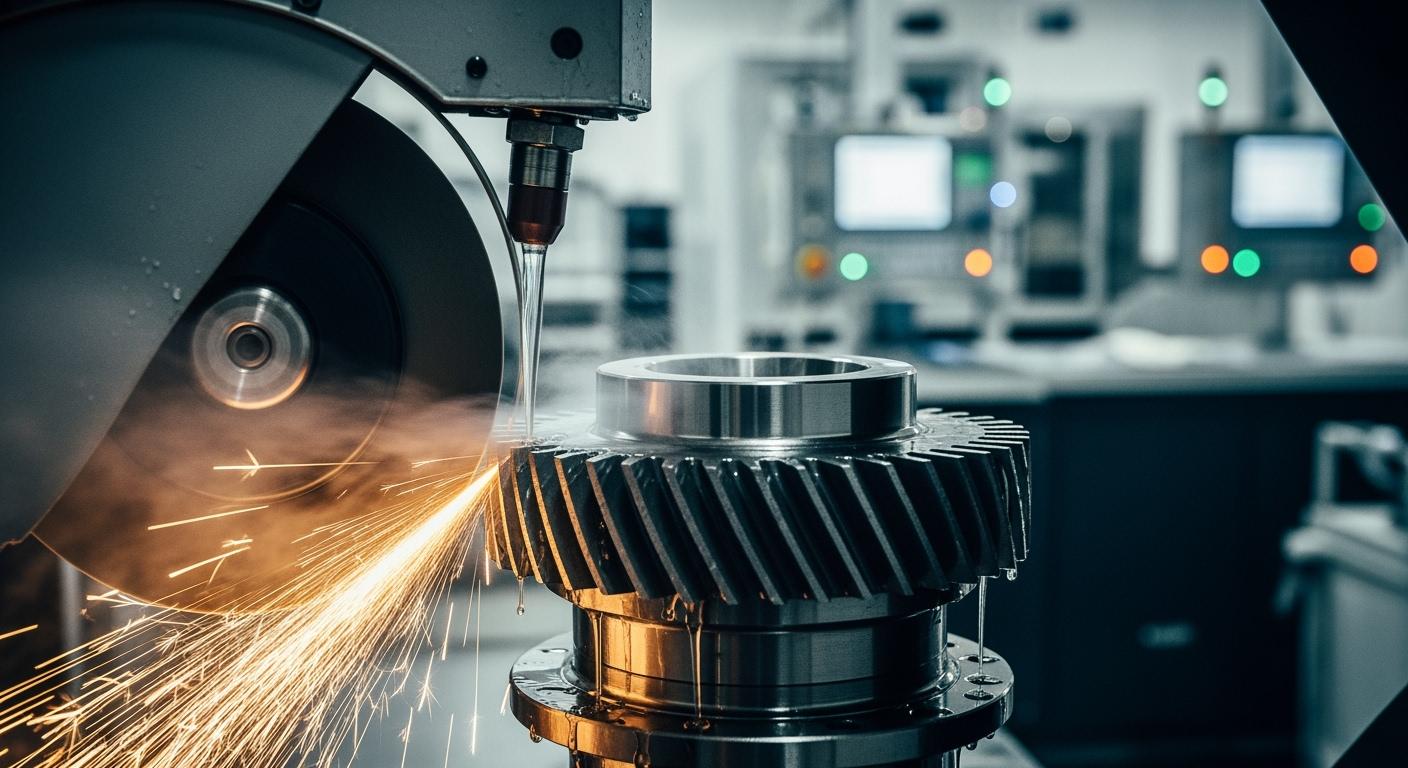
Specialized grinding fluid is non-negotiable for many high-stakes applications. In these critical application scenarios, using the right fluid is a fundamental requirement for success. It directly impacts production quality and efficiency in precision grinding operations.
Using the correct fluid prevents costly part defects, metallurgical burn, and production downtime. This makes the choice essential for high-quality grinding and overall quality control.
Achieving the required precision in grinding depends on this selection. High-quality precision grinding is simply not possible without the proper fluid for demanding applications.
Key Takeaways
- Specialized grinding fluid is very important for difficult grinding jobs. It helps make parts correctly and efficiently.
- Different materials need different fluids. Hard metals and sensitive metals require special fluids to prevent damage.
- High-precision parts, like medical implants, need special fluids. These fluids help make sure the parts are perfect.
- Advanced grinding methods, like creep-feed grinding, need special fluids. These fluids help manage heat and keep the process stable.
- The right fluid protects parts from rust and stains. This keeps the finished parts looking good and lasting longer.
Critical Application Scenarios for Grinding Materials
The material being ground is a primary factor in fluid selection. General-purpose fluids often fail when grinding advanced materials. These failures lead to poor surface finish, tool damage, and scrapped parts. Certain materials present unique challenges that only a specialized fluid can overcome. These are critical application scenarios for any precision grinding operation.
Grinding Superalloys and Hardened Steels
Superalloys like Inconel and hardened steels (above 55 HRC) are notoriously difficult to work with. Their low thermal conductivity traps intense heat at the grinding point. Their high strength resists the material removal process. A standard coolant cannot manage these conditions. These applications demand fluids with extreme pressure (EP) additives. These additives create a protective film that reduces friction. Superior cooling properties are also essential for the grinding process. The right fluid prevents metallurgical burn and extends wheel life during the grinding of these tough materials. This is one of the most demanding critical application scenarios.
Grinding Carbide and Ceramic Composites
Grinding carbide and ceramic composites introduces both chemical and physical challenges. A water-based coolant can cause chemical leaching in tungsten carbide. This weakens the material by removing the cobalt binder.
- Chelation: Additives in some fluids chemically bond with cobalt atoms, making them water-soluble.
- Impact: The loss of cobalt weakens the carbide tool’s structure.
- Bacterial Activity: Bacteria in a coolant can also metabolize cobalt, accelerating its release.
A specialized fluid for grinding carbide prevents this chemical attack. It also helps manage the fine swarf generated during grinding. Pairing the right fluid with high-performance abrasives, like Aimgrind‘s super hard abrasives, is key. This combination prevents wheel loading and ensures an efficient material removal and grinding process.
Grinding Sensitive Non-Ferrous Metals
Non-ferrous metals require careful fluid selection. Materials like aluminum and copper are highly susceptible to staining from general-purpose fluids. The wrong chemistry can leave permanent marks on the finished part. Titanium alloys present another challenge. Their low thermal conductivity and high chemical reactivity demand a specialized grinding fluid. An effective fluid for titanium grinding must provide exceptional cooling, prevent the wheel from loading, and ensure complete material removal of fine chips. These critical application scenarios show why a one-size-fits-all approach to grinding fluids fails in high-stakes applications. The grinding process for these materials requires a tailored solution for optimal material removal and surface integrity.
Applications of Precision Grinding Finishes
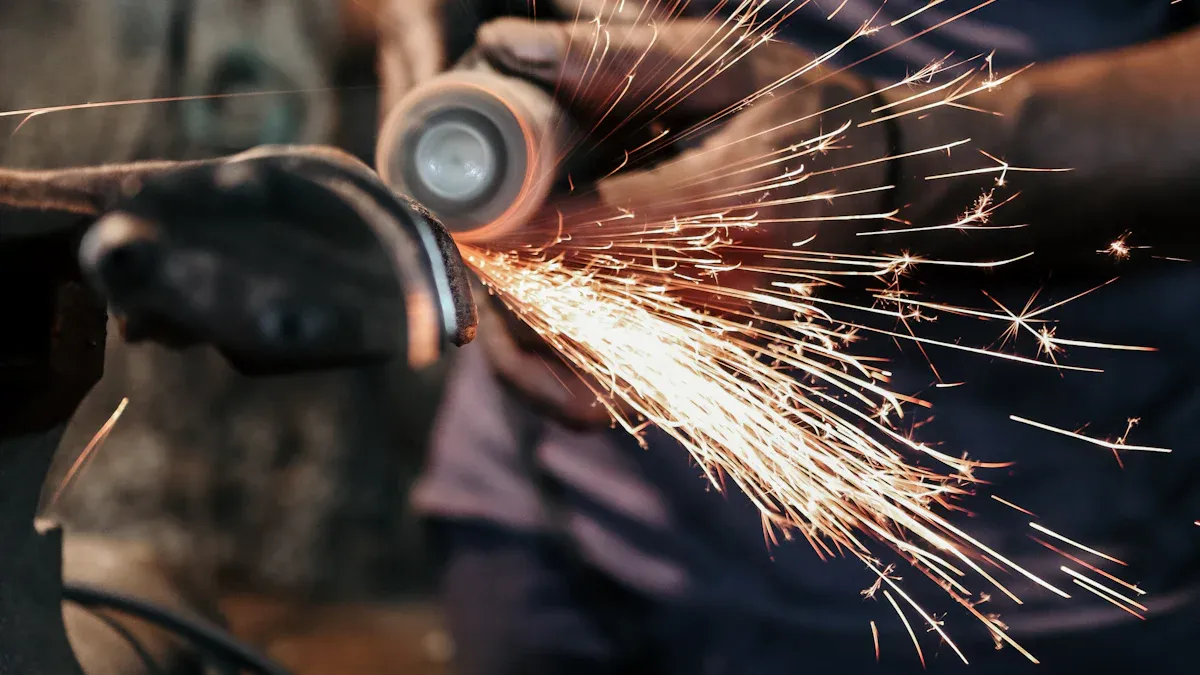
Certain applications of precision grinding demand flawless surface finishes and extremely tight tolerances. In these scenarios, the grinding fluid is not just a coolant; it is a critical component for achieving the required quality and precision. General-purpose fluids cannot deliver the performance needed for these high-stakes applications. The precision grinding process for high-quality parts relies on a fluid engineered for the task.
Medical and Aerospace Components
Medical implants and aerospace parts require absolute precision and reliability. The grinding process for these components must produce an excellent surface finish to ensure biocompatibility and prevent stress fractures. A specialized fluid is essential for this type of precision grinding. It provides superior lubricity and cooling during the grinding operation. This prevents microscopic flaws and ensures the final part meets stringent quality standards. Achieving these high-quality surface finishes is a core part of the applications of precision grinding in these fields. The precision machining of these parts leaves no room for error, making the right fluid choice critical for successful grinding.
Optics and Precision Molds
The manufacturing of optical components and precision molds pushes the limits of precision machining. The surface finish directly impacts performance. For example, high-precision optical molds can require a surface finish as smooth as Ra 1.5 nanometers. Even standard high-precision components often need a surface finish of 0.4 µm Ra.
Achieving such an excellent surface finish is impossible without a specialized grinding fluid. The fluid must efficiently remove microscopic swarf and dissipate heat to prevent any distortion. This level of precision ensures the final product has perfect clarity and form. The grinding process for these applications demands the highest quality fluid.
Metrology and Gage Components
Metrology tools, like gage blocks, are the foundation of quality control in manufacturing. Their accuracy is non-negotiable. The precision grinding of these components must achieve incredibly tight tolerances. Gage blocks have several tolerance grades that define their precision.
- Gage blocks are available in 5 tolerance grades: K, 00, 0, AS1, and AS2.
- These grades set strict tolerances for length, flatness, and parallelism.
- For instance, a grade zero block has an accuracy of +/- six millionths of an inch.
This extreme precision requires a stable grinding environment. A specialized fluid maintains a consistent temperature and provides constant lubrication. This stability allows the precision grinding process to hold the necessary tolerances, ensuring the final gage meets its required quality and precision. The grinding of these high-quality parts defines the standards for all other precision machining applications.
High-Performance Grinding Operations
High-performance grinding operations push equipment and fluids to their limits. These advanced methods demand specialized fluids to maintain control, precision, and efficiency. A standard fluid will fail under the extreme conditions of modern grinding, compromising the entire grinding process. Success in high-performance grinding depends on a fluid engineered for the specific operation.
Creep-Feed Grinding
Creep-feed grinding is a high-efficiency grinding process known for its substantial material removal. This method uses a slow feed rate and a large depth of cut. This prolonged contact between the wheel and workpiece generates immense heat. A specialized fluid with exceptional cooling and lubricity is mandatory for this type of precision grinding. It manages the thermal load to prevent part damage. The high material removal rates in creep-feed grinding are significant.
| Grinding Type | Specific Material Removal Rate Q’w [mm³/(mm/s)] |
|---|---|
| Creep-Feed Grinding | 8 to 80 |
A case study on grinding stainless steel found that superior lubrication reduced surface roughness by 42% compared to dry grinding. This shows how the right fluid directly improves part quality in a demanding grinding process. This precision grinding requires a robust coolant.
High-Speed Grinding
High-speed grinding operations, often exceeding 60 m/s, create a unique challenge. The grinding wheel’s rapid rotation forms an “air barrier” around it. This barrier deflects the coolant, preventing it from reaching the critical grinding zone. This issue can starve the grinding process of lubrication and cooling.
For high-speed grinding, a low-viscosity, low-foaming fluid is essential. Its properties allow it to penetrate the air barrier and effectively cool the point of contact. This ensures the precision grinding operation remains stable and achieves the desired high precision finish. The right fluid is key for successful high-speed material removal and precision grinding.
Automated Production Lines
Automated production lines, especially those using CNC grinding, require absolute process stability. These systems run with minimal human intervention, so every component must perform consistently. A specialized fluid is a cornerstone of reliable CNC grinding. It ensures consistent material removal and maintains high precision across thousands of parts.
Specialized fluids for CNC grinding resist contamination and maintain their properties over time. This stability is vital for a repeatable grinding process. The coolant system in a CNC machine relies on this consistency. Automation in CNC grinding demands a fluid that guarantees quality and precision without constant adjustments. This makes the fluid choice critical for any CNC operation focused on high precision grinding. The CNC relies on this for every grinding cycle. The CNC must deliver high precision. The CNC performs precision grinding. The CNC is essential for modern grinding.
Preventing Corrosion and Part Staining
A specialized fluid does more than assist the grinding process; it also protects the finished part. Corrosion and staining can ruin a component, wasting time and resources. The right fluid chemistry is a non-negotiable defense against these defects, especially after a precision grinding operation.
Protecting Sensitive Alloys
Certain alloys react poorly with general-purpose coolants. Sensitive metals like magnesium, bronze, and copper-bearing alloys can stain or corrode when exposed to the wrong fluid chemistry. Specialized fluids for these materials are formulated to be non-reactive. For example, some fluids for magnesium grinding are designed without sulfur, chlorine, or phosphorus to prevent chemical attack. Other formulations for brass and aluminum use balanced esters to provide lubricity without causing stains. Choosing the correct fluid is essential for successful grinding of these sensitive materials.
Ensuring Long-Term Rust Protection
Parts often sit in storage between manufacturing steps. A specialized fluid leaves behind a protective film that prevents rust during this time. The level of protection varies by fluid type.
- Soluble oil formulas can offer up to 6 months of protection.
- Synthetic water-based inhibitors provide around 90 days of indoor protection.
- Solvent or oil-based rust preventatives can protect parts for over a year.
Industry standards like ASTM B117 (the salt spray test) verify a fluid’s ability to prevent corrosion. This testing ensures the fluid provides reliable protection after the grinding is complete. This is a critical quality check for any grinding operation. The final grinding step must ensure part longevity.
Maintaining Bimetallic Compatibility
Assemblies often contain two or more different metals. When these dissimilar metals touch in the presence of an electrolyte, like a water-based grinding fluid, galvanic corrosion can occur. This electrochemical process causes one metal to corrode much faster than it would alone. A specialized grinding fluid contains inhibitors that prevent this reaction. This maintains the integrity of bimetallic components during and after the grinding process. Proper fluid selection is the only way to avoid this destructive corrosion in complex grinding scenarios.
Success in critical application scenarios depends on the right fluid. These applications involve difficult materials, high-quality precision goals, and advanced grinding operations. A specialized fluid is a foundational requirement for quality. It directly impacts the efficiency and profitability of any precision grinding operation. The grinding process must deliver consistent quality and precision.
Evaluate your grinding process. Consult with experts like the team at Aimgrind to match the right fluid to your specific grinding applications. High-quality precision grinding requires this step. Start your conversation by asking these key questions:
- What metals are involved in the machining process and machine tool?
- What is the quality of the water being used for the grinding fluid?
- Are there any specific chemical restrictions for the plant?
FAQ
Here are answers to common questions about selecting the right fluid for your grinding operations. The correct choice is essential for any precision grinding task. It ensures you achieve the required precision and part quality. Successful grinding depends on this critical decision. This is true for every grinding application, from simple jobs to complex precision grinding. The grinding process demands the right support.
Why is fluid choice so important for precision grinding?
The right fluid is vital for precision grinding. It cools the workpiece and reduces friction. This control helps achieve a superior surface finish and meet tight tolerances. Proper fluid selection ensures the grinding process delivers consistent precision and holds tight tolerances.
Can a general-purpose fluid handle all grinding jobs?
No, a general-purpose fluid often fails in demanding grinding jobs. Specialized grinding requires fluids designed for specific materials. Using the wrong fluid compromises precision and can damage parts. This affects the final surface finish and overall tolerances.
How does a fluid affect the surface finish in precision grinding?
A fluid directly impacts the surface finish. It provides lubricity for a smooth grinding action. It also flushes away particles that could scratch the part. This helps the precision grinding process create a flawless surface finish and maintain required tolerances for high precision.
What happens if the wrong coolant is used for grinding hard materials?
Using the wrong coolant for grinding hard materials leads to poor results. It causes overheating and rapid wheel wear. A specialized fluid is necessary for the precision grinding of these materials. It manages heat to achieve the needed precision and tight tolerances.
How do I know which fluid is right for my grinding application?
Choosing the right fluid depends on your material and precision goals. For successful precision grinding, consult an expert. They can match a fluid to your specific grinding needs. This ensures you meet all tolerances and achieve a great surface finish with high precision.
