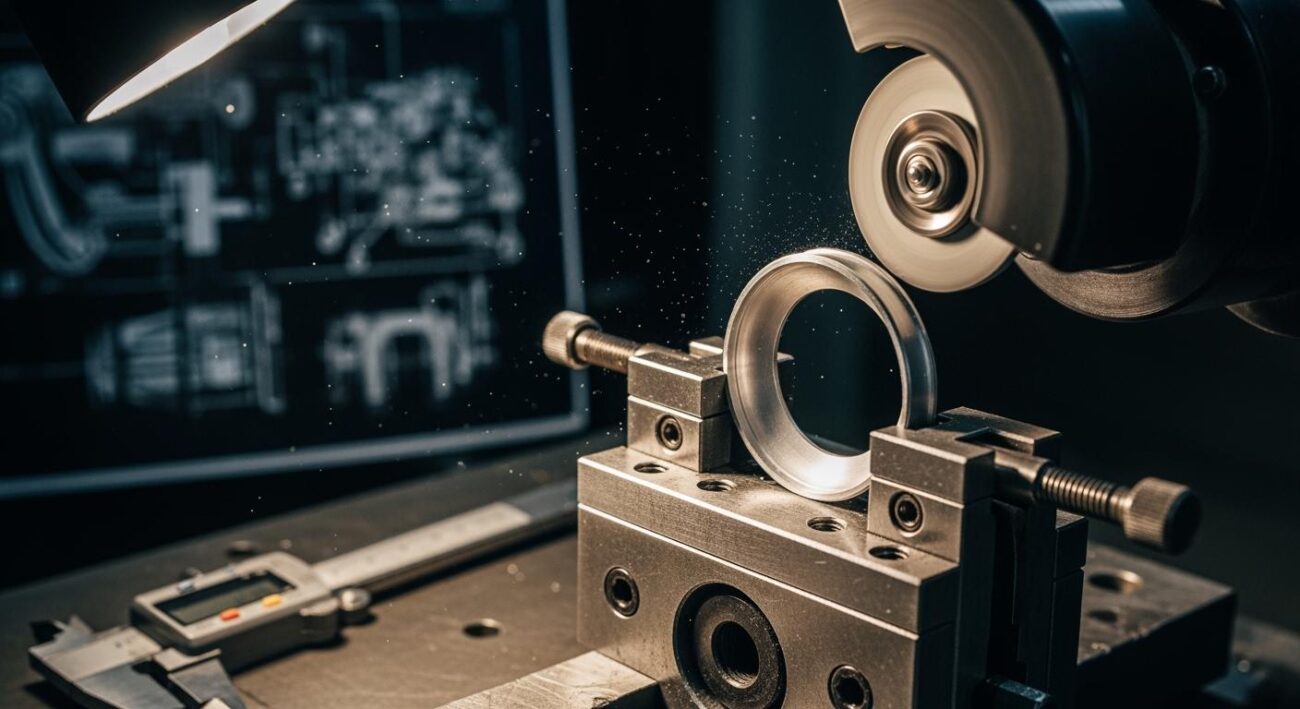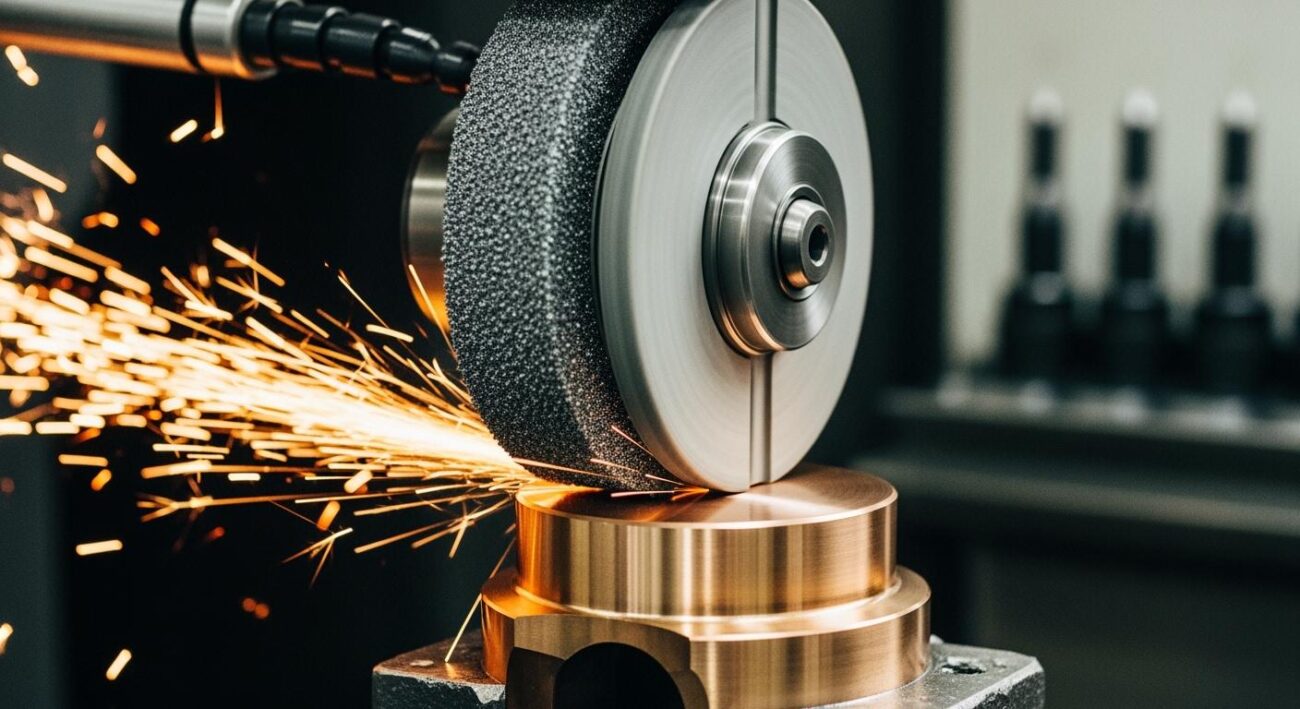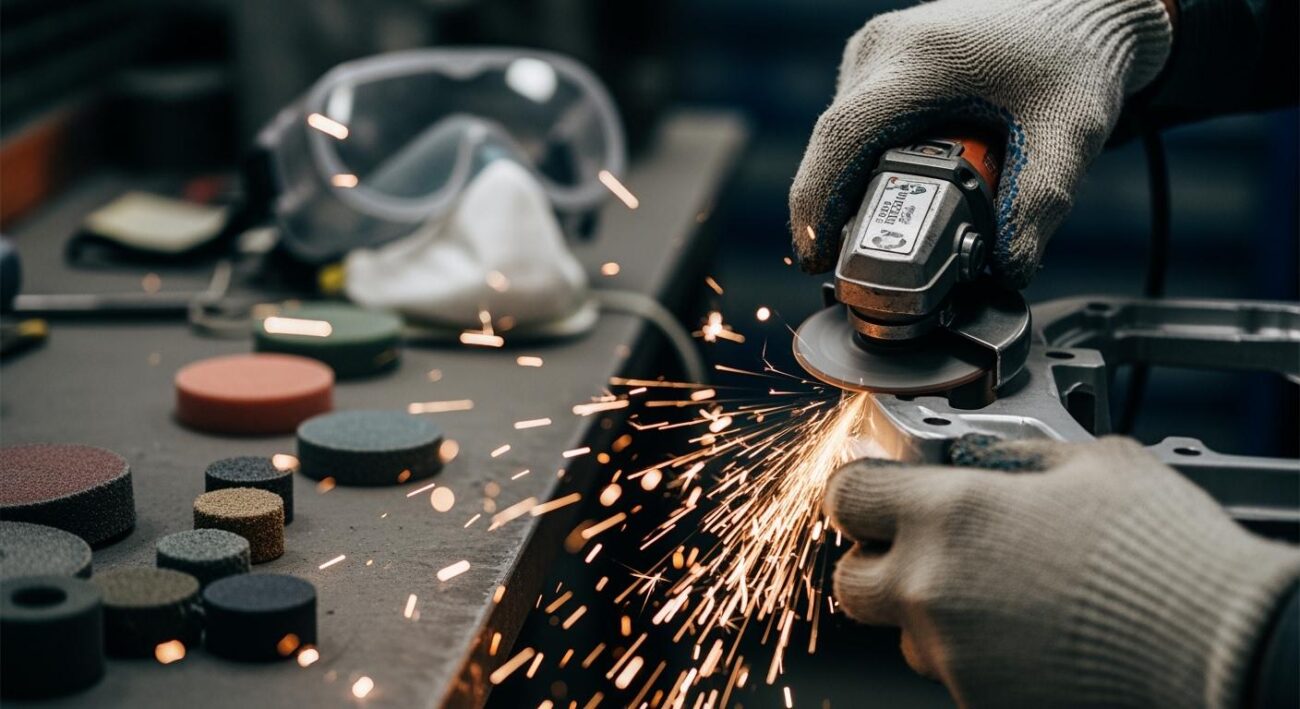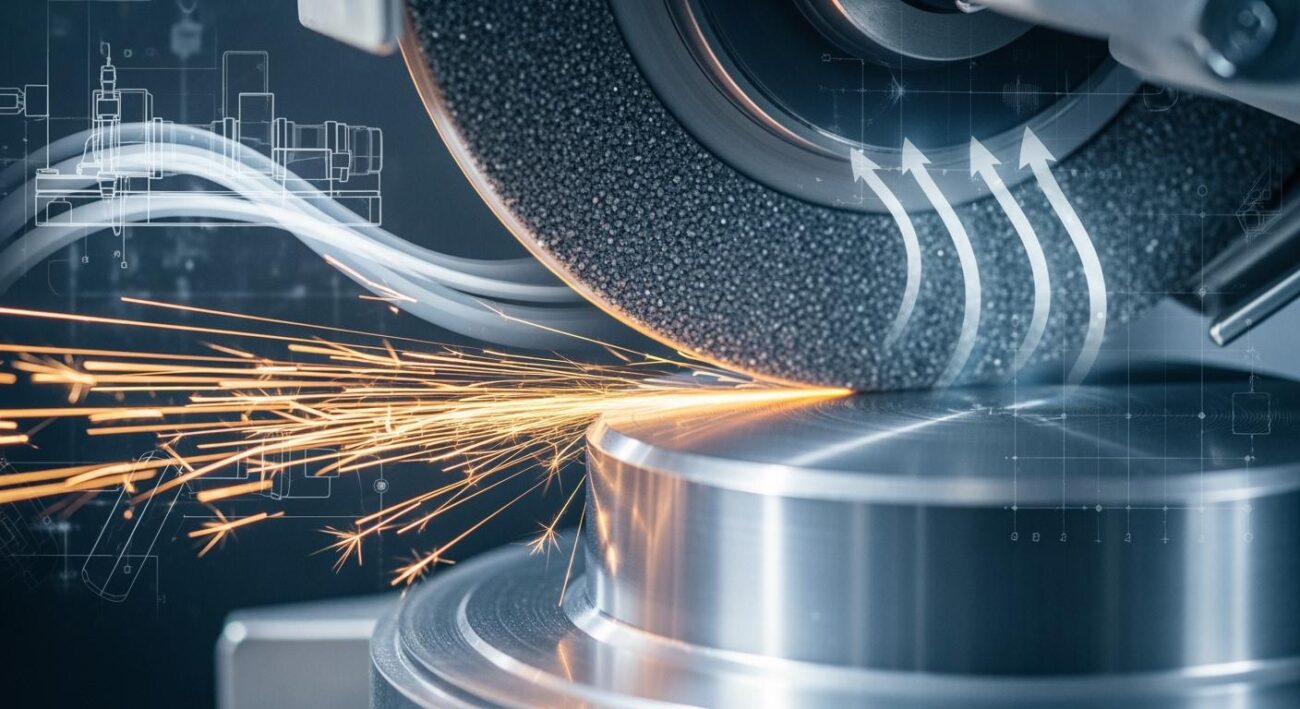
You often face tough challenges in Titanium Alloy Grinding. Surface defects, rapid tool wear, and overheating make it hard to get a smooth finish. Data shows that the surface roughness changes with different grit sizes. For example, Ra values range from 0.31–0.44 μm with P400 grit and 0.21–0.38 μm with P600 grit. The grinding angle also affects the result, with the lowest roughness at 45°. Aimgrind uses advanced diamond grinding wheels to help you solve these problems and improve your results.
Key Takeaways
- Surface defects like scratches and pits can lower the quality of titanium parts. Regular cleaning and proper grinding techniques help minimize these issues.
- Tool wear is a common problem in titanium grinding. Selecting the right grinding wheel and maintaining it can extend its life and improve efficiency.
- Overheating during grinding can damage titanium alloys. Use effective coolant strategies and adjust grinding parameters to keep temperatures in check.
- Achieving a quality finish requires fine-tuning grinding parameters and using the right tools. Aimgrind diamond grinding wheels can help you achieve smoother surfaces.
- Maintaining dimensional accuracy is crucial. Choose appropriate grinding wheels and monitor your process to avoid errors and ensure high-quality results.
Common Problems in Titanium Alloy Grinding
Surface Defects
You may notice surface defects when you grind titanium alloys. Scratches, pits, and grooves often appear. These defects make the surface rough and uneven. Sometimes, the color changes because of heat. Surface defects can lower the quality of your finished part.
Tool Wear
Grinding titanium can cause rapid tool wear. You see your grinding wheel lose its sharpness quickly. The wheel may become glazed or clogged. This makes grinding harder and less effective. Tool wear leads to more frequent wheel changes and higher costs.
Overheating
Overheating happens often during titanium grinding. You might see sparks or feel the part getting hot. Overheating can change the microstructure of titanium. It reduces plasticity and thermal stability. Severe overheating forms Weiss’ tissue, which lowers quality. Defects like voids and uneven organization can appear.
Here is a table showing the consequences of overheating in titanium grinding:
| Overheating Consequence | Description |
|---|---|
| Microstructural Changes | Significant changes in the microstructure of titanium alloys, leading to a reduction in mechanical properties such as plasticity and thermal stability. |
| Weiss’ Tissue Formation | Severe overheating can transform the microstructure into Weiss’ tissue, which is poorer in quality. |
| Defects | Results in uneven organization and voids, detrimental to the final product quality. |
Poor Finish
You may see a poor finish after grinding titanium. The surface can look dull or rough. Sometimes, the finish does not meet your standards. A poor finish affects how the part performs and looks. It can also make further processing difficult.
Dimensional Errors
Grinding titanium alloys can cause dimensional errors. You might find that parts do not match the required size. These errors happen because of wheel wear, machine vibration, or incorrect settings. Dimensional errors lead to wasted material and extra work.
Causes of Grinding Issues
Titanium Alloy Properties
You face unique challenges when grinding titanium alloy. The high strength and chemical reactivity of titanium make it difficult to achieve a smooth surface. Titanium reacts with oxygen and nitrogen, which leads to surface contamination and oxide scale formation. This creates a brittle layer and reduces plasticity. Titanium has low thermal conductivity, so heat builds up quickly during grinding. The alloy often sticks to grinding wheels, causing damage and lowering efficiency. Grinding temperatures can reach nearly 1500 °C, which results in deformation and burns.
| Factor | Description |
|---|---|
| Chemical Composition | TC4 titanium alloy reacts with oxygen and nitrogen, leading to oxide scale formation and a brittle layer that reduces plasticity. |
| Thermal Conductivity | Titanium alloy has low thermal conductivity, significantly affecting surface quality during grinding. |
| Grinding Wheel Bonding | Titanium alloy adheres to grinding wheels, causing damage and affecting grinding efficiency. |
| Grinding Temperature | High friction during grinding can raise temperatures to nearly 1500 °C, leading to deformation and burns. |
Grinding Parameters
You must pay attention to grinding parameters. The linear speed, depth, and force during grinding affect surface quality and tool wear. Studies show that higher grinding speed and deeper cuts increase roughness and vibration. Lower roughness improves fatigue life and reduces surface contamination. Adjusting grinding parameters helps you control noise, friction, and wear.
| Study | Findings |
|---|---|
| Zhu et al. | Investigated the effect of grinding force on surface roughness, highlighting the impact of grinding linear speed and depth. |
| Zhao et al. | Found that surface roughness significantly affects contact noise, vibration, friction, and wear. |
| Tan et al. | Demonstrated that reducing grinding roughness from Ra 0.43 to 0.15 μm greatly influences fatigue life compared to residual compressive stress reduction. |
| Sun et al. | Showed that linear speed of grinding has the most significant effect on surface roughness, with increased radial feed rate leading to higher roughness. |
| Additional Research | Identified a threshold value of surface roughness (0.2 μm) that significantly alters material surface morphology. |
Coolant and Heat Control
You need proper coolant and heat control to prevent overheating and surface contamination. Titanium’s poor thermal conductivity causes heat to concentrate at the cutting edge. Flood cooling reduces surface roughness and increases tool life. Minimum Quantity Lubrication (MQL) improves finish and reduces wear. Cryogenic cooling manages temperature very effectively and enhances surface integrity.
| Cooling Method | Effect on Surface Integrity | Impact on Tool Wear | Temperature Control |
|---|---|---|---|
| Flood Cooling | Reduces surface roughness | Increases tool life | Maintains lower temperatures |
| MQL | Improves surface finish | Reduces tool wear | Moderate temperature control |
| Cryogenic Cooling | Enhances surface integrity | Extends tool life | Very effective temperature management |
Tip: Constant coolant supply and correct grinding techniques help you avoid work hardening and part distortion.
Wheel Selection
You must select the right grinding wheel to minimize tool wear and surface contamination. Pressure and machining speed are essential for abrasive effectiveness. Swarf removal prevents overheating and micro-injuries. Monitoring wheel wear helps you optimize dressing intervals and maintain efficiency. Normal load and temperature have a big impact on diamond cluster wear during grinding.
| Process Parameters | Effects |
|---|---|
| Pressure and machining speed | Essential for maintaining abrasive effectiveness and preventing tool wear. |
| Swarf removal | Critical to avoid overheating and micro-injuries to the tool. |
| Factors | Effects on Wear |
|---|---|
| Normal load and temperature | Significant impact on diamond cluster wear during grinding. |
| Friction speed | Minor impact on wear compared to load and temperature. |
| Key Points | Implications |
|---|---|
| Accumulation of processed material can obstruct cutting edges. | This can lead to reduced machining effectiveness and surface quality. |
| Increased friction from swarf can cause premature tool wear. | Proper wheel selection and process parameters are essential to maintain tool integrity. |
Machine Setup
You must set up your machine correctly to achieve dimensional accuracy and a quality finish. Adjust grinding speed based on titanium alloy hardness to prevent overheating. Lower feed rates help you get precise finishing and control material removal. Moderate depth of cut gives stability and controls removal per pass. Fine-tuning feed rates leads to a smoother finish. Proper workpiece alignment and tool settings are crucial for precision and avoiding surface contamination.
| Parameter | Influence on Grinding Outcomes |
|---|---|
| Grinding Speed | Adjust based on titanium alloy hardness to prevent overheating. |
| Feed Rate | Lower feed for precise finishing, affecting material removal rate. |
| Depth of Cut | Moderate depth for stability, controlling material removal per pass. |
| Surface Finish | Fine-tuning feed rates can lead to a smoother finish. |
| Dimensional Inaccuracies | Proper workpiece alignment and tool settings are crucial for precision. |
Grinding Solutions with Aimgrind Diamond Grinding Wheels
Optimizing Parameters
You can improve titanium alloy grinding by adjusting key parameters. Grinding speed controls how fast you remove material and affects the finish. Feed rate changes accuracy and productivity. Grinding depth gives you control over the process. Coolant use helps reduce heat and keeps the wheel and workpiece in good condition. Aimgrind diamond grinding wheels let you fine-tune these settings for better results.
| Parameter | Description |
|---|---|
| Grinding Speed | Determines material removal rate and surface finish. Higher speeds can cause heat and vibration. |
| Feed Rate | Affects accuracy. Slower rates allow for precision. Faster rates increase productivity but may reduce precision. |
| Grinding Depth | Smaller depths allow for better control. Deeper depths are faster but need better machine control. |
| Coolant Use | Reduces heat, prolongs lifespan of workpiece and wheel, and supports grinding accuracy and surface finish. |
You can use Aimgrind wheels to match these parameters to your titanium alloy needs. Adjusting these settings helps you avoid surface contamination and dimensional errors. You get more efficiency and a smoother finish.
Coolant Strategies
You need the right coolant strategies to prevent overheating and surface contamination during titanium alloy grinding. A generous supply of high-quality coolant directed at the grinding zone lowers temperatures and flushes away chips. Specialized chemical coolants create a protective barrier on the titanium surface. High-pressure coolant delivery systems are crucial for effective machining.
- Use high-pressure coolant delivery systems for titanium grinding.
- Set pressure at 1000 PSI minimum for general operations.
- Increase pressure to 1500-2000 PSI for optimal performance.
- Use up to 3000 PSI for demanding applications.
- Choose semi-synthetic coolant for general purposes.
- Use oil-based coolant for heavy cutting.
- Select high-performance synthetic coolant for critical operations.
You can prevent overheating and reduce contamination by following these strategies. Coolant keeps the grinding wheel sharp and protects the titanium alloy from damage.
Tip: Always direct coolant at the grinding zone to avoid surface contamination and improve machining efficiency.
Choosing Aimgrind Diamond Grinding Wheels
You must select the right Aimgrind diamond grinding wheels for titanium alloy applications. The abrasive type, bond type, and operational considerations matter. Aimgrind offers customized wheels to match your titanium grinding needs.
| Criteria | Details |
|---|---|
| Abrasive Type | Use Cubic Boron Nitride (CBN) or silicon carbide (coated) for titanium. |
| Bond Type | Resinoid or metal bond is recommended. |
| Operational Considerations | Low thermal conductivity needs cool-cutting geometry and frequent dressing. Avoid aluminum oxide due to chemical reactions at high temperatures. |
Aimgrind diamond grinding wheels resist wear and deliver high strength for titanium alloy grinding. You get less surface contamination and a better finish. Aimgrind’s expertise helps you choose the best wheel for your machining needs.
Wheel Maintenance and Cleaning
You must maintain and clean your diamond grinding wheels regularly. Maintenance keeps the wheels sharp and accurate. Cleaning removes debris that causes friction, overheating, and wear. Dressing shapes the edge and keeps the cutting edge right.
- Regular maintenance ensures precision and sharp edges.
- Cleaning prevents debris buildup and reduces friction.
- Proper dressing maintains the wheel’s shape and performance.
- Neglecting maintenance lowers tool life and increases costs.
- Safe grinding depends on clean and well-maintained wheels.
You protect your titanium alloy parts from contamination and get consistent results. Aimgrind recommends routine maintenance for all grinding wheels to maximize efficiency and machining efficiency.
Achieving Quality Finish
You can achieve a quality finish on titanium alloy parts by using Aimgrind diamond grinding wheels and proper grinding solutions. Adjust grinding parameters, use the right coolant, and maintain your wheels. Aimgrind wheels help you polish titanium surfaces and reduce surface contamination.
- Use fine grit wheels for polishing titanium.
- Adjust feed rate and grinding depth for smooth surfaces.
- Apply coolant to prevent overheating and contamination.
- Clean wheels often to avoid defects and wear.
- Align workpieces and tools for accurate results.
You get a bright, polished finish and avoid dimensional errors. Aimgrind’s grinding solutions improve efficiency and help you meet high standards in titanium machining.
Note: Aimgrind’s diamond grinding wheels support advanced polishing techniques and deliver reliable results for titanium alloy applications.
Troubleshooting Guide for Titanium Alloy Grinding
Surface Defect Troubleshooting
You can solve surface defects in titanium alloy by following a clear process. Start with ultrasonic and alkaline cleaning to remove contamination. Use ultrasonic cleaning at 50-60°C for 10-15 minutes. Follow with alkaline cleaning at pH 10-12 and 60-70°C for 5-10 minutes. Inspect the surface visually and measure the contact angle to check for contamination. For uneven finishes, try mechanical polishing with 120-400 grit abrasives at 1000-1500 RPM and 0.1-0.2 MPa pressure. Use a roughness tester to confirm Ra values between 0.4-0.8 µm.
| Issue | Process | Key Parameters | Inspection Method |
|---|---|---|---|
| Surface Contamination | Ultrasonic + Alkaline Cleaning | Ultrasonic: 50-60°C, 10-15 min; Alkaline: pH 10-12, 60-70°C, 5-10 min | Visual inspection, contact angle measurement |
| Uneven Surface Finish | Mechanical Polishing | Abrasives: 120-400 grit, Speed: 1000-1500 RPM, Pressure: 0.1-0.2 MPa | Roughness tester (Ra 0.4-0.8 µm) |
Tip: Optimize coolant flow and use high-quality grinding wheels to reduce bonding and heat buildup.
Overheating Solutions
You can prevent overheating during titanium alloy grinding by using efficient heat dissipation techniques. Regulate coolant flow to keep temperatures safe. Adjust grinding parameters to avoid thermal damage. Some advanced machines use an internal impeller that rotates axially inside the grinding tool. This design keeps grinding temperatures below 91°C and improves machining efficiency. Always direct coolant at the grinding zone to protect the titanium surface from contamination.
Tool Wear Fixes
You can reduce tool wear by selecting the right grinding wheel material, such as green silicon carbide TL. Choose a slightly lower wheel hardness like ZR1 and a coarse wheel size around 60. Keep the grinding wheel speed between 10 and 20 m/s. Use a smaller feed and ensure full cooling with emulsion. These steps help you extend tool life and maintain high strength in your titanium alloy parts.
Finish Improvement Steps
You can improve the finish on titanium alloy by following these steps:
- Adjust pressure for even contact during polishing.
- Change polishing speed to get the best finish.
- Select the right abrasive type for your titanium sample preparation.
- Review grit progression for smooth transitions.
- Check tool condition to avoid scratches.
- Use proper lubrication to reduce friction and heat.
- Keep pressure consistent for uniform results.
- Monitor process parameters closely.
- Verify the condition of your titanium to avoid contamination.
Note: Good polishing practices help you achieve high quality and reduce contamination in sectioning titanium samples.
Dimensional Accuracy Tips
You can maintain dimensional accuracy by choosing the right grinding wheel, such as cubic boron nitride. Keep a steady coolant flow and use low-pressure grinding passes to avoid overheating and surface damage. Take shallow depth increments to prevent micro-cracks. These steps help you protect high-performance components and improve efficiency in your machining process.
Troubleshooting common issues in titanium alloy grinding helps you boost efficiency, reduce contamination, and achieve better results.
You can solve titanium grinding challenges by using the right tools and process control. Aimgrind diamond grinding wheels help you achieve superior surface finish, greater precision, and extended wheel life. Regular dressing increases material removal efficiency by up to 25% and reduces heat generation by 30%. MQL cooling lowers tool wear and improves surface quality. When you apply these solutions, you reduce downtime and maintain consistent quality. Keep evaluating your process and consult Aimgrind for customized support.
| Benefit | Impact |
|---|---|
| Superior Finish | Greater precision and consistency |
| Extended Wheel Life | Up to 50% longer lifespan |
| Improved Efficiency | Reduced cutting force and tool wear |
FAQ
What makes titanium alloy grinding difficult?
Titanium alloys have high strength and low thermal conductivity. You often see heat build up quickly. The material can stick to the wheel. This causes tool wear and surface defects.
How do Aimgrind diamond grinding wheels help with titanium?
Aimgrind diamond grinding wheels give you high cutting efficiency and long life. You get a smoother finish and less tool wear. These wheels handle tough materials like titanium with ease.
What coolant should you use for titanium grinding?
You should use high-pressure, high-quality coolant. Synthetic or semi-synthetic coolants work best. Always direct coolant at the grinding zone to keep temperatures low and surfaces clean.
How often should you clean and dress your grinding wheel?
You should clean and dress your wheel regularly. This keeps the wheel sharp and prevents debris buildup. Regular maintenance helps you achieve better results and extends wheel life.
Contact Us
For More Grinding Solution or Customized Abrasive Tools