

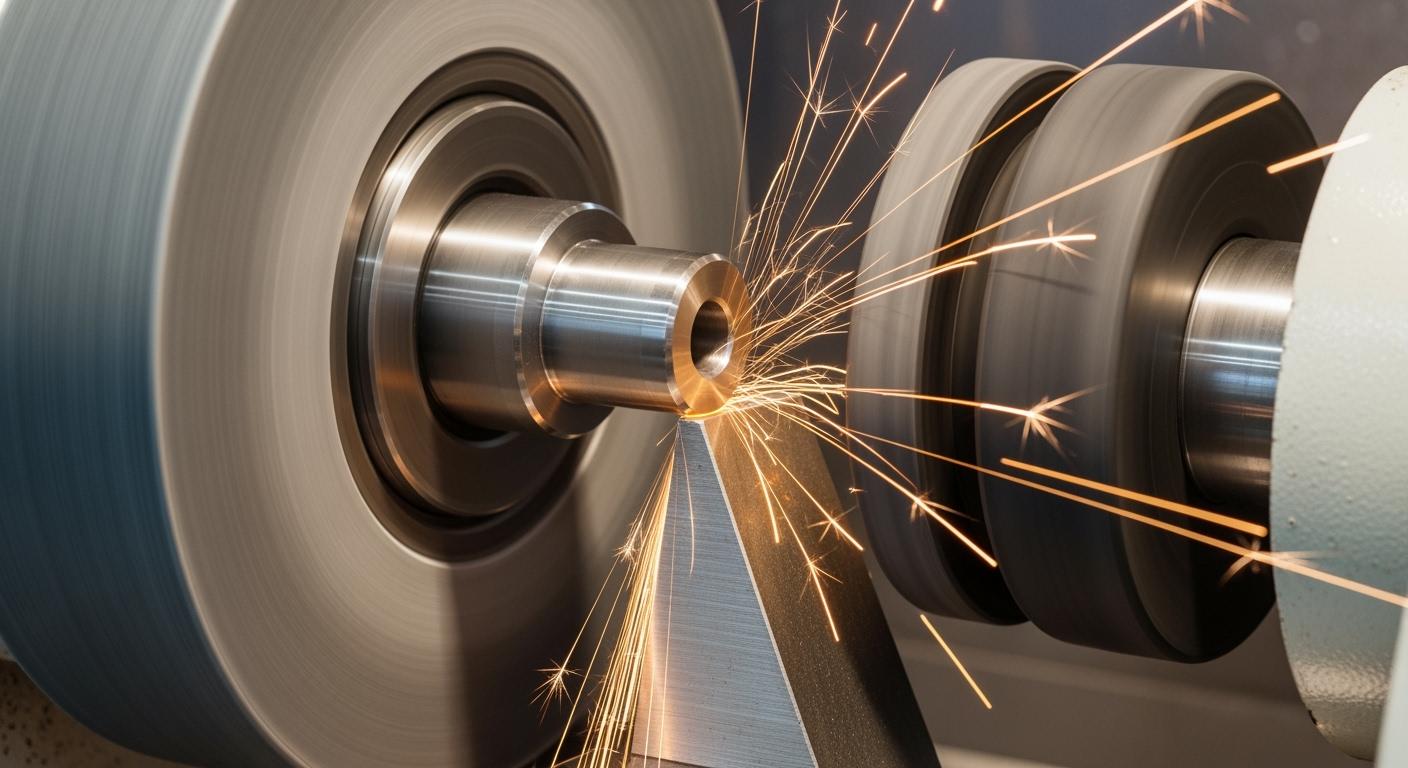
In the precision world of centerless grinding, two components dictate success. The work rest blade provides stable support for the workpiece. The regulating wheel gives dynamic control. The blade is the static foundation in work rest assemblies. The wheel governs the workpiece’s speed and feed. This relationship is key to achieving high precision. The demand for this process is growing, as shown by market projections.
| Attribute | Value |
|---|---|
| Market Size (2024) | USD 6,915 million |
| Projected Market Size (2032) | USD 15,370.58 million |
| Compound Annual Growth Rate (CAGR) | 10.5% |
| Forecast Period | 2024-2032 |
Poor support is a major issue. Studies show that approximately 40% of manufacturing defects in smaller operations come from a worn work rest blade. This highlights its critical role in the final quality.
Key Takeaways
- The work rest blade holds the part steady. It is like a strong base for the grinding process.
- The regulating wheel controls how the part spins and moves. It makes sure the part grinds evenly.
- The height and angle of the blade are very important. They help make the part perfectly round.
- The blade and wheel work together. They form a three-point system that makes parts rounder.
- Keeping the wheel clean is important. A clean wheel helps the machine work its best.
The Role of Work Rest Assemblies
Work rest assemblies are the unsung heroes of centerless grinding. They provide the rigid foundation necessary for achieving high precision. The work rest blade is the core component, giving the workpiece a fixed, stable base during the grinding operation. This prevents the part from dropping between the grinding and regulating wheels.
Ensuring Stable Workpiece Support
The primary job of work rest assemblies is to hold the workpiece securely. A standard work rest assembly includes several key parts working together.
- Work rest: This part supports the blade and mounts to the machine.
- Blade: It directly supports the workpiece.
- Arms, Fingers, and Guides: These components help position and guide the workpiece as it moves through the grinding zone.
Proper support from these assemblies is the first step toward a quality finish. A stable workpiece allows for consistent material removal.
Setting Grinding Geometry with Blade Height
The height of the work rest blade is critical for geometric accuracy. Operators typically set the blade so the workpiece sits slightly above the centerline of the two wheels. This setup creates the rounding action essential to centerless grinding. Adjusting this height is key to preventing defects. If the part’s center is too high, it can cause lobing, creating an uneven, multi-sided shape. Lowering the center can fix this, but setting it too low causes other problems. Precise adjustment is necessary for optimal roundness.
The Impact of Blade Angle on Roundness
The top angle of the blade also has a major impact on workpiece roundness. Research has shown that the blade angle is a primary factor influencing final precision. Oscillations of the workpiece center, often caused by an incorrect blade angle, lead to uneven grinding and increased waviness. Early studies identified the blade’s top angle as a crucial parameter for controlling out-of-roundness errors. Achieving tight dimensional tolerances depends on getting this angle right.
⚙️ Pro Tip: The material and condition of your centerless blades directly affect the final surface finish. A worn or chipped blade can transfer imperfections directly onto the workpiece, ruining an otherwise perfect grind.
Material and Design of Centerless Blades
The material of the centerless blades is just as important as their geometry. Blades are often tipped with carbide, cast iron, or other hard materials to resist wear and prevent marking the workpiece. The design of the work rest must be robust to avoid any vibration. High-quality work rest assemblies ensure that the only forces acting on the part are from the grinding process itself. This focus on stability and material quality is fundamental to modern manufacturing.
The Regulating Wheel’s Function
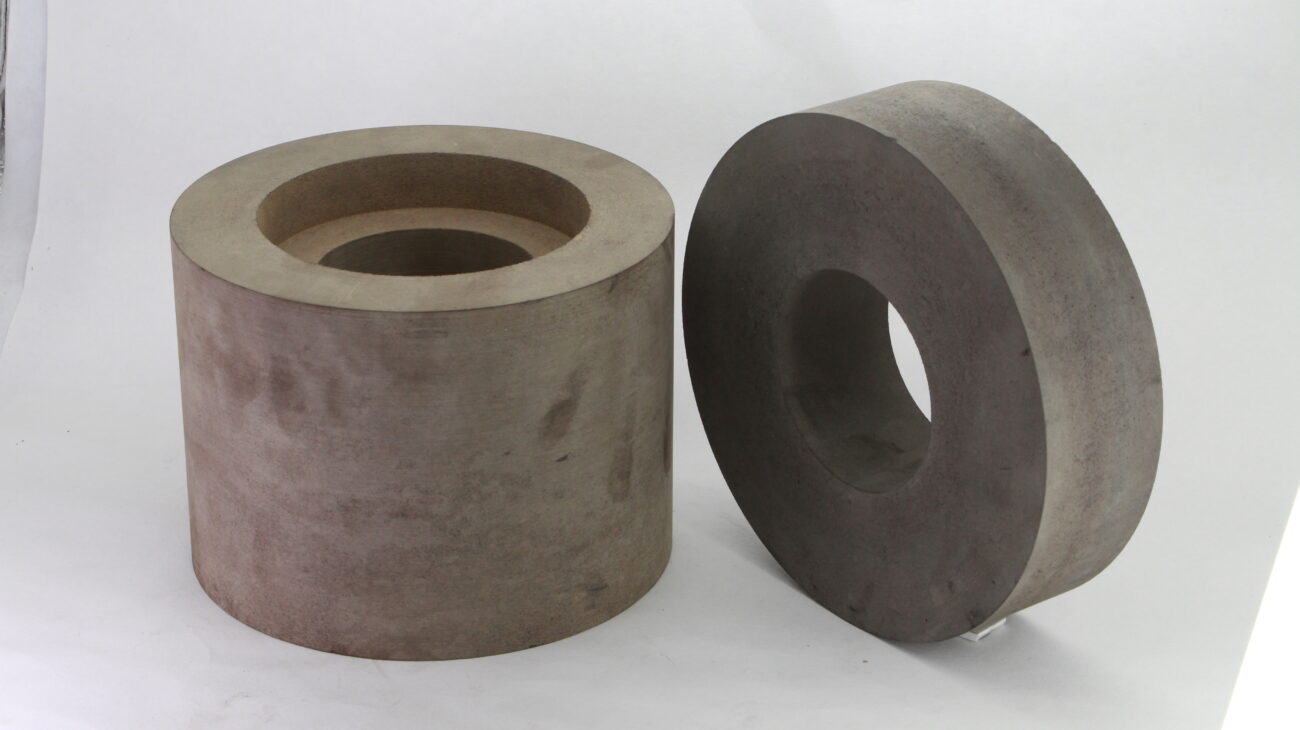
If the work rest blade is the static foundation, the regulating wheel is the dynamic director of the centerless grinding process. It performs several critical functions that control the workpiece and ensure a high-quality outcome. This wheel uses friction to manage the part’s movement with exceptional precision.
Controlling Workpiece Rotational Speed
The regulating wheel dictates how fast the workpiece spins. The surface speed of the wheel is nearly identical to the rotational speed of the workpiece. This control is essential for managing the material removal rate and achieving the desired geometry.
- For small-diameter, hard steel parts, surface speeds are often between 15–40 m/min.
- For larger or softer materials, speeds are typically lower, around 8–20 m/min.
Interestingly, small adjustments to this speed do not significantly impact the final surface finish. The primary goal is to maintain a consistent rotation for a stable grinding action.
Driving the Axial Feed Rate
In the common thru-feed method, the regulating wheel also controls how fast the workpiece moves axially through the machine. Operators achieve this by tilting the wheel’s axis at a slight angle, usually between 0.5° and 1.5°. This small tilt pushes the workpiece forward.
⚠️ Caution: An incorrect tilt angle can cause problems. Too much tilt may create spiral marks or a tapered part. Too little tilt can lead to chatter, burn marks, and an inconsistent feed rate.
Applying Consistent Grinding Pressure
This wheel applies steady pressure, pressing the workpiece against the grinding wheel. This force holds the part securely in the three-point contact system. Maintaining the right amount of pressure is vital for precision.
- Excessive Pressure: Can cause the grinding wheel to wear quickly or become loaded with material.
- Insufficient Pressure: Leads to longer grinding times and extra heat, which can damage the workpiece.
Modern machines often use sensors to monitor these forces in real-time, allowing for automatic adjustments that guarantee consistency.
Dressing the Regulating Wheel Face
Over time, the wheel’s surface can become glazed or loaded with material. A glazed wheel can slip, causing inconsistent rotation and poor surface finish. To prevent this, the wheel must be “dressed” or resurfaced. In high-volume production, dressing might be needed daily or even multiple times per shift. Regular dressing is a non-negotiable step for maintaining process control and achieving repeatable precision.
Synergy in Centerless Grinding
The individual roles of the work rest blade and regulating wheel are important. However, true precision in centerless grinding comes from their synergy. These components, along with the grinding wheel, work together in a finely tuned system. This interaction is what transforms a rough part into a perfectly round and finished product. Understanding this synergy is key to mastering the process.
The Three-Point Contact System
Centerless grinding relies on a three-point contact system for stability. The workpiece is held securely between three distinct points:
- The work rest blade provides support from below.
- The regulating wheel applies constant pressure and controls rotation.
- The abrasive grinding wheel performs the material removal.
This arrangement creates a stable geometric cradle. It confines the part without the need for centers or chucks. The stability of this system is the foundation for all subsequent grinding precision. High-quality work rest assemblies are essential for maintaining this rigid setup.
How Interaction Generates Roundness
The three-point system has a unique ability to correct out-of-roundness. This rounding action is a geometric process that happens with each rotation of the workpiece.
- A unique circle can be imagined through the three contact points at any moment. The center and radius of this circle change as the part rotates.
- An instantaneous radius that is above average (like the peak of a lobe) creates a larger grinding force. This increases the depth of cut.
- If this deeper cut occurs while grinding the low spot (trough) of a lobe, the trough gets deeper. This action actually causes the lobe to grow.
- Conversely, if the instantaneous radius is below average during the grinding of a trough, the lobe will decay. The high spots are ground down more, improving roundness.
Proper setup ensures this rounding action dominates, progressively refining the part’s geometry toward a perfect circle.
The Setup for Optimal Accuracy
Achieving optimal accuracy requires more than just understanding the theory. It demands a perfect setup where every component works in harmony. Modern precision machining uses advanced tools to predict and optimize outcomes. Computer simulations can model the entire process. These models analyze factors like lobing, chatter, and stability to find the best cycle length for minimum roundness error. Studies show that the best results occur when initial errors are suppressed before lobing patterns can fully develop.
💡 Did You Know? The effectiveness of the entire system depends heavily on the quality of the grinding wheel. For the demanding world of high-precision manufacturing, especially with hard materials like ceramics or composites, a standard wheel is not enough. Specialized wheels, such as Aimgrind’s diamond grinding wheels, are essential. They provide the durability and cutting efficiency needed to achieve superior precision and finish.
Interplay Between Blade and Wheel Settings
The final quality of a part is a direct result of the interplay between the blade and wheel settings. A change in one parameter requires adjustments in others. For example, raising the work rest blade height might require a change in the regulating wheel’s speed to maintain stability. The blade’s top angle must complement the wheel speeds and pressures to generate the desired rounding effect. This delicate balance between static support and dynamic control is what defines expert-level centerless grinding. Mastering this interplay unlocks the full potential of the machine performance.
In centerless grinding, the work rest blade is the static anchor, while the regulating wheel provides dynamic control. Neither component can deliver precision alone; their synergy is everything. Mastering the setup of work rest assemblies is fundamental.
Experts recommend a 30-degree blade angle to properly support the workpiece and ensure rounding precision.
This focus on the workpiece and setup is how Aimgrind helps customers achieve their aims, grinding with passion.
FAQ
Why is the work rest blade angle important?
The blade angle is vital for achieving a round part. A proper angle provides stable support to the workpiece. This stability prevents wobbling during the grinding process. It helps the machine create a uniform, circular shape and avoids geometric defects like lobing.
What happens if the regulating wheel is dressed improperly?
An improperly dressed regulating wheel causes problems. A glazed or loaded wheel surface can slip. This leads to inconsistent workpiece rotation.
⚠️ Result: This can cause a poor surface finish, chatter marks, or even burn spots on the part. Regular dressing is essential for quality control.
How do the blade and wheels create roundness?
These components form a three-point contact system.
- The work rest blade supports the part from below.
- The regulating wheel controls its rotation.
- The grinding wheel removes material.
This setup naturally grinds down high spots with each rotation, making the workpiece progressively rounder.
Can you use centerless grinding for any material?
Yes, the centerless grinding process is very versatile. It works on many materials, including metals, ceramics, and composites. The key is selecting the correct grinding wheel for the job. Hard materials often need specialized wheels, like diamond wheels, for the best results.