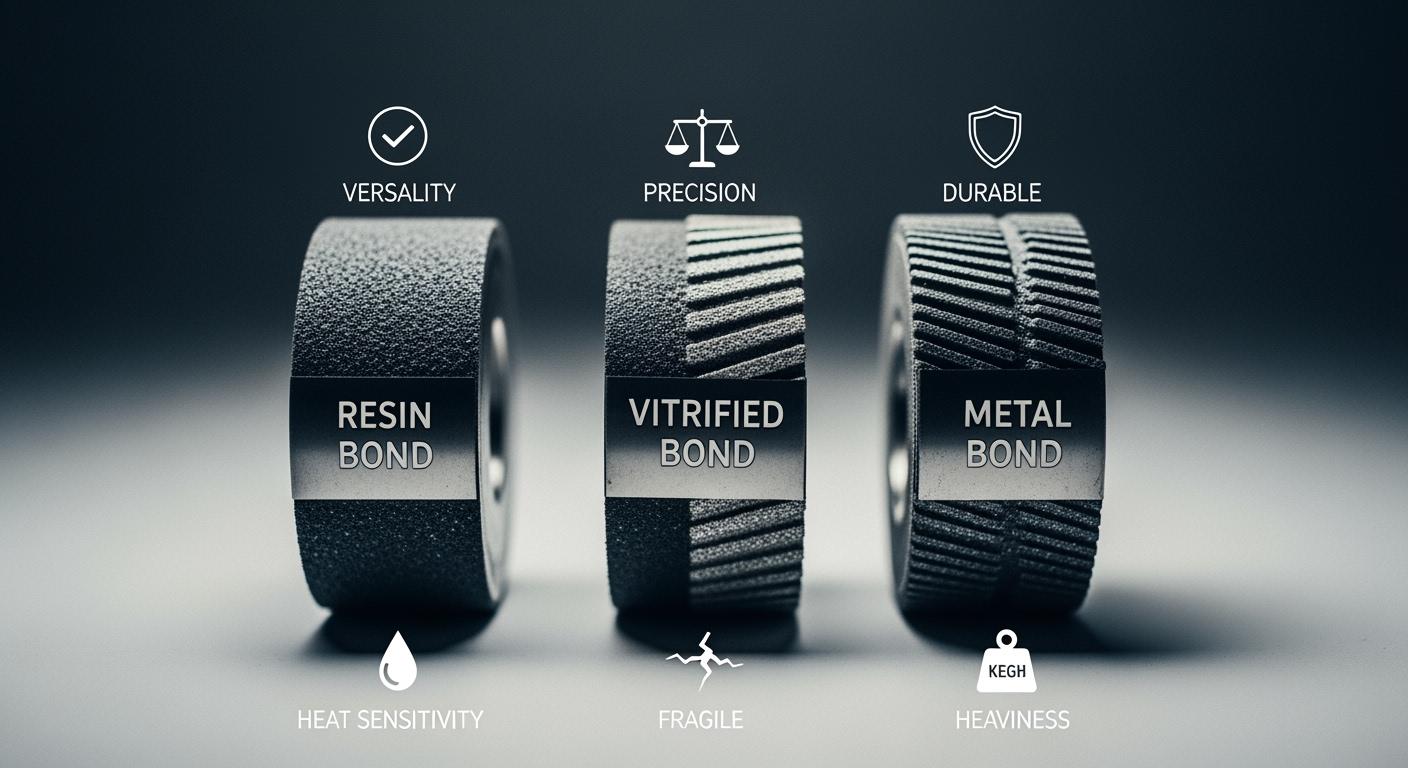
You face many choices when selecting grinding wheels. Resin Wheels offer flexibility and fast cutting, while vitrified wheels give you strong structure and precise shape. Metal bonded wheels last long and handle tough materials. The market shows Resin Wheels hold the largest share at 33%, followed by vitrified wheels at 29%.
| Type of Grinding Wheel | Market Share (%) |
|---|---|
| Resin-bonded | 33 |
| Vitrified | 29 |
| Rubber-bonded | 18 |
You improve grinding efficiency and product quality when you match wheel type to your material and process. Factors such as abrasive material, bond type, and wheel structure affect your results. Aimgrind helps you find the best wheel for your needs through custom solutions and expert advice.
Key Takeaways
- Resin wheels offer fast cutting and flexibility, making them ideal for general-purpose grinding and softer materials.
- Vitrified wheels provide high accuracy and durability, perfect for precision tasks in industries like automotive and aerospace.
- Metal bonded wheels excel in durability and handle tough materials, suitable for heavy-duty grinding applications.
- Choosing the right wheel type boosts productivity and reduces costs by minimizing downtime and rework.
- Aimgrind offers custom solutions to match your specific grinding needs, ensuring optimal performance and efficiency.
Resin Wheels Overview
Resin Bond Key Features
You will find that resin wheels use a resin bond to hold abrasive grains together. This bond gives the wheels flexibility and strength. Resin bonded diamond grinding wheels often use diamond or CBN as the abrasive. These wheels come in many shapes, such as straight, cylindrical, and centerless. The table below shows common types and materials:
| Type of Grinding Wheel | Application Areas | Materials Used |
|---|---|---|
| Straight Grinding Wheels | Automotive, Aerospace, Metalworking | Aluminum Oxide, Silicon Carbide |
| Cylindrical Grinding Wheels | Automotive, Aerospace | Diamond, CBN |
| Centerless Grinding Wheels | Automotive, Bearing Industries | Aluminum Oxide, Others |
| Specialized Grinding Wheels | Various Industries | Customized Materials |
Resin bonded wheels can be tailored for different jobs. You can use them for both rough and fine grinding.
Resin Bond Pros
Resin wheels offer many advantages. You get fast cutting speed and high material removal rates. Resin bonded diamond grinding wheels work well for both ferrous and non-ferrous metals. You can use them for rough grinding or ultra-fine finishing. These wheels provide a smooth surface finish, which is important for precision work. They also generate less heat, so you protect your workpiece. The table below highlights more benefits:
| Advantage | Description |
|---|---|
| Fast Cutting Speed | High material removal rates reduce cutting time. |
| Cost-Effectiveness | Lower cost for high-volume jobs. |
| High Tensile Strength | Safe and reliable at high speeds. |
| Wide Availability | Many sizes and types for different needs. |
| Improved Surface Finish | Smooth finish for precision applications. |
| Reduced Heat Generation | Cooler operation protects materials. |
| Versatility | Works on metals, ceramics, and more. |
Tip: Resin bonded diamond grinding wheels are a great choice when you need versatility and cost savings.
Resin Bond Cons
You may notice some drawbacks with resin wheels. They have lower hardness and strength than vitrified wheels. Resin bonded diamond grinding wheels can clog when grinding soft materials. The resin bond does not handle high heat well, so the wheels wear out faster under tough conditions. You may need to replace them more often if you use them for heavy-duty grinding.
- Lower hardness and strength for heavy-duty jobs
- Higher chance of clogging with soft materials
- Limited thermal resistance and shorter tool life
Resin Wheels Applications
You can use resin bonded diamond grinding wheels in many industries. They are common in automotive, aerospace, and metalworking. These wheels work well for rough grinding, snagging, and finishing. You will also find them in jobs that need a smooth finish or where heat-sensitive materials are involved, such as stainless steel. Resin wheels are popular for both general and precision grinding tasks. Diamond grinding wheels and resin bonded diamond grinding wheels are also used for ceramics and composite materials.
Vitrified Wheels Overview
Vitrified Bond Features
You will notice that vitrified bonded grinding wheels stand out because of their strong structure and performance. The vitrified bond gives a powerful grip on the diamond abrasive grains. This feature boosts cutting efficiency and keeps the wheels stable. The interconnected pores in these wheels help coolant flow easily, which is important for cooling during grinding. High rigidity lets the wheels keep their shape, so you get precision when grinding complex forms.
- Strong mechanical and chemical grip on diamond grains
- Interconnected pores for effective coolant flow
- High rigidity for shape retention and precision
Vitrified Bond Pros
You gain many advantages when you use vitrified bonded grinding wheels. These wheels remove material quickly because of their rigid structure and sharp diamond cutting edges. You will see longer tool life, which means fewer wheel changes and lower costs. The wheels keep their cutting edges sharp, so you get a smooth surface finish. Their porous structure lets coolant reach the grinding zone, preventing overheating. You also avoid wheel loading and clogging, so you spend less time dressing the wheels. Vitrified bond diamond grinding wheels keep their shape and cutting ability, giving you consistent performance.
- Faster material removal rates
- Extended tool life
- Enhanced surface finish
- Improved heat management
- Reduced wheel loading and clogging
- Consistent performance for precision applications
- Lower operational costs
Tip: You can customize vitrified bonded grinding wheels for specific materials and applications. This ensures superior performance and high tolerance form accuracy.
Vitrified Bond Cons
You may face some drawbacks with vitrified bonded grinding wheels. The high hardness can cause the diamond cutting edges to dull quickly, which lowers cutting ability. Increased heat and friction during grinding can speed up wear. This affects processing accuracy and surface quality.
- Rapid dulling of diamond cutting edges
- Increased heat generation and friction
- Accelerated wear impacts accuracy and surface quality
Vitrified Wheels Applications
You find vitrified bonded grinding wheels in many industries. Metalworking uses them for surface grinding, cylindrical grinding, and tool sharpening. Woodworking relies on them for precision grinding and sharpening tools. Automotive and aerospace industries use these wheels for high precision grinding and excellent surface finishes. Medical fields choose diamond grinding wheels for precision and high-quality finishes.
| Industry | Applications |
|---|---|
| Metalworking | Surface grinding, cylindrical grinding, tool sharpening |
| Woodworking | Precision grinding, tool sharpening |
| Automotive | Surface grinding, precision grinding |
| Aerospace | High precision grinding, excellent surface finish |
| Medical | Precision grinding, high surface finish |
You benefit from vitrified bonded grinding wheels when you need tight tolerances and accuracy. These wheels are essential in tool and die manufacturing, where precision matters most.
Metal Bonded Grinding Wheels by Aimgrind
Metal Bond Features
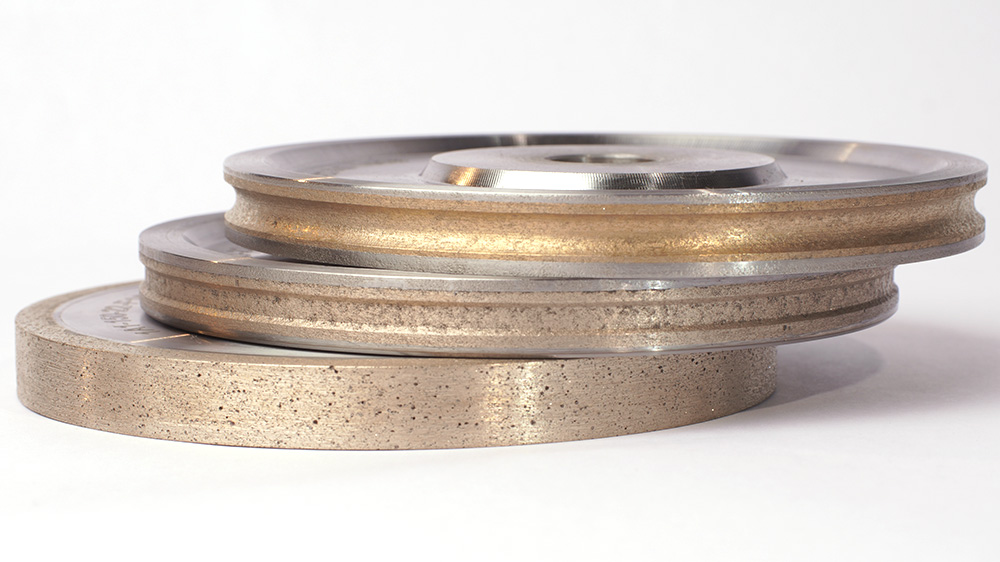
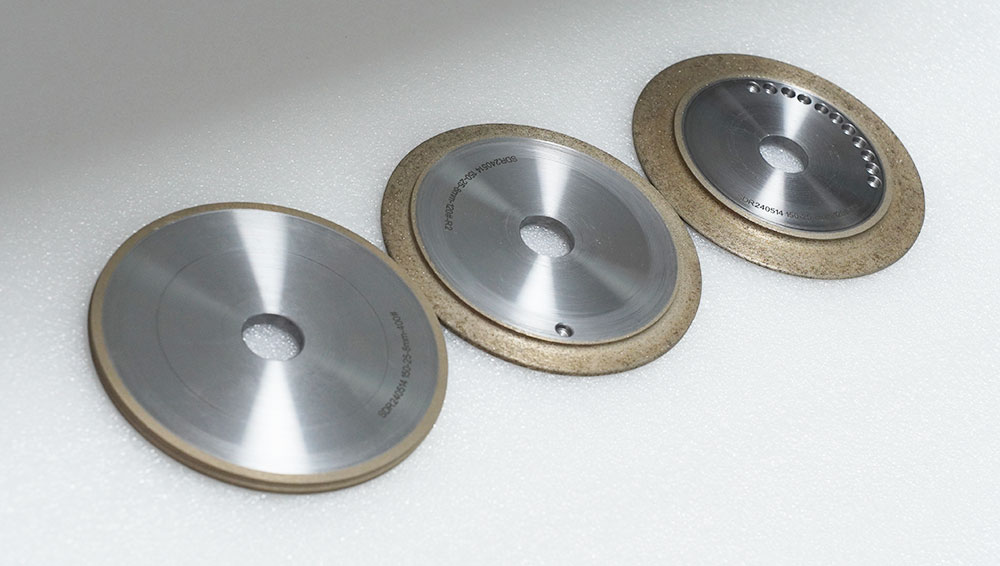
You get advanced technology when you choose metal bonded diamond grinding wheels from Aimgrind. These wheels use a metal bond matrix that holds diamond or CBN abrasive tools tightly. The metal bond structure gives you high strength and stability. You can use these wheels for both wet and dry grinding. The diamond particles stay sharp and hard, so you achieve high precision capability and excellent form accuracy. Aimgrind’s wheels come in many designs, such as segmented and continuous rim, to fit your grinding needs.
Metal Bond Pros
You benefit from many advantages with metal bonded diamond grinding wheels. These wheels show outstanding durability and minimal wheel wear. You can grind hard alloys, ceramics, and superhard materials with ease. The table below highlights the main advantages:
| Advantage | Description |
|---|---|
| Strong and Resilient | Metal bonded grinding wheels keep their shape and resist damage during tough jobs. |
| Endurance | You can use these wheels for long periods without losing performance. |
| Long Lifespan | Metal bonded diamond grinding wheels last longer, so you replace them less often. |
| High Heat Resistance | These wheels handle high temperatures and pressure during grinding. |
| High Grinding Efficiency | Diamond particles cut quickly, giving you high initial cutting efficiency and fast results. |
| Low Maintenance | You spend less time on maintenance because of the slow wear rate. |
You get consistent results and save time. The diamond and CBN abrasive tools in these wheels help you achieve smooth finishes and high-quality parts.
Tip: Metal bonded diamond grinding wheels from Aimgrind give you reliable performance and reduce downtime in your workshop.
Metal Bonded Grinding Wheels Applications
You can use metal bonded diamond grinding wheels in many industries. Aerospace companies use these wheels for grinding hard alloys and ceramics. Tool manufacturers choose them for shaping and sharpening cutting tools. The glass process industry relies on these wheels for edging and polishing building, furniture, and optical glass. You also find them in woodworking, where they grind tungsten saw blades. These wheels work well for any job that needs high precision and excellent form accuracy. You get the best results when you need outstanding durability and minimal wheel wear.
If you want to learn more about Aimgrind’s metal bonded grinding wheels, visit Aimgrind’s official website.
Grinding Performance Comparison
When you compare resin, vitrified, and metal bonded diamond grinding wheels, you see clear differences in grinding performance, cutting efficiency, and grinding accuracy. Each type of wheel offers unique strengths for different grinding tasks. Understanding these differences helps you make the right choice for your tools and materials.
Key Differences Table
You can use the table below to see a side-by-side performance comparison of resin, vitrified, and metal bonded diamond grinding wheels. This table highlights important metrics like grinding forces, tool wear, surface finish, wheel loading, and cutting efficiency.
| Metric | Resin Bonded Wheels | Vitrified Bonded Wheels | Metal Bonded Wheels |
|---|---|---|---|
| Grinding Forces | Moderate; suitable for most tasks | Low; easy to control, good for precision | Higher; best for hard materials |
| Tool Wear | Moderate; needs more frequent replacement | Low; long-lasting, less frequent changes | Very low; longest lifespan |
| Surface Finish | Smooth; excellent for fine finishes | Superior; achieves high grinding accuracy | Good; maintains form, suitable for precision |
| Wheel Loading | Can clog with soft materials | Minimal; porous structure prevents loading | Minimal; but may need dressing |
| Heat Generation | Low; keeps workpiece cool | Low to moderate; good heat dissipation | High; needs careful heat management |
| Cutting Efficiency | High; fast material removal | High; sharp edges, efficient grinding | Very high; excels in heavy-duty grinding |
| Form Holding | Good; flexible, but less rigid | Excellent; keeps shape for grinding precision | Outstanding; best for form and accuracy |
| Lifespan | Short to moderate | Long | Very long |
| Cost | Lower; cost-effective for many jobs | Moderate; balances cost and performance | Higher; investment for long-term use |
Note: Diamond grinding wheels with metal bonds last the longest and hold their shape best. Vitrified wheels give you the best grinding accuracy and surface finish. Resin wheels offer fast cutting and a cooler process.
Application Suitability
You need to match the right wheel to your grinding job for the best results. Each type of diamond grinding wheel fits specific applications based on its performance and grinding precision.
Resin Bonded Diamond Grinding Wheels
- You should use these wheels for general-purpose grinding, carbide tools, glass, and composites. They work well when you need a smooth surface finish and lower heat. Resin wheels are ideal for jobs where you want to avoid thermal damage, such as grinding ceramics or heat-sensitive metals. They also cost less, making them a good choice for high-volume production.
- If you wonder how to choose between resin and metal bond diamond grinding wheels, think about your material and the finish you need. Resin wheels suit softer materials and fine finishes. Metal bond wheels fit hard materials and heavy-duty tasks.
Vitrified Bonded Diamond Grinding Wheels
- You get the best grinding accuracy and shape retention with vitrified wheels. These wheels excel in precision grinding of hard and brittle materials, such as ceramics, glass, and advanced composites. Their porous structure allows coolant to flow, which helps prevent overheating and keeps the grinding zone clean. You should use vitrified wheels when you need tight tolerances and high-quality finishes.
Metal Bonded Diamond Grinding Wheels
- You choose metal bonded wheels for the toughest jobs. These wheels handle hard alloys, sapphire, ceramics, and stone. They deliver the highest cutting efficiency and grinding precision, especially in industries like aerospace and tool manufacturing. Metal bond wheels last the longest and keep their form, so you get consistent results over time. You may need to manage heat carefully, as these wheels generate more heat during grinding.
Tip: Always consider the risk of thermal damage. Resin bonded wheels keep your workpiece cool. Vitrified wheels balance heat dissipation and structural strength. Metal bonded wheels need extra care with heat, especially for sensitive materials.
You can see that diamond grinding wheels and CBN wheels each have their place. Your choice depends on the material, the required finish, and the grinding performance you need. Aimgrind offers a wide range of diamond grinding wheels and tools to help you achieve the best grinding accuracy and performance for your application.
Choosing the Right Wheel
Material and Application Factors
You need to look at several important factors when you choose grinding wheels. Each factor helps you match the right wheel to your job. Here are the main things to consider:
- Wheel material: Pick the right abrasive for your workpiece. Aluminum oxide works well for steel. Silicon carbide fits ceramics and softer metals. Diamond and CBN are best for very hard materials.
- Grit size: Coarse grits remove material quickly. Fine grits give you a smooth finish.
- Wheel hardness: Softer wheels wear out faster but are more forgiving. Harder wheels last longer but may create more heat.
- Wheel bond: The bond holds the abrasive grains. Resin, vitrified, and metal bonds each have their own strengths.
You should also think about your processing needs. Look at the shape and size of your wheels. Decide if you need disc wheels, cone wheels, or belt wheels. The hardness and shape of your workpiece matter too. For example, hard materials need diamond wheels. Soft materials may need a different abrasive.
The table below shows how different abrasives fit different materials:
| Abrasive Type | Suitable Materials | Characteristics |
|---|---|---|
| Aluminum Oxide | Steel, stainless steel, iron | Good for tough jobs |
| Silicon Carbide | Cast iron, brass, ceramics, aluminum | Best for non-metallic and soft metals |
| Diamond | Hard alloys, ceramics, glass | Best for superhard materials |
Aimgrind’s Custom Solutions
You can get the best results by using Aimgrind’s custom grinding wheels. Aimgrind has years of experience in making wheels for special jobs. You get wheels that match your material, your machine, and your process. Aimgrind helps you choose the right diamond or CBN wheels for your needs.
Here are some benefits you get from Aimgrind’s custom solutions:
| Benefit | Description |
|---|---|
| Durability | Wheels last longer and resist wear |
| Efficiency | High removal rate and precise control |
| Self-sharpening | Less need to change wheels often |
| Low heat | Less risk of burning your workpiece |
| Precision | Accurate shapes and smooth surfaces |
| Versatility | Good for many jobs, including gear and hard materials |
| Customization | Wheels made for your exact needs |
You can contact Aimgrind for help with wheel selection and formula design. The team will diagnose your problem, match the right parameters, and optimize your sample. You get a grinding solution that fits your equipment and your goals. Aimgrind’s experts help you achieve better productivity and quality in every grinding job.
Tip: When you need a special wheel for a tough job, Aimgrind can design a custom diamond wheel just for you.
You have seen that resin, vitrified, and metal bonded grinding wheels each offer unique strengths. The table below highlights key takeaways:
| Type | Advantages | Disadvantages | Best Use Cases |
|---|---|---|---|
| Vitrified | High accuracy, easy dressing | Brittle, higher cost | Automotive, tool grinding |
| Metal Bonded | Durable, precise, minimal wear | Hard to dress, higher cost | Hard materials, heavy grinding |
Choosing the right wheel boosts productivity and saves costs by reducing downtime and rework. Recent technology, like EDM dressing, makes metal bond wheels more precise. For expert help and custom solutions, you can trust Aimgrind.
FAQ
What is the main difference between resin, vitrified, and metal bond wheels?
You will see that resin wheels offer flexibility and fast cutting. Vitrified wheels provide strong structure and precision. Metal bond wheels deliver high durability and handle tough materials. Each type fits different grinding needs.
How do I choose the right grinding wheel for my material?
You should match the wheel to your material. Use diamond or CBN wheels for hard alloys and ceramics. Pick resin wheels for softer materials. Vitrified wheels work best for precision jobs. Metal bond wheels suit heavy-duty grinding.
Can I use metal bond wheels for glass or ceramics?
Yes! Metal bond wheels work well for glass and ceramics. You get high precision and long life. These wheels help you achieve smooth edges and accurate shapes in glass processing and ceramic grinding.
Why should I consider Aimgrind for custom grinding solutions?
Aimgrind gives you expert advice and custom wheel design. You get wheels that fit your machine and process. Aimgrind helps you solve grinding problems and improve your results. You can contact Aimgrind for personalized support.
Contact Us
For More Grinding Solution or Customized Abrasive Tools