

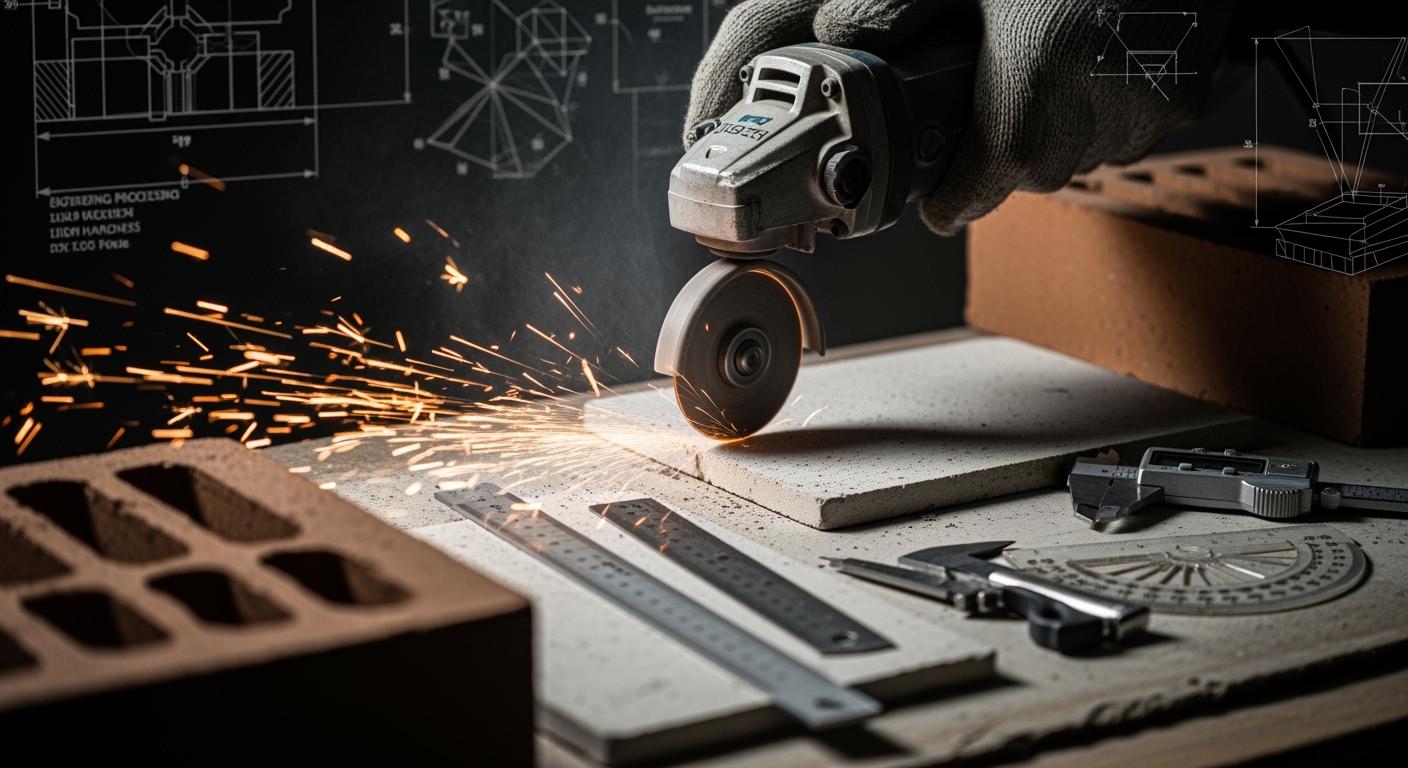
You face tough challenges when working with Refractory Bricks and high-hardness ceramics. These materials resist wear but break easily under the wrong tools or methods. You need the right approach to keep the work smooth and avoid costly mistakes. Specialized grinding wheels and cutting tools protect both your equipment and the material. Aimgrind brings years of experience and trusted products to help you achieve clean, precise results every time.
Key Takeaways
- Choose the right tools for refractory bricks and ceramics. Diamond grinding wheels provide strength and precision, ensuring clean cuts and longer tool life.
- Use proper cooling and lubrication during grinding. Water or suitable coolants help manage heat, extending tool life and improving surface finish.
- Follow a step-by-step grinding process. Start with finer grits, apply moderate pressure, and rotate the workpiece for even wear and consistent results.
- Control your feed rate and tool movement when cutting. Slow, steady movements prevent chipping and cracking, leading to cleaner cuts.
- Wear appropriate safety gear. Protect your eyes, lungs, and skin from dust and sharp fragments to ensure a safe working environment.
Material Properties and Processing Challenges
Hardness and Brittleness Factors
You work with some of the hardest materials in industry. Refractory Bricks and high-hardness ceramics like alumina, silicon nitride, silicon carbide, and boron carbide all have impressive hardness values. These materials resist scratches and wear, but they can break or chip if you use the wrong tools or too much force. The table below shows how hard these materials are:
| Material Name | Vickers Hardness (GPa) | Mohs Hardness |
|---|---|---|
| Alumina (Al2O3) | 15 – 18 | 9 |
| Silicon Nitride (Si3N4) | 18 – 22 | 9 |
| Silicon Carbide (SiC) | 22 – 28 | 9.5 |
| Boron Carbide (B4C) | 30 – 35 | 9.7 |
You see that these materials are almost as hard as diamonds. This makes them great for high-temperature and high-wear environments. However, their brittleness means they can crack or shatter if you do not handle them carefully.
Impact on Tool Choice
You must choose your tools wisely when working with these materials. Hardness and brittleness affect how you grind or cut them. If you use a tool that is too soft, it will wear out quickly. If you use too much force, you risk damaging the workpiece. The table below lists important factors to consider:
| Factor | Details |
|---|---|
| Processing Requirements | Different types of alumina suit different jobs based on their properties. |
| Workpiece Material | The hardness and brittleness of the material guide your tool selection. |
| Particle Size and Shape | The size and shape of abrasive particles affect grinding speed and surface finish. |
| Cost and Scale Balance | You need to balance performance with cost for your project size and budget. |
You should always match your tool to the material. For example, diamond grinding wheels from Aimgrind work well because they are harder than most ceramics and can handle tough jobs without losing their shape. You also need to think about the finish you want and how much material you need to remove. Careful tool selection helps you avoid waste and keeps your process efficient.
Tool Selection for Refractory Bricks and Ceramics
Diamond Grinding Wheels by Aimgrind
You need a tool that matches the toughness of your material. Diamond grinding wheels from Aimgrind give you the strength and precision you need for Refractory Bricks and high-hardness ceramics. These wheels use a diamond abrasive layer that can cut through hard surfaces without losing shape. You get a clean finish and longer tool life. Aimgrind offers different wheel sizes and shapes, so you can find the right fit for your job. You can use these wheels for both wet and dry grinding. This flexibility helps you work with many types of ceramics and Refractory Bricks.
Tip: Choose a wheel that matches your machine and the size of your workpiece. This helps you get the best results and keeps your process safe.
Bond Types and Grit Selection
The bond type holds the diamond particles in place. You can pick from resin, metal, or vitrified bonds. Each bond works best for different jobs:
- Resin bond: Good for fast, smooth grinding. Use this when you want a fine finish.
- Metal bond: Strong and durable. Pick this for heavy-duty grinding or when you need the wheel to last longer.
- Vitrified bond: Best for high-precision work. This bond gives you a sharp edge and keeps the wheel cool.
Grit size affects how smooth your surface will be. For high-hardness ceramics, you should use diamond abrasives. The right grit size helps you remove material quickly or get a smooth finish. Here are some common grit sizes for grinding ceramics:
- Start with 120 grit for rough grinding.
- Move to 240 or 320 grit for shaping.
- Use 400 or 600 grit for fine finishing.
You can also use SiC papers with 240, 320, 400, or 600 grit. Some people use P280, P400, P800, or P1200 for even finer work. Always match the grit size to your finish needs.
Note: Finer grits give you a smoother surface but take longer to remove material. Coarser grits work faster but may leave scratches.
Cooling and Lubrication Methods
Grinding and cutting create heat. Too much heat can damage your tool or your Refractory Bricks. You should use cooling and lubrication to keep things running smoothly. Water is a common coolant. It helps carry away heat and dust. Some jobs need special coolants or oils for better results.
- Use a steady flow of coolant during grinding.
- Make sure the coolant reaches the contact point between the wheel and the material.
- Clean your work area often to prevent buildup of dust and debris.
Safety Alert: Always wear safety gear when using coolants. Some coolants can irritate your skin or eyes.
Proper cooling and lubrication help your diamond grinding wheels last longer. You also get a better finish on your ceramics and Refractory Bricks.
Grinding Strategies for High-Hardness Ceramics
Step-by-Step Grinding Process
You need a clear process when you grind high-hardness ceramics. This helps you avoid mistakes and get the best results. Follow these steps to keep your work efficient and your material safe:
- Select a diamond or CBN abrasive wheel. These wheels remove hard material quickly and last longer than regular wheels.
- Begin with a fine abrasive grit, such as 240 or 320. Finer grits help you control material loss and reduce the risk of chipping.
- Set up your grinder for wet grinding. Use water or a suitable lubricant to keep the workpiece cool and prevent overheating.
- Apply steady, moderate pressure. Too much force can damage the ceramic or wear out your tool.
- Rinse your ceramic piece before moving to a finer abrasive. This step removes loose particles and keeps the surface clean.
- Rotate the specimen holder during grinding. This ensures even wear and a consistent finish across the entire surface.
Tip: Always check your grinding wheel and coolant system before you start. Clean tools and fresh coolant help you achieve a better finish.
Speed, Pressure, and Surface Finish
Grinding speed and pressure play a big role in your results. You can improve the surface finish by increasing the grinding speed. Faster speeds make the surface smoother and reduce roughness. However, you must watch the grinding depth. If you grind too deep, you increase the pressure and create more heat. This can damage your tool and the ceramic.
- Higher grinding speed = smoother surface
- Greater grinding depth = more pressure and heat
You should keep the grinding depth shallow. This lowers the contact pressure and keeps the temperature down. Use moderate pressure to avoid cracks or chips. Adjust the speed and pressure until you see a smooth, even surface.
| Parameter | Effect on Surface Finish | Risk Factor |
|---|---|---|
| High Speed | Smoother surface | Tool wear |
| High Pressure | Faster material removal | Cracking, chipping |
| Deep Grinding | More heat, rougher finish | Tool failure |
Note: Always monitor the temperature of your workpiece. If it feels hot, pause and let it cool before you continue.
Minimizing Material Damage
You want to keep your ceramic pieces strong and free from cracks. Use these strategies to protect your material:
- Choose the right abrasive wheel. Diamond wheels from Aimgrind work well for hard ceramics.
- Use continuous coolant flushing. Coolant removes heat and dust, which helps prevent thermal damage.
- Pick the correct grit size and bond type. Finer grits and the right bond reduce chipping and give you a better finish.
- Rinse your workpiece before each new grinding stage. This keeps the surface clean and prevents scratches.
- Rotate your specimen holder often. Even rotation helps you avoid uneven wear and weak spots.
Alert: Never rush the grinding process. Take your time to check the surface after each step. Careful grinding keeps your ceramics strong and looking their best.
By following these strategies, you can grind high-hardness ceramics with confidence. You will achieve a smooth finish, protect your tools, and keep your materials in top condition.
Cutting Techniques for Refractory Bricks
Diamond Blades and Angle Grinders
When you cut Refractory Bricks, you need tools that can handle their hardness and resist wear. Diamond blades work best for this job. You can use different types of diamond blades, each with its own advantage:
| Rim/Segment Style | Description |
|---|---|
| Continuous Rim | Smoothest cuts, best for tile and finishing work. |
| Turbo Rim | Faster than continuous, cleaner cut than segmented; good hybrid option. |
| Segmented Rim | Most aggressive, fastest cut, best for heavy masonry or concrete. |
Angle grinders help you cut Refractory Bricks with more control and speed. These tools keep the blade sharp longer and give you a cleaner edge. You also get less chipping and cracking. Angle grinders work well on curved surfaces and help you finish your work faster.
Tip: Always match the blade type to your cutting needs. For most Refractory Bricks, a turbo or segmented rim blade gives you the best balance of speed and finish.
Feed Rate and Tool Movement
You need to control your feed rate and tool movement to get clean cuts. Move the blade slowly and steadily through the brick. Fast movements can cause cracks or rough edges. Keep the cutting speed low to prevent overheating and reduce the risk of damage. Use a high spindle speed if your machine allows it. This helps you get a precise cut and lowers friction.
| Factor | Recommendation |
|---|---|
| Cutting Speed | Lower speeds prevent cracking. |
| Feed Rate | A controlled feed rate ensures smooth material removal. |
| Spindle Speed | High-speed spindles improve precision. |
| Coolant and Lubrication | Use water or coolant to keep the blade and brick cool. |
Note: Secure the brick before cutting. This reduces vibration and helps you keep a straight line.
Preventing Chipping and Cracking
You want to avoid chipping and cracking when you cut Refractory Bricks. Use a steady hand and do not force the blade. Adjust your feed rate if you see small chips forming. Coolant or water helps keep the brick cool and reduces stress. For best results, use diamond blades and keep your tool path smooth.
| Method | Benefit |
|---|---|
| Adjusting Feed Rate | Maintains surface integrity and reduces chipping. |
| Using Coolant | Prevents overheating and lowers the risk of cracks. |
| Proper Tool Movement | Ensures even pressure and clean edges. |
Alert: Always wear safety gear when cutting. Dust and small chips can be harmful if you do not protect yourself.
By following these tips, you can cut Refractory Bricks cleanly and safely. You will get better results and extend the life of your tools.
Safety and Efficiency Tips
Essential Safety Gear
You must protect yourself when grinding or cutting refractory bricks and ceramics. These materials create dust and sharp fragments. Always wear the right safety gear before you start work.
- Safety glasses or goggles: Shield your eyes from flying particles.
- Dust mask or respirator: Prevent dust from entering your lungs.
- Hearing protection: Reduce noise from grinders and cutters.
- Gloves: Protect your hands from sharp edges and hot surfaces.
- Protective clothing: Wear long sleeves and pants to cover your skin.
- Steel-toed boots: Keep your feet safe from heavy objects.
Tip: Check your safety gear before each job. Replace damaged items right away.
Workflow Optimization
You can boost your productivity by using smart workflow strategies. Here are some ways to make your grinding and cutting process more efficient:
- Use precision grinding techniques like creep-feed and peel grinding for better surface finish and accuracy.
- Set up advanced CNC systems to help with programming and monitoring complex shapes.
- Choose diamond tooling for durability and faster machining of hard ceramics.
- Pick environmentally friendly machining fluids for cooling and lubrication.
- Try high-speed machining to remove more material in less time.
- Work with materials that have improved properties for easier machining.
- Use ultrasonic machining to remove hard material with vibrations.
- Explore additive manufacturing to create complex ceramic shapes.
Note: Review your workflow often. Small changes can save you time and effort.
Reducing Waste
You can help the environment by reducing waste during processing. Recycling industrial waste, such as ceramic roller waste and other by-products, is a smart way to cut down on waste. This method not only keeps your workspace cleaner but also supports sustainability. By reusing materials, you lower costs and reduce the impact on the environment.
♻️ Every small step toward recycling makes a big difference for your business and the planet.
Troubleshooting Common Issues
Tool Wear and Overheating
You may notice your tools wearing out quickly or overheating during grinding and cutting. Fast cutting speeds and using the wrong tool materials often cause rapid wear. Poor heat management makes the problem worse. Too much heat can damage both your tool and your workpiece. You might see cracks or even deformation in your ceramics or bricks.
- Use the right tool coatings to reduce friction.
- Adjust your cutting speed and pressure to match the material.
- Always use effective cooling methods, like water or special lubricants, to keep temperatures down.
Tip: If your tool feels hot to the touch, pause your work and let it cool. This simple step can extend tool life and protect your materials.
Material Breakage Solutions
You can prevent breakage and keep your process running smoothly by following these steps:
- Re-open diamond segments by grinding them with refractory bricks if they become flat.
- Try mixed cutting. Alternate between materials with different abrasiveness to keep diamond segments sharp.
- For severe issues, remove the diamond segment, grind it, and weld it back.
- Use a hand-held electric grinder to restore the cutting ability of your diamond segment.
- For medium-diameter saw blades, sharpen the diamond segment with a belt machine.
🛠️ Regular maintenance of your tools helps you avoid unexpected breakage and keeps your cuts clean.
Achieving Consistent Results
You want every cut and grind to look the same. Consistency comes from careful planning and good habits.
- Select grinding tools made for ceramics and refractory bricks.
- Optimize your grinding speed, feed rate, and depth of cut for each job.
- Use the right coolant to control heat and improve accuracy.
- Dress your grinding wheel often to keep its shape and performance.
- Analyze your surface finish and adjust your parameters as needed.
| Practice | Benefit |
|---|---|
| Tool selection | Better results, less waste |
| Parameter optimization | Smoother surfaces |
| Regular wheel dressing | Longer tool life |
| Effective cooling | Prevents thermal damage |
Note: Small changes in your process can make a big difference. Review your setup often to keep your results consistent.
You can achieve better results by using the right grinding and cutting strategies for refractory bricks and high-hardness ceramics. Aimgrind’s diamond grinding wheels help you work faster and safer. You see less downtime and higher product quality when you follow best practices.
- Modern tools reduce assembly time and extend refractory life.
- Many professionals ask about tool types, blade selection, and cutting methods.
- You can access full support, training, and spare parts from Aimgrind.
Contact Aimgrind for custom solutions and expert guidance.
FAQ
What makes diamond grinding wheels better for ceramics and refractory bricks?
Diamond grinding wheels cut hard materials easily. You get faster results and a smoother finish. These wheels last longer than regular ones. You save time and money by using them.
How do I choose the right grit size for my project?
Start with a coarse grit for rough shaping. Move to finer grits for a smooth finish. For most ceramics, use 120 grit first, then 240 or 320, and finish with 400 or 600.
Can I use water as a coolant during grinding?
Yes, you can use water as a coolant. Water keeps your workpiece cool and reduces dust. Always make sure the coolant reaches the grinding area for best results.
How do I prevent chipping when cutting refractory bricks?
Use a steady hand and slow feed rate. Secure the brick before cutting. Apply water or coolant to keep the blade and brick cool. This helps you avoid chips and cracks.
Where can I get help choosing the right grinding wheel?
You can contact Aimgrind for expert advice. The team helps you select the best wheel for your material and machine. Visit Aimgrind’s website or call for support.
Contact Us
For More Grinding Solution or Customized Abrasive Tools