Preventing Burrs in precision grinding plays a big role in your manufacturing success. When you control burrs, you help parts fit together better and keep tight tolerances. This makes your products safer and more reliable. You also save time because machines or tools work faster and more efficiently. Aimgrind supports you with custom grinding solutions and diamond grinding wheels that help you achieve clean, high-quality results every time.
Key Takeaways
- Control burrs to improve part fit and maintain tight tolerances, enhancing product safety and reliability.
- Set up your grinding machine correctly to prevent excessive material removal and reduce burr formation.
- Choose the right diamond grinding wheels for your materials to achieve clean edges and minimize burrs.
- Regularly inspect parts during grinding to catch burrs early and maintain high product quality.
- Select the appropriate deburring method based on part complexity and production volume for efficient burr removal.
Understanding Burrs in Grinding
What Are Burrs?
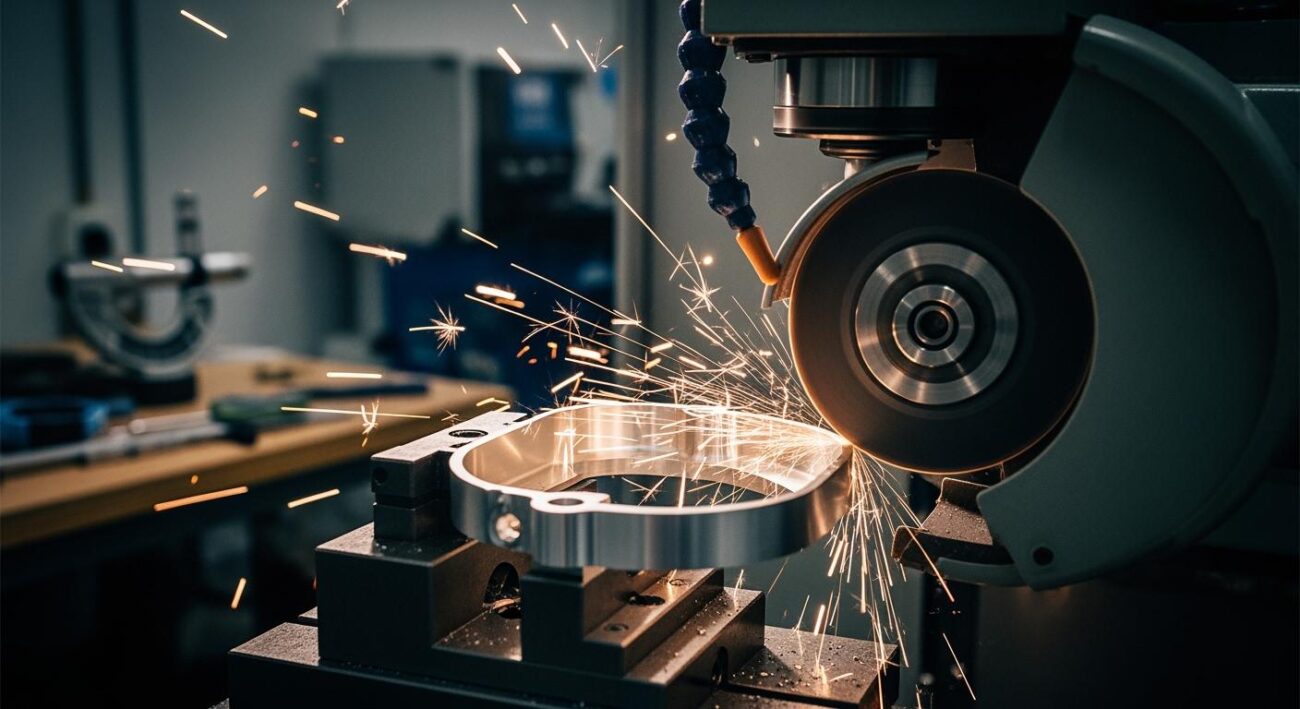
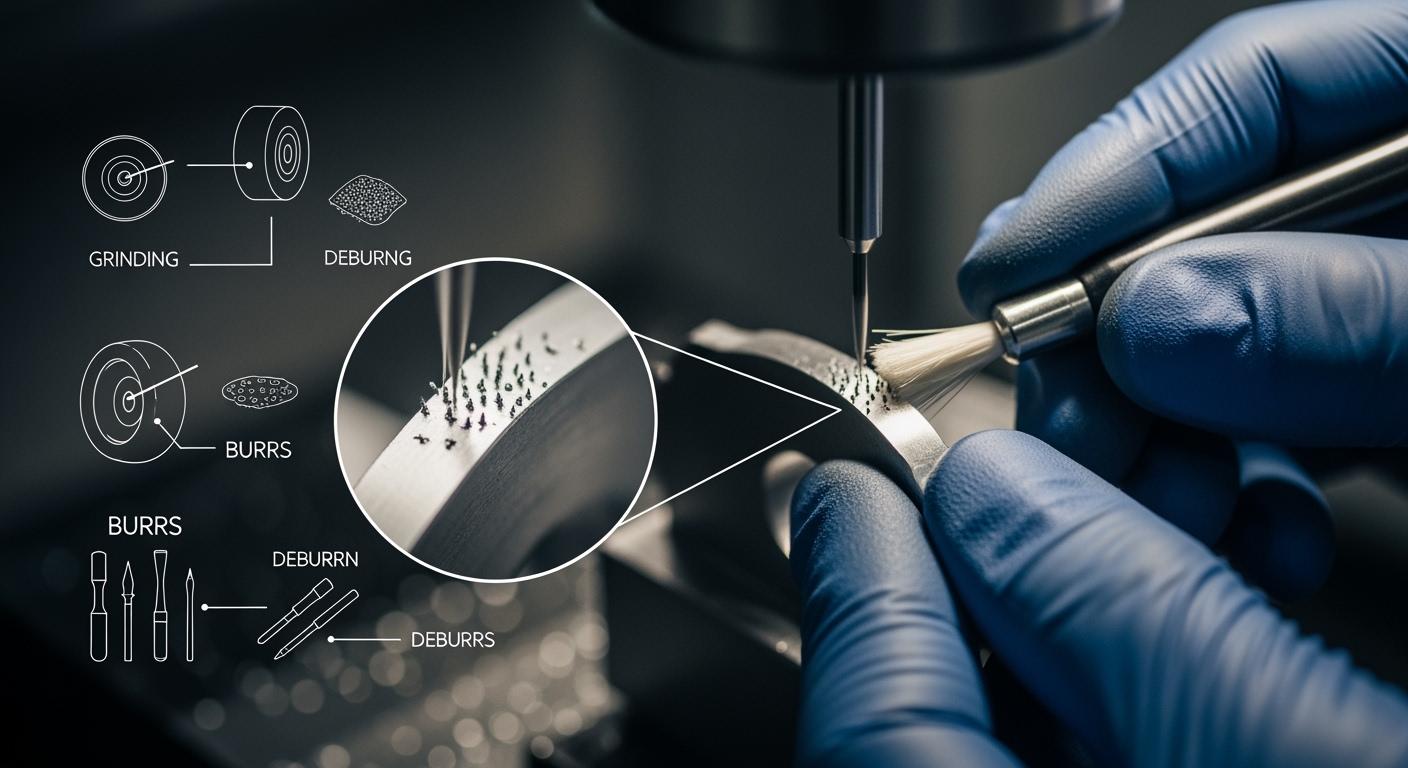
You may notice small, rough edges or tiny pieces of material left on a metal part after grinding. These are called burrs. They form when the grinding wheel cuts into the metal and pushes or tears away bits of material. Burrs can look like thin slivers, sharp points, or even small flakes. They often appear where the grinding tool finishes its pass or changes direction.
Why Burr Control Matters
You need to control burrs because they can cause many problems. Burrs can make parts fit together poorly. They can scratch or damage other parts during assembly. If you leave burrs on a part, they may break off and cause machines to jam or wear out faster. Removing burrs helps you keep your products safe and reliable. It also makes your grinding process more efficient and reduces the risk of injury for workers.
Tip: Always check for burrs before moving parts to the next step in production. This simple habit can save you time and money.
Types of Burrs in Metal Grinding
You will find several common types of burrs in precision grinding operations:
- Rollover burrs
- Tear burrs
- Breakoff burrs
- Poisson burrs
Each type forms in a different way. For example, rollover burrs happen when the edge bends over instead of cutting cleanly. Tear burrs appear when the material rips instead of shearing smoothly. Breakoff burrs form when a piece breaks away suddenly. Poisson burrs develop because of pressure that pushes material sideways.
Burr Formation Mechanisms
You create burrs when the grinding wheel removes material quickly or with too much force. The heat from grinding can also soften the metal, making it easier for burrs to form. The type of metal, the speed of the grinding wheel, and the way you hold the part all affect how burrs develop. If you use the right grinding wheel and set up your machine correctly, you can reduce the number of burrs that appear.
Preventing Burrs in Precision Grinding
Machine Setup & Alignment
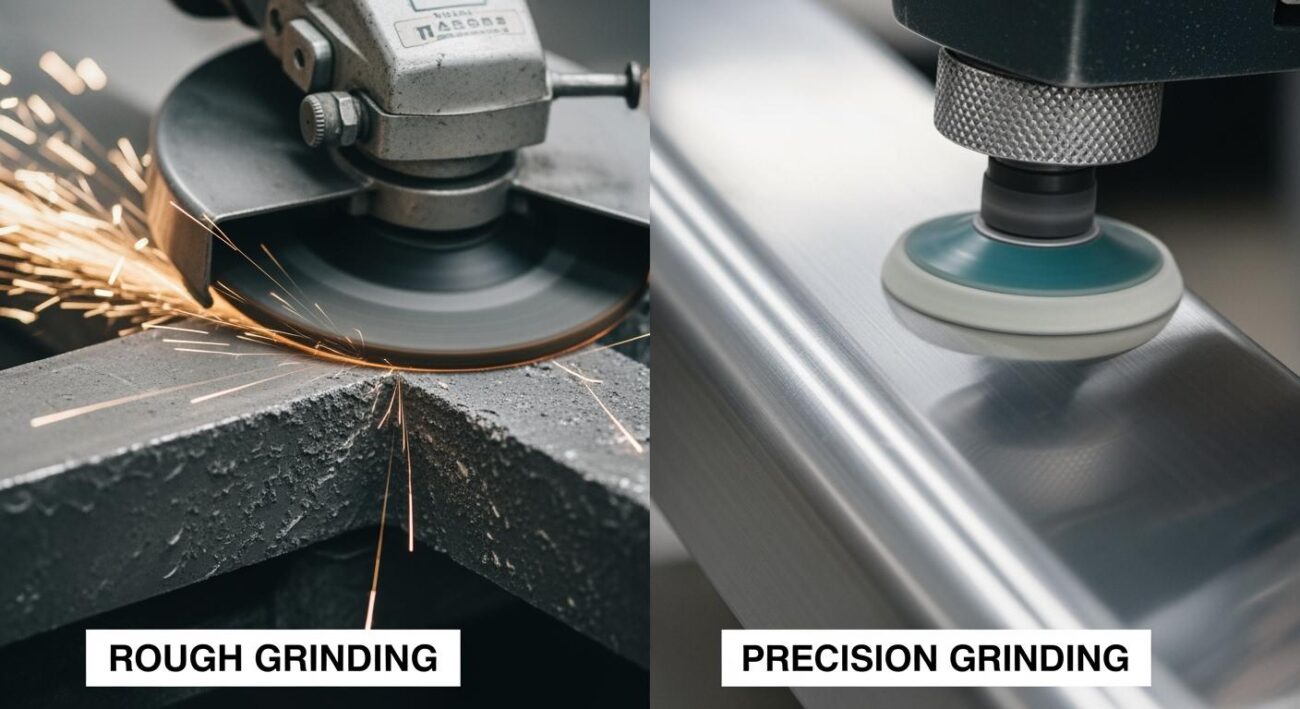
You play a key role in preventing burrs during precision grinding by setting up your machine correctly. When you align your equipment, you reduce the risk of burrs forming on your parts. Improper setup can cause excessive material removal, which leads to unwanted burrs. If you use angle grinders without proper support or with incorrect tool paths, you may see more burrs on your finished parts.
- Burrs often form when the cutting force is too high for the material.
- Excessive material deformation happens with softer metals or when you use blunt grinding wheels.
- Incorrect tool path settings can create burrs at the edges.
- Inadequate support during grinding increases the chance of burrs.
You can use simple techniques to check alignment. The marker test helps you see if the burr aligns with the grinding wheel. You color the burr, run the grinder, and check the wear pattern. If you find misalignment, you can use shimming. Place thin spacers under the burr to correct the angle. These steps help you keep your grinding process precise and reduce burrs.
Tip: Always check your angle grinders for proper alignment before starting. This small step can make a big difference in preventing burrs.
Abrasive Selection with Aimgrind Diamond Grinding Wheels
Choosing the right grinding wheels is essential for preventing burrs in precision grinding. The abrasive you select affects how much material removal you achieve and how clean your edges look. Aimgrind diamond grinding wheels offer a solution for high-precision work. These wheels provide consistent material removal and help you avoid burrs, even on hard alloys and ceramics.
| Factor | Description |
|---|---|
| Wheel Material | Pick the right abrasive for your workpiece. Diamond grinding wheels work well for hard metals and ceramics. |
| Grit Size | Coarse grits remove material quickly. Fine grits give you a smoother finish and help prevent burrs. |
| Wheel Hardness | Softer wheels wear faster but are gentle on your parts. Harder wheels keep their shape and support precision. |
| Wheel Bond | The bond holds the abrasive grains. Resin, metal, and vitrified bonds each suit different grinding techniques. |
Aimgrind’s diamond grinding wheels stand out because they keep their shape and sharpness. You get reliable results with every pass. These wheels fit many angle grinders and support both wet and dry grinding. You can choose from different sizes and bonds to match your grinding process. When you use Aimgrind wheels, you improve your precision and reduce downtime from wheel changes.
Note: Aimgrind offers custom grinding wheels to match your specific needs. This helps you achieve the best results in material removal and burr prevention.
Process Parameters & Coolant Control
You control burr formation by adjusting your grinding process parameters. The depth of cut, grinding speed, and feed speed all affect how much material removal you get and how many burrs appear. For precision grinding, you should keep these values in mind:
| Parameter | Value Range |
|---|---|
| Grinding Depth | 5–15 μm |
| Grinding Speed | 60–70 m/min |
| Feed Speed | 500–1000 mm/min |
If you set your angle grinders to these ranges, you help prevent burrs and keep your grinding process stable. Coolant control also plays a big part. Using the right coolant reduces heat and tool wear. Minimum Quantity Lubrication (MQL) improves machining quality and lowers burr formation. Cryogenic pre-cooling can make your surfaces smoother and reduce burrs even more. Cryogenic Minimum Quantity Lubrication (CMQL) increases tool life and gives you a better finish.
- MQL reduces tool wear and burrs.
- Cryogenic cooling lowers surface roughness and burr size.
- CMQL boosts tool life and improves surface quality.
Alert: Always monitor your coolant system. Proper coolant flow keeps your grinding wheels and angle grinders working at their best.
Material Considerations in Metal Grinding
The type of material you grind affects how burrs form. Brittle materials behave differently from ductile ones. When you use angle grinders on brittle metals, you may see larger burrs if you increase spindle speed or use a bigger tool. Chip thickness, friction angle, and residual stresses also change how burrs appear. Tool coatings can help reduce burr size.
Material inhomogeneity can cause inconsistent burr formation. Dynamic effects from your grinding machine may also play a role. You need to understand your material’s properties to choose the right grinding wheels and techniques. Aimgrind diamond grinding wheels work well with a wide range of materials, helping you maintain precision and control material removal.
Tip: Test your grinding process on a sample piece before full production. This helps you spot burrs early and adjust your setup for better results.
By focusing on machine setup, abrasive selection, process parameters, and material properties, you take control of preventing burrs in precision grinding. Aimgrind supports you with high-quality grinding wheels and expert advice, so you can achieve the best results every time.
Deburring Methods & Solutions
Manual Deburring Techniques
You can use manual deburring when you need control and flexibility. This method works well for small batches or parts with simple shapes. You use hand tools to remove burrs left after grinding. These tools include files, scrapers, sandpaper, and grinding heads. You can reach tight spaces and smooth flat surfaces with these tools. Manual deburring gives you the ability to check your work as you go.
- Files help you remove small burrs from edges.
- Scrapers let you clean up corners and grooves.
- Sandpaper smooths flat areas and removes fine burrs.
- Grinding heads work for small, detailed spots.
Manual deburring is affordable and easy to set up. You do not need special machines. You can use this method for metal deburring on parts that need a careful touch. You get the best results when you pay attention to detail and check each part closely.
Tip: Use manual deburring for prototypes or custom parts. This method helps you avoid over-removal and keeps your parts within tolerance.
Mechanical & Automated Deburring
You can speed up burr removal with mechanical and automated deburring. These methods use machines to handle larger batches and more complex parts. Mechanical deburring uses tools like rotary brushes, tumblers, or abrasive belts. Automated deburring uses robots or CNC machines to remove burrs with high precision.
Here is a comparison of mechanical and automated deburring:
| Aspect | Automated Deburring | Mechanical Deburring |
|---|---|---|
| Consistency | High uniformity across parts | Varies with operator input |
| Time Efficiency | Tasks completed in minutes | Can take hours for batches |
| Safety | Reduces risk of accidents | Higher risk due to manual tools |
| Long-Term Cost Effectiveness | Lower labor costs and fewer discards | Higher ongoing labor costs |
| Expandable Capacity | Handles small to large batches seamlessly | Limited scalability |
Mechanical deburring works well for medium-sized batches and parts with regular shapes. You can use abrasive belts or brushes to clean edges quickly. Automated deburring fits high-volume production. You program machines to remove burrs from many parts at once. This method gives you consistent results and saves time.
Aimgrind’s grinding wheels work with many mechanical and automated systems. You can use these wheels for metal deburring in both manual and machine setups. You get reliable burr removal and a smooth finish.
Note: Automated deburring reduces worker fatigue and improves safety in your shop.
Choosing Deburring Methods for Metal Grinding
You need to choose the right deburring method for your grinding operation. The best method depends on your part geometry, material, and production volume. You should look at these factors before you decide:
| Factor | Considerations |
|---|---|
| Type of Parts | Simple parts may use manual deburring. Complex shapes need mechanical or automated methods. |
| Production Volume | Small batches fit manual deburring. Large runs need mechanical or automated deburring. |
| Finish Quality | High-quality finishes may require automated deburring for uniform results. |
| Part Complexity | Intricate shapes need machines or robots for effective burr removal. |
You also need to think about tolerances and the material you grind. Hard metals may need special grinding wheels, like those from Aimgrind, to reduce burrs before deburring. If you work with complex parts, you may need to combine methods. For example, you can use machines for most burr removal and finish with hand tools for detailed spots.
The geometry of your part changes how you approach metal deburring. Simple shapes allow for quick manual work. Complex parts with tight corners or holes need machines or robots. You should match your deburring method to your grinding process for the best results.
Alert: Always test your chosen method on a sample part. This step helps you avoid mistakes and ensures your burr removal process meets your quality standards.
You can improve your grinding results by selecting the right deburring method. Aimgrind supports you with grinding wheels that fit both manual and automated systems. You get efficient metal deburring and high-quality parts every time.
Inspection & Quality Control
Burr Detection Tools
You need the right tools to spot burrs and keep product quality high. Many shops use a mix of simple and advanced equipment for burr detection. Here are some of the most widely used tools:
- Image measuring microscope for non-contact optical checks
- Profile projector to measure part profiles and dimensions
- Hardness tester to check material strength
- Visual inspection with magnifying glasses or optical microscopes
- Coordinate measuring machines (CMM) for precise measurements
- Profilometers for mapping surface details
- Ultrasonic testing for hidden burrs in complex shapes
- Coating thickness gauge for checking surface layers
These tools help you find even the smallest burrs. When you use them regularly, you protect product quality and avoid problems later in production.
Establishing Burr-Free Standards
You must set clear standards if you want to achieve burr-free parts. Many industries follow international or national guidelines to define what counts as a burr and how clean an edge should be. Some companies also create their own standards to match their needs. Measuring burr size and shape is important for research and for keeping product quality consistent. When you follow these standards, you make sure every part meets your expectations and your customers’ needs.
Tip: Write down your burr-free standards and share them with your team. This helps everyone aim for the same level of product quality.
Integrating Inspection in Grinding Operations
You should make inspection a regular part of your grinding process. Start by checking parts after each grinding step. Use burr detection tools to catch problems early. Train your team to spot burrs and understand why product quality matters. Keep records of your inspections so you can track trends and fix issues quickly. When you build inspection into your workflow, you improve product quality and reduce waste.
Alert: Regular inspection saves time and money by catching burrs before they affect product quality.
Maintenance & Best Practices
Operator Training for Burr Prevention
You need skilled operators to keep your grinding and polishing results consistent. Training helps you understand how grinders work and how to use metal grinding tools safely. When you know the right polishing technique, you can spot burrs early and adjust your process. You learn how to set up grinders, select the best grinding wheels, and check the surface for defects. Good training also teaches you how to use fine grinding and polishing methods for a high precision surface finish. You can prevent burrs by following best practices and staying alert during every step of grinding and polishing.
Tip: Hold regular workshops to update your team on new grinding and polishing techniques. This keeps everyone sharp and ready for any challenge.
Equipment Maintenance with Aimgrind Solutions
You keep your grinders in top shape by following a simple maintenance routine. Regular inspection helps you find wear or damage before it affects your grinding and polishing. Clean your grinders after each use to remove debris and keep the surface clear. Always use the correct RPM for your metal grinding tools to avoid overheating. Apply steady pressure to protect the surface and prevent burrs. Move your grinders smoothly to get an even surface finish. Aimgrind offers support and service for all your grinding and polishing needs. You can rely on Aimgrind’s custom grinding wheels to keep your equipment running smoothly and your surface finish at its best.
| Maintenance Step | Why It Matters |
|---|---|
| Inspect grinders | Find wear or imbalance early |
| Clean after use | Prevent clogging and keep surface clear |
| Use correct RPM | Avoid overheating and poor finishing |
| Apply steady pressure | Protect surface and reduce burrs |
| Smooth movements | Achieve even grinding and polishing |
Continuous Improvement in Metal Deburring
You improve your grinding and polishing by reviewing your process often. As manufacturing changes, you face stricter quality rules and more complex parts. You need to adapt your metal grinding tools and grinders to meet these new demands. Automation in grinding and polishing can boost your productivity and give you a better surface finish. When you switch to automated systems, you save costs and keep your grinders working longer. Aimgrind helps you stay ahead with tailored grinding and polishing solutions. You can test new polishing techniques and grinding wheels to keep your surface finish sharp and your burrs under control. Continuous improvement means you always look for ways to make your grinding and polishing faster, safer, and more precise.
Note: Track your grinding and polishing results. Small changes in your process can lead to big gains in surface quality and finishing.
You can prevent burrs and improve your grinding results by following these essential strategies:
- Use rational structural design with rounded corners.
- Plan the correct processing sequence.
- Avoid tool withdrawal during machining.
- Select suitable machining routes.
- Adjust milling parameters for each material.
To assess your current process, follow these steps:
- Inspect metal parts for burrs.
- Choose the right deburring method.
- Apply proper tools or machines.
- Round sharp edges.
- Finish surfaces for quality.
- Inspect again for standards.
Aimgrind’s diamond grinding wheels and custom solutions help you achieve better productivity, superior finishes, and less waste.
| Benefit | Impact on Manufacturing Efficiency |
|---|---|
| Improved Productivity | Maximize efficiency and maintain tolerances |
| Superior Surface Finishes | Enhance component function and longevity |
| Versatility | Suit many materials and industries |
| Reduced Material Waste | Save costs and speed up production |
Review your grinding and deburring process. Aimgrind can help you reach higher standards with tailored solutions.
FAQ
What causes burrs during metal grinding?
You see burrs when the grinding wheel removes material too quickly or with too much force. Heat from metal grinding can also soften the surface. If you do not set up your machine correctly, burrs will form more often during metal grinding.
How do Aimgrind diamond grinding wheels help in metal grinding?
You use Aimgrind diamond grinding wheels to get clean edges in metal grinding. These wheels keep their shape and sharpness. You finish metal grinding faster and with fewer burrs. You also reduce downtime because the wheels last longer.
Can you use the same grinding wheel for all types of metal grinding?
You should not use one wheel for every metal grinding job. Each metal grinding task needs a wheel with the right grit, bond, and size. Aimgrind offers custom wheels for different metal grinding needs. You get better results when you match the wheel to your metal grinding process.
How often should you inspect parts during metal grinding?
You should check your parts after each step in metal grinding. Frequent inspection helps you catch burrs early. You keep your metal grinding process under control. This habit improves quality and reduces waste in metal grinding.
What is the best way to remove burrs after metal grinding?
You can use manual tools, machines, or automated systems for burr removal in metal grinding. The best method depends on your part’s shape and how many you need to finish. You get smooth results when you choose the right deburring method for your metal grinding job.
Contact Us
For More Grinding Solution or Customized Abrasive Tools