

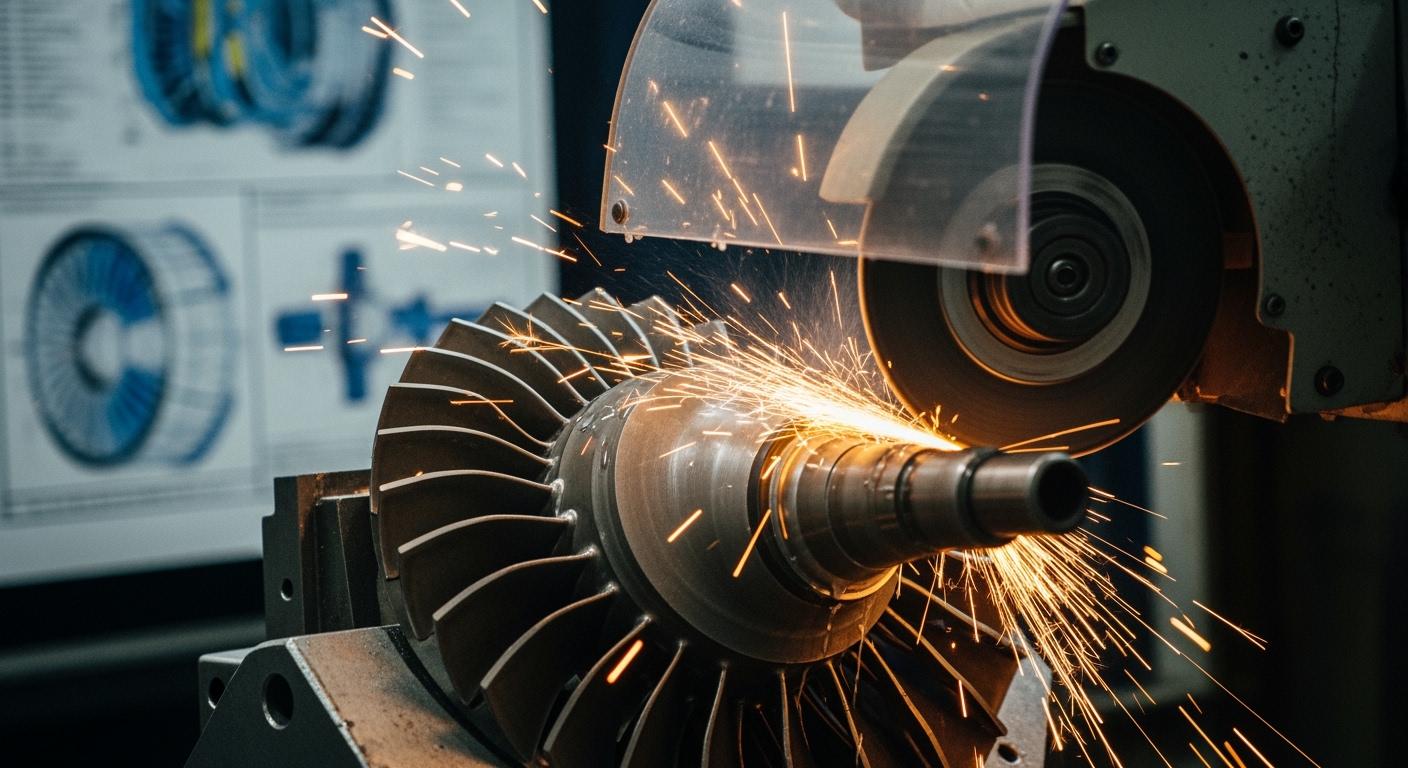
You can prevent thermal damage in jet engine component grinding by selecting the right grinding wheels, optimizing your parameters, and ensuring proper coolant use. Thermal damage happens when excess heat changes the structure of the material during grinding. This can weaken jet engine parts, reduce their lifespan, and lead to failures. The latest ceramic matrix composites in engines resist temperatures up to 1400°C and lower weight by 30-40%. Advanced coatings also extend component life by reducing temperatures. Grinding with the correct wheels is critical because superalloys and composites need precise control. Aimgrind specializes in customized grinding solutions, helping you match the best wheel to your process.
| Performance Factor | Impact of Thermal Damage on Jet Engine Components |
|---|---|
| Material Advancements | CMCs allow higher temperature resistance and weight loss |
| Thermal Barrier Coatings | Lower metal temperature, longer part lifespan |
| Hybrid Material Systems | Improved resistance, fewer failures |
- Composite materials like CMCs increase fuel efficiency and operate at higher temperatures than nickel superalloys.
Key Takeaways
- Select the right grinding wheels to minimize heat generation and prevent defects.
- Optimize grinding parameters like speed and feed rate to control heat and avoid grinding burn.
- Ensure a strong coolant supply to dissipate heat and maintain surface quality during grinding.
- Regularly maintain grinding equipment to prevent uneven grinding and thermal damage.
- Train operators to recognize signs of thermal damage and adjust processes for better quality.
Causes of Thermal Damage in Grinding
Improper Parameters
You can face serious defects in jet engine components if you set the wrong grinding parameters. When you use too much force or a high feed rate, the grinding process creates excess heat. This heat can cause grinding burn, which changes the surface of the material. You might see the hardness drop or even find new, brittle layers forming. These changes make the part weaker and can lead to cracks or other grinding defects. If you do not control the grinding parameters, you risk phase transformations that reduce the strength and durability of the part.
- Grinding burn can soften or harden the surface.
- Phase changes may create brittle spots.
- Surface hardness can fall outside safe limits.
Inadequate Coolant
Coolant plays a key role in the grinding process. If you do not use enough coolant or if the coolant jet does not reach the grinding zone, heat builds up quickly. This leads to burn and other defects. Tests show that straight oil coolant prevents burn and keeps the surface safe. Water soluble oil coolant can cause burn at even low feed rates. You need to make sure the coolant jet is strong and aimed at the right spot to avoid grinding burn and grinding cracks.
- Straight oil coolant stops burn and keeps the surface cool.
- Weak coolant jets allow heat to damage the part.
- Poor coolant supply leads to more defects.
Incorrect Wheel Choice
The grinding wheel you choose affects how much heat builds up. If you use the wrong wheel, you increase the risk of grinding burn and other defects. Wheels made from diamond or cubic boron nitride create less heat. These wheels work well for high-precision grinding in aerospace. Wheels with larger grains remove chips better and help get rid of heat. If you pick the wrong wheel, you may see more grinding defects and even grinding cracks.
- Diamond wheels lower heat and reduce burn.
- Larger grain wheels help with heat dissipation.
- The wrong wheel increases grinding defects.
Equipment Issues
Grinding equipment must work properly to prevent defects. If your machine has worn parts or poor alignment, you can get uneven grinding. This causes hot spots and leads to burn. Faulty coolant jets or blocked nozzles also let heat build up. You should check your equipment often to avoid grinding defects and keep the grinding process safe.
- Worn machines create uneven heat.
- Blocked coolant jets cause burn.
- Regular checks prevent grinding defects.
Tip: Always monitor your grinding process for signs of burn, cracks, or other defects. Early action can save your jet engine components from costly damage.
Grinding Burn Risks and Effects
Material Degradation
You need to understand how grinding burn changes the material in jet engine parts. When you use grinding with too much heat, the surface can show burns. These burns come from high temperatures during grinding. The surface may look blue or dark. You may also see changes in the microstructure of the alloy. These changes can make the metal weaker. The grinding process can cause tensile residual stresses. These stresses make the part more likely to fail. Metallurgical phase changes can also happen. The alloy may lose its strength and toughness. The table below shows some effects of grinding burn on jet engine alloys:
| Effect | Description |
|---|---|
| Surface Burns | Caused by high temperatures during grinding, leading to thermal and mechanical reasons. |
| Tensile Residual Stresses | Induced due to steep temperature gradients, adversely affecting mechanical properties. |
| Metallurgical Phase Changes | High grinding temperatures can lead to changes in the alloy’s microstructure, impacting strength. |
Grinding burn can also lead to other defects. You may see small cracks or even holes in the surface. These defects make the part unsafe for use in jet engines.
Reduced Lifespan
Grinding burn does not just change the surface. It also shortens the life of jet engine components. When you have defects from grinding, the part wears out faster. The surface may chip or break during use. You may need to replace the part sooner than expected. This increases costs and downtime. If you use the wrong grinding wheel or do not control the process, you will see more defects. The part will not last as long as it should.
Note: Regular checks for grinding burn help you catch defects early and keep your parts working longer.
Performance Failures
Grinding burn can cause serious performance problems. If you have defects like cracks or burns, the part may fail during flight. This can lead to engine shutdowns or even accidents. The grinding process must stay under control to avoid these risks. You need to use the right grinding wheels and parameters. Good grinding practices keep your jet engine parts safe and reliable. When you prevent grinding burn, you protect the performance of the whole engine.
Prevent Thermal Damage: Strategies and Solutions
You can prevent thermal damage in jet engine component grinding by following proven strategies. Each step in the grinding process matters. You must control speed, select the right grinding wheel, and maintain effective cooling. These actions help you achieve high quality and efficiency.
Optimize Grinding Parameters
You need to set the right speed, feed, and depth of cut for your grinding process. If you use a high speed, you may remove material faster, but you also risk more heat and grinding burn. Lowering the depth of cut can reduce thermal stress, but you may need more passes. Adjusting the feed rate helps you control how long the grinding wheel touches the part. This reduces the chance of burn and cracks. You should always check your grinding parameters to match the material and the grinding wheel.
| Optimization Area | Strategy | Expected Outcome |
|---|---|---|
| Grinding Process | Adjust radial feed and stroke speed; ensure proper alignment; reserve safety margin. | Controlled heat input and uniform material removal. |
| Wheel and Dressing | Select appropriate wheel hardness and grain size; optimize dressing parameters. | Enhanced cutting efficiency and reduced thermal load. |
| Microstructural Control | Limit carbon to 0.7-0.9%; use double tempering; apply shot peening. | Reduced brittleness and residual stress, lowering cracks risk. |
You can prevent thermal damage by making small changes to your grinding process. Always monitor speed and feed. Use a grinding wheel that matches your material. This keeps the grinding quality high and prevents grinding burn.
Ensure Coolant Supply
Coolant is vital in the grinding process. It removes heat, keeps the grinding wheel clean, and improves surface quality. You should use a high-volume coolant to flush away debris and keep the grinding area cool. The coolant must reach the grinding zone with enough velocity. Clean coolant prevents thermal damage and grinding burn. Water-based coolants work well with diamond grinding wheels. Soluble oils give better lubrication, but you must filter them often. Synthetic fluids reduce foaming and help the grinding wheel cut better.
- Coolant dissipates heat and prevents thermal damage.
- It maintains part accuracy and surface quality.
- Coolant lubricates the grinding wheel and extends its life.
- High coolant velocity flushes away debris and keeps the process safe.
You must check your coolant supply often. Make sure the coolant jet hits the grinding zone. Clean and replace coolant as needed. This ensures effective cooling and prevents grinding burn.
Select Diamond Grinding Wheels by Aimgrind
Choosing the right grinding wheel is key to prevent thermal damage. Aimgrind offers diamond grinding wheels that give you high quality and efficiency. These wheels cut hard alloys, ceramics, and composites with less heat. You get a smooth finish and fewer defects. Aimgrind’s diamond grinding wheels come in resin, metal, and vitrified bonds. You can pick the best wheel for your process.
- Diamond grinding wheels remove material fast and keep the temperature low.
- They last longer and need fewer changes, which boosts efficiency.
- You can use them for wet or dry grinding.
- Aimgrind customizes wheels to fit your machine and process.
Aimgrind’s team helps you match the grinding wheel to your needs. You get support with parameter selection and sample testing. This ensures you achieve the best grinding quality and prevent grinding burn. Visit Aimgrind’s diamond grinding wheels to learn more.
Maintain Equipment
You must keep your grinding equipment in top condition. Worn parts or poor alignment can cause uneven grinding and hot spots. This leads to burn and cracks. Check your machines often. Make sure the coolant system works well. Clean or replace blocked nozzles. Set up your grinding operations correctly every time.
| Evidence | Explanation |
|---|---|
| Effective coolant systems | These systems help maintain stable temperatures during the grinding process, which is essential to avoid thermal damage. |
- Adequate cooling lubricants prevent excess heat.
- Correct setup avoids grinding burn and keeps the process safe.
Regular maintenance keeps your grinding process stable. You get better grinding quality and longer machine life.
Operator Training
Well-trained operators help you prevent thermal damage. You should teach your team how to set grinding parameters, check coolant supply, and select the right grinding wheel. Operators must know how to spot grinding burn, cracks, and chatter. Training helps your team react fast to any problem. This keeps the grinding process safe and efficient.
- Operators learn to adjust speed and feed for each material.
- They check coolant supply and grinding wheel condition.
- Training reduces mistakes and improves grinding quality.
You can prevent grinding burn and keep your jet engine components safe with skilled operators. Good training supports high efficiency and quality in every grinding process.
Tip: Review your grinding process often. Small changes in speed, coolant, or grinding wheel choice can prevent thermal damage and improve quality.
Prevent Grinding Burn: Detection and Testing
Surface Temperature Monitoring
You can spot early signs of thermal damage by watching the surface temperature during grinding. High energy in grinding creates steep temperature changes on the surface. These changes can lead to grinding burn and weaken the material. You should use tools like infra-red sensors to measure the surface temperature quickly and accurately. Direct measurement is hard, so indirect methods work best. If you keep the surface temperature under control, you lower the risk of damage.
| Evidence Description | Key Findings |
|---|---|
| High energy values in grinding lead to steep thermal gradients | These gradients can cause grinding burn, affecting material properties and leading to failure. |
| Importance of temperature prediction and measurement | Effective temperature monitoring is critical to prevent thermal damage during grinding operations. |
- Surface temperature control is essential to prevent thermal damage.
- Infra-red devices give fast and accurate surface readings.
Non-Destructive Testing
You can use non-destructive testing to check for hidden damage on the surface after grinding. Barkhausen Noise Analysis (BNA) helps you find small changes in the surface structure before you see any cracks. BNA can spot flaws early and help you adjust your grinding process. Nital etching also shows surface burns and stress. These methods do not harm the surface and give you important information.
| Method | Sensitivity to Burns | Residual Stress (MPa) |
|---|---|---|
| Nital Etch | Class A (20) | -700 |
| Barkhausen Noise | Class B (45) | 200 |
| Class D (70) | 400 |
- BNA detects microstructural changes on the surface.
- You can use these tests to improve grinding quality.
Visual Inspection
You should always look at the surface after grinding. A clean, shiny surface means good grinding. If you see blue or dark spots, you may have thermal damage. Small cracks or rough patches on the surface also warn you about problems. Use a magnifying glass or microscope for a closer look. Early visual checks help you fix issues before they get worse.
Tip: Check the surface right after grinding. Quick action prevents bigger problems.
Metallurgical Analysis
Metallurgical analysis gives you a deep look at the surface and the layers below. You can measure things like hardness, ductility, and electrical conductivity. If the surface has been damaged by heat, you will see lower hardness and ductility. The surface may also show marked etching under a microscope. This analysis confirms if the surface has changed from grinding.
| Property | Unaffected Regions | Heat-Affected Regions |
|---|---|---|
| Electrical Conductivity (IACS) | 33% | Up to 45.8% |
| Mechanical Properties | Typical of 2024-T3 | Significant decreases |
| Ductility | Normal | Decreased |
| Hardness | Normal | Decreased |
| Temper Change | T3 | Fully Annealed |
| Metallographic Evaluation | No significant differences | Marked etching observed |
You can use metallurgical analysis to confirm the extent of surface damage. This helps you decide if the part is safe to use.
Best Practices for Grinding Safety
Process Documentation
You should keep clear records for every grinding operation. Good documentation helps you track the steps you follow and the results you get. When you write down your process, you can spot problems faster and make better decisions. You also help your team repeat the best methods every time.
- You can record how you apply coolant during grinding. This helps you manage heat and avoid thermal damage.
- You can note how often you dress the wheel. Better coolant use means you do not need to dress the wheel as often.
- You can check for issues like foaming or misting in the coolant. These problems can disrupt the grinding process.
A well-documented process keeps your grinding safe and efficient.
Continuous Improvement
You should always look for ways to improve your grinding process. Small changes can make a big difference in quality and safety. You can ask your team for ideas and test new methods. You can also review your records to find patterns or mistakes.
Tip: Try new grinding parameters on a test piece before using them on important parts.
Continuous improvement helps you stay ahead of problems and keeps your grinding process strong.
Quality Assurance
You need a strong quality assurance plan for grinding. This means you check your work at every step. You can use inspections, tests, and measurements to make sure each part meets your standards. You should train your team to spot signs of thermal damage early. You can also use checklists to make sure you do not miss any steps.
| Quality Check | What to Look For | Why It Matters |
|---|---|---|
| Surface Inspection | Burns, cracks, color changes | Prevents part failure |
| Coolant Monitoring | Flow, clarity, temperature | Controls grinding heat |
| Wheel Condition | Shape, wear, balance | Ensures safe grinding |
Quality assurance keeps your grinding process reliable and your jet engine components safe.
You can prevent thermal damage in jet engine component grinding by optimizing parameters, ensuring coolant supply, and selecting the right grinding wheels. Aimgrind’s diamond grinding wheels help you achieve precision and durability. You improve grinding quality by maintaining equipment and training operators. The table below shows solutions for common challenges in grinding:
| Key Challenges | Solutions |
|---|---|
| Oil mist & fumes | Mist Collection Extraction System |
| Heat dissipation | High Pressure Through Coolant System |
| Contaminants | Coolant Filtration System |
You can also use a chiller to keep fluids cool and a filtration system for clean grinding. Consult Aimgrind for customized grinding solutions.
FAQ
What causes thermal damage during grinding?
You create thermal damage when grinding generates too much heat. This happens if you use the wrong parameters, lack coolant, or pick the wrong grinding wheel. You must control these factors to keep your jet engine parts safe.
How do Aimgrind diamond grinding wheels help prevent burn?
Aimgrind diamond grinding wheels cut hard materials with less heat. You get a smoother finish and fewer defects. These wheels last longer and need fewer changes. You can trust them for high-precision grinding.
Why is coolant important in grinding?
Coolant removes heat from the grinding zone. You keep the surface cool and prevent burns. Coolant also flushes away debris and helps the grinding wheel last longer.
How can you detect grinding burn early?
You can check for grinding burn by watching surface color, using temperature sensors, or testing with Barkhausen Noise Analysis. Early detection helps you fix problems before they cause damage.
Contact Us
For More Grinding Solution or Customized Abrasive Tools