

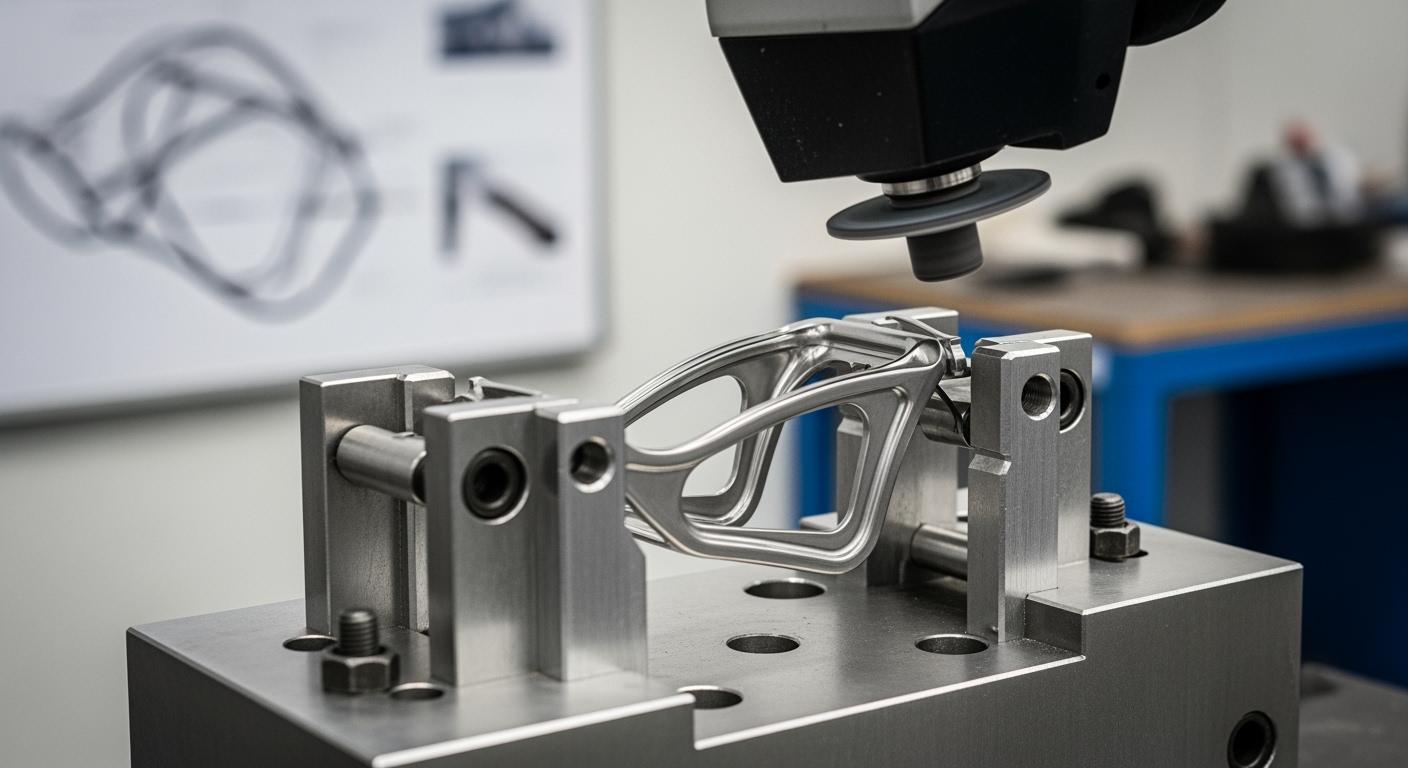
You can prevent distortion during titanium machining by using practical techniques that focus on rigid workholding, smart tool selection, and precise grinding methods. Distortion is a critical issue because titanium’s flexibility and vibration tendencies demand special attention.
Titanium’s unique flexibility and vibration tendencies require specialized clamping strategies that maximize rigidity while preventing distortion throughout the entire machining process.
In industries like aerospace, even minor distortion can affect performance. Aimgrind offers customized grinding solutions and diamond grinding wheels designed for thin-wall titanium machining.
Key Takeaways
- Use rigid workholding techniques to stabilize thin-wall titanium parts during machining. Custom fixtures and steady rests prevent bending and vibration.
- Select the right diamond grinding wheels to control heat and reduce distortion. Look for wheels designed specifically for titanium to improve surface finish.
- Implement adaptive machining techniques to monitor and adjust cutting parameters in real time. This helps minimize vibration and maintain part integrity.
- Apply effective cooling methods like Minimum Quantity Lubrication to manage heat and friction. This reduces the risk of thermal distortion in titanium components.
- Plan your machining process carefully, including pass sequencing and toolpath optimization. This approach helps prevent deflection and ensures accurate results.
Causes of Distortion in Titanium Machining
Material Properties and Thin-Wall Challenges
You face many challenges when machining thin walls made of titanium. Titanium machining often leads to distortion because titanium has unique properties. These properties include low thermal conductivity, high strength, and low modulus of elasticity. Low thermal conductivity causes heat to build up at the cutting edge. This heat can lead to shrinkage and rapid tool wear. High strength means you need more force to cut or grind titanium. Low modulus of elasticity makes titanium springy, so panels can bend or flex easily. Chemical reactivity at high temperatures can cause titanium to stick to tools during machining or welding.
When you work with thin panels, the risk of distortion increases. Thin walls make it harder to keep the panel stable. Machining thin walls can cause tool deflection and vibrations. These problems affect surface finish and accuracy. Thicker panels provide more stability and help prevent angular distortion. The 8-to-1 rule helps you preset to offset distortion. It says the maximum depth of cut should not be more than eight times the thickness of the panel next to the cut. This rule helps you control shrinkage and avoid panel distortion.
Understanding the material properties and wall thickness helps you choose the right machining and welding methods to reduce distortion.
Common Sources of Deflection
You must know the main sources of deflection when grinding titanium panels. The table below shows the most common causes:
| Source of Deflection | Description |
|---|---|
| Cutting Forces | Larger cutting forces increase the magnitude of deflection, affecting part thickness and performance. |
| Thermal Loads | Localized thermal stress leads to non-uniform dimensional deviations, impacting fatigue life. |
| Elastic-Plastic Deformation | The flexible thin wall’s deformation due to low rigidity results in varying thickness and performance. |
Residual stress from previous machining or welding operations also affects distortion. When you release clamping forces, the panel can change shape because of elastic recovery. Even moderate residual stress can cause angular distortion or longitudinal shrinkage. These changes lead to out-of-tolerance conditions or scrap. You must control residual stress to prevent panel distortion and improve machining quality.
You can reduce distortion by understanding these sources and using proper machining, welding, and grinding techniques.
Workholding Techniques to Prevent Distortion
Rigid and Custom Fixtures
You need strong and stable workholding to prevent distortion when machining thin walls made of titanium. Custom fixtures support your part at key points. This support stops movement or bending during grinding. You can use steady rests or tailstock supports for long, slender parts. These supports break long sections into shorter spans. Shorter spans help prevent thin-wall deflection and reduce vibration.
You should avoid over-clamping. Too much force can cause warping or angular distortion. Instead, use several low-force clamps. This spreads the pressure and keeps the part flat. Sacrificial clamp plates protect important surfaces from damage. These plates take the pressure, so your titanium part stays safe.
- Use custom fixtures that match the shape of your part.
- Place supports close to the cutting area.
- Add extra supports for long or thin features.
- Use multiple low-force clamps instead of a few strong ones.
- Protect surfaces with sacrificial plates.
Tip: Custom fixtures and steady rests help you prevent thin-wall deflection and stop vibration during titanium machining.
Vacuum and Vibration Damping Methods
Vacuum fixtures give you even support across the whole surface. This technique holds thin titanium parts flat without causing angular distortion. Vacuum workholding works well for panels and sheets. It also allows for quick setup and removal.
To reduce vibration, you can use vibration damping pads or materials under your part. These pads absorb energy and stop vibration from spreading. You can also use hydraulic clamping systems. These systems give you precise and repeatable pressure. Even pressure helps prevent distortion and shrinkage during titanium machining.
- Vacuum fixtures hold thin panels flat and prevent thin-wall deflection.
- Vibration damping pads reduce vibration and stop angular distortion.
- Hydraulic clamps give even pressure and help with distortion control.
Note: Using vacuum and damping methods helps you prevent distortion and reduce vibration when machining thin walls of titanium.
Aimgrind Solutions for Thin-Wall Stability
Aimgrind understands the challenges of titanium machining. The brand offers workholding solutions that support your part close to the cutting area. This support helps you prevent distortion and shrinkage. Aimgrind distributes clamping pressure evenly. Even pressure keeps your titanium part stable and flat.
You can see the best clamping approaches in the table below:
| Workpiece Characteristic | Recommended Clamping Approach | Benefits |
|---|---|---|
| Thin-walled parts | Distributed pressure across maximum surface area | Prevents distortion while maintaining rigidity |
| Solid blocks | Strategic clamping near cutting zones | Minimizes vibration at the source |
| Complex geometries | Custom-fit fixtures with conformal support | Eliminates unsupported areas susceptible to vibration |
Aimgrind uses these techniques to help you with titanium machining:
- Place clamps as close as possible to the cutting area.
- Add support fixtures for long or thin features.
- Use multiple setups for complex parts instead of reaching across long distances.
- Add intermediate supports, even in areas you do not machine.
Aimgrind’s workholding solutions allow for efficient chip removal and coolant access. This helps you prevent shrinkage and angular distortion during milling, grinding, and welding. The team at Aimgrind can diagnose your workholding challenges and design custom fixtures for your titanium machining needs.
Remember: Good workholding is the first step to prevent distortion, stop vibration, and achieve high-quality results in titanium machining.
Tool Selection and Diamond Grinding Wheels
Choosing the Right Wheel for Titanium
You need to select the right grinding wheel to prevent distortion during titanium machining. The right wheel helps you control heat and reduce vibration. When you choose a wheel, look at these key factors:
- Grinding parameters: Use a shallow grinding depth. This reduces the number of cutting edges in contact and makes the chips thinner. Less heat builds up, and the wheel wears down more slowly.
- Cooling and lubrication: Use grinding fluid through the wheel’s inner holes or try liquid nitrogen. These techniques lower grinding forces and temperatures. They also stop titanium from sticking to the wheel.
- Wheel characteristics: Pick a wheel with the right abrasive, binder, and porosity. These features help with cooling and delay wheel wear.
These techniques help you keep titanium parts stable during machining, milling, and welding. You can avoid distortion and get a better finish.
Tool Geometry and Coatings
Tool geometry plays a big role in titanium machining. Sharp edges and positive rake angles help you cut cleanly. These features lower deflection and keep your thin-wall titanium parts precise. You should also look at tool coatings. Coatings like TiAlN and AlTiN help manage heat and reduce wear. They keep the tool sharp and stop titanium from sticking. This lowers the risk of distortion during grinding, milling, and welding.
Titanium’s low modulus of elasticity makes it flexible. This can cause vibration and deformation. You need stable setups and strong workholding to keep your titanium parts from moving. These techniques help you control distortion and improve your machining results.
Aimgrind Diamond Grinding Wheels Advantages
Aimgrind offers diamond grinding wheels made for titanium machining. These wheels give you high cutting efficiency and a long service life. You can use them for grinding, milling, and welding titanium parts. Aimgrind’s wheels come in resin, metal, and vitrified bonds. You can pick the best one for your application.
Aimgrind designs each wheel to match your equipment and process. The wheels help you remove material quickly and keep the surface smooth. You get less downtime and fewer wheel changes. Aimgrind’s team helps you choose the right wheel and workholding techniques. This support helps you prevent distortion and get the best results in titanium machining.
Tip: Use Aimgrind diamond grinding wheels with the right techniques to control distortion and improve your titanium machining, milling, and welding projects.
Grinding Parameters and Process Techniques
Speeds, Feeds, and Depth of Cut
You must select the right cutting parameters to prevent distortion when machining thin walls of titanium. Titanium machining needs careful control of speeds, feeds, and depth of cut. These choices help you minimize distortion and keep your parts accurate. You can use shallow cuts and light passes to reduce heat and vibration. This approach works well for milling, grinding, and welding titanium components.
The table below shows optimal cutting parameters for different titanium alloys. You can use these values to guide your titanium machining and prevent distortion.
| Titanium Alloy | Operation Type | Recommended Cutting Speed (SFM) | Feed Rate (IPT/IPR) | Depth of Cut |
|---|---|---|---|---|
| Commercially Pure | Roughing | 200-250 | 0.004-0.008 IPT | 1-2 times tool diameter |
| Commercially Pure | Finishing | 250-300 | 0.004-0.008 IPT | 0.010-0.030″ |
| Ti-6Al-4V | Roughing | 150-200 | 0.005-0.015 IPR | 1-2 times tool diameter |
| Ti-6Al-4V | Finishing | 200-250 | 0.004-0.008 IPT | 0.010-0.030″ |
| Ti-5Al-5Mo-5V-3Cr | Roughing | 100-150 | 0.005-0.015 IPR | 1-2 times tool diameter |
| Ti-5Al-5Mo-5V-3Cr | Finishing | 150-200 | 0.004-0.008 IPT | 0.010-0.030″ |
You should always start with lower speeds and feeds when machining thin walls. This technique helps you avoid chatter and keeps your titanium parts stable. You can increase the speed for finishing passes, but keep the depth of cut small. Small cuts help you minimize distortion and improve surface finish. You must monitor your workholding and toolpath to make sure your titanium machining stays accurate.
Tip: Use shallow cuts and light passes to prevent distortion and keep your titanium parts precise.
Pass Sequencing to Prevent Thin-Wall Deflection
You can use smart pass sequencing to prevent distortion during titanium machining. This technique involves planning the order of your cuts to reduce stress and vibration. You should start with roughing passes that remove most material. These passes use optimal cutting parameters and keep the part stable. You can follow with finishing passes that use lighter cuts and slower feeds.
You must avoid removing too much material at once. This mistake can cause thin walls to bend or flex. You can use trochoidal milling to spread the cutting forces and reduce heat. Trochoidal milling uses a circular toolpath that keeps the tool engaged with the material. This method helps you prevent distortion and control vibration.
You can also use multiple setups for complex parts. This technique lets you support thin features during each stage of titanium machining. You must check your workholding after each pass to make sure your part stays flat and rigid.
- Plan your pass sequence to minimize distortion.
- Use roughing passes with optimal cutting parameters.
- Follow with finishing passes using light cuts.
- Apply trochoidal milling for thin-wall features.
- Check workholding after each pass.
Note: Smart pass sequencing and trochoidal milling help you prevent distortion and keep your titanium parts accurate.
Adaptive Machining and Vibration Control
You can use adaptive machining techniques to control vibration and prevent distortion in titanium machining. Adaptive control systems monitor your spindle speed and feedrate during milling, grinding, and welding. These systems adjust the cutting parameters in real time to keep your titanium parts stable.
You can optimize spindle speed to avoid chatter. Chatter causes vibration and distortion in thin-wall titanium components. You must use enhanced monitoring strategies to detect vibration early. These strategies help you adjust your toolpath and workholding before distortion occurs.
Adaptive machining techniques include:
- Adaptive control systems that minimize vibration and distortion.
- Feedrate optimization to reduce processing time and cutter consumption.
- Real-time monitoring to prevent chatter and improve machining quality.
- Spindle speed adjustment for titanium machining and welding.
- Toolpath changes to keep thin walls stable.
You can see big improvements when you use adaptive machining. Feedrate optimization can cut processing time and reduce tool wear. Real-time monitoring helps you catch vibration before it causes distortion. You must use these techniques with strong workholding and smart toolpath planning.
Tip: Adaptive machining and vibration control help you minimize distortion and improve your titanium machining results.
Cooling and Lubrication to Prevent Distortion
You must use proper cooling and lubrication to prevent distortion during titanium machining. These techniques help you control heat, reduce vibration, and keep thin-wall titanium parts stable. Cooling and lubrication also protect your tools and improve surface finish.
Coolant Types and Application
You can choose different coolants for titanium machining. Coolant selection affects heat management, surface quality, and grinding force. The table below shows how coolant types impact thin-wall titanium grinding:
| Coolant Type | Maximum Temperature (°C) | Surface Roughness (µm) | Grinding Force (N) |
|---|---|---|---|
| CN-MQL (5 g/L) | 250.41 | 0.49 | 20.3 |
| Dry Grinding (DG) | 336.98 | 8.44 | 44.9 |
| Wet Grinding (WG) | N/A | N/A | N/A |
You should use CN-MQL for titanium machining. This coolant lowers temperature and grinding force. It also gives you a smoother surface. Dry grinding causes more heat and roughness. Wet grinding can help, but CN-MQL works best for thin-wall titanium.
Tip: Apply coolant directly to the cutting zone. Use high-pressure systems to remove chips and reduce heat. This technique helps you prevent distortion and chatter.
Minimum Quantity Lubrication (MQL)
Minimum Quantity Lubrication is a smart technique for titanium machining. MQL uses a small amount of lubricant to control heat and friction. You can see how MQL compares to flood cooling in the table below:
| Method | Friction Reduction | Heat Generation | Impact on Distortion | Surface Integrity | Dimensional Accuracy |
|---|---|---|---|---|---|
| Minimum Quantity Lubrication | High | Low | Minimizes distortion | Improved | Enhanced |
| Flood Cooling | Moderate | High | Higher risk of distortion | Standard | Standard |
You should use MQL to prevent distortion. This technique reduces heat and friction. It also improves surface integrity and accuracy. Flood cooling can cause more distortion and chatter in thin-wall titanium machining.
Heat Management for Thin-Wall Titanium
You need strong heat management techniques for titanium machining. These techniques help you avoid thermal distortion and keep your parts precise.
- Lower RPMs and high torque prevent deflection and vibration.
- Use sharp carbide tools with PVD or TiAlN coatings to resist wear and heat.
- Keep feed rates constant. Adjust axial depth for each pass to spread tool wear.
- High-pressure coolant systems remove heat and chips.
- Cryogenic cooling uses liquid nitrogen or carbon dioxide to lower cutting zone temperature.
You can combine these techniques with good workholding and toolpath planning. This approach helps you prevent distortion, reduce chatter, and improve titanium machining results.
Note: Cooling and lubrication are key to controlling distortion in titanium milling, grinding, and workholding.
Advanced Path Strategies and Techniques
Toolpath Optimization for Distortion Control
You can use advanced toolpaths to control distortion during titanium machining. These techniques help you manage heat and reduce stress on thin-wall titanium parts. When you plan your toolpath, you should focus on keeping the cutting load steady. This approach prevents sudden force changes that can bend or warp titanium.
Here is a table showing some advanced toolpath strategies for titanium machining:
| Strategy | Description |
|---|---|
| Dynamic and Trochoid Milling | Minimizes heat by keeping cutting loads steady and avoids tool overload. |
| Trochoidal Milling | Uses curved paths to keep tool load even, reducing heat and allowing faster feeds. |
| Constant Engagement Tool Paths | Keeps the tool in steady contact with titanium, reducing chatter and spreading tool wear. |
You can use these techniques to keep your titanium parts stable and accurate. Climb milling also helps by reducing cutting forces and improving surface finish.
Stress Minimization and Deflection Compensation
You need to plan your toolpath to minimize stress and deflection in titanium machining. Dynamic tool paths adjust feed rates based on how much of the tool touches the titanium. This keeps cutting conditions optimal and reduces distortion.
- Dynamic tool paths change feed rates to match engagement and material removal.
- Good process planning considers stress, vibration, and distortion to stop unexpected movement.
- Managing residual stresses keeps titanium parts stable during machining.
These techniques help you avoid deflection and keep your thin-wall titanium components precise.
Real-Time Monitoring and Adjustment
You can use real-time monitoring to keep distortion under control during titanium machining. Smart systems track cutting forces, temperature, and vibration as you work. This lets you adjust your techniques right away if something changes.
Here is a table showing some technologies for real-time monitoring in titanium machining:
| Technology | Description |
|---|---|
| AI-Driven Optimization | Adjusts cutting parameters in real time, schedules maintenance, and monitors tool wear. |
| Smart Monitoring Systems | Uses digital twins and sensors to track force, temperature, and vibration. |
| Real-Time Monitoring | Tracks cutting forces, spindle power, tool wear, and thermal conditions with advanced sensors. |
You can use these systems to spot problems early and keep your titanium parts within tight tolerances. These techniques help you maintain part integrity and prevent distortion during every stage of titanium machining.
You can prevent distortion in titanium machining by using techniques like rigid workholding, optimized tool selection, and adaptive grinding. The table below shows common challenges you face in titanium machining:
| Challenge Type | Description |
|---|---|
| Material Instability | Thin-walled parts are prone to deformation and instability during machining due to their fragility. |
| Vibration and Chatter | Reduced thickness increases the likelihood of vibrations, affecting surface finish and accuracy. |
| Tool Deflection | Delicate tooling is required to prevent inaccuracies caused by tool deflection under cutting forces. |
| Heat Generation | High-speed operations can generate excessive heat, leading to thermal distortion and cracking. |
| Workholding Challenges | Traditional clamping methods may cause uneven pressure, risking part distortion or damage. |
| Tool Selection and Geometry | Choosing the right tools and geometries minimizes cutting forces and reduces deflection risks. |
| Surface Finish Requirements | Achieving the desired finish is challenging due to potential tool marks and surface imperfections. |
A medical device company improved titanium machining by using advanced techniques and real-time monitoring, reducing distortion and achieving high accuracy. Aimgrind’s customized diamond grinding wheels and expert support help you apply these techniques. Use this quick checklist:
- Choose rigid fixtures for titanium machining.
- Select diamond grinding wheels for thin-wall titanium.
- Apply adaptive machining and cooling techniques.
- Monitor distortion and adjust techniques as needed.
- Consult Aimgrind for expert solutions.
Continuous improvement and expert advice keep your titanium machining distortion-free.
FAQ
What makes titanium machining challenging for thin-wall parts?
Titanium machining is difficult because titanium bends easily and heats up fast. Thin-wall parts can distort or vibrate. You must use strong fixtures and the right grinding wheels to keep titanium parts stable.
How do you prevent distortion during titanium machining?
You prevent distortion by using rigid workholding, diamond grinding wheels, and proper cooling. You must choose the right speeds and feeds. These steps help you keep titanium parts accurate and avoid bending.
Why do you need special grinding wheels for titanium?
Titanium is tough and wears out regular wheels quickly. Diamond grinding wheels last longer and cut titanium smoothly. You get better surface finish and less distortion during titanium machining.
What cooling methods work best for titanium machining?
You should use high-pressure coolant or minimum quantity lubrication. These methods keep titanium cool and reduce heat. Cooling helps you prevent distortion and improves the quality of titanium parts.
Can you use real-time monitoring in titanium machining?
Yes, you can use sensors to track vibration and heat. Real-time monitoring helps you adjust your process. You keep titanium parts within tolerance and avoid distortion during titanium machining.
Tip: Always check your setup before starting titanium machining. Good preparation prevents distortion and improves results.
Contact Us
For More Grinding Solution or Customized Abrasive Tools