

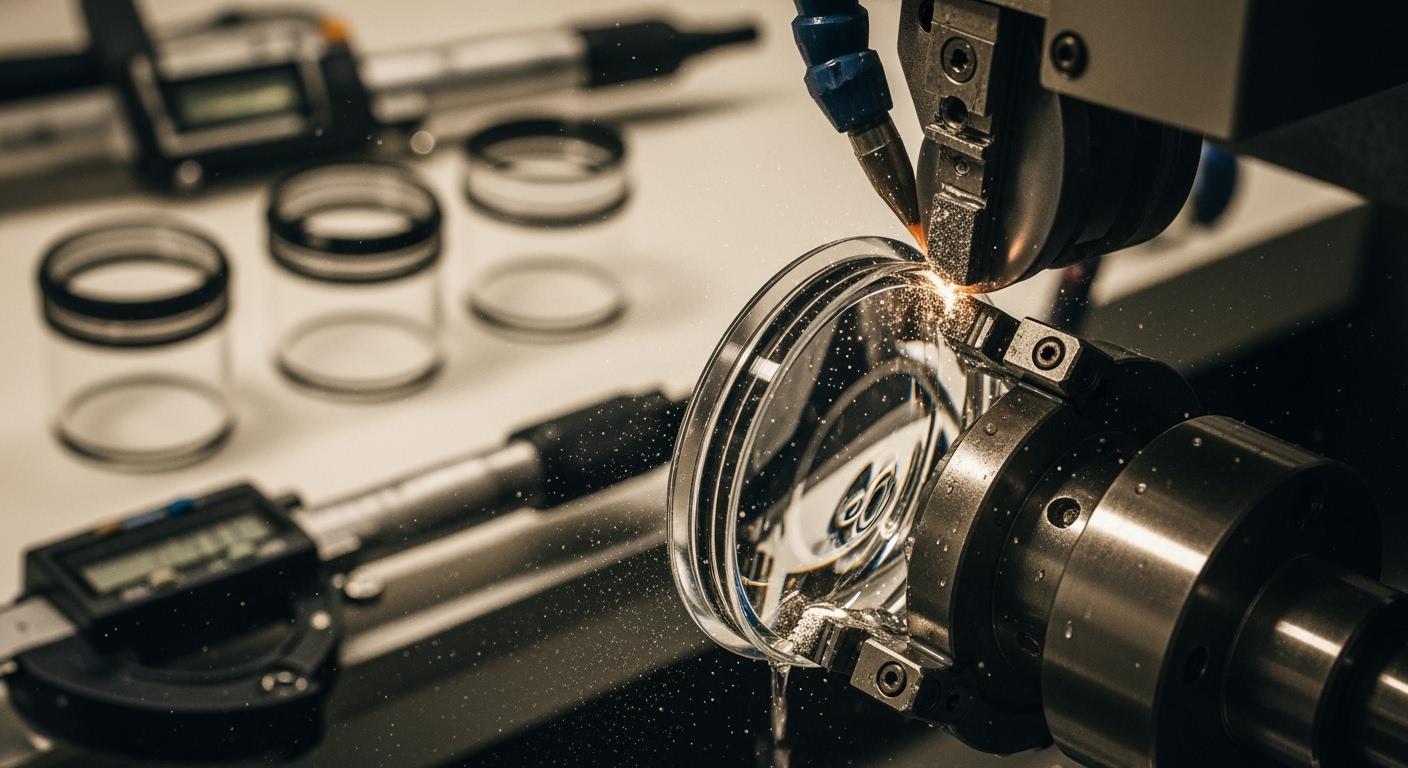
You can Improve Edge Grinding accuracy for optical lenses by focusing on precision at every step. Precision in optical glass processing impacts the performance of finished lenses in many ways:
- It enhances visual clarity for users.
- It reduces optical aberrations by up to 40%, providing clearer images and more comfort.
- It enables advanced manufacturing with exceptional accuracy.
Advanced tools like diamond grinding wheels from Aimgrind help you reach these high standards. Choosing the right equipment and technology makes a noticeable difference in your results.
Key Takeaways
- Choose high-precision optical grinding machines that meet strict specifications to ensure accuracy and reliability.
- Utilize Aimgrind diamond grinding wheels for their sharpness and wear resistance, which enhance edge quality and reduce chipping.
- Optimize grinding parameters like wheel speed and coolant flow to improve surface finish and maintain edge integrity.
- Regularly calibrate your equipment to avoid errors and ensure consistent results in lens grinding.
- Invest in ongoing operator training and routine maintenance to keep your grinding processes efficient and effective.
Equipment Selection for Optical Glass
Choosing Precision Machines
You need the right equipment to achieve high accuracy in edge grinding for optical glass. The optical grinding machine plays a key role in shaping and finishing each lens. When you select an optical grinding machine, you should look for features that support precision and reliability. The table below shows important specifications you should check:
| Specification Type | Requirement |
|---|---|
| Quality Management Standard | ISO 9001:2015 |
| CE Certification | Required for European markets |
| Electromagnetic Compatibility | IEC 61000-6-2 |
| Surface Flatness Tolerance | ±1 µm |
| Edge Roundness Accuracy | ±0.05 mm |
| Spindle Speed Range | 1,000–6,000 RPM |
| CNC Resolution | 1 µm |
| Warranty Duration | Minimum 12 months |
| After-Sales Support | 24/7 technical support |
| Operational Safety Compliance | OSHA and EN ISO 13849-1 standards |
You should always choose an optical grinding machine that meets these standards. This helps you get the best results when working with optical glass. High spindle speed and CNC resolution allow you to control the grinding process with great detail. You can trust your optical glass will have smooth edges and a perfect finish.
Aimgrind Diamond Grinding Wheels
Diamond tools are essential for processing optical glass. Aimgrind diamond grinding wheels stand out because they combine sharpness, wear resistance, and stable performance. You can see their main features in the table below:
| Feature/Advantage | Description |
|---|---|
| Sharpness | High-quality diamond powder ensures sharpness for precise grinding. |
| Wear Resistance | Made from durable materials that resist wear, maintaining performance over time. |
| Prevention of Chipping | Designed to minimize chipping on glass edges during grinding, enhancing the quality of the finish. |
| Stable Performance | Consistent performance during operation, leading to reliable results. |
| Lightweight Aluminum Substrate | Ensures high-speed operation without rust, contributing to efficiency. |
| Accurate Inner Hole | Facilitates easy installation and stability during high-speed grinding. |
You can use these diamond tools for both rough and fine grinding of optical glass. Vitrified diamond wheels work especially well for precision grinding. The design of these diamond tools helps you avoid chipping and keeps the edge of the optical glass smooth.
When you match diamond tools to the specific type of optical glass, you improve the quality of your work. Here are some reasons why matching matters:
- You reduce the risk of cracks and chips in the optical glass.
- You control the depth of sub-surface damage, which leads to a better surface finish.
- You make sure the grinding process fits the hardness and structure of the optical glass.
You should always select diamond tools that fit your optical grinding machine and the type of optical glass you use. This gives you the best edge quality and extends the life of your equipment. Aimgrind offers custom solutions to help you match the right diamond tools to your needs.
Improve Edge Grinding Methods
Process Parameter Optimization
You can improve edge grinding by focusing on the right process parameters. In optical grinding, the speed of the grinding wheel, the pressure applied, and the flow of coolant all play important roles. Each parameter affects the quality and accuracy of the lens edge.
When you adjust the grinding wheel speed, you control how the abrasive interacts with the glass. Higher speeds can give you a better surface finish, but if you do not control the speed, you may see more roughness. The feed rate, or how fast you move the lens against the wheel, changes the material removal rate and the surface roughness. If you use a high feed rate, you may lose edge accuracy. Coolant application is also important. It keeps the temperature low and helps prevent damage to the glass. You need to keep the coolant system clean and working well to maintain good edge quality.
Here is a table that shows how each parameter affects the process:
| Grinding Parameter | Impact on Surface Quality | Impact on Edge Accuracy |
|---|---|---|
| Grinding Wheel Speed | Higher speeds can improve surface finish but may increase roughness if not controlled. | Can lead to better edge definition if optimized. |
| Feed Rate | Affects the material removal rate and surface roughness. | Higher feed rates can compromise edge accuracy. |
| Coolant Application | Essential for thermal management, preventing damage to the glass. | Helps maintain edge integrity during grinding. |
You should also pay attention to the grinding path and compensation methods. Careful planning of the grinding path helps you create the right contours on the lens. This planning can control profile errors to within 200 nanometers. When you optimize the process based on optical imaging effects, you can improve the optical properties of the lens. This means you get better results in both fine grinding and rough grinding.
Tip: Always match the grinding wheel to the type of optical glass and the process you use. This step helps you achieve the best surface finish and edge accuracy.
Aimgrind supports you with parameter matching and sample optimization. The team helps you select the right abrasive tool and process settings. You can solve problems like vibration, burn marks, and tool wear with their help. This support increases your efficiency and improves the results of your optical grinding.
Advanced Control Techniques
You can use advanced control techniques to improve edge grinding consistency and accuracy. In optical grinding, new systems help you control the process in real time. These systems use sensors and feedback to adjust the grinding force and path.
Here are some advanced techniques you can use:
| Technique | Description |
|---|---|
| High-Dynamic Force Control System | Uses force and torque sensors for fast feedback, ensuring even material removal during grinding. |
| Adaptive Force Control | Keeps the pressure steady by adjusting to changes in the lens surface during fine grinding. |
| Complex Surface Following | Calculates the best angle and force for grinding complex shapes, improving surface quality. |
You can also use high-speed adhesive tape solutions to hold the lens in place during grinding. This method keeps the lens stable and reduces vibration. Stable holding improves the surface finish and edge accuracy.
Proper selection of abrasive tools is important for both rough and fine grinding. You need to choose the right grit size and bond type for your process. Good thermal management is also key. If you keep the temperature low, you prevent thermal damage and keep the surface smooth.
Note: Regular maintenance of your coolant system helps you avoid overheating and poor surface finish. Clean coolant removes debris and keeps the grinding zone clear.
When you combine these advanced techniques with the right process parameters, you improve edge grinding accuracy and efficiency. You get better surface roughness and a higher-quality optical lens. Aimgrind offers help with parameter matching and sample testing. This support ensures your abrasive tools and process settings work together for the best results in optical grinding.
Optical Grinding Quality Control
Equipment Calibration
You need to keep your grinding equipment calibrated to achieve consistent results. Calibration ensures your machine works within the required tolerances. You should follow a regular schedule for calibration. The table below shows when you should calibrate your equipment:
| Calibration Frequency | Description |
|---|---|
| Manufacturer’s Recommended Intervals | Start with the manufacturer’s specifications for calibration frequency found in the owner’s manual. |
| Following a Potentially Harmful Event | Calibrate after any event that could affect equipment integrity, even if no visible damage is present. |
| Periodically | Common schedules include monthly, quarterly, semiannually, annually, or biannually, depending on usage and accuracy needs. |
Regular calibration helps you maintain accuracy in grinding and polishing. You avoid systematic errors that can affect complex lens shapes. If you skip calibration, you may see deviations in the edge profile. These errors can lower the quality of your optical lenses.
Tip: Always check your calibration records and update them after each session.
You improve optical quality when you keep your equipment in top condition. Consistent calibration supports high-quality results every time.
Edge Inspection Techniques
You must inspect lens edges to ensure they meet strict standards. Advanced tools help you measure edge accuracy at the nanometer level. The LEXT™ OLS5500 3D optical profilometer gives you precise measurements from the nanometer to micrometer scale. This tool helps you evaluate edge accuracy and surface finish.
A non-contact optical probe using the astigmatism method can achieve a longitudinal resolution of 1 nm. This method works well for checking the finest details on optical glass edges. You can trust these tools to help you reach the highest quality standards.
Operator skill also plays a big role in inspection and grinding. Skilled operators achieve precise angle tolerances and spot issues early. Training and experience help you maintain quality and avoid costly mistakes.
Remember: Your attention to detail in calibration and inspection leads to better optical quality and higher customer satisfaction.
Skill Development and Maintenance
Operator Training
You play a key role in the success of lens grinding and polishing. Ongoing training helps you keep up with new techniques and equipment. When you understand both manual and automated grinding, you improve the quality of lenses and the overall performance of your shop. Here are some best practices for operator training:
- Attend comprehensive training sessions during installation and follow-up visits.
- Take part in daily operations to gain hands-on experience with grinding and polishing machines.
- Follow regular maintenance protocols to prevent costly breakdowns.
- Complete daily tasks such as cleaning, calibrating machines, and managing waste.
Aimgrind supports your training needs by offering guidance on grinding wheel selection, polishing process optimization, and troubleshooting. You can rely on their expertise to help you achieve the best results for your lenses.
Routine Maintenance
Routine maintenance keeps your grinding and polishing equipment running at peak performance. You should inspect key components often and replace them when needed. The table below shows common maintenance tasks and their recommended frequency:
| Maintenance Task | Frequency |
|---|---|
| Inspect clamping gear | Daily |
| Clean gibs | Every 6 months |
| Maintain magnets | Every 6 months |
| Clean wheel components | Every 6 months |
You should also check grinding wheels daily for glazing, dishing, or cracks. Inspect bearings weekly for vibration or noise. Examine belts monthly for fraying or stretching. Check the coolant system weekly to avoid contamination and low levels. Incorrect coolant use can lower grinding efficiency by 30%. Ignoring worn parts can cause 30% downtime. Misalignment from poor calibration can reduce machine efficiency by 30%.
Recent advances, like sensor-based monitoring, help you spot problems early. Predictive maintenance can cut unplanned downtime by 40%. If you notice issues with edge accuracy, follow these steps:
- Inspect abrasives and consumables.
- Verify machine setup and fixturing.
- Check process fluids and slurry chemistry.
- Optimize transition sequences and edge handling.
- Use measurement and feedback controls.
Aimgrind offers comprehensive service and support for grinding and polishing. Their team helps you with maintenance schedules, troubleshooting, and process improvements. This support ensures your lenses meet the highest standards for accuracy and performance.
You can improve edge grinding accuracy for optical lenses by following a few key steps. Inspect each optical glass surface for defects and check that all specifications match the standards. Use advanced technology, such as Aimgrind diamond grinding wheels, to reduce roughness and improve optical performance. Optimize your manufacturing process with digital tools and keep your equipment clean. Train regularly and focus on quality control. These actions help you achieve better results and make your optical products stand out.
FAQ
What is the best way to improve edge grinding accuracy for optical lenses?
You should use high-precision machines and diamond grinding wheels. Adjust process parameters and inspect edges often. Training and routine maintenance help you achieve consistent results.
How do Aimgrind diamond grinding wheels help with optical lens grinding?
Aimgrind diamond grinding wheels offer sharpness and wear resistance. You get smooth edges and reduced chipping. These wheels work well for both rough and fine grinding.
Why is coolant important during optical lens grinding?
Coolant keeps the grinding area cool. You prevent thermal damage and maintain surface quality. Clean coolant also removes debris and improves grinding efficiency.
How often should you calibrate grinding equipment?
You should follow the manufacturer’s schedule. Calibrate after any event that could affect accuracy. Regular calibration helps you produce high-quality optical components.
What should you check during routine maintenance?
You need to inspect clamping gear, clean wheel parts, and check coolant levels. Look for signs of wear or misalignment. Early detection prevents downtime and keeps your grinding process efficient.
Contact Us
For More Grinding Solution or Customized Abrasive Tools