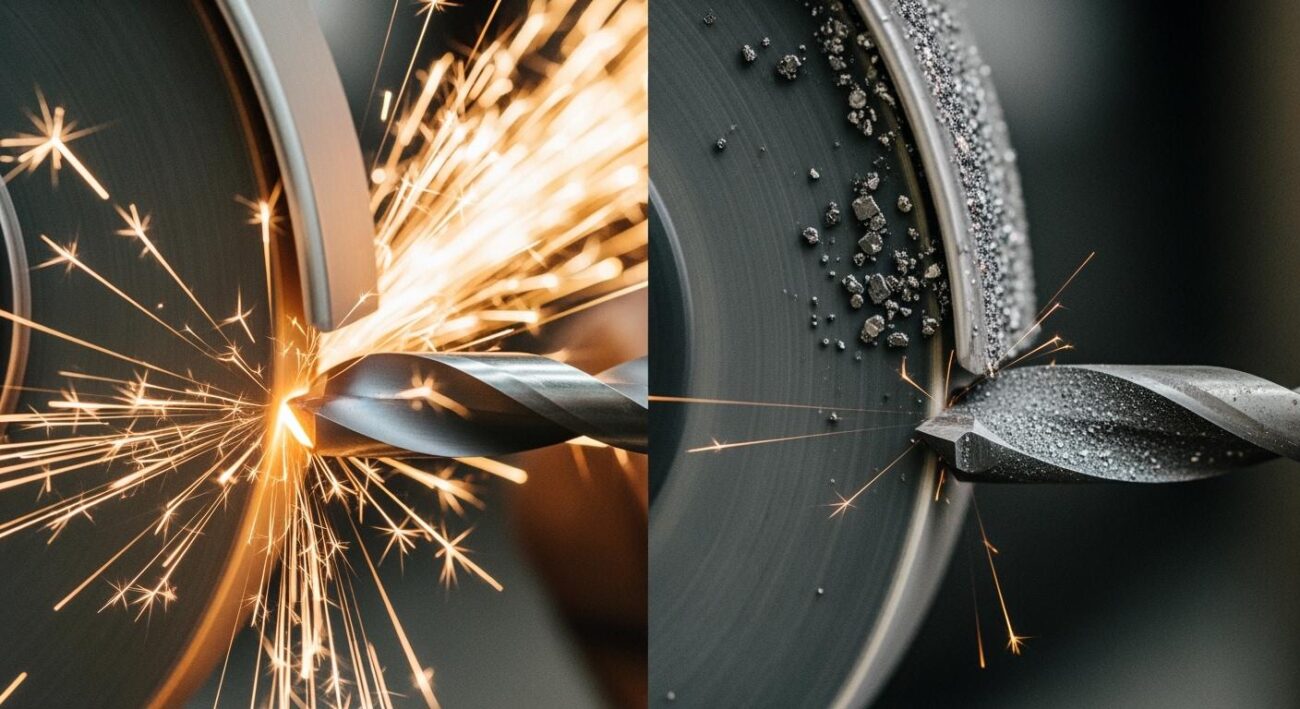
You might fear burning your HSS tools during grinding. This common mistake can ruin the steel’s temper.
Successful HSS grinding is not about avoiding heat completely. It is about smart heat management. High-Speed Steel (HSS) maintains its hardness up to 600°C (1112°F), which gives you a safe working range.
You can grind HSS tools without damage. The solution involves using the right wheel, applying a light touch, and cooling the tool properly. This technique prevents heat from reaching a critical level.
Key Takeaways
- Choose the right grinding wheel. Use a friable aluminum oxide wheel (white or pink) or a CBN wheel to keep the tool cool.
- Use light pressure and grind in short bursts. This stops too much heat from building up in the tool.
- Keep the tool moving. Do not hold it still against the wheel to spread out the heat and make an even surface.
- Cool the tool often. Dip the HSS tool in water after each pass to quickly remove heat.
- Watch the steel’s color. A purple or blue color means the tool is getting too hot, so cool it right away.
Choosing the Right Wheel for Grinding
Your choice of grinding wheel is the single most important factor in preventing a burnt HSS tool. A wheel that runs too hot will transfer excessive heat, ruining the temper of your HSS steel. Let’s explore your options for cool grinding.
Standard Friable Wheel Selection
You should avoid the common gray aluminum oxide wheels. They are hard-bonded and generate too much heat for HSS. Instead, choose a friable aluminum oxide wheel, which is designed to break down and expose fresh, sharp abrasive. This action keeps the grinding process much cooler.
Pro Tip: Look for white or pink wheels. White wheels are very friable and great for heat-sensitive HSS. Pink wheels offer excellent shape retention, making them ideal for precision grinding on alloyed HSS.
For general HSS work, you can use the following as a guide:
| Grit Size | Grinding Wheel Grades | Suitable Materials |
|---|---|---|
| 70-220 | Medium-Hard (I-P) | high-speed steel |
Upgrade to Aimgrind CBN Wheels
For the best results, you should upgrade to a Cubic Boron Nitride (CBN) wheel. Aimgrind CBN wheels are the superior choice for any serious HSS work. CBN has incredible thermal stability. It does not react with the iron in steel at high temperatures. This means the wheel stays sharp, cuts faster, and transfers significantly less heat to your HSS tools.
The benefits are clear:
- Cooler Operation: Drastically reduces the risk of burning your HSS.
- Faster Cutting: You spend less time at the grinder.
- Longer Life: A CBN wheel offers a very, very long life, making it a cost-effective investment for frequent grinding.
Dressing the Wheel for a Cool Cut
No matter which wheel you use, you must keep it clean. A wheel “loaded” with metal particles will rub instead of cut, creating excess heat. Use a dressing stick regularly to clean the wheel’s surface and expose fresh abrasive. This simple step ensures a cool, efficient cut every time.
Mastering the Grinding Technique

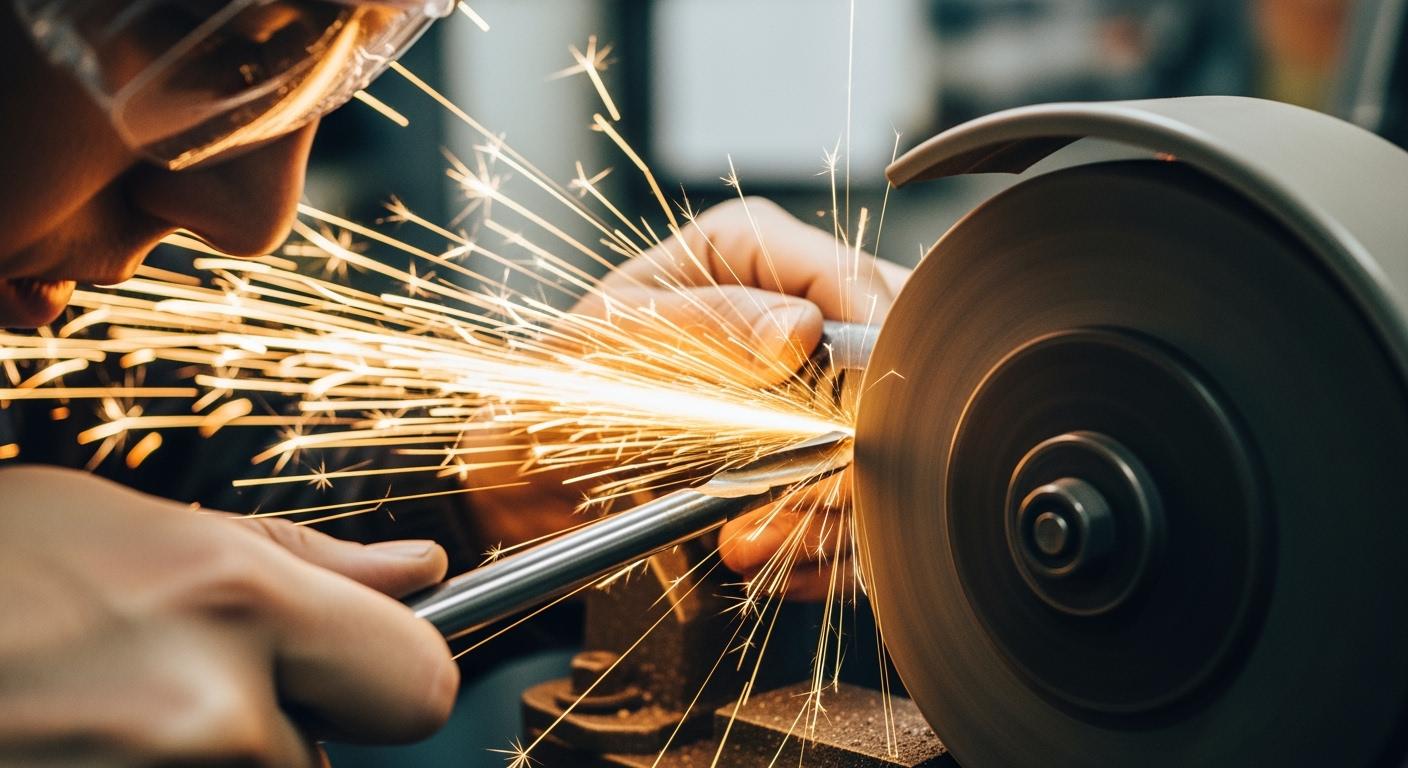
A great wheel is only half the battle. Your technique at the grinder determines whether you get a sharp edge or a burnt piece of HSS. Proper technique is all about controlling pressure, time, and movement to manage heat effectively.
Apply Light, Steady Pressure
You must learn the feel of a good cut. Pushing too hard is a common mistake that generates excess heat and can ruin your HSS.
- Apply force straight into the grinding wheel.
- Use a push block for better stability and consistent pressure.
- Move the tool across the entire width of the wheel for an even grind.
Pay attention to the signs of excessive pressure. If you hear a dull, thudding sound or see the cutting quality drop, you are pushing too hard. This can lead to chipping or overheating your HSS, which weakens the steel. For rough shaping, you can apply more force. For finish grinding, a light touch is always best.
How to Grind HSS Tools in Bursts
Continuous grinding is the fastest way to overheat and damage your HSS. The energy from the grinder’s motor converts directly into heat. If you grind a tool for too long, that heat penetrates the steel and causes thermal damage. You can prevent this with a simple technique.
Work in short bursts. Make a single, smooth pass across the wheel, then pull the tool away. This method is crucial when you grind HSS tools. It allows the heat to dissipate before it can build up to a damaging level. This is especially important for thin sections like the edge of a knife or an HSS turning tool, which heat up very quickly. This short-burst grinding technique gives you maximum control.
Keep the Tool in Constant Motion
Never hold the tool stationary against the wheel. You must keep it moving to distribute the heat and create a flat, even surface. The specific motion depends on the tool you are sharpening. The process of grinding lathe tools requires a different motion than sharpening a drill bit.
- For grinding lathe tools: You will rock and pivot the tool to create the necessary clearance angles. A common angle is around 7 degrees. You can use a gauge to check your angles as you work.
- For HSS drill bits: You hold the cutting edge parallel to the grinder’s axis. You then grind the surface, making sure the cutting edge is slightly higher than the back of the point.
Consistent movement is key for all tools. This practice, combined with light pressure, is fundamental to successful grinding. Following these steps for grinding lathe tools and other HSS implements will help you achieve sharp, durable edges every time.
Effective Cooling and Heat Control
Controlling heat is the final piece of the puzzle. Even with the best wheel and technique, you must actively cool your tool. This prevents the small amount of heat from your grinding from building up and ruining the temper of your HSS.
The Role of Water Quenching
You should always have a container of cool water next to your grinder. After each short pass, you must dip the HSS tool into the water. This rapid cooling, or quenching, is very effective. The process happens in stages:
- A vapor film first forms around the hot tool.
- This film collapses, causing violent boiling that pulls heat away quickly.
- Finally, the water cools the tool through simple convection.
This quick dip is the most important habit you can develop to grind HSS tools without burning them. While professionals sometimes use other methods like oil or gas quenching, water is the perfect choice for your workshop.
Understanding HSS Heat Tolerance
You have a good margin for error with HSS. This material was designed for high-heat applications. Its key property is “red hardness,” which is the ability to stay hard even when it gets very hot. Different grades of HSS have different heat limits.
For example, standard M2 HSS holds its temper up to about 1025°F (550°C). A cobalt-alloyed HSS like M42 can withstand even higher temperatures, making it more forgiving during grinding.
This high heat tolerance means you do not need to panic if the tool gets warm.
Reading the Steel’s Color
The color of the steel surface tells you its temperature. You can use this as a guide.
- A light straw or yellow color (around 445°F / 230°C) is perfectly normal and shows the steel is well within its safe zone.
- A purple or blue color (around 540-590°F / 280-310°C) means the HSS is getting hot. For most HSS, this is still below the critical temperature, but it is a clear warning sign to cool the tool immediately.
Be aware that your workshop lighting can change how these colors appear. Always try to check the color in consistent, good light. Watching the color helps you manage heat effectively.
Successful HSS grinding combines the right wheel, proper technique, and smart heat control. You can master this skill. Follow this checklist to protect your HSS.
No-Burn HSS Checklist 📝
- Use a cool-cutting wheel (friable or CBN).
- Grind HSS tools in short, light passes.
- Keep the HSS tool in constant motion.
- Quench your HSS in water after every pass.
You can now approach grinding with confidence. Upgrading to a high-quality wheel like an Aimgrind CBN wheel makes the process much easier. It boosts your efficiency by preventing thermal damage to your HSS tools, giving you sharp, consistent results every time.
FAQ
What is the best wheel for a beginner?
You should start with a friable aluminum oxide wheel, like a white or pink one. They run cooler than standard gray wheels. When you are ready for an upgrade, an Aimgrind CBN wheel offers the coolest and fastest cut for HSS.
Can I cool my HSS tool with oil?
You should use water for quenching HSS. Oil cools the steel too slowly. This slow cooling can soften the HSS and ruin its hardness. Water provides the rapid cooling you need to protect the tool’s temper effectively.
How do I know if I have ruined my HSS tool?
You can check the tool’s edge. If the steel has turned a dark blue or gray and the edge crumbles or dulls instantly during use, you have likely ruined the temper. The tool will no longer hold a sharp cutting edge.
What angles should I use for grinding lathe tools?
A 7-degree clearance angle is a great starting point for grinding lathe tools. You can use a protractor or gauge to check your work. This angle provides good support for the cutting edge while allowing it to cut freely.