

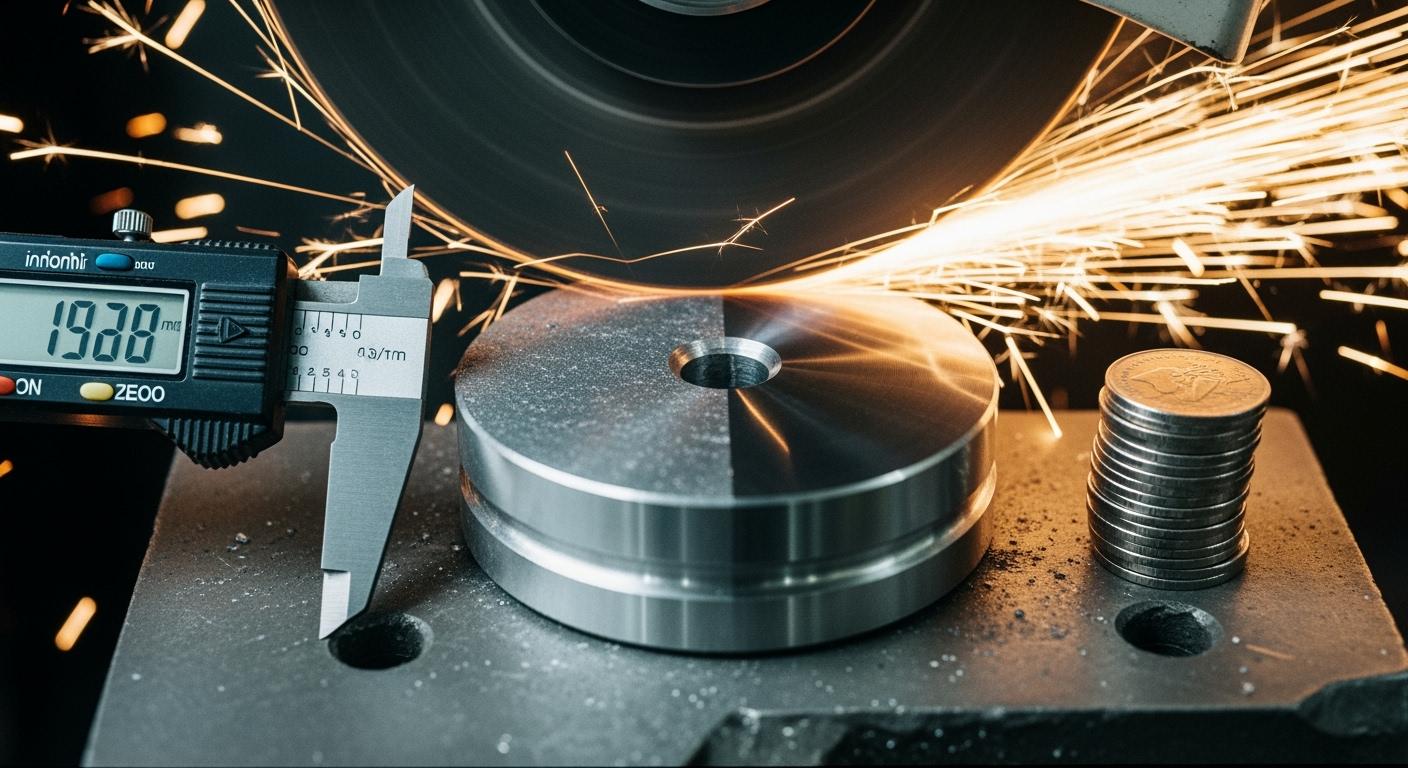
Your grinding parameters are the primary levers in any grinding process. You must balance part quality with production efficiency. This creates a core conflict in all grinding operations.
Aggressive parameters lower costs but can harm the final finish and precision. This directly affects your part quality.
Conservative parameters improve the finish and precision but increase costs.
This guide helps you understand and manage these critical trade-offs. You can learn to optimize your settings for successful grinding.
Key Takeaways
- Grinding parameters affect how smooth a surface is, how accurate a part is, and how much it costs to make.
- You can change wheel speed, grit size, and how deep you cut to get a better surface finish.
- To make parts very accurate, use shallow cuts and make sure your machine is strong and stable.
- Faster grinding saves time and money, but it can wear out tools faster and make more mistakes.
- A two-stage grinding plan uses fast grinding first, then slow, careful grinding to get both speed and quality.
Key Grinding Parameters for a Superior Surface Finish
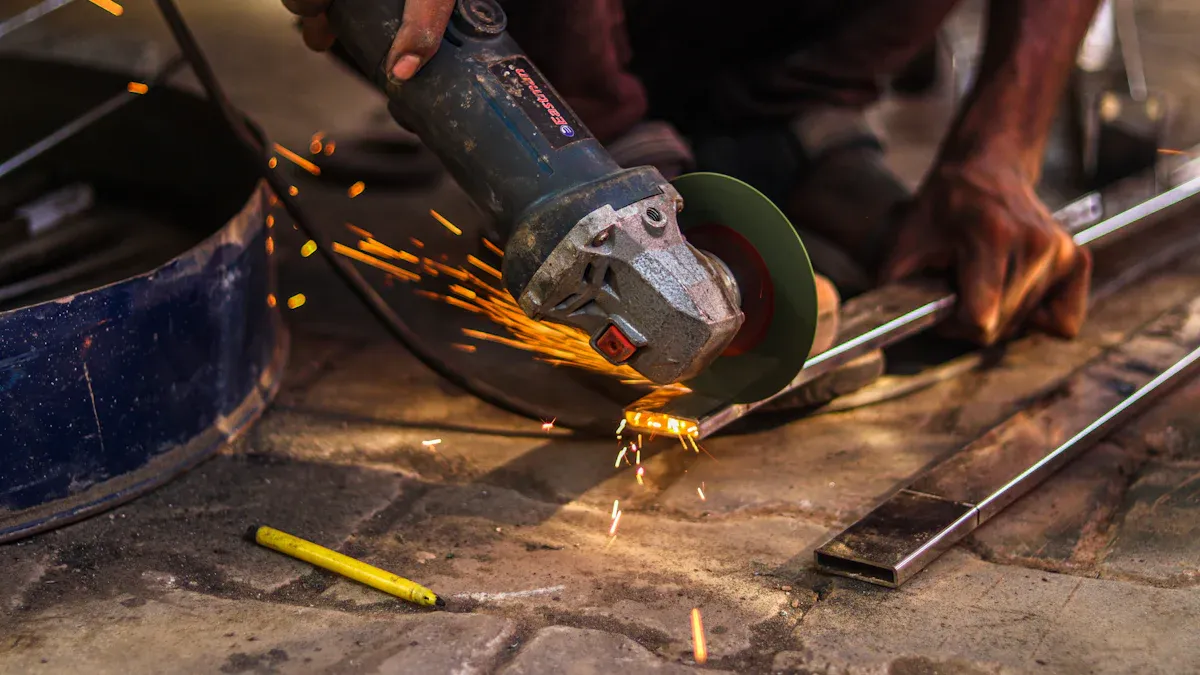
Achieving a superior surface finish requires you to control several key grinding parameters. Your machine settings directly impact the final surface quality. Let’s explore the most important factors for a flawless finish.
Wheel Speed and Grit Size
You can improve your surface finish by adjusting wheel speeds and grit size. Increasing grinding wheel speeds often reduces surface roughness. For example, on hardened steel, raising the wheel speed from 300 RPM to 350 RPM can improve the finish. Finding the optimal speed is crucial for performance.
Grit size has an inverse relationship with your finish.
- Coarse grits (lower numbers) remove material quickly but leave a rougher surface.
- Fine grits (higher numbers, like 8500 grit) produce a much smoother surface.
For a superior surface finish, you need finer abrasive particles.
Feed Rate and Depth of Cut
Your feed rate and depth of cut also control the final finish. Slower feeds and shallower cuts generally create a better surface. Aggressive cuts with high feeds increase the material removal rate but can introduce stress into the workpiece. A shallow depth of cut helps with maintaining surface integrity and prevents thermal damage, which is one of the common surface finish challenges. This careful approach to grinding is essential for high-quality results.
Abrasive Selection with Aimgrind
Your grinding wheel selection is as important as your machine parameters. Advanced abrasives are critical for achieving superior surface finishes, especially on hard materials. Diamond wheels, for instance, produce ultra-smooth finishes on tungsten carbide.
This is where a specialized partner helps. At Aimgrind, we provide custom grinding solutions. Our high-performance super hard abrasives, including diamond and CBN, are designed for the toughest grinding jobs. Proper grinding wheel selection ensures your equipment and grinding parameters deliver top performance and high-quality surface finishes.
Coolant and Dressing for a Flawless Finish
Finally, do not overlook coolant and wheel dressing.
- Coolant: Proper coolant flow prevents thermal damage. It allows for higher removal rates without burning the surface. The right pressure and flow rate are vital for precision grinding.
- Dressing: Regular dressing keeps your grinding wheel sharp and clean. It exposes fresh abrasive grains and removes embedded particles. This action is essential for consistent precision grinding and a smooth finish over an entire production run.
Achieving Accuracy in the Grinding Process
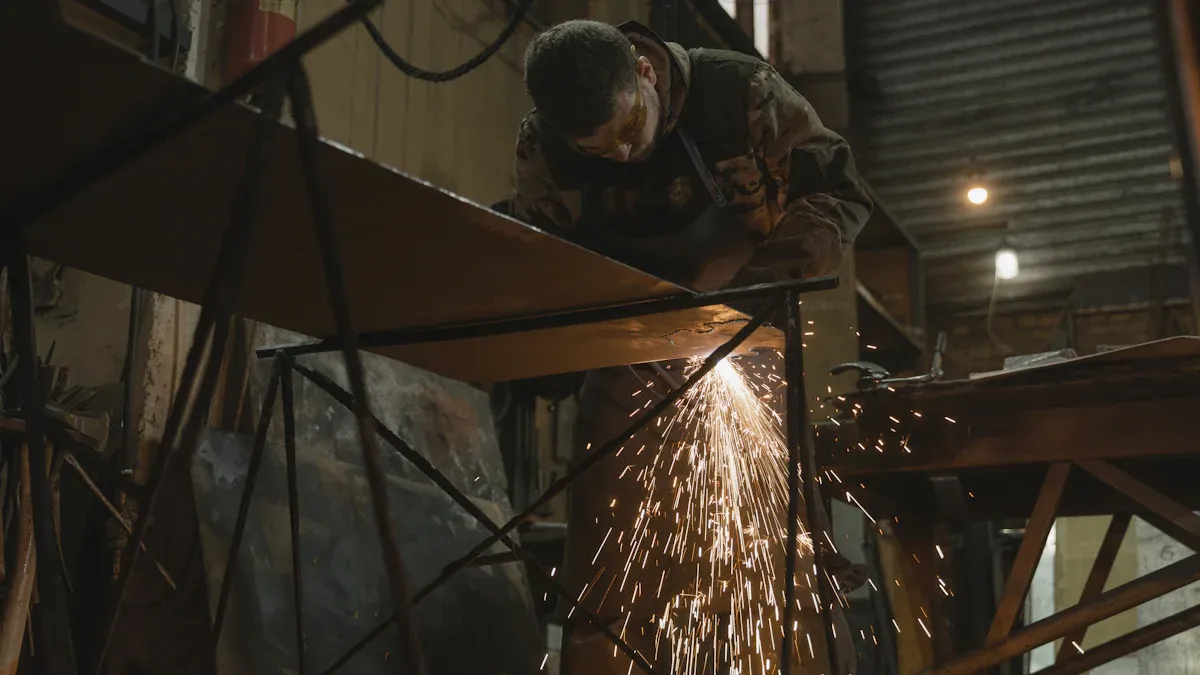
Beyond a smooth surface, your grinding process must deliver dimensional accuracy. Achieving tight tolerances requires a focus on stability and control. The right grinding parameters and machine conditions are essential for hitting your precision targets every time. Let’s look at how you can ensure your parts meet exact specifications.
Depth of Cut and Multiple Passes
For high precision, you should use shallow depths of cut across multiple passes. While a deep cut removes material quickly, it increases forces that can cause vibrations and tool deflection. This leads to surface irregularities and dimensional errors.
By using several shallow passes, you reduce these forces. This strategy is a cornerstone of precision grinding. It helps you maintain control, prevent burning or stress, and refine the part’s final profile to meet exact dimensional demands for superior quality. This careful approach to grinding ensures a high-quality surface.
The Role of Spark-Out Passes
You can use spark-out passes to achieve the highest level of precision. A spark-out is a final grinding pass you perform without advancing the wheel. This step allows the wheel to “spark out,” removing the last tiny bits of material and relieving any remaining deflection in the system. This action corrects minor imperfections, improves the final surface, and ensures the part’s dimensions are perfect. It is a simple but powerful technique in precision grinding.
Machine Rigidity and Thermal Stability
Your machine’s condition is just as important as your grinding parameters. Two factors are critical for precision:
- Machine Rigidity: A machine with high stiffness resists bending under grinding forces. Low-stiffness machines can deform during operation, causing the wheel to overcut and ruin dimensional accuracy. Rigid systems are essential for the rapid and accurate positioning needed in precision manufacturing.
- Thermal Stability: Heat from motors and the grinding process can cause machine components to expand. In precision manufacturing, even a tiny expansion can push a part out of its tight tolerance range. Maintaining thermal stability is vital for consistent quality in precision grinding operations. This makes it a key factor in precision grinding.
How Parameters Influence Manufacturing Cost
Your grinding parameters directly control your manufacturing costs. You can reduce expenses by optimizing your process. However, you must balance cost-saving measures with the need for quality. Let’s explore how your choices impact your bottom line.
Feed Rate and Cycle Time
Your feed rate is a primary driver of cycle time and cost. Faster feeds reduce the time it takes to complete a part. This increases your throughput. Optimizing your grinding program can lead to significant gains. For example, you might achieve a 34.2% cost savings and produce 48% more parts per hour. Even small adjustments to your feeds can save 3 to 5 seconds per cycle. This adds up to major productivity boosts over a full production run. The goal is to find the fastest feeds that still produce an acceptable surface.
Tool Wear and Consumable Costs
Aggressive grinding parameters can increase tool wear and drive up consumable costs. A high material removal rate wears down conventional wheels quickly. This is where your wheel choice matters. Superabrasives like diamond and CBN offer superior hardness and thermal conductivity. This improves their performance and lifespan.
You can measure this efficiency using the G-ratio. A high G-ratio means less wheel wear for the amount of material removed. You can also track the specific grinding energy, or Q-prime. A low Q-prime indicates efficient grinding. Using advanced wheels can increase wheel life by 50% and improve your G-ratio. A better G-ratio and a low Q-prime mean you spend less on replacements. This G-ratio is a key performance indicator. A high G-ratio and low Q-prime improve your G-ratio. A good G-ratio and Q-prime value are essential for cost-effective grinding.
The Hidden Costs of Scrap and Rework
Poorly set parameters create scrap and rework, which are major hidden costs. An incorrect setting can damage the part’s surface, leading to dimensional errors. This forces you to either scrap the part or spend extra time and money reworking it. A manufacturing company that optimized its process reduced scrap by 5.5%. This single change saved 3.5% of its total production cost. Reducing your scrap rate directly boosts your profit margin. Careful control over your grinding process prevents these expensive mistakes and protects your surface quality.
Grinding Process Optimization: Balancing the Trade-offs
You now understand how individual parameters affect your results. The next step is combining them into a smart strategy. Your ideal approach depends entirely on the job’s priorities. True grinding process optimization involves choosing the right strategy to balance quality, cost, and speed. Let’s explore three common strategies for your grinding operations.
Strategy for High Finish and Accuracy
You should choose this strategy when the final quality is non-negotiable. Industries involved in precision manufacturing rely on this approach for critical components. The goal is to achieve a flawless surface finish and tight dimensional precision. This often means sacrificing speed for perfection.
Applications in the medical field are a perfect example.
- Orthopedic Implants: Products like hip stems and knee joints require an exceptional finish to ensure biocompatibility and long-term performance.
- Surgical Tools: Needles, guidewires, and catheters need a smooth surface for patient comfort and procedural accuracy. Precision grinding delivers the consistent tolerances these intricate designs demand.
To achieve this level of quality, you must adjust your grinding parameters carefully. This method focuses on gentle material removal to create a superior surface and avoid defects.
Your strategy for high precision and finish should include:
- Reduced feed rates to allow each abrasive grain to make a smaller, cleaner cut.
- Higher wheel speeds to shorten the contact time between the wheel and the part.
- Shallow cutting depths during finishing passes to reduce heat, friction, and stress on the workpiece.
- Finer grit sizes on your grinding wheel to produce a smoother final surface.
This careful approach to precision grinding ensures you meet the strictest quality standards.
Strategy for Low Cost and High Throughput
You should use this strategy when speed and cost are your main concerns. The goal is to remove material as quickly as possible to maximize output and lower the cost per part. This approach is common in industries where high production volume is more important than a perfect finish.
The automotive industry often uses this strategy for roughing components. For example, one automotive customer slashed part cycle time from 8.5 minutes to just 1.1 minutes. This was achieved by optimizing the roughing process. This change also boosted tool life from 80 to 250 parts per cutter. These improvements show how aggressive grinding can dramatically increase throughput and reduce operational costs. The key is to find the fastest parameters that still produce an acceptable part.
A Balanced Two-Stage Strategy
Why choose between quality and cost when you can have both? A two-stage strategy offers an excellent balance for many grinding operations. This method of grinding process optimization separates the job into two distinct phases: an aggressive roughing pass and a delicate finishing pass. This is a highly effective way to achieve both efficiency and precision.
The first stage, roughing, focuses on speed. You use aggressive settings to remove the bulk of the material quickly. The second stage, finishing, focuses on precision. You switch to conservative settings to achieve the final dimensions and a smooth finish.
This table breaks down the differences between the two passes:
| Characteristic | Roughing Pass | Finishing Pass |
|---|---|---|
| Primary Goal | High material removal rate | Final dimensions and surface quality |
| Cutting Forces | High, which can cause vibration | Low, which allows for fine control |
| Surface Finish | Rough, with visible tool marks | Smooth, meeting tight tolerances |
| Time & Efficiency | Optimized for speed and volume | Slower and more precise, using light cuts |
By using this two-stage approach, you get the speed benefits of a high-throughput strategy and the high-quality results of a precision grinding strategy. It is a powerful technique for modern precision manufacturing.
You will not find one “best” set of grinding parameters. The optimal choice always depends on your job’s priorities. Your machine settings and tool selection are interconnected levers in the grinding process. Adjusting one affects your final finish, precision, and cost. A strategic, multi-stage grinding approach is often the most effective way to achieve both surface quality and precision. This balanced method helps you succeed in all your grinding operations and deliver a superior surface finish.
FAQ
What is the G-ratio and why is it important?
The G-ratio measures grinding efficiency. It compares the material you remove from the part to the material you lose from the wheel. A high G-ratio means your wheel lasts longer. This reduces your consumable costs and improves overall productivity.
When should I use a two-stage grinding strategy?
You should use a two-stage strategy for jobs needing both speed and precision. The first stage removes material quickly. The second stage creates the final accurate dimension and smooth finish. This approach balances efficiency with high-quality results.
How do I choose the right abrasive for my job?
Your material and finish goals determine the right abrasive. For hard materials, you often need super hard abrasives like diamond or CBN. Aimgrind specializes in creating custom grinding solutions to match your specific application and equipment for optimal performance.
Can I improve finish without increasing cycle time?
Yes, you can improve finish without slowing down too much. Upgrading to a high-performance abrasive, like Aimgrind’s super hard abrasives, allows for more efficient cutting. This can produce a better finish even at higher feed rates, helping you balance quality and speed.