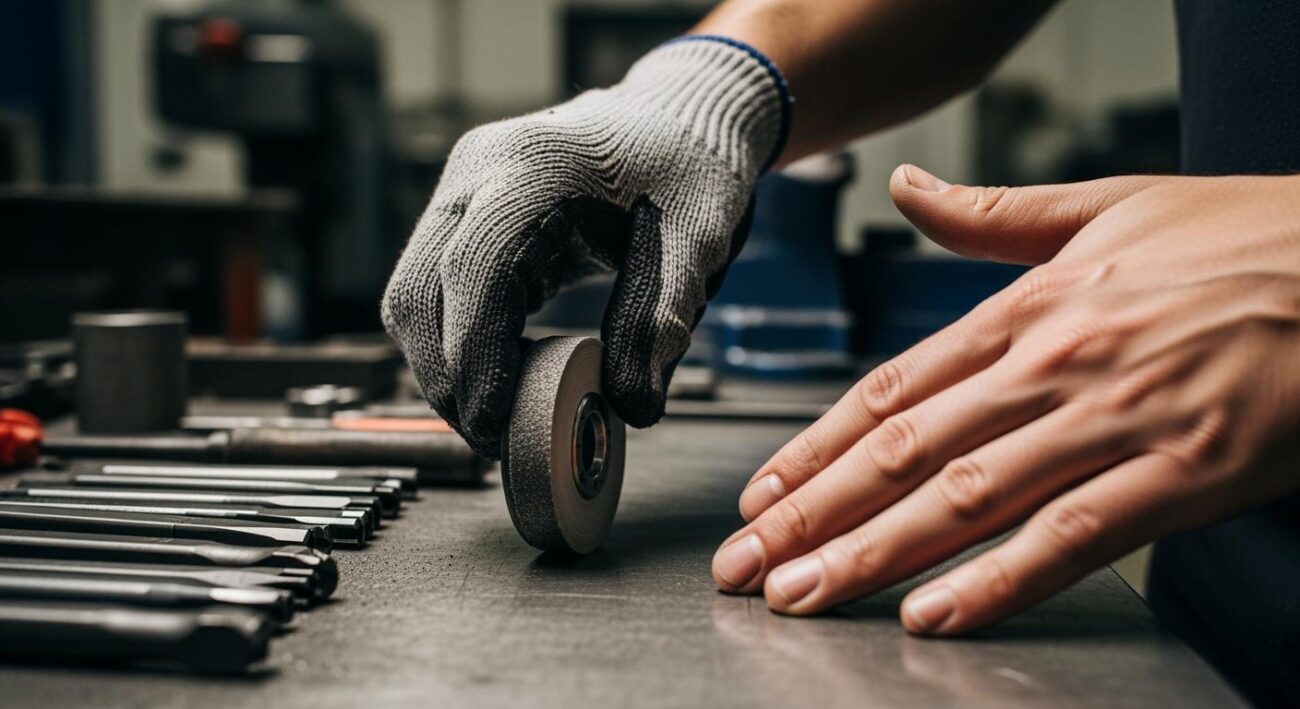
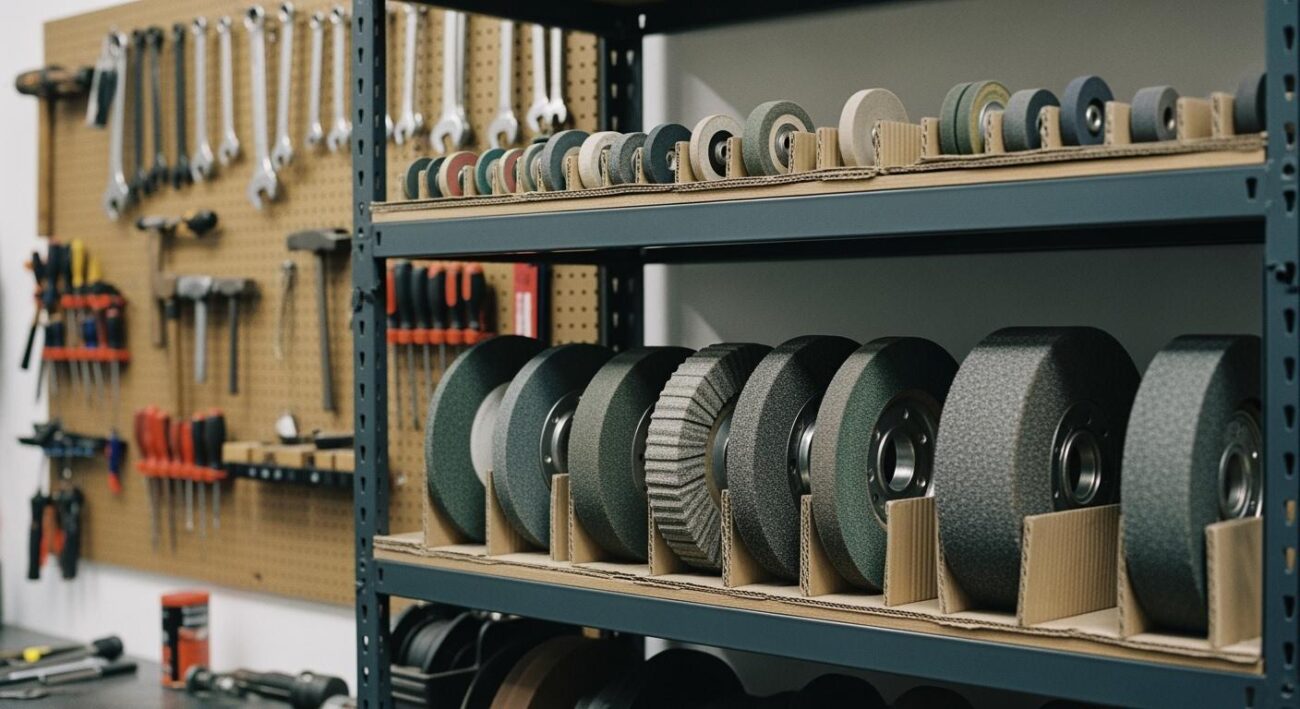
You face a tough choice with grinding wheel selection. The market for grinding wheels is growing fast, showing how vital these tools are for many applications.
| Metric | Value |
|---|---|
| Projected Market Increase | USD 6.29 billion |
| CAGR (2024-2029) | 5.2% |
| Year-over-Year Growth (2024-2025) | 4.4% |
Successful grinding depends on the right grinding wheel. You must match the abrasive, grit, and bond to your job. This guide helps you choose the best grinding wheel for different grinding tasks. We will cover three main applications: aggressive stock removal, finishing, and precision sharpening. Understanding the correct abrasive, grit, and grinding wheel grit helps you master these tasks. Your choice of grit affects the final removal.
Key Takeaways
- Choose a coarse grinding wheel for fast material removal. Use tough abrasives like ceramic alumina for heavy jobs.
- Select a medium-grit wheel for deburring and finishing. This helps smooth edges without removing too much material.
- Use a fine-grit wheel for sharpening tools. This creates a very sharp edge and prevents tool damage.
- Always match the grinding wheel to your specific task. This ensures good results and keeps you safe.
- Replace damaged grinding wheels right away. Cracks or uneven shapes make them unsafe to use.
Heavy Stock Removal: Choosing Your Grinding Wheel

When your goal is aggressive material removal, you need a grinding wheel built for power and speed. These heavy-duty grinding tasks demand a tool that can handle high pressure without failing. Choosing the right grinding wheel ensures efficient and safe operation for demanding applications.
Abrasives for Aggressive Cutting
The abrasive material in your grinding wheel does the actual cutting. For heavy stock removal, you need a tough, sharp abrasive. Ceramic alumina is an excellent choice for these jobs. It is a high-performance abrasive engineered for rapid cutting on hardened metals. You can use it for many metalworking tasks:
- Heavy stock removal on carbon and alloy steels
- Weld removal and smoothing
- Beveling and edge preparation
- Rust, paint, and coating removal
Zirconia alumina is another great option. It excels at cutting through metal and is very durable, making it ideal for high-pressure grinding applications.
Grit Size and Bond for Fast Removal
For fast removal, you should select a coarse grit. A lower grit number, typically between 24 and 36, means larger abrasive particles. This coarse grinding wheel grit allows for deep, aggressive cutting. The bond holds the abrasive grains together. A hard, vitrified bond offers exceptional strength and rigidity.
Pro Tip: Vitrified bonds create a porous grinding wheel structure. This helps coolant flow efficiently, which is crucial for reducing heat during intense grinding and preventing damage to your workpiece. The right grade ensures the wheel wears correctly.
Recommended Wheel Types
Different grinding wheel types are suited for specific materials. For metalworking, you will use abrasive wheels designed for steel and other alloys. These are different from masonry grinding wheels, which are made for hard, brittle materials like concrete or stone. For general-purpose cutting, cutting wheels offer great performance. When selecting your tool, consider the grinding wheel grades available. Always match your abrasive wheels to the material you are cutting to achieve the best results.
Best Grinding Wheels for Deburring and Finishing
After heavy grinding, your workpiece needs refinement. Deburring and finishing are critical tasks for removing sharp edges and creating a smooth, professional look. These finishing operations improve both safety and appearance without changing the part’s dimensions. Choosing the right grinding wheel ensures you get a clean surface finishing without damaging your work.
Abrasives for Smoothing Edges
The abrasive material you choose depends on the metal you are working with. For these delicate applications, you need an abrasive that cuts cleanly. Aluminum oxide is a great all-around choice for general metalworking on various steels. For non-ferrous metals, silicon carbide is often better because it reduces loading and keeps cutting effectively.
| Task / Material | Recommended Abrasive | Why It Works Best |
|---|---|---|
| General deburring on steel | Aluminum Oxide | Tough and cost-effective for predictable wear. |
| Deburring aluminum, brass, copper | Silicon Carbide | Sharper grain reduces material buildup on the wheel. |
Grit and Bond for Blending
For blending and deburring, you want to remove imperfections, not bulk material. A medium grit, typically between 60 and 80, is ideal. This grit size provides enough cutting action to smooth edges but is fine enough to prevent deep scratches.
The bond also plays a key role. A softer, resinoid bond helps achieve a smooth finish. This type of bond allows used abrasive grains to break away, exposing fresh, sharp edges. This self-sharpening action is perfect for creating a consistent surface. The right grinding wheel grades and bond grade are essential for effective grinding.
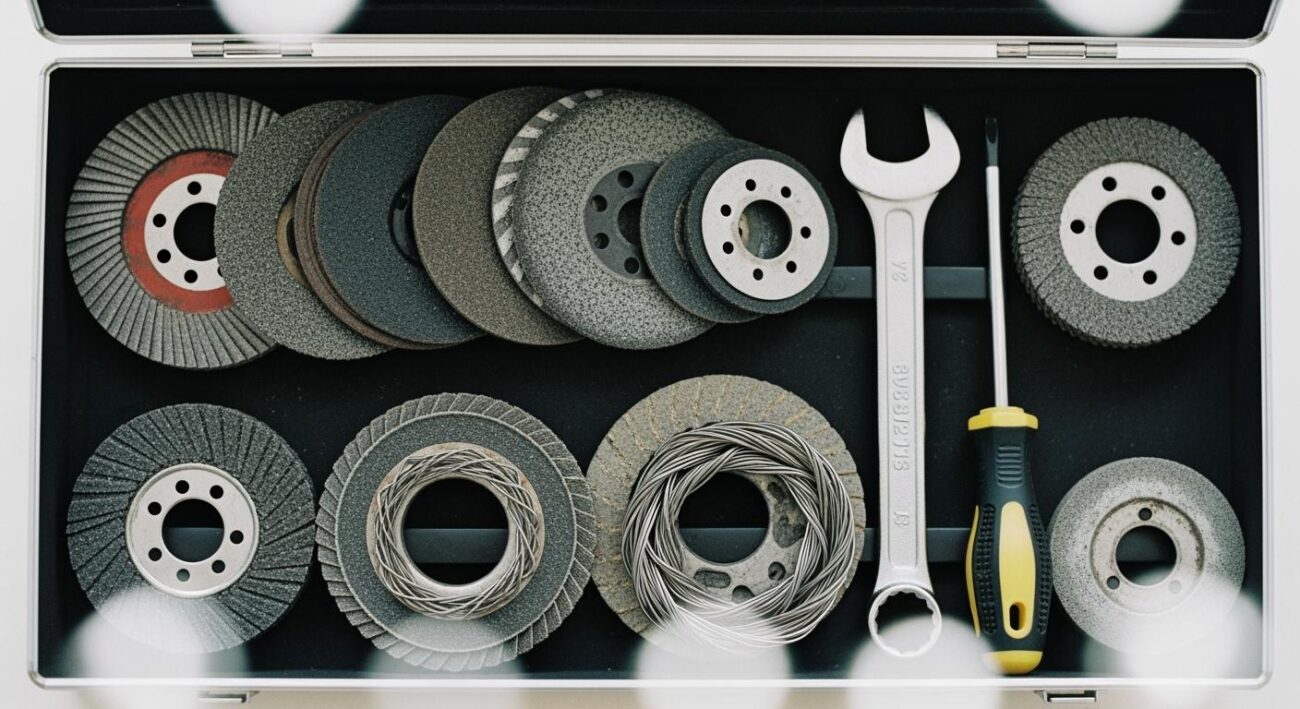
Versatile Abrasive Wheels
Standard grinding wheels are not your only option. Other abrasive wheels offer unique benefits for finishing.
- Flap Discs: These are excellent for blending welds and working on contoured surfaces. The flexible flaps conform to curves, giving you a smoother finish with less gouging than a rigid grinding wheel. They are great for both light grinding and finishing.
- Wire Wheels: For cleaning rust or preparing a surface, wire wheels are very effective. They are less about cutting and more about cleaning.
Safety First! ⚠️
When using wire wheels, tiny wires can fly off at high speed. Always wear safety goggles or a full face shield. Proper personal protective equipment is non-negotiable for these cutting and cleaning tasks.
From cutting wheels to specialized grinding wheels, selecting the correct tool makes all the difference in your metalworking projects.
Precision Tool Sharpening and Grinding

Precision sharpening operations demand accuracy and control. You need a grinding wheel that can create a sharp edge without damaging the tool’s temper. Choosing the right abrasive and grit is essential for these delicate tasks. The correct abrasive wheels ensure your tools perform at their best.
Cool-Cutting Abrasives for HSS
When sharpening high-speed steel (HSS) tools, heat is your enemy. You need a cool-cutting abrasive to prevent de-tempering. Friable white aluminum oxide is an excellent choice for this job. Its grains fracture under pressure, exposing fresh, sharp cutting edges. This action allows the grinding wheel to slice cleanly rather than rub, which keeps the tool cool and produces a sharper edge. For other precision metalworking applications, such as grinding crankshafts or roller bearings, seeded gel (SG) ceramic abrasive wheels offer superior grinding performance.
Superabrasives for Hard Materials
For extremely hard materials like tungsten carbide or ceramics, you need a superabrasive. Diamond and Cubic Boron Nitride (CBN) are the top choices, but they serve different purposes.
- Diamond is perfect for grinding hard, brittle materials like carbide and ceramics.
- CBN excels at grinding hardened ferrous metals (steels) because it does not react chemically with iron at high temperatures.
For professional results on carbide tools, you need a specialized solution. Aimgrind has deep expertise in providing high-performance diamond grinding wheels for these demanding applications. Aimgrind offers customized solutions, ensuring your grinding wheel is perfectly matched to your tools and equipment. Their diamond abrasive wheels deliver superior precision and longevity, making them a valuable investment for any serious metalworking professional.
Understanding Grinding Wheel Grit
The grinding wheel grit determines the final surface finish. Similar to sandpaper, a lower grit number means a coarser abrasive, which removes material faster but leaves a rougher surface. For sharpening, you need a finer grit.
A finer grit, such as P240 or higher, removes less material but creates a much smoother, sharper edge. The choice of grit directly impacts the surface roughness (Ra). A finer grit produces a lower Ra value, resulting in a polished, mirror-like finish ideal for cutting tools. The right grinding wheel grades and grit size are critical for successful sharpening.
Your grinding wheel selection is key. Optimal results depend on matching the grinding wheel to your grinding tasks. This guide helps you choose the right abrasive wheels.
- Stock Removal: Use a coarse grinding wheel grit (P8-P80) with a tough abrasive.
- Deburring & Finishing: Choose a medium grit (P100-P220) for smooth finishing.
- Tool Sharpening: Select a fine grit (P240+) and the right grade for a sharp edge.
You can now choose your grinding wheels confidently. For a custom grinding wheel and specific applications, an expert abrasive supplier like Aimgrind provides the perfect grinding wheel grades for your abrasive wheels. This ensures you get the right grinding wheel with the best abrasive.
FAQ
What happens if I use the wrong speed for my grinding wheel?
⚠️ You should always match the wheel’s maximum RPM to your grinder’s speed. Using a wheel at a speed that is too high can cause it to break apart, creating a serious safety hazard. Running it too slow makes your grinding inefficient.
Why choose a diamond wheel over an aluminum oxide wheel?
You use aluminum oxide wheels for sharpening steel tools. You need a diamond wheel for much harder materials like tungsten carbide. Aimgrind’s diamond wheels provide the necessary hardness for a precise, sharp edge on these advanced materials, ensuring superior performance and longevity.
How do I know when to replace my grinding wheel?
You must replace your grinding wheel immediately if you find any damage. Look for these signs:
- Cracks or chips on the surface
- An uneven or out-of-round shape
- The wheel has worn down near the label
A damaged wheel is unsafe and ineffective.
Can I use one wheel for both stock removal and finishing?
It is not a good practice. A coarse wheel for stock removal leaves a rough surface. A fine wheel for finishing cuts too slowly for heavy work. You will achieve better and safer results by using a dedicated wheel for each specific task.