

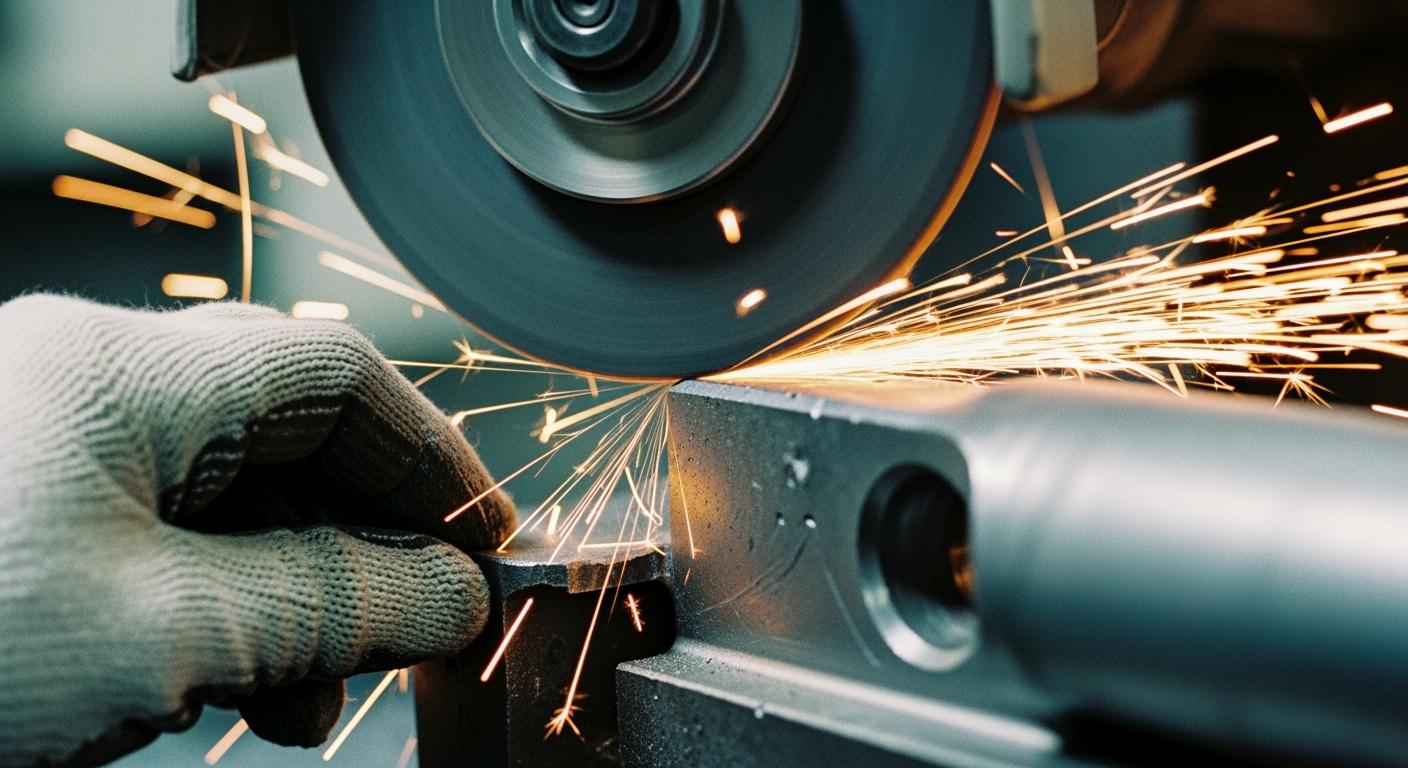
You can extend wheel life when grinding titanium by choosing the right wheels, using cooling methods, and maintaining your equipment. Start by selecting diamond grinding wheels, which deliver high cutting efficiency and perform well with titanium. Use proper coolants and avoid high temperatures. Clean your machine regularly and inspect the wheel for wear. Aimgrind offers customized grinding solutions, helping you match the best wheel formula for titanium and maximize life.
- Diamond grinding wheels work well with titanium.
- You can improve performance by pairing the right bond type and coolant.
Key Takeaways
- Choose diamond grinding wheels for efficient cutting and longer life when grinding titanium.
- Select the right abrasive grain type, like ceramic or zirconia alumina, to enhance performance and reduce heat.
- Maintain proper cooling methods, such as high-pressure coolant systems, to prevent overheating and extend wheel life.
- Regularly inspect and clean your grinding equipment to ensure optimal performance and avoid costly downtime.
- Monitor wheel wear and adjust your grinding process to maintain high productivity and achieve better results.
Choose the Right Grinding Wheel
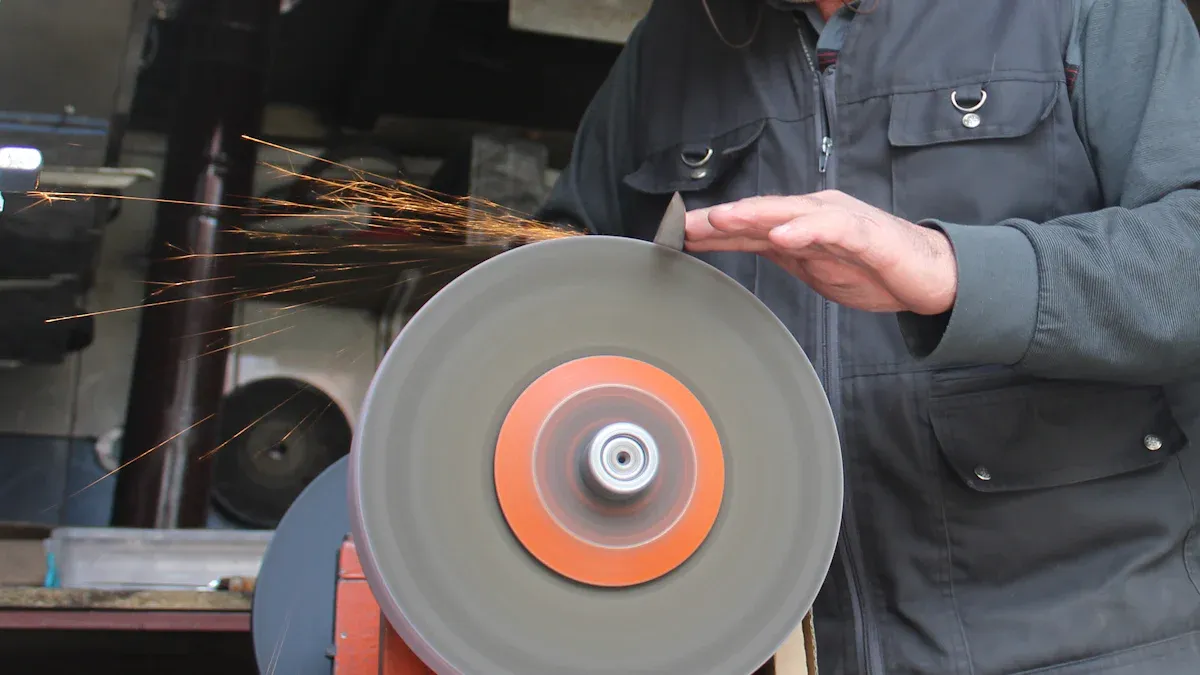
Selecting the right grinding wheels is the most important step for extending wheel life and improving results when working with titanium. You can boost performance and reduce downtime by focusing on grain type, bond type, and wheel size. Aimgrind offers diamond grinding wheels with custom formulas that match your equipment and process. You get longer service life and higher efficiency when you consider the application and choose the best abrasive for your needs.
Grain Type Selection
You need to pick the right abrasive grain for titanium. Ceramic alumina and zirconia alumina grains work well because they self-sharpen and stay cool under pressure. These grains help you avoid heat discoloration and keep the wheels lasting longer. You can see the benefits in the table below:
| Abrasive Grain | Benefits |
|---|---|
| Ceramic alumina | Self-sharpening, micro-fracturing, cool operation, long life under pressure, minimizes heat discoloration. Ideal for titanium and other hard metals. |
| Zirconia alumina | Fast cutting, long life, self-sharpening, effective under high pressures and temperatures. Suitable for metals like titanium and stainless steel. |
Grain size also affects wheel life and grinding results:
- Coarse grains remove material quickly but leave a rougher finish.
- Medium grains balance removal rate and surface finish.
- Finer grains give you a smooth finish but work slower.
Aimgrind’s diamond grinding wheels use advanced abrasive grains and can be customized for your specific needs. You get the right grain size and type for your titanium grinding job.
Bond Type for Titanium
Bond type is another key factor. You need a bond that holds the abrasive grains firmly and allows the wheel to cut efficiently. Vitrified bonds and coated crystals last longer and resist wear. These bonds provide fast, cool cutting action and strong bonding. You can compare the options in the table below:
| Bond Type | Advantages | Cost Impact |
|---|---|---|
| Coated Crystals | Lasts 2-3 times longer than uncoated; enhances performance with coatings. | 2% to 20% more than uncoated. |
| Vitrified Bonds | Provides fast, cool cutting action; high wear resistance; strong bonding. | Requires less matrix material. |
You get excellent surface finish and versatility for both ferrous and non-ferrous metals. Vitrified bonds work well for harder materials like ceramics and composites. Aimgrind’s abrasive coating of resin bonded grinding wheel combines the best features of resin and metal bonds. You get fast cutting, high resistance to wear, and secure crystal holding.
Wheel Size and Shape
Wheel size and shape affect grinding efficiency and wheel longevity. You need a wheel that self-sharpens and matches your machine setup. Modified abrasive wheels with alumina grains improve grinding efficiency for titanium alloys. Layered wheels with special features reduce grinding power and extend tool life.
- Self-sharpening wheels keep their cutting edge and last longer.
- Modified wheels with alumina grains work well for Ti-6Al-4V alloy.
- Layered wheels reduce grinding power and extend tool life.
Aimgrind offers wheels in many sizes and shapes. You can customize your wheel to fit your equipment and process. You get better results and longer wheel life when you consider the application and choose the right wheel.
Tip: Always match your grinding wheel to your machine and material. Aimgrind’s experts help you select the best wheel formula for titanium and optimize your grinding process.
Optimize Wheel Life with Proper Techniques
You can optimize wheel life and achieve better results by using the right grinding techniques. These methods help you extend wheel life, improve performance, and reduce downtime. Aimgrind’s experts support you with parameter matching and sample optimization, so you get the best results for titanium.
Pressure and Feed Rate
You need to control pressure and feed rate during grinding. High pressure can cause wheels to wear out quickly. Low pressure may lead to inefficient cutting. You should find a balance that keeps abrasive grains sharp and prevents overheating.
- Start with moderate pressure and adjust as needed.
- Use a steady feed rate to avoid sudden changes.
- Monitor the grinding process for signs of wheel loading or dulling.
Cooling methods play a big role in extending wheel life. You can use high-pressure coolant systems to deliver coolant directly to the cutting zone. This removes chips and lowers temperature. Cryogenic cooling uses liquids like nitrogen to keep the area cold, which reduces friction and helps abrasive wheels last longer.
Tip: Always check the grinding area for heat buildup. Proper cooling keeps wheels sharp and extends their life.
Wheel Orientation
Wheel orientation affects surface quality and wheel life. You can change the angle to optimize wheel life and improve grinding results. The table below shows how different angles impact surface flatness, grinding depth, and surface integrity:
| Angle (θ) | Surface Flatness | Grinding Depth | Surface Integrity |
|---|---|---|---|
| 0° | Highest | Lowest | Most uniform |
| 30° | Good | Moderate | Consistent |
| 60° | Lowest | Deepest | Poor |
You should use a 0° angle for the highest surface flatness and uniform results. A 30° angle gives you consistent performance. Avoid 60° angles, as they lead to deeper grinding and poor surface integrity. Aimgrind helps you match wheel orientation to your equipment and material, so you optimize wheel life and get the best finish.
Grinding Motion
Grinding motion influences how abrasive grains interact with titanium. You need to use smooth, controlled movements. Avoid jerky or uneven motions, as these can cause wheels to degrade faster.
- Move the wheel steadily across the surface.
- Keep the grinding path consistent.
- Use wet grinding whenever possible to reduce heat and friction.
Regular wheel dressing is important for maintaining wheel life. Dressing refreshes abrasive grains, keeps them sharp, and prevents wheel loading. It also maintains a consistent power curve, so you get effective cutting and less overheating.
Note: Schedule wheel dressing as part of your routine maintenance. This keeps abrasive wheels in top condition and helps you extend wheel life.
Aimgrind’s service process includes parameter matching and sample optimization. You get support for choosing the right grinding motion, cooling method, and wheel dressing schedule. This ensures you optimize wheel life and achieve reliable results.
Machine Setup and Maintenance for Longer Life
Inspection and Adjustment
You need to inspect your grinding wheels before every session. Check for cracks, chips, or uneven wear. Adjust the wheel alignment to match your machine settings. This step helps you prevent accidents and keeps your wheels working at their best. Regular inspection extends the life of your wheels and ensures you get consistent results. Aimgrind offers support for equipment compatibility, so you can match your wheels to your machine and process. You maximize the service life of grinding wheel by making small adjustments and keeping everything in proper condition.
Tip: Create a checklist for daily inspection. You spot problems early and avoid costly downtime.
Cooling and Lubrication
Cooling and lubrication play a big role in grinding titanium. You keep the wheels cool and reduce friction. This helps you extend wheel life and achieve a long operating life. Different cooling systems work better for titanium. The table below shows which systems give you the best results:
| Cooling/Lubrication System | Effectiveness | Source |
|---|---|---|
| Cryogenic liquid nitrogen | Substantial rise in cutting tool life, minimizes tool wear | An et al. (2006) |
| Alkaline-based coolants | More effective than cryogenic nitrogen for Ti–6Al–4V | Tiecher et al. (2006) |
| Cryogenic grinding | Decrease in grinding force and surface roughness | Elanchezhian et al. (2015) |
| MQL-assisted cryogenic cooling | Most effective for improving machining performance | Gupta and Laubscher (2017) |
| SQL and liquid CO2 setup | Reduces grinding forces, better surface finish | Current Experiment |
You choose the system that fits your process. Aimgrind helps you optimize cooling and lubrication for your wheels and grinding operation. You get better performance and longer life from your wheels.
Clean Work Area
A clean work area keeps your wheels in top shape. You remove dust and debris to prevent clogging. Clean coolant stops wheel pores from getting blocked. You extend wheel life by keeping your workspace tidy. Here are some reasons why cleanliness matters:
- Poor coolant cleanliness can clog grinding wheel pores, leading to increased wear.
- Dust contamination can exacerbate grinding wheel clogging.
You make cleaning part of your routine. Aimgrind supports process optimization, so you maintain a clean environment and get the most from your wheels.
Note: Clean your work area after every grinding session. You protect your wheels and ensure a long operating life.
Avoid Common Mistakes That Shorten Service Life
Grinding titanium can be tough on your abrasive wheels. You can protect their life by avoiding common mistakes. Aimgrind helps you spot these problems early and offers support to keep your wheels working longer.
Excessive Pressure
You might think more pressure means faster grinding, but it can damage your abrasive wheels. Too much force causes heat and weakens the diamond layer.
Excessive pressure leads to heat build-up and premature diamond loss.
You should use steady, moderate pressure. This keeps the abrasive grains sharp and extends the life of your wheels.
Wrong Wheel Selection
Choosing the wrong abrasive wheel for titanium can cause many problems. You may see a poor finish on your workpiece. The tool wears out faster. Excess heat can damage both the wheel and your machine. Productivity drops and quality suffers. The wheel cannot cut or manage heat well, so you lose valuable grinding time and shorten the life of your equipment.
Aimgrind offers diagnostic services to help you select the right abrasive wheels. You get expert advice and custom solutions for titanium grinding.
Neglecting Maintenance
Regular maintenance keeps your abrasive wheels in top shape. If you skip cleaning or balancing, you risk shortening their life. Here are some facts:
- Regular cleaning can increase the service life of polishing wheels by over 50% when compared to less frequent cleaning.
- Balancing adjustments can reduce vibration amplitude by 70% and decrease bearing failure rates by 90%.
You should clean your abrasive wheels often and check for balance. Aimgrind’s support team helps you set up a maintenance routine. You get longer life and better grinding results.
Tip: Aimgrind’s experts can diagnose problems and recommend solutions. You avoid mistakes and keep your abrasive wheels working at their best.
Enhance Efficiency and Safety
Protective Equipment
You protect yourself and your grinding wheels by using the right safety gear. Safety goggles or face shields guard your eyes from sparks and flying fragments. Respiratory protection filters out fine dust, which can contain heavy metals. Protective clothing shields your body from debris. Gloves help, but you need to check if they fit your task. Ear protection keeps your hearing safe during noisy grinding sessions. You must never remove safety shields or modify equipment. Machines should have dedicated start and stop switches. Proper grounding prevents electrical hazards. Dust collection systems reduce exposure and keep your workspace clean. Regular training helps you understand hazards and respond to emergencies. Aimgrind values operator safety and quality, supporting you with reliable grinding solutions.
Monitor Wheel Wear
You improve productivity by checking wheel wear often. Multi-sensor systems let you monitor grinding wheels in real time. Sensors measure acoustic emission, grinding force, vibration, and temperature. These signals help you spot changes in wheel condition. You can use fuzzy mathematical models to decide when to dress the wheel. Advanced microscopy shows how the wheel surface changes over time. Systematic inspection and cleaning keep your wheels working longer and help you maintain optimal performance. Aimgrind’s diamond grinding wheels last longer, so you spend less time on maintenance and more time optimizing productivity.
Quick-Reference Checklist
You boost productivity and safety by following a simple checklist:
- Inspect wheels for cracks or wear before each session.
- Confirm all safety shields and guards are in place.
- Wear eye, face, and ear protection.
- Use dust collection systems and keep the area clean.
- Monitor grinding wheel condition with sensors or visual checks.
- Dress wheels regularly to maintain performance.
- Replace worn wheels promptly.
- Attend training sessions on grinding safety and wheel maintenance.
Tip: Aimgrind’s diamond grinding wheels extend service life and reduce downtime. You achieve higher productivity and safer operations by following these steps.
Aimgrind stands for quality and customer satisfaction. You rely on their expertise for improving productivity and optimizing productivity in every grinding task.
You can extend wheel life and boost productivity by following a few simple steps.
- Choose the right wheel for your grinding job.
- Use coatings like nickel or copper to help grits stick better and last longer.
- Control heat with sustainable methods to protect your wheel and improve productivity.
- Clean and inspect your equipment every day to keep productivity high.
- Track wheel wear and adjust your process to maintain top productivity.
Aimgrind diamond grinding wheels help you reach your productivity goals. For custom solutions, contact Aimgrind’s experts.
FAQ
What type of grinding wheel works best for titanium?
You get the best results with diamond grinding wheels. These wheels cut titanium efficiently and last longer than conventional wheels. Aimgrind offers custom diamond wheels designed for titanium and other hard metals.
How often should you dress your grinding wheel?
You should dress your grinding wheel regularly. Check the wheel before each session. If you notice dullness or loading, dress the wheel immediately. Regular dressing keeps the wheel sharp and extends its life.
Why is cooling important when grinding titanium?
Cooling prevents heat buildup. Too much heat can damage both the wheel and the titanium part. Use coolants or wet grinding to keep temperatures low. This helps you avoid wheel wear and improves your results.
Can you use Aimgrind diamond grinding wheels on other materials?
Yes, you can use Aimgrind diamond grinding wheels on hard alloys, ceramics, and composites. These wheels work well for many tough materials. You can ask Aimgrind for a custom solution for your specific needs.