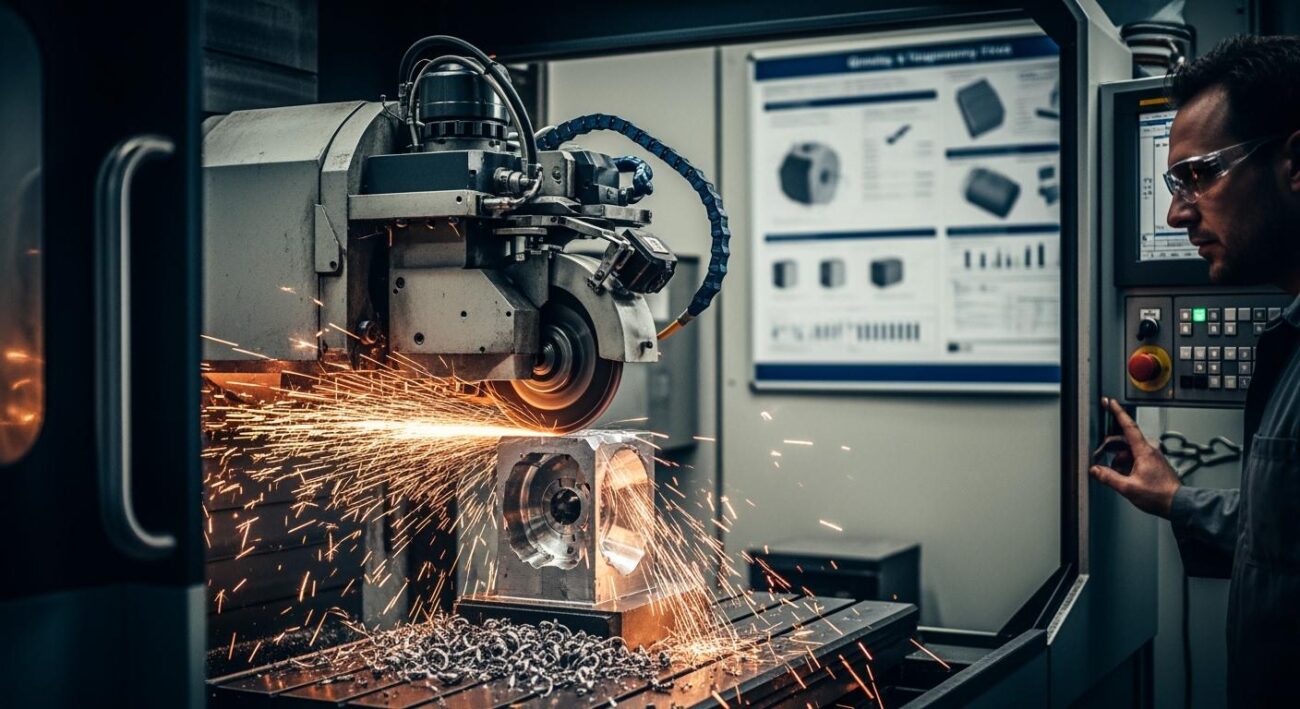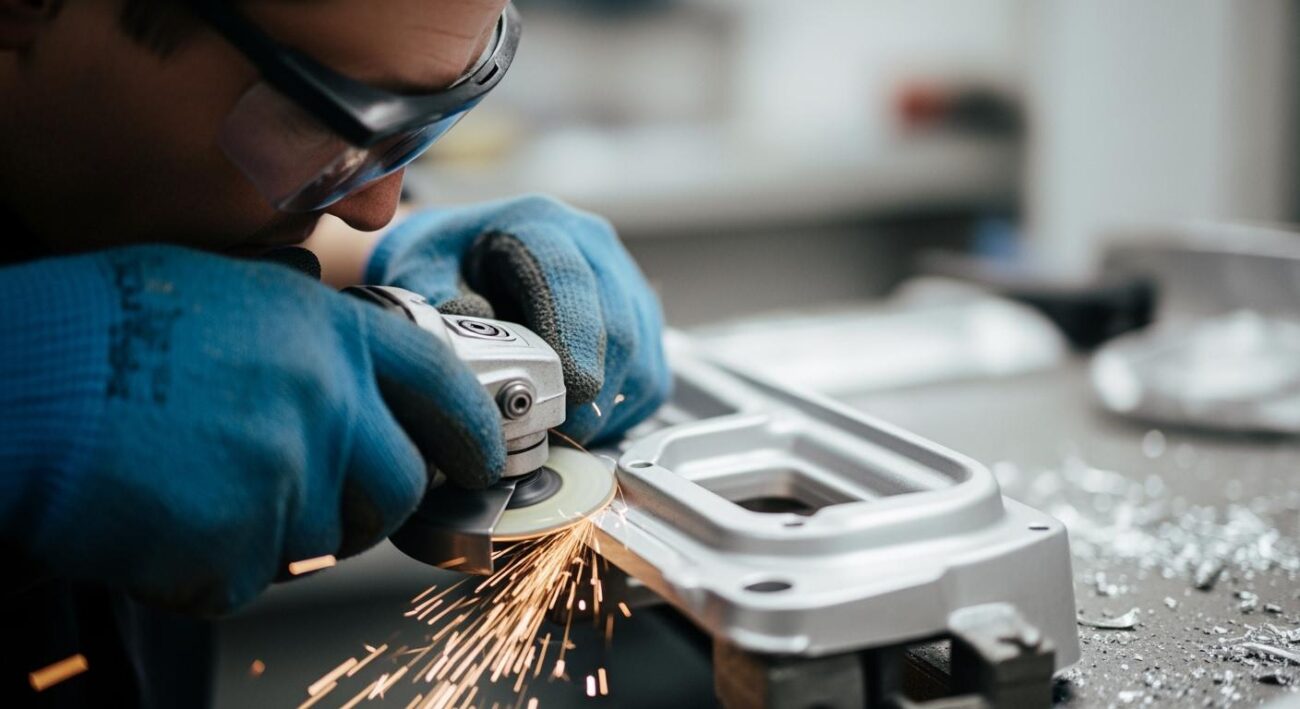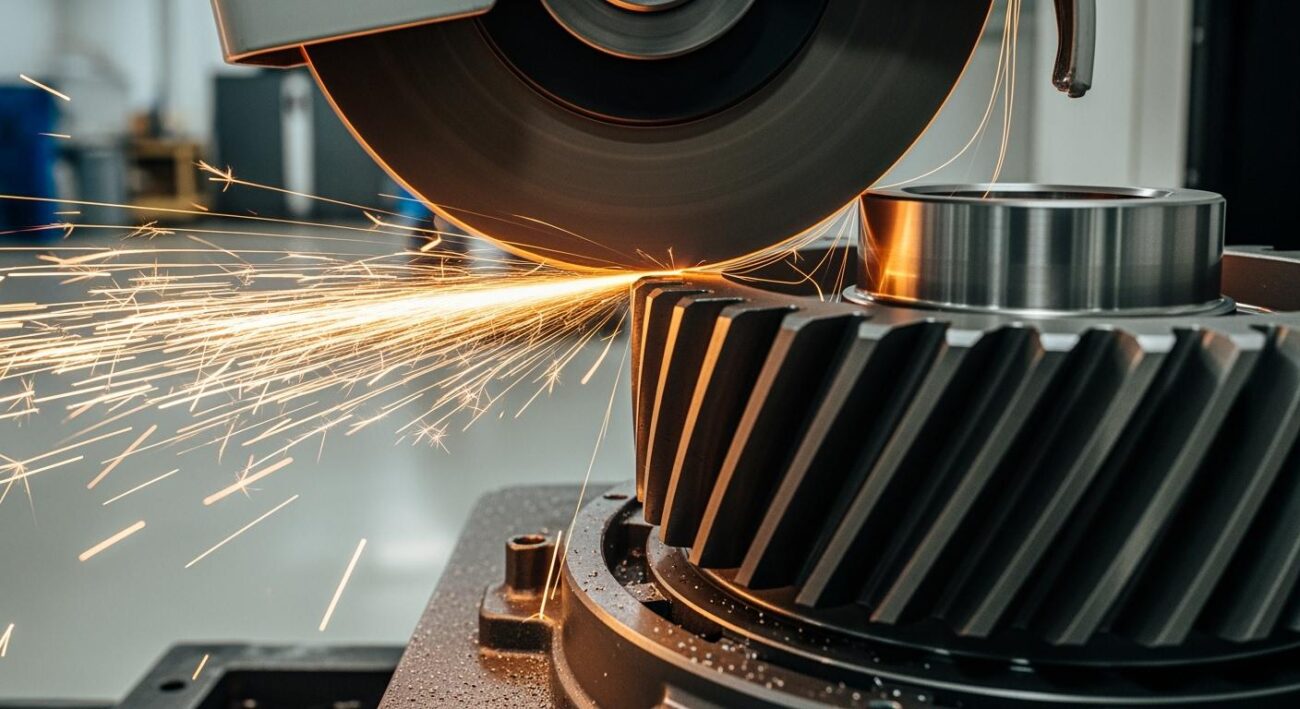
You need damage-free grinding to protect titanium and superalloy parts. Advanced grinding solutions improve the quality of your components and help them last longer. Improper grinding causes surface damage and reduces performance. Specialized products like Aimgrind diamond grinding wheels give you better control and results. Recent studies show that understanding material damage leads to higher grinding quality and longer-lasting parts:
- Experts found that damage-free grinding helps you achieve strong, reliable titanium and superalloy components.
- Sustainable grinding methods, such as cryogenic machining, improve the quality of titanium parts used in medical implants.
You get safer, more efficient grinding when you follow best practices and use innovative tools.
Key Takeaways
- Use advanced grinding tools like Aimgrind diamond wheels to achieve damage-free results on titanium and superalloys.
- Control temperature during grinding with methods like cryogenic cooling to prevent surface damage and improve quality.
- Select the right abrasive material to match the hardness of titanium and superalloys for better grinding efficiency.
- Optimize grinding parameters, such as wheel speed and grit size, to enhance surface finish and reduce defects.
- Implement in-process inspections to catch any damage early and ensure high-quality results in your grinding operations.
Grinding Challenges with Titanium and Superalloys
Heat and Surface Damage Risks
You face several challenges when grinding titanium and superalloys. Titanium does not carry heat away well. This causes heat to build up during grinding. Excessive heat can damage the surface of your parts. Sometimes, titanium reacts with the abrasive material at high temperatures. This reaction can lower grinding efficiency. You may also see smearing, where the material spreads across the surface instead of forming clean chips. Smearing makes it harder to get a smooth finish.
- Heat generation during grinding can lead to surface burns and micro-cracks.
- Titanium can become gummy, which clogs the grinding wheel and affects performance.
- Chemical reactions at high temperatures may change the grinding process.
Work Hardening and Wheel Loading
Grinding titanium and superalloys often leads to work hardening. When you grind these materials, they become tougher and harder. This makes further grinding more difficult. You need sharp abrasives and careful control of grinding time. If you spend too much time on one spot, the material hardens even more. Superalloys contain hard carbide particles. These particles wear down grinding wheels quickly.
Wheel loading is another problem. Titanium’s gummy nature causes the grinding wheel to fill up with material. This reduces grinding efficiency and affects the surface finish. You can see how different superalloys respond to grinding in the table below:
| Superalloy | Grinding Force | Surface Roughness | Tool Wear | Conclusion |
|---|---|---|---|---|
| Inconel 718 | Highest | Less adhered material | N/A | Less adhered material leads to better performance |
| Ti-6Al-4V | N/A | N/A | N/A | Better grindability than Inconel 718 |
| K4125 | Higher | N/A | N/A | Worse grindability than Inconel 718 |
| FGH96 | Lower | N/A | N/A | Better grinding performance than GH4169 |
| GH4169 | Higher | N/A | N/A | N/A |
| Ti2AlNb | N/A | N/A | N/A | SiC wheel preferred for grinding |
| DD6 | N/A | N/A | N/A | MA abrasive wheel superior to BA abrasive wheel |
You need specialized grinding solutions to handle these challenges. Advanced grinding wheels, like those from Aimgrind, help you manage heat, reduce wheel loading, and achieve a high-quality surface. You protect your parts and improve efficiency when you use the right tools and techniques.
Principles of Damage-Free Grinding
Temperature and Coolant Control
You must control temperature during grinding to protect titanium and superalloys. Heat can damage the surface and reduce the quality of your parts. Hybrid cooling systems, such as Minimum Quantity Lubrication with jets of liquid CO2, help lower grinding forces and improve surface finish. Cryogenic coolants like liquid nitrogen and liquid CO2 reach deep into the grinding zone. These coolants keep the surface cool and prevent defects. You get better precision grinding and a smoother surface finish when you use advanced cooling methods.
Abrasive Selection and Wheel Matching
Choosing the right abrasive is essential for damage-free grinding. You need an abrasive that matches the hardness and toughness of titanium and superalloys. Aimgrind diamond grinding wheels offer high cutting efficiency and maintain their shape. You achieve precision grinding and a mirror-like surface finish with the correct abrasive. Mechanical polishing with fine abrasives on cloth avoids defects like pitting or dragging. You must select the abrasive based on the material and the desired surface finish. Matching the grinding wheel to your application ensures consistent results.
Tip: Always check the abrasive type and wheel bond before starting grinding. This step helps you avoid wheel loading and surface defects.
Process Parameter Optimization
You must optimize process parameters to achieve damage-free grinding. Cooling reduces temperatures and prevents chemical reactions on the surface. You need to select the right wheel characteristics, such as a SiC wheel with a friable vitrified bond, to avoid surface burning. Adjusting grit size and wheel speed improves chip clearance and surface finish. You must monitor grinding settings to maintain precision grinding and protect the surface.
| Requirement | Description |
|---|---|
| Cleanliness | Titanium sheets must be free of surface defects. |
| Surface Preparation | Sand off scratches deeper than 180-grit finish. |
| Edge Treatment | Radius sharp edges to prevent cracking. |
| Oxide Removal | Remove surface oxides to avoid cracking during forming. |
| Stress Raisers | Eliminate rough finishes for better formability. |
You achieve the best results when you follow these principles. You protect the surface and improve the quality of your precision grinding.
Advanced Grinding Solutions with Aimgrind
You need advanced grinding solutions to achieve damage-free results with titanium and superalloys. Aimgrind gives you customized grinding wheels and diamond abrasives that match your application. You get the right grinding solution for high-precision parts and tight tolerances. Aimgrind helps you solve grinding and polishing problems with innovative tools and expert support. You protect your surface and improve tool wear resistance when you use Aimgrind’s diamond grinding wheels.
High-Pressure Coolant Strategies
High-pressure coolant strategies play a key role in grinding titanium and superalloys. You must use coolants like Minimum Quantity Lubrication (MQL) and cryogenic jets to control temperature and reduce surface damage. These grinding solutions lower grinding forces and improve surface quality. You get eco-friendly results and better lubrication in the grinding zone. The table below shows the main benefits of high-pressure coolant strategies:
| Benefit | Description |
|---|---|
| Enhanced Lubrication | MQL provides better lubrication in the grinding zone, reducing surface roughness and wheel wear. |
| Reduced Grinding Forces | MQL significantly reduces grinding forces and prevents surface burn. |
| Improved Surface Quality | Cryogenic cooling with LN2 jets enhances surface quality compared to dry and wet grinding. |
| Lower Grinding Temperature | Cryogenic methods reduce grinding temperature, improving overall performance. |
| Eco-Friendly Solutions | MQL and cryogenic cooling are more sustainable compared to traditional flood cooling methods. |
You achieve a smoother surface and less tool wear when you use high-pressure coolant strategies. Aimgrind supports you with grinding solutions that optimize coolant delivery and abrasive performance.
Diamond Grinding Wheels for Superalloys
Diamond grinding wheels from Aimgrind give you superior grinding and polishing for superalloys. You get high cutting efficiency and consistent surface quality. Porous diamond wheels increase grinding efficiency by almost 30%. You see a reduction in surface roughness by over 27%. These diamond abrasives have self-sharpening properties and better wettability. You remove material faster and avoid surface defects. Aimgrind’s diamond grinding wheels help you maintain tight tolerances and achieve high-precision parts.
You need diamond grinding wheels for demanding applications. Aimgrind offers wheels with resin, metal, and vitrified bonds. You match the abrasive to your material and process. You get longer wheel life and less downtime. You achieve a fine grinding sequence and final polishing with Aimgrind’s diamond solutions. You protect your surface and improve polishing technique with the right grinding solution.
Modern Grinding Techniques
Modern grinding techniques help you achieve damage-free grinding and polishing for titanium and superalloys. You use processes like µ-ECDM to improve surface integrity and dimensional accuracy. Hybrid approaches combine the benefits of micromachining and electrochemical methods. You get better material removal rates and less surface damage. You choose cooling and lubrication methods that refine surface finish and prolong tool life.
- The µ-ECDM process improves surface integrity compared to traditional methods.
- It achieves better dimensional accuracy in machining titanium.
- The hybrid approach addresses the drawbacks of conventional micromachining.
- Modern methods like µ-EDM and µ-ECM have limitations in material removal rate and surface damage.
- Hybrid processes like µ-ECDM enhance material removal rate and improve surface integrity.
- µ-ECDM combines the benefits of µ-ECM and µ-EDM, making it effective for difficult-to-machine materials.
You select grinding solutions that match your needs. Aimgrind helps you with grinding and polishing tools that support modern techniques. You achieve a smooth surface and reliable final polishing.
| Cooling/Lubrication Method | Effect on Machining Titanium | Effect on Machining Nickel Alloys |
|---|---|---|
| Dry | Varies | Varies |
| Flood | Varies | Varies |
| Minimum Quantity Lubrication (MQL) | Notable efficacy in refining surface finish | Disparate outcomes depending on wear mode |
| Cryogenic | Notable efficacy in refining surface finish | Varies |
| High-Pressure Cooling | Augments chip breakability and prolongs tool life | Varies |
You use Aimgrind’s diamond abrasives and grinding wheels to support these modern grinding solutions.
Precision Machines and Adaptive Controls
Precision machines and adaptive controls help you achieve consistent grinding and polishing results. You need machines that deliver high accuracy and optimal surface finishes. Adaptive controls let you adjust grinding parameters in real time. You minimize heat generation and prevent thermal damage. You control spindle speed and feed rate to optimize material removal and maintain surface quality.
- Precision machines ensure high accuracy and optimal surface finishes, which are critical for grinding titanium and superalloys.
- Adaptive controls allow for real-time adjustments to grinding parameters, minimizing heat generation and preventing thermal damage.
- Fine control over parameters such as spindle speed and feed rate helps achieve optimal material removal rates while maintaining surface quality.
You get reliable grinding solutions with Aimgrind’s support. You achieve tight tolerances and high-precision parts. You use diamond grinding wheels and polishing tools that match your equipment. You follow a fine grinding sequence and final polishing steps to protect your surface.
Tip: Always use precision machines and adaptive controls with Aimgrind’s diamond abrasives for the best grinding and polishing results.
You achieve damage-free grinding and polishing with Aimgrind’s advanced grinding solutions. You protect your surface, improve efficiency, and get reliable results every time.
Process Optimization and Monitoring
In-Process Inspection
You need in-process inspection to detect grinding and polishing damage before it affects your titanium or superalloy parts. Grinding burn happens when the temperature in the grinding zone rises above the critical level for the material. This causes changes in the microstructure of the surface. You may see reduced hardness and residual stresses under the surface. These defects are hard to spot but can weaken your parts. You protect your surface by checking for signs of burn and using temperature sensors during grinding. You also inspect the surface after polishing to confirm quality.
Adaptive Adjustments and Continuous Improvement
You improve grinding and polishing results by making adaptive adjustments. You change grinding parameters based on real-time measurements. You use dynamic adjustment to keep grinding conditions optimal. You modify contact force during polishing to fix profile errors and improve accuracy. You apply meta-reinforcement learning to optimize process parameters as conditions change. You use admittance control to maintain constant contact force during polishing. These techniques help you achieve a smooth surface and reduce defects.
| Technique | Description |
|---|---|
| Dynamic Adjustment | Adjusts grinding parameters in real time to maintain optimal conditions. |
| Adaptive Contact Force Adjustment | Changes force during polishing to fix profile errors and improve accuracy. |
| Meta-Reinforcement Learning | Uses algorithms to optimize grinding and polishing parameters dynamically. |
| Admittance Control | Maintains constant contact force during polishing, adapting to conditions. |
You monitor tool condition to enhance grinding efficiency and reduce costs. You create accurate models to understand variability in grinding operations. You define optimization criteria to assess sensitivity and select responsive criteria for process changes.
| Best Practice | Description |
|---|---|
| Model Creation | Develop models to understand variability in grinding and polishing operations. |
| Optimization Criteria | Use normalized criteria to assess sensitivity and select responsive criteria for changes. |
| Tool Condition Monitoring | Regularly check tool condition to improve efficiency and minimize tool dressings. |
Case Studies and Practical Tips
You see successful grinding and polishing with Aimgrind solutions. Diamond grinding wheels use less power and remove more material than SiC wheels. You avoid surface cracking and burn with diamond and cBN wheels. You use combined evaluation methods to make decisions about grinding wheel performance. Characteristic curves help you predict future applications.
| Grinding Wheel Type | Power Consumption | Material Removal | Damage Observed |
|---|---|---|---|
| SiC | High | Low | Cracking, burn |
| cBN | Moderate | Moderate | None |
| Diamond | Low | High | None |
| Evaluation Methodology | Performance Insights |
|---|---|
| Combined methodology | Helps you decide on grinding wheel performance |
| Characteristic curve | Predicts how wheels will perform in future applications |
Tip: Always match your abrasive and grinding wheel to your material and process. You protect your surface and achieve damage-free polishing when you follow these best practices.
You achieve damage-free grinding by selecting the right tools, optimizing process parameters, and using advanced cooling methods. Aimgrind diamond grinding wheels help you protect titanium and superalloy parts. You improve efficiency and reliability when you follow best practices. Manufacturers who use innovative grinding tools gain a competitive edge. Stay informed about new technologies shaping the future:
| Innovation | Description |
|---|---|
| Ultra-fine diamond grinding tools | Additive manufacturing creates high precision and reduced roughness. |
| Composite material for tools | Diamond grains and polyamide improve tool performance. |
| Ductile grinding regime | Innovative designs enable high workpiece quality. |
| Eco-friendly abrasive machining | Additively fabricated tools enhance efficiency and reduce environmental impact. |
| High performance grinding | Combines grinding and lapping for better surface finish. |
| Minimization of subsurface damage | New techniques reduce damage during machining. |
Tip: You boost production efficiency and product reliability by specifying tolerances early, using near-net-shape components, and applying advanced cooling and lubrication techniques.
You stay ahead by learning about superabrasive wheels and dressable metal-bonded diamond wheels. Keep improving your grinding and polishing process with Aimgrind solutions.
FAQ
What makes Aimgrind diamond grinding wheels suitable for titanium and superalloys?
You get high cutting efficiency and long wheel life. Aimgrind diamond grinding wheels help you achieve smooth surfaces and reduce tool wear. You can use them for precision tasks in aerospace and medical industries.
How do you prevent surface damage during grinding?
You control temperature with advanced coolants. You choose the right abrasive and optimize process parameters. You inspect parts during grinding to catch defects early.
Can you use Aimgrind diamond grinding wheels for both wet and dry grinding?
Yes. You can use Aimgrind diamond grinding wheels for wet and dry grinding. You select the bond type and process based on your material and application.
How do you match the grinding wheel to your application?
You check the material type and desired surface finish. You consult Aimgrind experts for wheel selection and formula design. You test samples to ensure the wheel fits your equipment.
What industries benefit from Aimgrind solutions?
You see benefits in aerospace, precision tooling, woodworking, and glass processing. Aimgrind grinding wheels help you achieve reliable results and improve productivity in these industries.
Contact Us
For More Grinding Solution or Customized Abrasive Tools