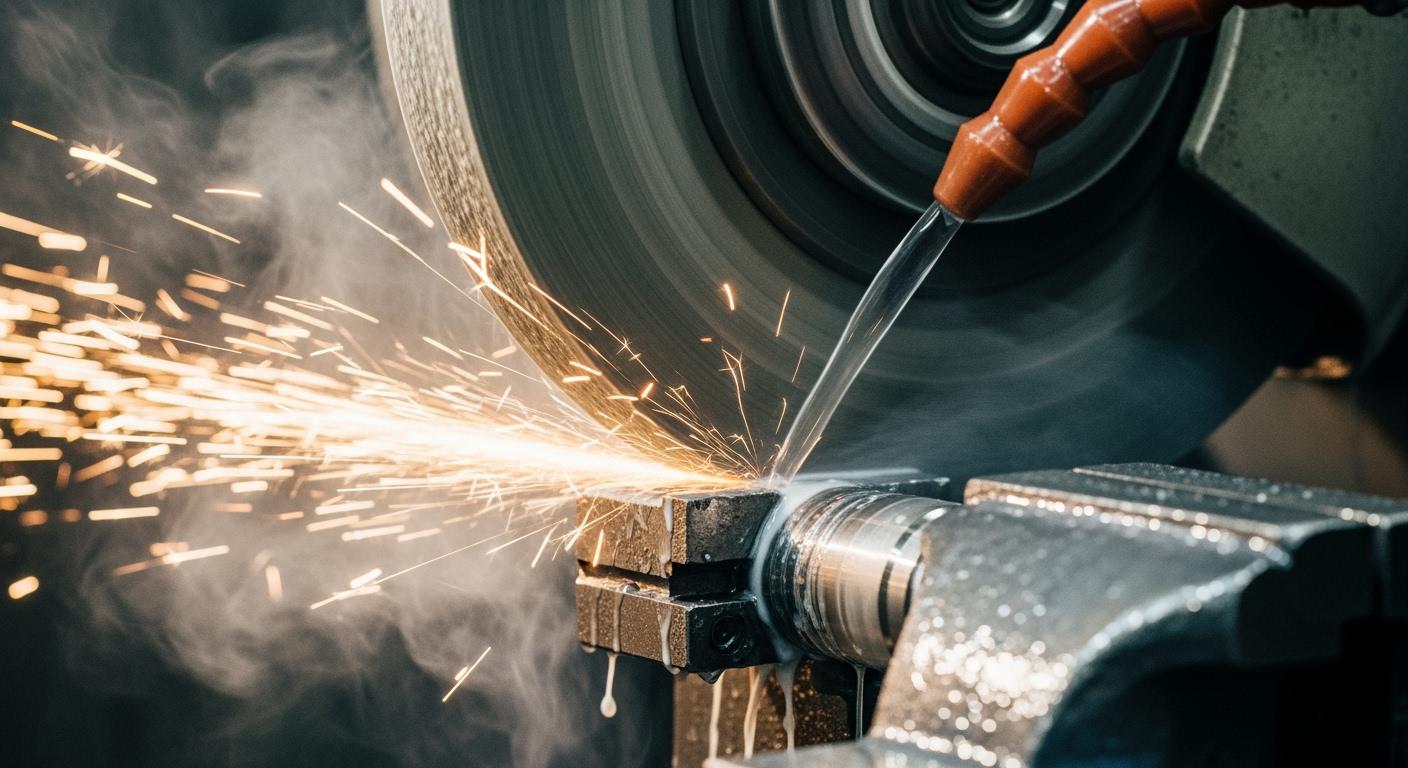
Your coolant strategy is a primary driver for a successful grinding operation. Many people overlook the importance of grinding coolant. Your choice of grinding coolant directly impacts performance, from preventing thermal damage to achieving a perfect surface finish.
A poor coolant leads to burnt parts and high costs. The right coolant, however, boosts quality and profitability.
This choice of grinding coolant also affects wheel life and process stability, making your coolant a key to overall success.
Key Takeaways
- A good coolant strategy is important for successful grinding. It prevents damage and improves part quality.
- Poor coolant causes problems. These include burnt parts, bad surface finish, and faster wheel wear.
- Choose the right coolant for your needs. Oil-based coolants offer lubrication, and water-based coolants offer cooling.
- Manage your coolant daily. Check its concentration, pH levels, and remove dirt to keep it working well.
- Pair your coolant with the right grinding wheel. This team effort leads to better results and longer tool life.
How a Poor Coolant Strategy Fails
A flawed coolant strategy creates problems that ripple through your entire operation. When your grinding coolant fails, you will see direct impacts on your parts, your tools, and your bottom line. These failures show up in four key ways.
Failure 1: Thermal Damage and Burning
Your grinding coolant has one primary job: to remove heat. An incorrect coolant cannot cool the workpiece effectively. This failure leads to thermal damage, also known as burning. You can spot this damage on your parts after etching.
- Dark gray or black areas show the part was overheated (tempering).
- White spots indicate severe burning where the metal was re-hardened.
These marks mean the part’s structural integrity is compromised, making it scrap.
Failure 2: Poor Surface Finish
You rely on your grinding coolant for lubrication. Contaminated coolant, especially with tramp oil or fine metal particles, loses its lubricating power. This causes a poor surface finish on your components. Instead of a smooth, precise surface, you get roughness and imperfections. This lack of accuracy can cause parts to fail inspection.
Failure 3: Accelerated Wheel Wear
Your grinding wheel also suffers from a bad coolant. Inadequate coolant flow or the wrong type of coolant causes “wheel loading.” This is when metal particles clog the surface of the wheel. A loaded wheel cannot cut effectively. It glazes over, loses its sharpness, and wears down much faster. You end up spending more money on replacement wheels and lose time changing them out.
Failure 4: Process Instability
An unstable coolant leads to an unstable process. Minor issues with your coolant can cause major disruptions, leading to unplanned downtime and costly rework. Inconsistent coolant management is a common source of failure.
Note: Even small changes in your coolant can have a big impact. One company saved $20,000 in annual scrap costs just by optimizing its coolant management.
Common problems with your grinding coolant often have simple root causes.
| Coolant Problem | Root Causes |
|---|---|
| Rusting Parts | Coolant concentration is too low; low pH from bacteria. |
| Sticky Residues | Coolant concentration is too high; hard water minerals. |
| Short Sump Life | Tramp oil contamination; inconsistent concentration. |
| Excessive Foaming | Air leaks in the system; incorrect coolant concentration. |
Building a Winning Coolant Foundation
You can avoid the failures of a poor coolant strategy by building a solid foundation. This starts with choosing the right cutting fluid and managing it correctly. A high-performance grinding fluid is an investment that pays off in quality and productivity. Understanding the importance of grinding coolant is the first step toward a more stable and profitable operation.
Choosing the Right Cutting Fluid
Your first major decision is selecting the correct type of grinding coolant. The two main categories are oil-based fluids and water-based fluids. Your choice depends on your primary goal: do you need maximum lubricity or maximum cooling?
- Oil-Based Fluids provide excellent lubricity. This reduces friction between the wheel and the workpiece, which is critical for achieving a fine surface finish.
- Water-Based Fluids (synthetics and semi-synthetics) excel at heat dissipation. Water transfers heat more effectively than oil, making these fluids ideal for high-speed operations where preventing thermal damage is the top priority.
There are several types of grinding coolants within these categories. Each offers a different balance of cooling, lubricity, and cost. A higher quality cutting fluid often provides better performance and a longer sump life.
| Feature | Synthetic Coolants | Semi-Synthetic Coolants | Soluble Oil Coolants |
|---|---|---|---|
| Primary Strength | Superior cooling | Balanced cooling & lubricity | Good lubricity |
| Lifespan | Longest lifespan | Moderate lifespan | Shorter lifespan |
| Cost | More expensive | Moderate cost | Less expensive |
| Best For | Heavy-duty grinding | Moderate to heavy tasks | Light to moderate tasks |
Choosing the right cutting fluid sets the stage for better overall performance. A premium fluid can significantly improve your process.
Key Coolant Selection Factors
Selecting the best cutting fluid involves more than just its base. You must consider several factors to ensure the coolant meets all your operational needs. A high-performance grinding fluid does more than just cool and lubricate.
A great grinding coolant serves several key functions:
- Cooling: It pulls heat away from the workpiece and wheel to prevent burning.
- Lubrication: It reduces friction, which extends wheel life and improves part finish.
- Chip Removal: It flushes away small particles to prevent wheel loading and maintain cutting efficiency.
- Accuracy: It helps you achieve tight tolerances by creating a stable grinding environment.
You also need to consider workplace safety and environmental rules. In the U.S., agencies like OSHA and the EPA set limits on coolant mist exposure and regulate how you dispose of used fluid. Always use a cutting fluid that helps you meet these standards.
Proactive Coolant Management
Your work is not done after you select a high-performance grinding fluid. Proper management ensures your coolant continues to perform day after day. A well-managed coolant system extends the life of your fluid, reduces waste, and protects your equipment.
Follow these simple daily checks to maintain your grinding coolant:
- Check Concentration: Use a refractometer to check the coolant concentration. If it falls below the recommended level (often around 2.0%), the risk of rust and poor performance increases.
- Monitor pH Levels: Use pH strips to test the fluid. A pH level below 8.0 can signal bacterial growth, which causes bad odors and degrades the coolant.
- Remove Contaminants: Tramp oil and metal fines are enemies of your coolant. Use tools like oil skimmers or aeration systems to keep the fluid clean. Effective chip removal is vital for maintaining lubricity.
Consistent management turns your cutting fluid from a simple expense into a strategic asset. It is the key to unlocking a stable, efficient, and reliable grinding process.
Optimizing the Grinding Operation with the Right Wheel
A winning coolant strategy is only half the battle. Your grinding wheel is the other critical component. The best grinding coolant cannot fix the problems caused by the wrong abrasive. You must create synergy between your coolant and your wheel to achieve peak performance.
Synergy Between Coolant and Abrasives
Your grinding coolant and abrasive wheel work as a team. The coolant removes heat and flushes away chips. The wheel does the cutting. When they work together, you get excellent results. A high-quality grinding coolant allows a premium wheel to perform at its best. This partnership is essential for all precision grinding operations. The right combination helps you maintain accuracy and extend the life of your tools.
Aimgrind’s CBN Wheels for Hard Materials
For tough materials like hardened tool steels (e.g., M2 steel), you need a superior abrasive. This is where Aimgrind‘s expertise in customized solutions makes a difference. Our CBN (Cubic Boron Nitride) grinding wheels are designed for these demanding jobs.
CBN is a superabrasive that is much tougher and more wear-resistant than conventional abrasives. This toughness leads to a more predictable and stable grinding process.
Aimgrind’s CBN wheels offer several key advantages that work with your grinding coolant:
- Cooler Operation: They generate less heat, reducing the risk of thermal damage. This feature supports the primary job of your coolant.
- Longer Life: Their exceptional wear resistance means fewer wheel changes and more uptime. A clean coolant helps maintain this long life.
- Improved Quality: The combination of a CBN wheel and the right coolant reduces grinding force, leading to better part quality.
The Impact of Proper Coolant Delivery
How you deliver the grinding coolant is just as important as the coolant itself. You must get the coolant to the exact point where the wheel meets the workpiece. Proper nozzle placement and pressure ensure the coolant effectively cools the cutting zone and removes chips. Without effective delivery, even the best coolant and wheel combination will fail. A well-directed flow of coolant ensures your CBN wheel can do its job efficiently.
Your coolant strategy is a strategic asset, not just an expense. A proactive approach combines the right grinding coolant with a high-performance wheel, like those from Aimgrind. This synergy boosts part quality, cuts costs, and improves overall performance.
Re-evaluate your entire system, from the coolant to the wheel. The right coolant and grinding coolant will unlock a more profitable operation.
FAQ
What is the most important job of grinding coolant?
Your coolant has one primary job: cooling. It pulls heat away from the grinding zone to prevent thermal damage. It also provides lubrication to improve surface finish and flushes away metal chips to keep your wheel cutting efficiently.
How often should I check my coolant?
You should check your coolant daily. This simple habit prevents most common problems.
Daily Checks:
- Use a refractometer to test concentration.
- Use pH strips to monitor acidity levels.
- Look for and remove any tramp oil.
Can I use the same coolant for all materials?
No, you should match your coolant to the material. Hard materials often need a fluid with superior cooling properties. Softer materials might require more lubricity for a better finish. The right choice improves performance and protects your parts.
Why is a CBN wheel better for hard steels?
CBN wheels use a superabrasive material. They generate less heat and wear down much slower than conventional wheels. This means you get higher quality parts, less thermal damage, and more production uptime when grinding tough tool steels.
Contact Us
For More Grinding Solution or Customized Abrasive Tools