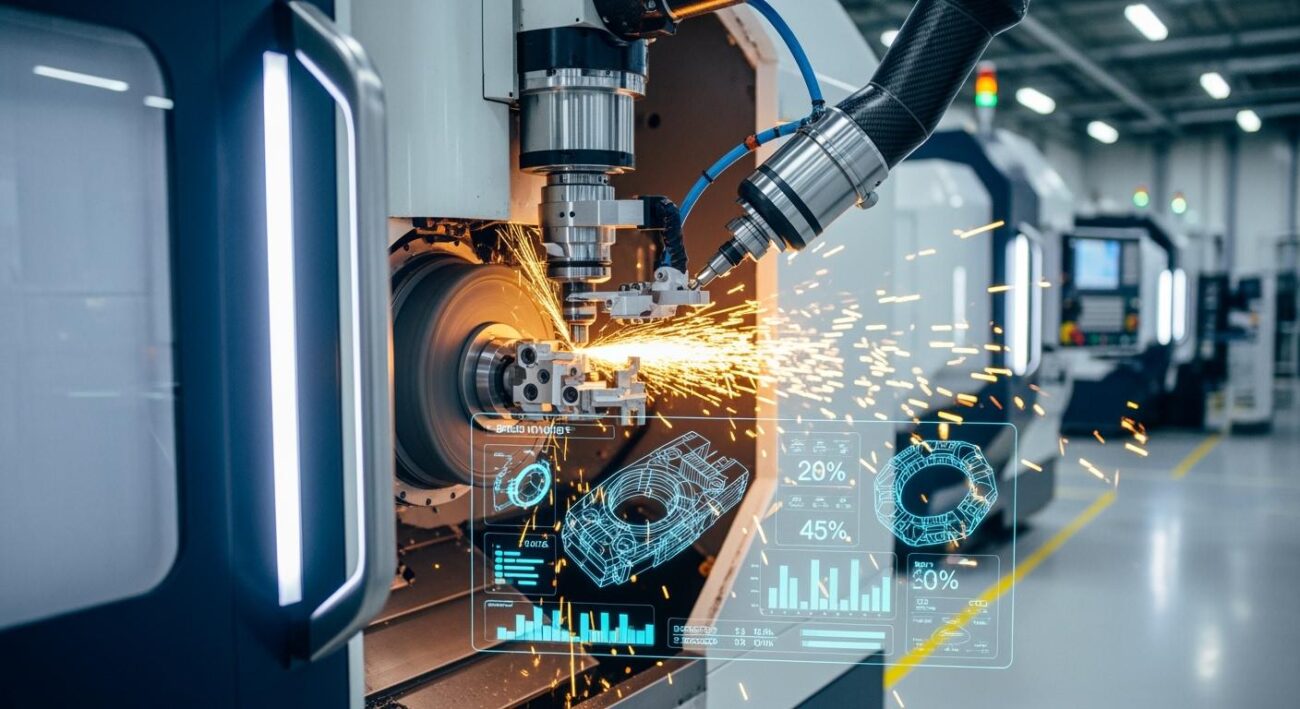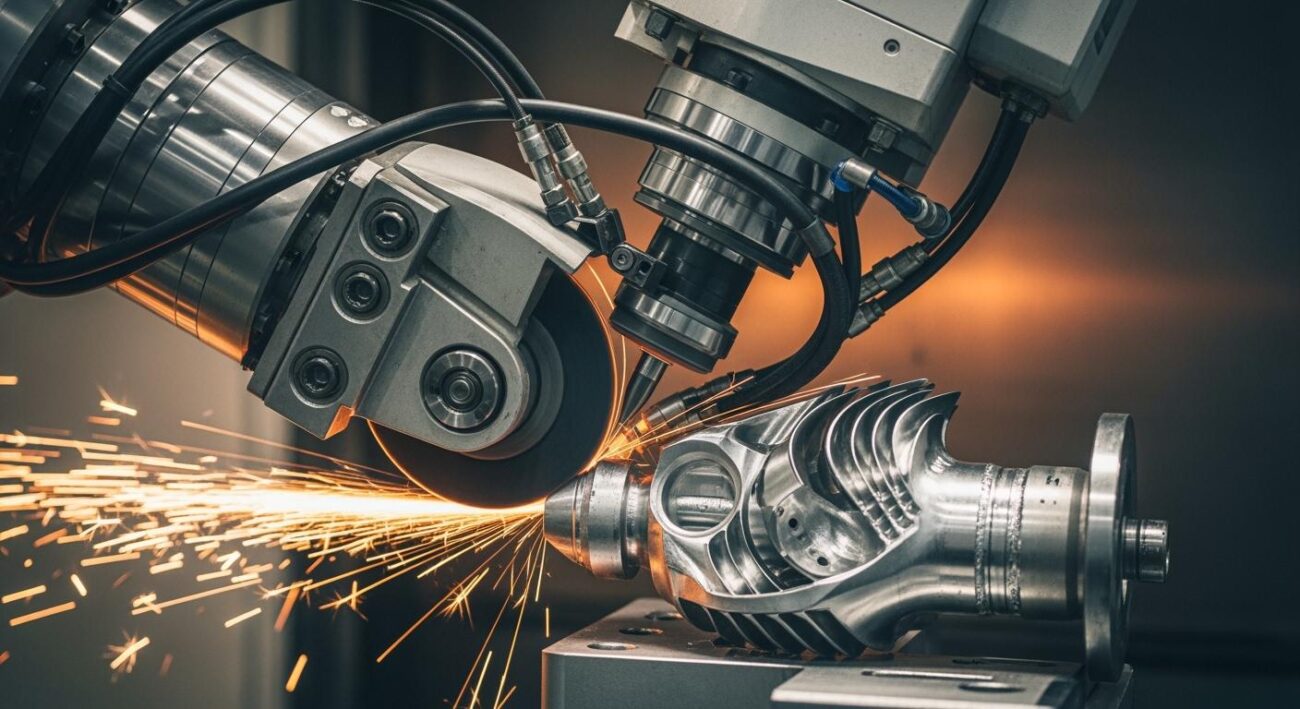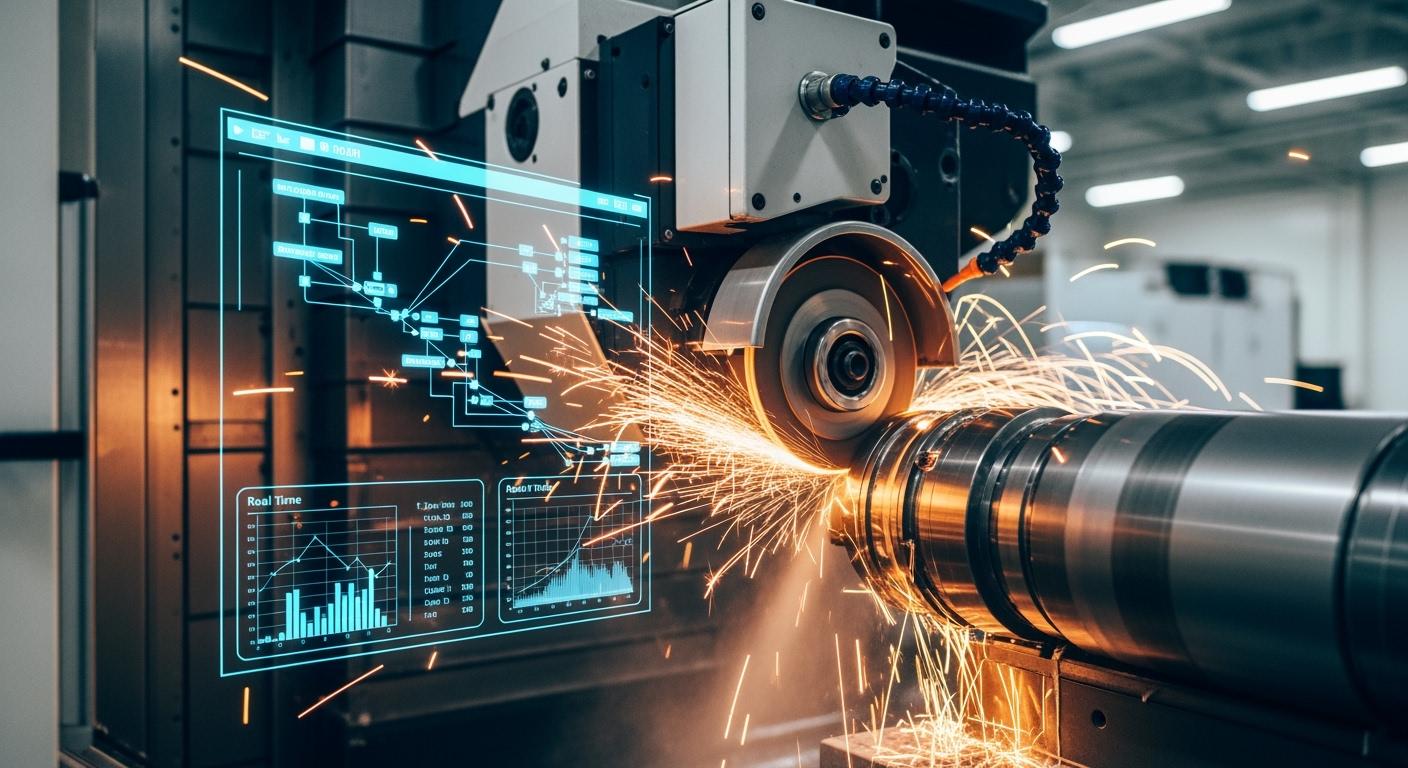
Your success in precision grinding depends on a systematic process. The global CNC grinding machine market is growing, showing how vital this technology is for modern manufacturing. Mastering the CNC grinding workflow is key. This guide gives you the essential knowledge for top efficiency and quality. You can achieve excellent precision and accuracy in every CNC machining and grinding task. This workflow breaks the complex machining process down into five core phases:
- CAD/CAM Planning
- Machine Setup
- Machining Execution
- Post-Grinding
- Final Inspection
This structured machine process turns a difficult CNC machining and grinding job into a repeatable one.
Key Takeaways
- A successful CNC grinding workflow has five main steps: planning, machine setup, machining, post-grinding, and final checks.
- Digital planning uses CAD to design the part and CAM to create tool paths. Simulation helps find errors early.
- Setting up the machine means securing the part, choosing the right grinding wheel, and telling the machine where everything is.
- During grinding, you must watch the process closely. Automated tools can fix errors as they happen.
- After grinding, clean the part, remove rough edges, and check it carefully. This ensures the part meets all quality standards.
The CNC Grinding Workflow: CAD/CAM
The first phase of any successful CNC grinding workflow is digital planning. This is where you translate your design into a set of instructions for the CNC grinding machine. This critical process ensures the final component meets all specifications with high precision. The planning stage has three key steps.
CAD Component Design
Your journey begins with Computer-Aided Design (CAD). You use CAD software to create a precise 2D or 3D digital model of the part. This process is all about defining the component’s geometry and dimensions. Think of CAD as the blueprinting stage. Your primary goal is creating a perfect digital representation of the final product. Once your design is complete, you export it.
Common file formats for this step include:
- STEP (.stp): A universal format that holds detailed 3D model data, making it ideal for CNC machining.
- IGES (.igs): An older but still widely used format for transferring geometric data between different systems.
This digital file is the foundation for the entire production process.
CAM Toolpath Generation
Next, you move to Computer-Aided Manufacturing (CAM). The CAM process takes your CAD model and generates the toolpaths. These are the exact paths the grinding wheel will follow. CAM software helps you plan the entire machining operation. You will define grinding strategies, select tools, and set speeds and feeds. While CAD defines what to make, CAM determines how to make it. This step turns your design into actionable instructions, known as G-code, that the CNC machine can understand. This planning is vital for efficient and accurate production.
Digital Simulation and Verification
Before you start the actual grinding, you must verify your plan. Modern CNC software allows you to run a digital simulation of the entire CNC machining process.
This virtual run-through lets you watch the machining process on your computer. You can check for potential collisions, optimize toolpaths, and even predict the final surface finish.
This simulation step is crucial for catching errors early. It ensures the G-code is correct and the production process will run smoothly. Verifying your program digitally saves time, reduces material waste, and guarantees the highest precision and accuracy for your CNC grinding and CNC machining tasks. This final check confirms your plan is ready for the machine.
Setting Up the CNC Grinding Machine
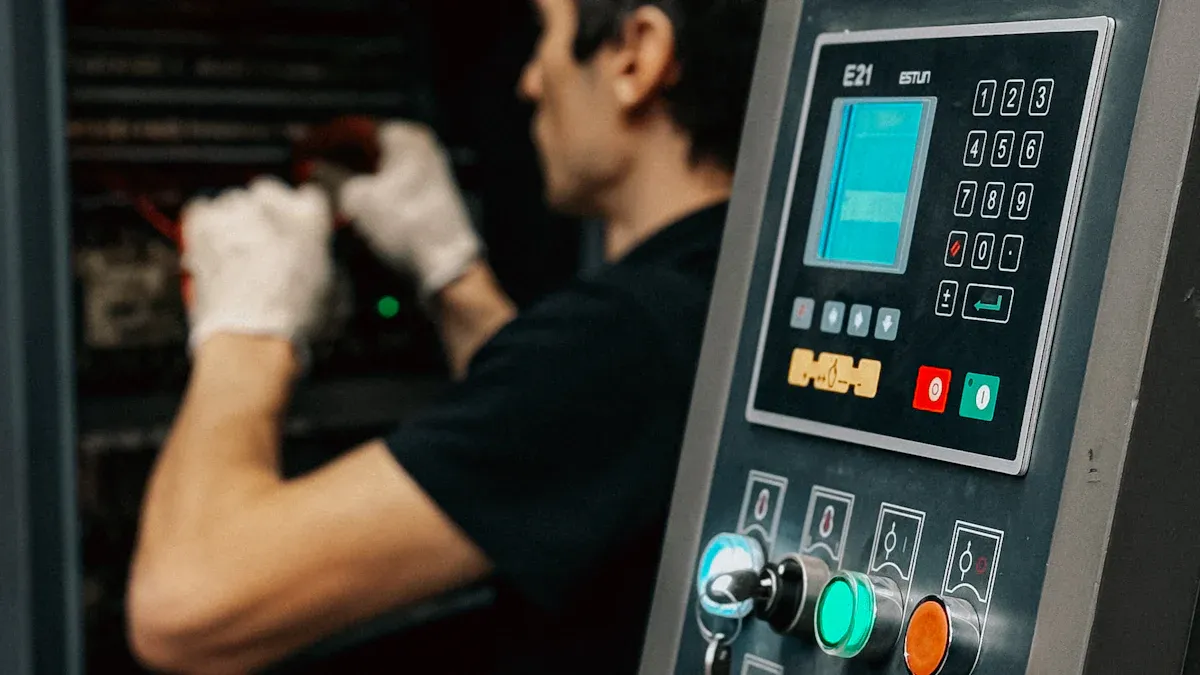
After planning, you must prepare the physical CNC grinding machine. This setup phase is critical for turning your digital plan into a high-quality physical part. A proper setup ensures the entire CNC grinding workflow runs smoothly and delivers the required precision. This process involves securing your workpiece, selecting the right tool, and programming the machine’s reference points for the CNC machining operation.
Workpiece Fixturing
You must first secure your workpiece to the machine bed. This step, called fixturing, prevents any movement during the grinding process. Improper support can deform the part or cause it to shift, leading to poor dimensional control and inaccurate results. You have several options for this CNC machining task.
- Magnetic Fixtures use powerful magnets to hold ferrous materials, allowing for quick setups.
- Rotary Fixtures rotate cylindrical parts for consistent grinding around an axis.
- Grinding Fixtures are custom-designed to hold specific parts, ensuring maximum stability for complex production runs.
Grinding Wheel Selection and Dressing
Choosing the right grinding wheel is essential for success. The wheel’s abrasive, grit, and bond must match your workpiece material. For specialized materials like hard alloys or ceramics, you need an expert solution. A brand like Aimgrind provides customized grinding solutions, using their expertise in formula design to match the perfect wheel to your equipment and process.
For example, Aimgrind’s diamond grinding wheels are high-performance cutting tools for CNC machining. They offer exceptional durability and efficiency, helping you achieve superior surface finishes on the toughest materials. This is a key part of choosing the right CNC grinding machine setup for your production needs. You must also maintain the wheel through dressing, which cleans the surface, and truing, which restores its geometric shape. This maintenance ensures consistent quality in every CNC tool grinding operation.
Setting Work and Tool Offsets
Finally, you must tell the CNC machine the exact location of your part and your tool. You use work offsets (like G54) to define the zero point, or origin, on your workpiece. This tells the CNC where the machining program begins.
Next, you set tool offsets. These tell the CNC controller the precise length and diameter of your grinding wheel. The machine combines geometry and wear offsets to compensate for tool size and wear during the grinding process. This ensures the CNC machine moves the tool with absolute precision, which is vital for a successful CNC machining and grinding process.
CNC Machining and In-Process Monitoring
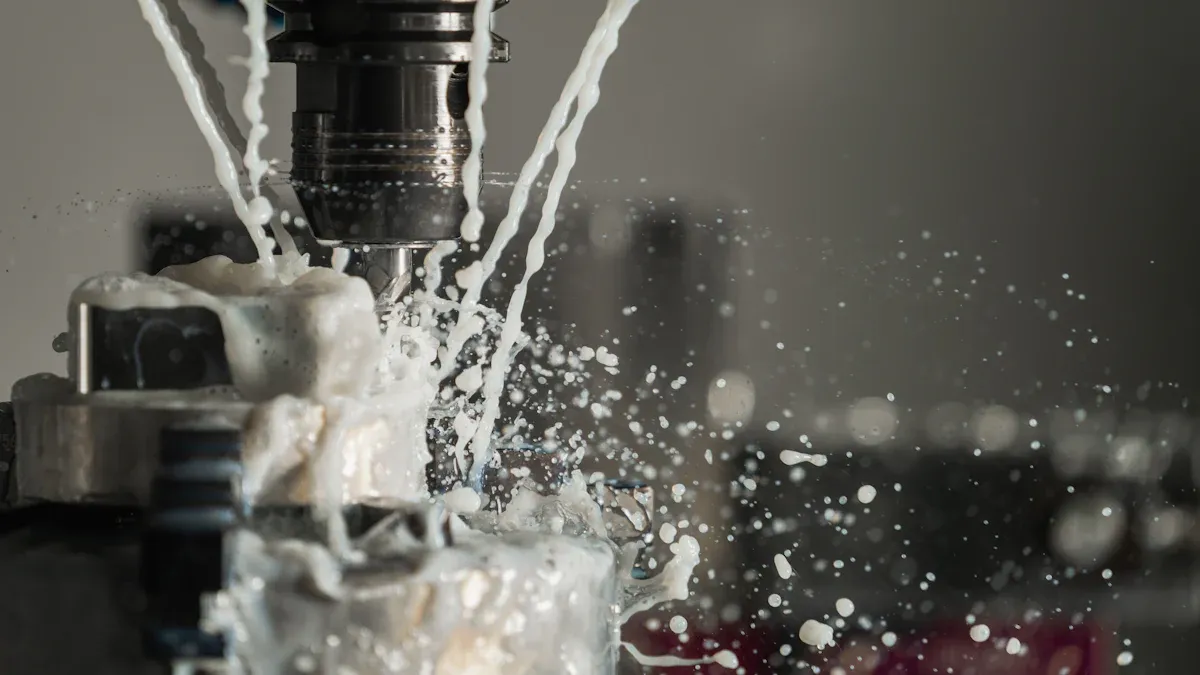
With your plan and setup complete, you are ready for the execution phase of the CNC grinding workflow. This is where the CNC grinding machine brings your digital design to life. This stage combines running the program with constant monitoring to ensure the highest quality and precision for every part. This process is vital for successful high-precision cnc machining.
Loading and Running the Program
First, you load the G-code file into the CNC controller. Before you press ‘Cycle Start’, you must perform critical safety checks. A safe CNC machining process is an efficient one. You should always verify:
- Emergency stop buttons and safety guards are working correctly.
- The grinding wheel and spindle are in good condition and properly aligned.
- Workholding devices are secure and free from damage.
- All machine axes move smoothly without obstruction.
Once you confirm the machine is safe, you can run the program. Many operators perform a “dry run” with the spindle off to watch the toolpath and prevent collisions. This is a key step in the CNC machining process.
Real-Time Process Monitoring
During the grinding process, you must monitor the operation in real-time. This helps you catch issues early and maintain consistent quality throughout production. Modern CNC systems use advanced sensors to track key parameters.
Sensors for acoustic emission, force, and vibration give you live data on the machining process. This information helps you optimize efficiency and speed.
You should watch for changes in:
- Workpiece Diameter: Detects deviations from thermal changes or wheel wear.
- Flute Indexing: Shifts in this parameter can affect the final geometry of cutting tools for cnc machining.
- Run-out: Monitoring run-out is essential for improving the accuracy of the grinding operation.
This constant feedback loop is crucial for a stable production process.
Automated In-Process Probing
For ultimate precision, you can use automated in-process probing. This technology uses touch probes to measure the workpiece during the CNC machining cycle. The system can detect and correct errors from tool wear automatically. This process greatly improves operational efficiencies.
The CNC machine uses the probe to measure the part after a roughing pass. If the measurement deviates from the target, the CNC controller automatically updates the tool offsets for the next pass. This dynamic adaptation ensures the final part meets exact tolerances. Modern probing systems offer incredible repeatability, some achieving accuracy down to 0.25 µm. This automated process allows the CNC machine to run more efficiently, stopping the program only if a tolerance is violated, which prevents errors in the grinding and machining process.
Post-Grinding Operations
Your cnc machining work is not finished when the grinding stops. The post-grinding phase is essential for preparing your component for its final use. This stage ensures the part is clean, smooth, and meets all quality standards. Proper post-grinding operations are a critical part of the entire production process.
Part Removal and Cleaning
First, you must carefully remove the finished part from the cnc machine. Handle it with care to avoid any scratches or damage after the precision grinding process. Once removed, the part needs a thorough cleaning. The grinding machining process often leaves behind coolant residue and tiny abrasive particles.
You must clean these contaminants from the part’s surface. A clean part is necessary for accurate inspection and for any final finishing steps. This simple action protects the quality you achieved during the cnc grinding machining.
Deburring and Final Finishing
After cleaning, you need to inspect the part for burrs. Burrs are small, sharp edges of material left over from the machining process. Removing them is a crucial step in any quality cnc production. You can use several deburring techniques depending on the part’s complexity and material.
- Manual Deburring: You use hand tools for simple parts or hard-to-reach areas.
- Mechanical Deburring: You use machinery with abrasive materials for large-scale production.
- Thermal Deburring: You use a burst of heat to burn away burrs on complex parts.
- Electrochemical Deburring: You use a chemical reaction to dissolve burrs without touching the part, which is great for delicate cnc machining jobs.
For parts requiring an exceptionally smooth surface, you may need final finishing. Lapping is a machining technique that uses a loose abrasive to create an extremely flat surface. Polishing is the final step you take to achieve a mirror-like finish, removing the last microscopic scratches from the grinding. These final machining steps ensure your cnc component has the perfect surface for its application.
Final CNC Part Inspection and QA
The final phase of the cnc workflow is inspection and quality assurance (QA). You must verify that every aspect of the finished component meets the design specifications. This step guarantees the reliability and performance of your part, confirming the success of the entire cnc machining process.
Dimensional and Geometric Checks
First, you must confirm the part’s physical measurements. This involves checking both its size and its shape. Your goal is to ensure every feature meets the specified accuracy requirements. While dimensional tolerances define a feature’s size, geometric tolerances (GD&T) control its form and orientation, ensuring it functions correctly. This level of precision and accuracy is vital in modern cnc machining.
You use specialized metrology tools for this critical machining inspection:
- Coordinate Measuring Machines (CMMs) use a probe to take precise 3D measurements, perfect for verifying complex geometries.
- Optical Comparators project a magnified shadow of the part onto a screen, allowing you to check its profile against a standard.
- Granite Inspection Tables provide a perfectly flat reference surface for all your measurements, ensuring consistent accuracy.
Surface Finish Analysis
Next, you analyze the part’s surface texture. The grinding process creates a specific finish, and you must measure it to ensure it meets the required quality. For industries like aerospace or medical, an ultra-smooth finish of 0.4 Ra is often necessary. Achieving this level of quality requires careful control over the grinding and machining process.
You use a profilometer to measure surface roughness. This tool drags a fine stylus across the surface to create a profile. From this data, you calculate key values like Ra (the average roughness) and Rz (the mean roughness depth). This analysis confirms your cnc machining achieved the desired smoothness, sometimes down to micron-level accuracy.
Documentation and Traceability
Finally, you must document everything. Proper documentation provides proof of quality and is essential for accountability. This paperwork confirms that the cnc part conforms to all standards. Key documents include:
| Document Type | What It Certifies |
|---|---|
| Material Test Report (MTR) | The chemical and physical properties of the raw material. |
| Certificate of Conformity (CoC) | The finished part meets all drawing specifications. |
| Final Inspection Report | The measured dimensional data for the finished part. |
Traceability links a finished part back to its origins. You can achieve this by marking each component with a unique identifier, like a laser-engraved serial number. This mark connects the part to its raw material batch, the specific cnc machine used, and all machining parameters. This complete history is the ultimate mark of a professional cnc machining operation.
You now know the complete cnc grinding workflow. This process covers five key stages: planning your machining, setting up the machine, executing the machining, post-machining operations, and final inspection. Following this structured machining process is your key to achieving consistent precision. This turns complex machining into a reliable task. The right machining process, combined with a quality cnc grinding machine and superior tooling from Aimgrind, is your formula for success in modern machining. This quality machining ensures every machining job on your machine is a success.
FAQ
Why is digital simulation important?
You use digital simulation to find errors before machining begins. This virtual check prevents tool collisions and reduces material waste. It confirms your program will run smoothly, saving you valuable time and resources on the shop floor.
How do you choose the right grinding wheel?
You must match the wheel to your workpiece material. For tough materials like hard alloys or ceramics, you need an expert solution. A specialized brand like Aimgrind provides custom wheels to ensure you achieve the best performance and surface finish.
Why is final documentation so important?
You use final documentation to prove part quality. These records confirm your component meets all design specifications. They also create a traceable history for every part, which is essential for professional quality assurance and accountability.