

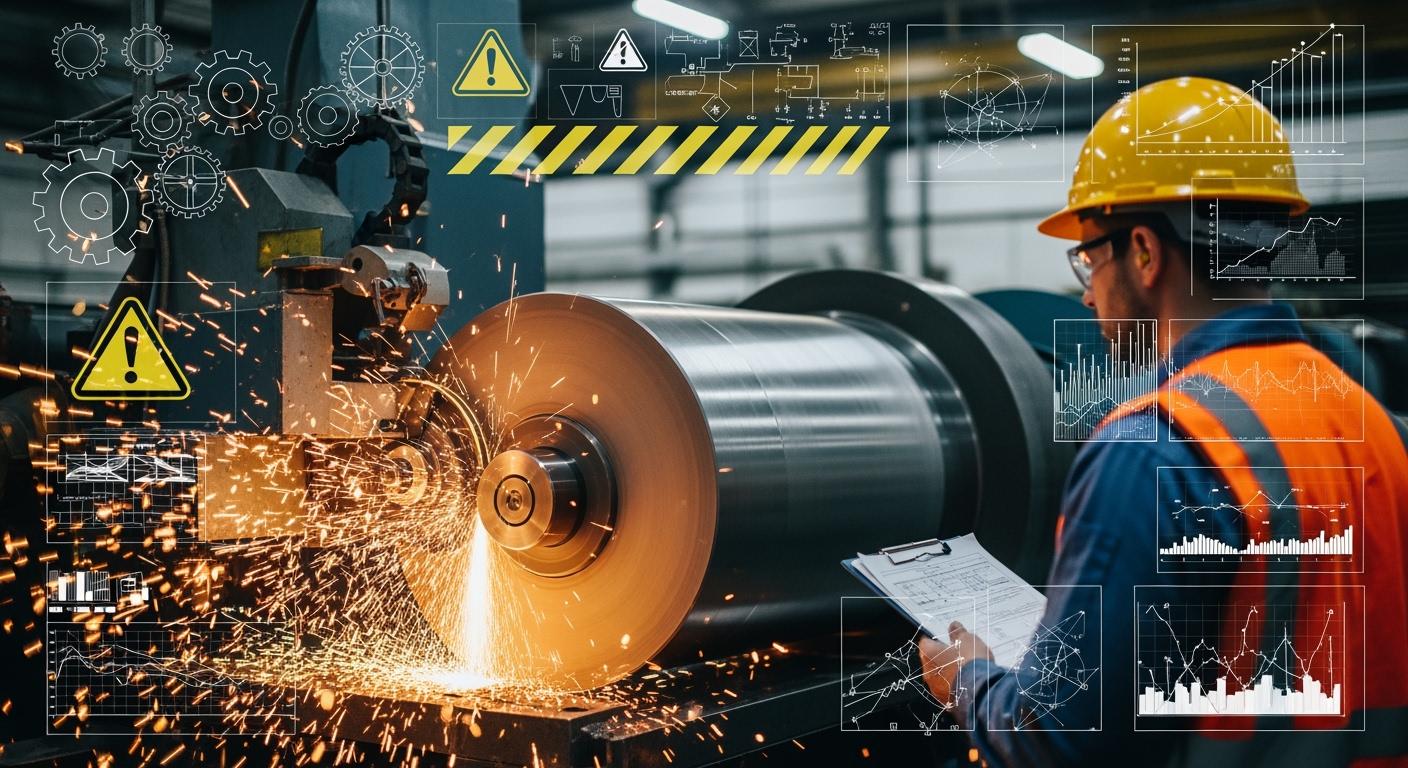
You see the impact of mill roll grinding every day in steel and paper manufacturing. Precise surface finishing and dimensional accuracy help you improve product quality and boost production efficiency.
- The global roll grinders market will reach $512 million by 2025.
- The steel industry makes up more than 55% of roll grinder market revenue.
- Roll grinders directly affect surface quality and reduce scrap rates.
Aimgrind’s CBN grinding wheels give you advanced tools to solve critical challenges and maintain high standards. You can diagnose, prevent, and fix common roll grinding issues with the right solutions.
Key Takeaways
- Identify and address vibration and chatter issues in rolling mills to improve product quality and reduce wear.
- Implement preventive and predictive maintenance practices to extend the lifespan of rolling mill rolls and minimize downtime.
- Utilize Aimgrind’s CBN grinding wheels for enhanced performance, including better surface quality and reduced wear.
- Monitor grinding parameters closely to maintain consistent product quality and prevent costly mistakes.
- Invest in operator training to ensure skilled handling of rolls, which helps avoid unexpected breakdowns and maintains high quality.
Critical Challenges in Rolling Mill Rolls
Vibration and Chatter Issues
You often see vibration and chatter problems in rolling mill rolls. These issues appear when the mill operates at high speeds. Chatter vibrations in S6-high rolling mills can cause premature wear and defects in metal strips. These vibrations usually happen at a frequency of 130 Hz when rolling at 40 m/min. Mill vibration is common in metal strip rolling. It includes low-frequency torque vibrations and higher-frequency vertical vibrations, often above 100 Hz. Chatter marks from these vibrations lower the quality of rolled strips and speed up machine wear. You may need to reduce rolling speed to control these problems, which affects the efficiency of high-speed mills. Replacing side support rolls can help lower vibration levels and improve mill performance.
Surface Defects and Wear
Surface defects and wear are critical challenges for rolling mill rolls. You face roll wear from mechanical and thermal fatigue, impact, abrasion, adhesion, and corrosion. The complex shape of rolls in section rolling makes wear harder to manage. Microstructural issues, such as pores and MnS inclusions, often lead to roll failure. A high percentage of retained austenite, about 9%, can cause spalling. This happens when austenite turns into martensite, leading to volume expansion during operation. You can control non-uniform wear with proper roll pass design. These challenges rolls face increase maintenance needs and affect product quality.
Output and Fineness Deviations
Output and fineness deviations in rolling mill rolls impact your product quality and performance. You must monitor several factors to keep results consistent. The table below shows how different factors affect the final product:
| Factor | Impact on Product Quality and Performance |
|---|---|
| Grinding Pressure | Changes the size reduction and uniformity of the final product. |
| Classifier Speed | Alters particle separation, affecting fineness of the output. |
| Material Characteristics | Determines how materials respond to milling and final traits. |
Frequent rebuilding of rolls increases production costs in hot strip mills. Insufficient service life of working barrels leads to high consumption costs, especially for electric energy and natural gas. Compulsory stoppages for roll rebuilding cause production losses. HSS rolls last longer, with a service life of 14,000–20,000 Mg per 1 mm of wear, compared to 2,000 Mg for high chromium cast iron rolls. HSS rolls show 80% less wear than high chromium rolls. Addressing these critical challenges helps you reduce downtime and improve efficiency.
Diagnosing and Troubleshooting Grinding Problems
Identifying Root Causes
You need to find the main reasons behind grinding problems in mill rolls. Start by looking for signs of vibration, chatter, and surface defects. These issues often show up as strange marks, uneven surfaces, or loud noises during grinding. You can use special health indexes to spot problems early. One helpful tool is ODNSES. This index helps you detect chatter by picking up small impulses in vibration signals. ODNSES also reduces noise in the frequency domain, so you can see abnormal vibrations more clearly. It is 29.12% more sensitive to impulse amplitudes than older methods. This makes it easier for you to catch problems before they get worse.
| Indicator | Description |
|---|---|
| ODNSES | A health index for early chatter detection in roll grinding. It finds impulses in vibration signals. |
| Noise Suppression | ODNSES lowers interference in the frequency domain, making abnormal vibrations easier to spot. |
| Sensitivity | ODNSES is 29.12% more sensitive to impulse amplitudes than classic health indexes. |
You should also check for wear on rollers, changes in grinding pressure, and any shifts in product fineness. These signs help you decide where to focus your troubleshooting steps.
Troubleshooting Techniques
You can solve many grinding problems by following a clear process. First, inspect the rollers for wear. Use a laser alignment check to see if the rollers are in the right position. If you find worn rollers, replace them and realign within a 0.05mm tolerance. Next, check the foundation. Use a torque wrench to measure bolt tightness. Retighten bolts to the manufacturer’s specification, usually between 300 and 400 N·m.
If you notice reduced output capacity, test the feed material hardness with a Bond Work Index test. Inspect the grinding elements for wear and check the classifier speed. For abnormal noise patterns, look at the spacers and shims. Replace any worn parts. Flush and repack the bearings with NLGI Grade 2 grease.
When you see product fineness deviation, increase the classifier rotor speed. Lower the grinding pressure and check for leaks inside the system. These actions help you keep the fineness of your product within the desired range.
| Issue | Diagnostic Method | Repair Action |
|---|---|---|
| Worn rollers | Laser alignment check | Replace rollers and realign within 0.05mm tolerance |
| Foundation issues | Torque wrench measurement | Retighten bolts to 300-400 N·m |
| Reduced Output Capacity | Check feed material hardness | Inspect grinding elements and verify classifier speed |
| Abnormal Noise Patterns | Inspect and replace spacers/shims | Flush and repack bearings (NLGI Grade 2 grease) |
| Product Fineness Deviation | Increase classifier rotor speed | Reduce grinding pressure and check for internal leaks |
Tip: Keep a logbook of all grinding checks and repairs. This helps you spot patterns and prevent future problems.
Role of CBN Grinding Wheels by Aimgrind
You can solve many grinding challenges by choosing the right tools. Aimgrind’s CBN grinding wheels give you a big advantage. These wheels work well on hardened steels and superalloys. They keep their shape and sharpness, even when you grind at high speeds. You get faster cutting and cooler operation, which lowers the risk of thermal damage. This means less wear on your rolls and better surface quality.
CBN grinding wheels help you control vibration and chatter. Their stable structure reduces the chance of uneven grinding. You also get more consistent fineness in your finished products. The wheels last longer than conventional abrasives, so you spend less time and money on replacements. You can use them for both wet and dry grinding, which gives you more flexibility in your process.
Aimgrind offers CBN grinding wheels in different bond types and sizes. You can match the wheel to your specific grinding needs. The team at Aimgrind helps you with parameter matching and sample optimization. This support ensures you get the best results from your grinding operations. When you use Aimgrind’s CBN grinding wheels, you improve productivity, reduce downtime, and achieve high-quality finishes every time.
Best Practices for Roll Maintenance
Preventive and Predictive Maintenance
You can extend the lifespan of rolling mill rolls by following best practices for roll maintenance. Preventive maintenance schedule routines help you spot early signs of wear, such as cracks and pitting. Predictive maintenance uses condition monitoring systems to track vibration and temperature. You can act before problems cause downtime. Regular inspections and proper lubrication reduce friction and prevent excessive wear. Cooling systems stop thermal fatigue and distortion. Alignment checks keep rolls working at their best. Predictive maintenance lets you focus on real issues, not just scheduled tasks. This approach lowers maintenance costs and cuts unplanned downtime.
Aimgrind supports you with parameter matching and service support. You get grinding wheels that fit your equipment and process. This helps you achieve optimal roll performance and reliability.
Inspection and Alignment
Inspection is a key part of best practices for roll maintenance. You should check the alignment of rollers and guides often. Use a leveling tool to make sure the mill sits correctly. Surface quality checks help you find defects like scratches or cracks. Measure strip dimensions to confirm they meet your specifications. If you see any deviations, take corrective actions right away. Regular inspections ensure high-quality output and prevent roll grinding issues. Alignment checks keep pressure distribution uniform, which stops uneven wear and boosts grinding efficiency. Investing in high-quality alignment tools and training your team reduces misalignment problems.
Lubrication and Cooling Optimization
Lubrication plays a major role in roll grinding performance. You can choose from different methods. Dry grinding causes high wear and poor surface quality. MQL-PO reduces wear by 36% and improves surface quality. MQL-Al2O3 gives the best results, lowering friction and tool wear while improving surface quality. The oil-film formed during MQL modes keeps cutting edges sharp. Cooling systems also matter. They prevent thermal fatigue and keep rolls from distorting. Mills that follow daily protocols for lubrication and cooling see 60% fewer defects and extend component life by 50%. The rolling oil system provides lubrication, cooling, and surface cleanliness. Keeping the right emulsion concentration and temperature prevents surface staining and roll mark transfer.
| Lubrication Method | Coefficient of Friction | Effect on Tool Wear | Surface Quality Improvement |
|---|---|---|---|
| Dry Grinding | 0.53 | High wear due to chip deposits | Poor |
| MQL-PO | 0.34 | 36% reduction in wear | Improved |
| MQL-Al2O3 | 0.26 | Significant reduction in wear | Best surface quality |
You can improve roll performance and reduce maintenance costs by following these practices.
Ensuring Consistent Performance and Quality
Monitoring Grinding Parameters
You need to monitor grinding parameters closely to keep rolls working at their best. When you track vibrations during grinding, you can prevent damage to rolls and protect the finished product. This helps extend the life of your grinding wheels and keeps rolls in top shape. You should use real-time monitoring for power, pressure, and temperature. These checks help you spot problems early. Automatic feed rate adjustments based on motor load keep rolls running smoothly. Particle size analysis and classifier speed control help you get the right finish every time. Predictive maintenance alerts warn you before rolls show signs of trouble. Studies show that monitoring vibration signals gives you important clues about surface quality. High-frequency vibration changes can tell you if rolls need attention. You can use statistical tools to find patterns and improve grinding results. This approach helps you maintain high quality and avoid costly mistakes.
Quality Control Measures
You can use advanced quality control systems to keep rolls performing well. Automated control systems let you adjust settings from a distance. This saves time and keeps rolls working without interruption. These systems help you get consistent grind sizes, which is important when you need different grain sizes for your products. Precision in roll gap positioning is key for accurate grinding. Some systems, like AccuGap, let you adjust each side of the rolls independently. Sensors measure and position rolls with high accuracy, keeping product quality steady. If foreign materials disrupt the process, the system can quickly correct roll positioning. Continuous sensor data helps you monitor vibration, temperature, and hydraulic pressure. AI-driven pattern recognition finds early faults, so you can fix them before rolls fail. Edge computing and cloud tools help you process data and spot problems fast. You can see how well your rolls perform by checking strip thickness and flatness. Tuning feedback controllers helps you manage disturbances and keep quality high.
| System Feature | Benefit for Rolls and Quality |
|---|---|
| Automated Controls | Remote adjustments, less downtime |
| Precision Sensors | Accurate roll positioning |
| AI Pattern Recognition | Early fault detection |
| Edge Computing | Fast data processing |
Operator Training and Support
You need skilled operators to keep rolls in top condition. Training programs teach you about roll types, construction, maintenance, and grinding. Some programs last three days and cover topics like roll balancing and asset management. Others focus on maintenance for different machines and can last up to five days. These programs help you learn the best ways to care for rolls and spot problems early. When you know when to replace rolls, you avoid unexpected breakdowns and keep quality high. Aimgrind supports you with expert advice and customer service. You get help with parameter matching and grinding wheel selection. This support helps you keep rolls working well and maintain high quality in every batch. You can trust Aimgrind’s commitment to innovation and customer satisfaction. With the right training and support, you keep rolls running smoothly and deliver top-quality products every time.
You can overcome mill roll grinding challenges by using modern automation, smart sensors, and energy-efficient motors. The table below shows how these solutions help you reduce downtime, stress, and fatigue, and prevent premature roll failure:
| Actionable Solution | Benefits |
|---|---|
| Automation systems | Less downtime, better mill performance |
| Smart sensors | Early failure detection, less stress |
| Energy-efficient motors | Lower fatigue, longer life of rolling mill rolls |
You should focus on alignment, the role of lubrication, and avoid improper maintenance. Cleaning clogged nozzles and replacing bearings stop premature roll failure. You can cut downtime and stress by tracking fatigue and alignment. Aimgrind’s CBN wheels help you prevent premature roll failure, reduce fatigue, and extend mill life. Continuous improvement stops premature roll failure and stress. You can avoid fatigue, downtime, and premature roll failure by following these steps. You keep your mill running, reduce stress, and stop fatigue and premature roll failure.
FAQ
What materials can you grind with Aimgrind’s CBN wheels?
You can grind hardened steels, tool steels, and superalloys. These wheels work well for tough materials in industries like aerospace and automotive.
How do CBN grinding wheels improve roll grinding quality?
CBN wheels keep their shape and sharpness. You get faster cutting and cooler operation. This helps you achieve smooth surfaces and consistent results.
Can you use CBN grinding wheels for both wet and dry grinding?
Yes. You can use CBN wheels for wet or dry grinding. This gives you flexibility in your process and helps you match your equipment needs.
How does Aimgrind support you in choosing the right grinding wheel?
Aimgrind helps you with parameter matching and sample optimization. You get expert advice and support. This ensures your grinding wheel fits your machine and process.
Contact Us
For More Grinding Solution or Customized Abrasive Tools