


Scratches and haze can ruin the look of your glass, making you think replacement is the only choice. However, professional glass polishing offers a cost-effective restoration. Glass scratch repair is significantly cheaper than buying new glass.
| Cost Type | Percentage of Replacement Cost |
|---|---|
| Professional Glass Resurfacing | 30% to 70% less |
| Average Savings on Large Projects | Approximately 65% |
This guide details the glass polishing process. You will learn the steps from grinding to the final polishing. This knowledge helps you restore clarity and achieve perfect optical clarity for your glass.
Key Takeaways
- Glass polishing saves money. It costs much less than replacing scratched glass.
- Glass restoration has three main steps. First, grind away damage. Second, smooth the surface. Third, polish for a clear finish.
- Use the right tools for each step. You need different abrasives and a good polishing wheel for the best results.
- Always wear safety gear. Protect your eyes, hands, and lungs from glass dust and chemicals.
- Follow steps carefully. Clean the glass, use different grit sizes, and keep the glass wet to avoid damage.
The Core Stages of Glass Restoration
The glass polishing process transforms damaged glass into a clear, flawless surface. You can achieve amazing results by following three core stages. This restoration journey takes your glass from rough and scratched to perfectly smooth.
Stage 1: Grinding to Erase Damage
The first stage of glass restoration is grinding. You use this aggressive step to remove visible damage from the glass. This process tackles deep scratches and even some gouges. For most architectural glass scratch repair, the work begins with a coarse abrasive around a 180-grit level. The grinding stage is essential for creating a uniform foundation for the next steps in the glass polishing process.
Note: While this process can fix many types of damage, chips and cracks often require specialized repair techniques beyond standard surface grinding.
Stage 2: Pre-Polishing to Smooth the Surface
After grinding, you will move to the pre-polishing stage. This step is crucial for preparing the glass surface for the final polish. You will work through a series of progressively finer abrasives to smooth out the marks left by the initial grinding. This sequence typically involves:
- Semi-smooth grind (around 220 grit)
- Smooth grind (around 400 grit)
- Super-smooth grind (around 600 grit)
This careful progression eliminates remaining irregularities. It ensures the glass is uniform before you begin the final polishing process.
Stage 3: Polishing for a Flawless Finish
The last stage is the final polish. This is where you achieve true optical clarity. The goal of professional glass polishing is removing imperfections at a microscopic level. This polishing step erases any remaining haze or fine defects, such as:
- Scratches: Tiny tears on the surface.
- Digs: Small pits or craters.
- Roughness: A texture that scatters light.
Successful polishing makes the glass smooth and mirror-like. This last part of the glass polishing process delivers the transparent, perfect finish you want for your glass.
Essential Tools for the Glass Polishing Process
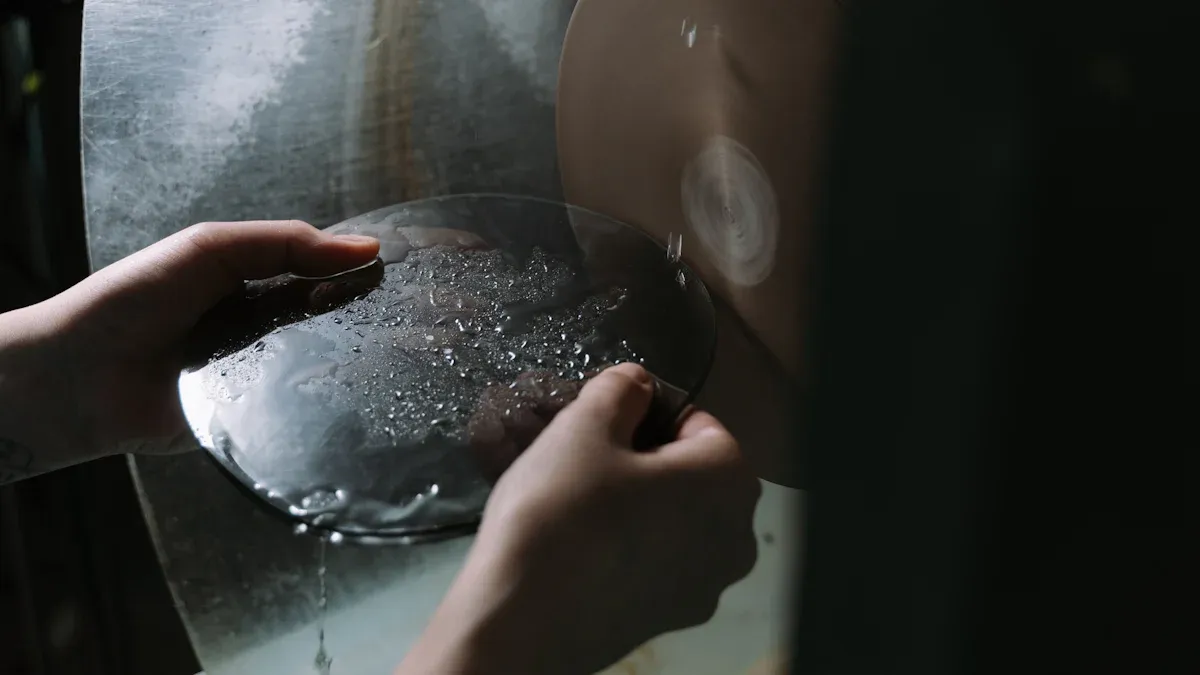
Having the right tools is essential for a successful glass polishing project. Each stage of the glass polishing process requires specific equipment to move from a damaged surface to a perfectly clear finish. Here is what you need in your toolkit.
Grinding and Pre-Polishing Abrasives
You will start the restoration with abrasives. These materials do the heavy lifting of removing scratches. You will use different types of abrasive materials for grinding and pre-polishing glass.
- Silicon Carbide (SiC): A common abrasive for the initial grinding stages.
- Aluminum Oxide (Al2O3): Often used for achieving a fine finish on glass.
- Cerium Oxide (CeO2): A popular choice for the final polishing compound, delivering excellent surface quality.
You must use these abrasives in a sequence from coarse to fine. Larger grit sizes work faster but leave a rougher surface, while smaller grits refine it.
| Grinding Stage | Grit Size | Surface Quality |
|---|---|---|
| Rough Grinding | Large | Lower (Rough) |
| Fine Grinding | Small | Higher (Smooth) |
| Finish Grinding | Very Small | High (Polished) |
Aimgrind Polishing Wheels and Compounds
For the final, most critical stage of the glass polishing process, you need a high-quality polishing wheel. This is where you achieve true optical clarity. We recommend Aimgrind Polishing Wheels for their durability and versatility on different types of glass.
Aimgrind offers specialized wheels like soft wool felt wheels, perfect for buffing glass surfaces, and 10S wheels, which combine polishing powder and a binder for an effective polishing process. These wheels are designed for compatibility with standard machines, making them easy to integrate into your workflow. Using the right wheel with the correct polishing compounds ensures a flawless result. When you use a superior tool, you can Grind with Passion, Achieve with Aim. The right polishing compounds and wheel make all the difference in glass polishing.
Mandatory Safety Gear
Your safety is the top priority during any glass polishing work. The process creates fine glass dust and particles from polishing compounds.
Safety First: Inhaling these particles, especially silica-based polishing compounds, can be harmful to your lungs over time. Always protect yourself.
You must wear the proper personal protective equipment (PPE) before you begin. This includes:
- Safety Goggles: To protect your eyes from flying debris.
- Gloves: To protect your hands from abrasives and polishing compounds.
- N95 Respirator Mask: To prevent you from breathing in harmful dust from the glass and polishing compounds.
The Step-by-Step Glass Polishing Process
With your tools and safety gear ready, you can begin the hands-on work. This step-by-step guide breaks down the entire glass polishing process into three manageable stages. Following these instructions carefully will help you restore clarity and achieve a professional finish on your glass.
Step 1: Surface Prep and Inspection
Proper preparation is the foundation of effective glass polishing. You cannot fix what you cannot see. You must start with a perfectly clean and thoroughly inspected surface.
First, you need to clean the glass to remove any dirt, grease, or debris. A clean surface prevents you from grinding existing dirt into the glass, which could cause more scratches. Follow these steps for a streak-free clean:
- Remove Dust: Gently wipe the surface with a soft, lint-free microfiber cloth to get rid of loose dust.
- Apply Cleaner: Lightly spray a mild glass cleaner or a solution of equal parts water and vinegar onto another microfiber cloth.
- Wipe the Glass: Clean the glass by wiping from top to bottom in smooth, even strokes.
- Rinse and Dry: Use a separate, clean cloth dampened with water to rinse the surface. Dry it completely with a dry microfiber cloth to prevent water spots.
Next, you must inspect the glass for damage. A proper inspection helps you identify the exact location and depth of every scratch.
- Use Good Lighting: Position a light source at a low angle to the glass. This technique makes scratches cast small shadows, making them easier to see.
- Create Contrast: Place a black or white sheet behind the glass. This contrasting background helps imperfections stand out.
- Feel the Surface: Gently run your fingers over the glass. Sometimes you can feel a deep scratch or chip that is hard to see.
- Mark the Flaws: Use a non-permanent marker on the opposite side of the glass to circle the damaged areas. This map will guide your grinding work.
Step 2: The Grinding and Smoothing Sequence
This stage does the heavy lifting of the glass restoration. You will use a sequence of abrasive pads to grind away the damage and smooth the surface. The key is to progress from a coarse grit to a fine grit. Never skip a grit level, as each step is designed to remove the scratches from the one before it.
Important Note: Always keep the glass surface wet during the grinding and polishing process. Use a spray bottle with clean water. This lubricates the surface, keeps glass dust down, and prevents heat buildup that can crack the glass.
A typical grinding sequence for glass scratch repair looks like this:
| Stage | Grit Size | Purpose |
|---|---|---|
| Initial Grinding | 180 – 220 grit | Removes deep scratches and damage. |
| Semi-Smooth Grind | 400 grit | Erases the scratches from the initial grinding. |
| Smooth Grind | 800 grit | Further refines the surface for a satin finish. |
| Pre-Polish | 1500 – 3000 grit | Removes all visible haze and prepares for the final polish. |
Work in small, manageable sections. Use consistent, overlapping motions to blend your repair area seamlessly with the rest of the glass. After each grit stage, clean the surface completely to remove all abrasive particles before moving to the next finer grit.
Step 3: Final Polish for Ultimate Clarity
The final step in the glass polishing process is where the magic happens. Here, you will transform the smooth but hazy surface into one with perfect optical clarity. This stage uses a polishing wheel and a specialized polishing compound.
For professional glass polishing results, a high-quality polishing compound is essential. Cerium oxide is the industry standard for polishing compounds because it produces an exceptional finish on glass.
Here is the polishing technique for a flawless result:
- Apply the Compound: Apply a small amount of your polishing compound directly to the glass or onto your polishing wheel. Do not use too much compound; a little goes a long way.
- Work in Sections: Polish a small two-foot by two-foot area at a time. Use slow, overlapping passes in a circular or side-to-side motion.
- Maintain Consistent Pressure: Let the weight of the machine do the work. Applying too much pressure can create distortion or heat up the glass too quickly.
- Keep the Surface Lubricated: Mist the area with water if the polishing compound starts to dry out. The compound should maintain a slurry-like consistency.
- Check Your Work: After a few passes, stop and clean the area with a microfiber cloth. Inspect the glass for any remaining haze or fine scratches. Continue the polishing process until the surface is perfectly clear.
By carefully following these polishing techniques, you will remove the last of the imperfections and achieve a distortion-free shine. This final polish is what separates an amateur repair from professional glass polishing.
Pro Tips for Achieving Optical Clarity
Mastering the glass polishing process requires more than just following steps. You need to refine your technique to handle common challenges. These professional glass polishing tips will help you achieve a truly flawless finish and perfect optical clarity.
Maintaining Consistent Speed and Pressure
Your control over speed and pressure is vital for effective glass polishing. Inconsistent handling can ruin your results. For example, too much pressure can cause uneven wear, while too little pressure leads to incomplete polishing. The right balance is key. For brittle glass, a low pressure is crucial to prevent cracks and achieve a mirror-like finish.
This table shows how these factors affect the glass polishing outcome:
| Parameter | Effect on Material Removal | Effect on Surface Finish |
|---|---|---|
| Pressure | Significant increase | Highest gloss at optimal pressure |
| Speed | Significant increase | Finest finish at lowest speed |
Watch for these signs: A patchy blend in the polished surface is a clear indicator that your speed or pressure was inconsistent. This is a common issue in glass scratch repair.
How to Avoid Overheating the Glass
Heat is the enemy of glass. Excessive heat buildup during the polishing process can cause the glass to crack, creating a much bigger problem. Overheating usually happens for two reasons: moving the polisher too fast or applying too much pressure.
To prevent this, always let the machine do the work. Use a slow, deliberate arm speed and light pressure. Most importantly, keep the surface wet. A continuous supply of water or polishing compound acts as a lubricant. This reduces friction and keeps the glass cool.
Troubleshooting Haze and Swirl Marks
Even with careful work, you might see haze or swirl marks. Understanding these imperfections is the first step to fixing them.
Haze can come from several sources. Sometimes, it is residue from cleaning materials or off-gassing from nearby lubricants. Make sure your work area and the glass are perfectly clean before you start polishing.
Swirl marks are often caused by an incorrect polishing technique. To fix them, use these polishing techniques:
- Work in small, manageable sections with overlapping passes.
- Use a slow arm speed and hold the polishing pad flat against the glass.
- Always maintain a wet buffing technique. Do not let the polishing compound dry out, as this increases friction.
- Clean your polishing pad often to remove old compound and glass particles. You should remove spent residue before adding fresh compound.
Following these techniques will help you remove any final flaws from the glass.
You now understand the glass polishing process for glass restoration. The path from grinding to final polishing restores clarity to your glass. Achieving true optical clarity in professional glass polishing requires quality tools. Using superior equipment, like Aimgrind‘s specialized polishing wheels, makes the polishing process effective. This knowledge empowers you to begin your own glass polishing and glass restoration projects with confidence.
FAQ
Can I use this glass polishing technique on my car’s windshield?
Yes, you can use this glass polishing technique on automotive glass. However, you must be very careful. Windshields often have special coatings. Always test your polishing method in a small, hidden area first to ensure you do not damage the glass or its coatings.
How long does the glass polishing process take?
The time for glass polishing depends on the damage severity and glass size. A small scratch might take under an hour. A large, deeply scratched area could take several hours of careful work. Proper polishing requires patience for the best results.
What is the most important step in glass polishing?
Every step in glass polishing is important. However, the final polishing stage is where you achieve clarity. Using a quality polishing compound and wheel on the glass surface is critical. This last part of the glass polishing process removes all haze for a perfect finish.
Can I skip grit levels to speed up the polishing?
You should never skip grit levels during glass polishing. Each finer grit removes the scratches from the previous one. Skipping a step will leave deep scratches behind. This incorrect technique makes the final polishing much harder and can ruin the glass.