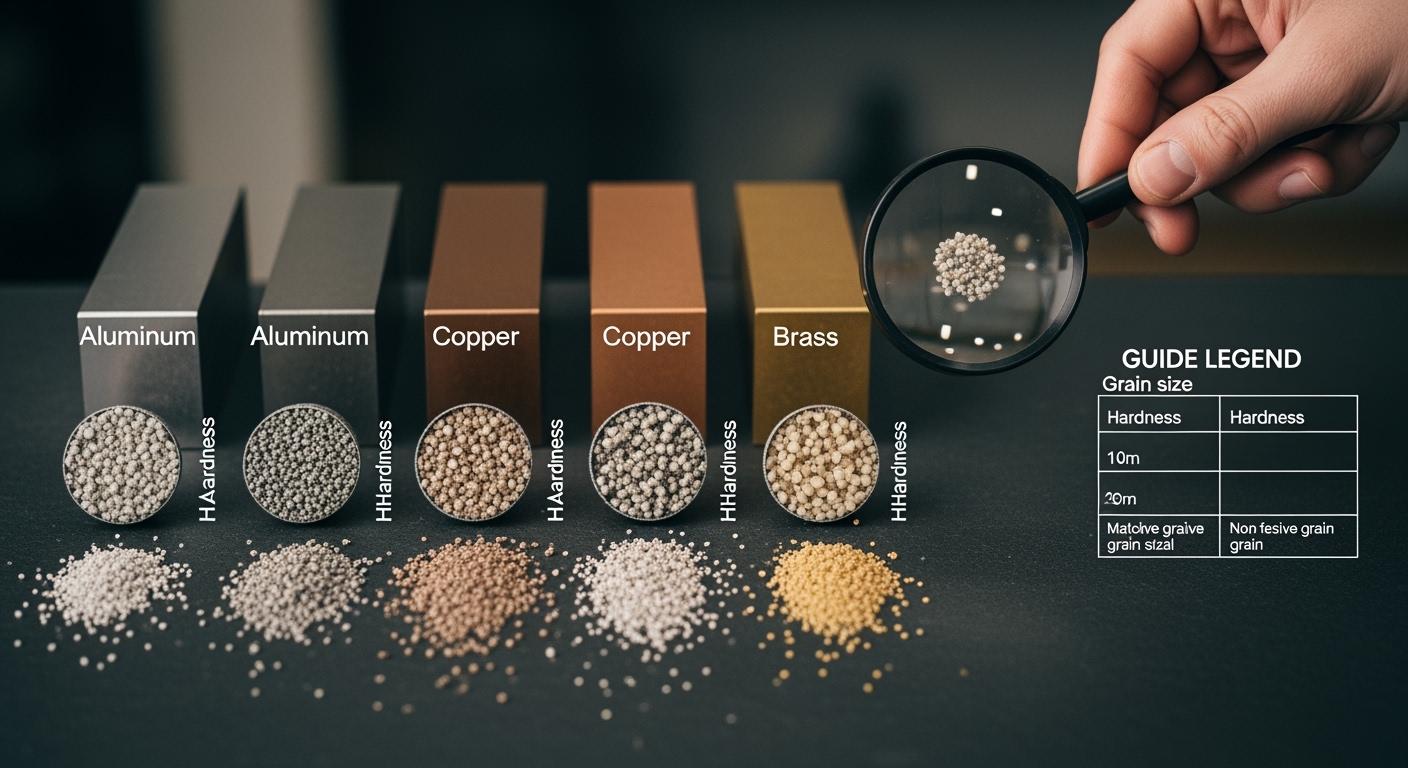
You need to match the abrasive grain size and abrasive toughness to the specific non-ferrous metal for best results. High hardness abrasives help extend tool life and improve finish. Aimgrind offers custom abrasive properties for aluminum, copper, brass, bronze, and nickel alloys. Use this quick reference table to select the right grit and hardness:
| Metal | Recommended Grain Size | Hardness Level |
|---|---|---|
| Aluminum | 120-220 | Medium |
| Copper | 80-180 | Medium-High |
| Brass | 100-200 | Medium |
| Bronze | 120-240 | Medium-High |
| Nickel Alloy | 180-320 | High |
You can use this guide for professional or DIY projects.
Key Takeaways
- Match abrasive grain size and hardness to the specific non-ferrous metal for optimal results.
- Use coarse grit for fast material removal and fine grit for a smooth finish; adjust based on your project needs.
- Monitor heat generation during grinding to prevent damage; use lighter pressure and keep the workpiece cool.
- Select the right abrasive type, such as aluminum oxide or super hard abrasives, based on the metal you are working with.
- Always check your abrasive’s specifications to avoid clogging and ensure efficiency in your grinding tasks.
Abrasive Grain Size & Hardness Basics
What Is Abrasive Grain Size?
You see abrasive grain size listed as a number, such as 80, 120, or 220. This number tells you how big or small the abrasive particles are. Smaller numbers mean larger grains, which remove material quickly. Higher numbers mean finer grains, which create smoother surfaces. You choose abrasive grain size based on your project goals. For example, if you want to shape aluminum fast, you pick a coarse grain size. If you need a polished finish on brass, you select a fine grain size.
Tip: Always check the grain size before starting. It affects how much material you remove and how smooth the finish looks.
Here is a table that shows how abrasive grain size affects performance:
| Aspect | Effect of Abrasive Grain Size |
|---|---|
| Material Removal Rate (MRR) | Larger particles enhance mass and volume, influencing interactions with the workpiece. |
| Surface Finish | Finer particles lead to smoother finishes, while larger particles can cause roughening. |
| Wear Resistance | The hardness of the metal surface affects wear resistance and the mode of wear during machining. |
Understanding Hardness in Abrasives
Hardness describes how tough the abrasive grains are. You match hardness to the metal you work with. Softer wheels work well for aluminum and copper because they shed grains easily and prevent clogging. Harder wheels suit nickel alloys and bronze, which need more durability. You find different abrasive types with varying hardness levels. For example, silicon carbide has very high hardness and works well for non-ferrous metals like aluminum and brass.
| Abrasive Type | Hardness Level | Key Properties |
|---|---|---|
| Aluminum Oxide | Moderate | Good hardness, medium toughness, high friability, suitable for general use. |
| Zirconia Alumina | High | Exceptional durability, high toughness, ideal for heavy stock removal. |
| Silicon Carbide | Very High | Extremely hard, brittle, ideal for non-ferrous metals like aluminum and brass. |
| Ceramic Alumina | Ultra High | Exceptional toughness, controlled friability, best for high-performance tasks. |
Grit and Finish: Key Concepts for Non-Ferrous Metals
You use grit size to control the finish and efficiency of your work. Grit size ranges from coarse to fine. Coarse grit size removes material fast but leaves a rough surface. Medium grit size balances removal and finish. Fine grit size gives you a smooth, high-quality finish. Grit selection depends on your project. If you want rapid material removal, you choose coarse grit size. For honing and polishing, you select fine grit size.
- Coarse grit size: Rapid material removal, rough finish
- Medium grit size: Balanced removal and finish
- Fine grit size: Smooth, high-quality finish
You improve your results by matching grit selection to the metal and the finish you want. Always consider abrasive grain size, hardness, and grit size for the best outcome.
Performance Factors for Non-Ferrous Metals
Surface Finish Impact
You need to pay close attention to surface finish when working with non-ferrous metals. The surface finish you achieve depends on the abrasive grain size and the hardness of the abrasive. If you want a smooth surface finish, you should select a finer grain size. Coarse grains will give you a rougher surface finish, which may not meet your surface finish requirements. When you use a harder bond, the abrasive grains stick out more and can handle higher forces. This helps you get better material removal and a more consistent surface finish. Studies show that harder bonds let grains cut deeper, which improves removal and reduces the energy needed for grinding. This means you can reach your surface finish requirements faster and with less effort. Always check your surface finish requirements before you start, so you can pick the right abrasive for the job. If you want a mirror-like surface finish, you should use a fine grain and a suitable hardness to match your surface finish requirements.
Material Removal and Grit Selection
Material removal is a key factor in grinding non-ferrous metals. You must choose the right grit size to balance removal and surface finish. Coarse grit sizes remove material quickly but can leave scratches on the surface finish. Fine grit sizes remove less material but give you a better surface finish. If you need to remove a lot of material, start with a coarse grit, then switch to a finer grit for the final surface finish. The hardness of the abrasive also affects removal. Harder abrasives last longer and keep their shape, which helps you maintain a steady removal rate and a consistent surface finish. Always think about how much removal you need and what surface finish you want before you pick your abrasive.
Heat Generation and Metal Sensitivity
Heat generation is important when you grind non-ferrous metals. If you use a very hard abrasive, you might create more heat. Too much heat can damage the surface finish and even warp the metal. You need to control heat to protect your surface finish. Here are some things to remember:
- Harder abrasives can lead to increased heat generation due to dulling and friction.
- Excessive heat can cause warping and loss of temper in non-ferrous metals.
- Selecting the right abrasives is crucial for managing heat effectively during grinding or polishing.
You should always monitor the temperature during grinding. If you see discoloration or feel the metal getting hot, stop and let it cool. This will help you keep the surface finish smooth and meet your surface finish requirements. Good heat control also helps you get the best removal rate without damaging the surface finish.
Matching Abrasive Grain Size & Hardness to Non-Ferrous Metals
Aluminum: Grain Size, Hardness, and Finish
When you work with aluminum, you need to choose the right abrasive grain size and abrasive hardness for the best results. Aluminum is soft and can clog abrasive wheels quickly. You should use a medium abrasive hardness to prevent loading and keep the wheel clean. Aluminum oxide works well for most tasks. For heavy stock removal, you can start with a coarse grit. For a smooth finish, you should use a finer grit.
Here is a table to help you select the right grit for aluminum:
| Grit Number | Application | Result |
|---|---|---|
| 24 – 40 | Heavy Stock Removal | Rough surface, fast material removal |
| 60 | General Purpose Grinding | Medium finish, balances removal/smooth |
| 80 – 120 | Finishing and Cleaning | Smooth surface finish, light removal |
You can use super hard abrasives, such as diamond or CBN, for high-demand aluminum applications. These abrasives last longer and give you a better finish. Many industries, like electric vehicles and aerospace, use super hard abrasives to improve tool life and performance. You will also see these abrasives in semiconductor wafer finishing, where accuracy is important. Super hard abrasives offer better thermal resistance and cutting performance than traditional options.
Tip: Always match your abrasive hardness to the aluminum grade and the finish you want. This helps you avoid clogging and keeps your grinding efficient.
Copper: Grit and Hardness Selection
Copper is a soft, ductile metal. It can smear and load up your abrasive wheel if you do not choose the right abrasive hardness. You should pick a medium to high abrasive hardness for copper. Aluminum oxide is a good choice for most copper grinding jobs. For rough grinding, use a coarser grit. For a finer finish, switch to a higher grit number.
You can use super hard abrasives for copper when you need a long-lasting tool or a very precise finish. These abrasives help you reduce downtime and keep your results consistent. Always check your copper alloy and adjust your abrasive hardness and grit size for the best outcome.
- Use medium grit for general shaping.
- Use fine grit for polishing and finishing.
- Choose a harder abrasive if you notice wheel loading.
Brass: Finish and Abrasive Recommendations
Brass is a common non-ferrous material that needs careful abrasive selection. You should use a medium abrasive hardness to avoid wheel loading. Aluminum oxide works well for most brass applications. If you want a smooth finish, use a finer grit. For shaping or removing material, start with a coarser grit.
You can switch to super hard abrasives if you need a high-gloss finish or if you work with large batches. These abrasives help you keep your finish consistent and reduce tool changes. Always check your brass type and adjust your abrasive hardness and grit for the best results.
Note: Brass can heat up quickly. Use a steady hand and avoid too much pressure to keep your finish smooth.
Bronze: Choosing the Right Grit
Bronze is harder than aluminum and brass. You need a medium-high abrasive hardness for bronze. Aluminum oxide is a reliable choice for most bronze grinding. For a smooth finish, use a finer grit wheel. For faster removal, start with a coarser grit.
Here is a table to help you understand how different grinding parameters affect your bronze finish:
| Grinding Parameter | Surface Finish Impact |
|---|---|
| Wheel Type | Finer grit wheels produce smoother finishes |
| Wheel Speed | Higher speeds generally yield better finishes |
| Coolant Flow | Proper cooling prevents thermal damage |
| Dressing Frequency | Regularly dressed wheels maintain finish quality |
You can achieve a finish as smooth as 0.1-0.4 μm Ra on bronze if you use the right grit and keep your wheel dressed. Super hard abrasives help you reach these fine finishes and keep your process stable.
Nickel Alloys: Hardness and Grain Size
Nickel alloys are tough and need a high abrasive hardness. You should use a fine to medium grain size for most nickel alloy grinding. Aluminum oxide and super hard abrasives both work well. Super hard abrasives give you better durability and help you keep your finish consistent.
- Always use the right abrasive hardness to manage heat and surface finish.
- Use centerless grinding and honing for precise dimensions and smooth finishes.
- Keep coolant flowing to prevent heat buildup and tool wear.
- Grinding and honing help you reach tight tolerances and smooth surfaces on nickel alloys.
You can trust super hard abrasives for nickel alloys in high-performance jobs. These abrasives last longer and help you avoid tool changes.
Other Non-Ferrous Metals: Custom Solutions
Some non-ferrous materials, like titanium or specialty alloys, need custom abrasive solutions. You can choose from different abrasive types based on your needs. Brown aluminum oxide is tough and economical. It works well for rough grinding and heavy-duty removal. White aluminum oxide is purer and harder. It is best for precision grinding, tool sharpening, and polishing delicate parts.
Here is a table to help you pick the right abrasive for less common non-ferrous metals:
| Abrasive Type | Key Properties | Best Applications |
|---|---|---|
| Brown Aluminum Oxide | Tough, durable, economical | Rough grinding, sandblasting, heavy-duty removal |
| White Aluminum Oxide | High purity, high hardness, self-sharpening | Precision grinding, tool sharpening, optical polishing |
Aimgrind offers custom abrasive solutions for all non-ferrous materials. You can ask for a special formula to match your equipment and process. Super hard abrasives are also available for the most demanding jobs. These tools help you get the best finish and efficiency, no matter what non-ferrous metal you work with.
Callout: If you are not sure which abrasive to use, contact Aimgrind for expert advice and a custom solution.
Application Guidance for Finish & Efficiency
Finishing Non-Ferrous Metals
You can achieve a quality finish on non-ferrous metals by selecting the right abrasive and adjusting your sanding technique. Use fine grit for a smooth surface. Aluminum oxide works well for most finishing tasks. If you want a high-quality finish, try diamond or CBN abrasives. These options give you better toughness and last longer. Always check the surface for smearing or discoloration. Use lighter pressure and lower speeds for metals like aluminum and brass. This helps you avoid heat buildup and keeps the finish bright.
| Abrasive Type | Characteristics and Uses |
|---|---|
| Aluminum Oxide | Removes sharp edges and burrs, versatile for most non-ferrous metals. |
| Silicon Carbide | Hard, sharp, and ideal for high thermal conductivity; great for a smooth finish. |
| Diamond | Extremely hard, delivers a precise finish on tough metals. |
| CBN | Best for precision grinding and consistent surface quality. |
Shaping and Material Removal
You need to focus on the material removal rate when shaping non-ferrous metals. Coarse grit abrasives remove material quickly. Silicon carbide and zirconia alumina are good choices for shaping copper, bronze, or aluminum. These abrasives have high toughness and keep the surface even during heavy grinding. For faster results, use a harder abrasive with a coarse grit. Always monitor the surface to avoid deep scratches. Switch to a finer grit for the final finish.
| Abrasive Type | Application in Non-Ferrous Metals |
|---|---|
| Silicon Carbide | Shaping and fast material removal for copper, bronze, aluminum. |
| Zirconia Alumina | High toughness, ideal for aggressive grinding and shaping. |
Polishing for High-Gloss Finish
You can create a high-gloss finish by using fine grit abrasives and the right polishing compounds. Start with a medium grit, then move to a fine grit for the final polish. Use diamond abrasives for the best surface clarity and toughness. Always use gentle pressure and keep the surface cool. For metals like brass and copper, remove oxidation before polishing. Protect the finish with a sealant if needed.
| Metal Type | Buffing Tips |
|---|---|
| Aluminum | Use lighter pressure, lower speeds, and softer compounds to avoid smearing. |
| Brass | Apply less pressure and control heat to prevent discoloration. |
| Copper | Remove oxidation first, use gentle compounds, and seal the finish. |
Specialty Applications: Deburring & Edge Prep
You can improve edge quality and remove burrs by choosing the right abrasive and grit. Aluminum oxide and silicon carbide work well for most deburring jobs. For production environments, zirconia and ceramic abrasives offer high toughness and aggressive cutting. Use coarser grits for heavy burrs and finer grits for a smooth surface. Always replace worn abrasives and check your equipment for safety. Aimgrind’s super hard abrasives help you achieve consistent edge quality and a precise finish, even in demanding applications.
Tip: Record your best sanding and grinding settings for repeat jobs. This helps you maintain finish quality and process efficiency.
Practical Tips & Common Mistakes
Selecting the Right Abrasive for Your Project
You can improve your results by choosing the right abrasive for your non-ferrous metal project. Industry experts recommend these tips:
- Start with a coarse abrasive, like a 40-grit aluminum oxide disc, for heavy-duty grinding.
- Switch to finer grades or diamond abrasives when you need to polish materials such as stainless steel or titanium.
- For aluminum, pick an abrasive with an open-coat structure and a grinding aid. Ceramic alumina with a top coat helps prevent loading.
- Use high-quality aluminum oxide or zirconia alumina abrasives for copper and brass.
- Match the abrasive to your power tool to avoid inefficiency or damage.
- Begin with a coarse grade for fast material removal, then move to finer grades for a smooth finish.
- Replace worn abrasives to keep your work efficient and prevent surface damage.
Tip: Always check that your abrasive is labeled for the specific metal you are working with. Using a disc meant for steel can cause clogging and overheating on non-ferrous metals.
Avoiding Common Errors in Grit and Hardness Choice
You can avoid many problems by watching out for these common mistakes:
- Skipping grits can leave deep scratches on your workpiece.
- Applying too much pressure may damage the metal and wear out your abrasives quickly.
- Using the wrong abrasive wastes time and resources.
- Forgetting to clean the surface can lead to paint failure or poor adhesion.
- Ignoring safety gear puts you at risk from metal dust and debris.
Note: Take your time with each grit and always clean the surface before moving to the next step.
Maintenance and Safety Tips
You should always follow these steps to keep your work safe and your tools in good shape:
- Wear safety goggles, gloves, ear protection, and a dust mask to protect yourself from flying debris, noise, and dust.
- Inspect your abrasive tools before use. Do not use damaged or worn tools.
- Handle abrasive tools with care and mount them securely on your equipment.
- Keep your work area clean and well-ventilated.
- Clean abrasive tools regularly with a brush or compressed air.
- Store abrasives in a dry, cool place, either in their original packaging or on racks.
- Use tools within their recommended speed and pressure limits.
Safety First: The right habits protect both you and your equipment. Always follow the manufacturer’s guidelines for best results.
You improve your finish and efficiency when you match abrasive grain size and hardness to each non-ferrous metal. Aimgrind gives you custom abrasive solutions, including super hard abrasives for tough jobs. Use the quick reference guide for your next project:
- Choose the right casting method for your needs.
- Consider the advantages of different alloys.
- Plan finishing steps for quality results.
Follow these practical tips for better outcomes:
- Pick the right abrasive type for your task.
- Select the correct wheel shape.
- Match grit size to your finish goal.
- Check the coating for durability.
- Use the right grade for your material.
Contact Aimgrind for expert advice and custom solutions.
FAQ
What abrasive grain size should you use for a smooth finish on aluminum?
You should use a fine grit, like 120 or 220. Fine grains help you get a smooth, shiny surface. Always check your project needs before picking the grit.
Why do non-ferrous metals need special abrasives?
Non-ferrous metals are softer and can clog regular abrasives. Special abrasives, like aluminum oxide or super hard abrasives, help you avoid loading and keep your work clean.
How do you prevent overheating when grinding non-ferrous metals?
You should use light pressure and keep the workpiece cool. Take breaks if the metal gets hot. Super hard abrasives from Aimgrind also help reduce heat.
Can you use the same abrasive for all non-ferrous metals?
No, you should match the abrasive to the metal. For example, use medium hardness for brass and higher hardness for nickel alloys. Check the quick reference table for guidance.
What are super hard abrasives, and when should you use them?
Super hard abrasives use diamond or CBN grains. You should use them for tough jobs or when you need a long-lasting tool. They give you a better finish and last longer than regular abrasives.
Contact Us
For More Grinding Solution or Customized Abrasive Tools