

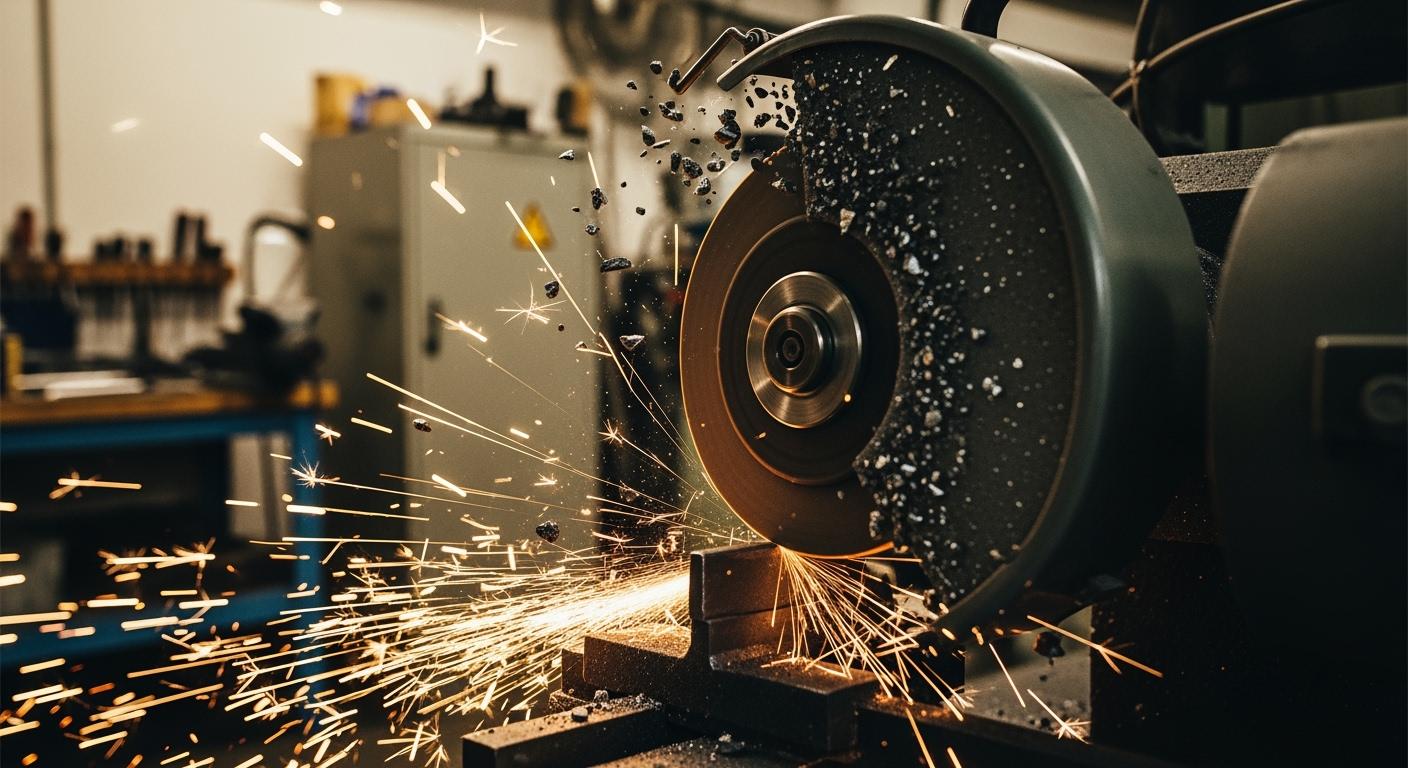
You see self-sharpening grinding wheels at work when fresh, sharp edges appear during use. As you grind, tiny abrasive grains break away, revealing new facets that keep the grinding wheel cutting efficiently. This process happens because the grains fracture along special planes, which creates new cutting points. When about 10-20% of the crystal surface area has these optimal facets, grinding performance reaches its best level. You get smoother results and less downtime for sharpening. Aimgrind provides advanced solutions that make this process reliable for your needs.
Key Takeaways
- Self-sharpening grinding wheels maintain sharpness by shedding worn grains, which leads to smoother finishes and less downtime for maintenance.
- Choosing the right bond type and abrasive grain is crucial for optimal performance. Different materials and bonds affect how the wheel cuts and lasts.
- Self-sharpening wheels outperform standard wheels by reducing the need for frequent dressing, allowing for continuous grinding and increased productivity.
- Aimgrind offers advanced super hard abrasives that enhance grinding efficiency, making them suitable for various materials like metals, ceramics, and glass.
- Proper maintenance and selection of grinding wheels can significantly extend their lifespan and improve grinding results, ensuring safety and effectiveness.
What Are Self-Sharpening Grinding Wheels?
Definition and Key Features
You use self-sharpening grinding wheels when you need a tool that keeps its cutting ability for a long time. These wheels have a special design. The abrasive grains break away as you grind, so new sharp edges appear. The bond inside the grinding wheel controls how fast the grains shed. For example, in vitrified bonds, the chemical makeup lets grains release easily. Resin bonds change with heat, so grains shed faster at higher temperatures. Ceramic alumina wheels have a micro-crystalline structure. As you use the wheel, dull crystals fall off and new sharp ones take their place. This process keeps the grinding wheel efficient and reduces the need for frequent maintenance.
You notice that self-sharpening grinding wheels work well for surface grinding wheels and other precision tasks. The wheel stays sharp, so you get a smooth finish and save time. You do not need to stop often to dress or replace the wheels. This feature makes these types of grinding wheels popular in many industries.
Comparison with Standard Wheels
You see a big difference between self-sharpening grinding wheels and standard wheels. Standard wheels lose their sharpness as you use them. You must stop and dress the wheel or replace it. This interrupts your work and lowers productivity. Self-sharpening wheels solve this problem. They shed grains automatically, so you keep grinding without frequent stops.
Many users think all wheels work the same way. Some believe metal wheels are best for every job, but metal wheels can clog or tear in rubber processing. Others choose wheels that are too hard or too fine. These wheels dull quickly and make chip removal hard. You should pay attention to the bond and structure of the grinding wheel. If you ignore these, you get unstable grinding results. Running wheels too fast causes heat buildup and poor surface quality.
Tip: Always check the bond type and grain size before you select a grinding wheel. This helps you avoid common mistakes and keeps your grinding process stable.
You find that self-sharpening grinding wheels offer better performance, longer life, and less downtime compared to standard wheels. You get consistent results and a smoother finish.
How Self-Sharpening Grinding Wheels Work
Abrasive Grain Breakdown
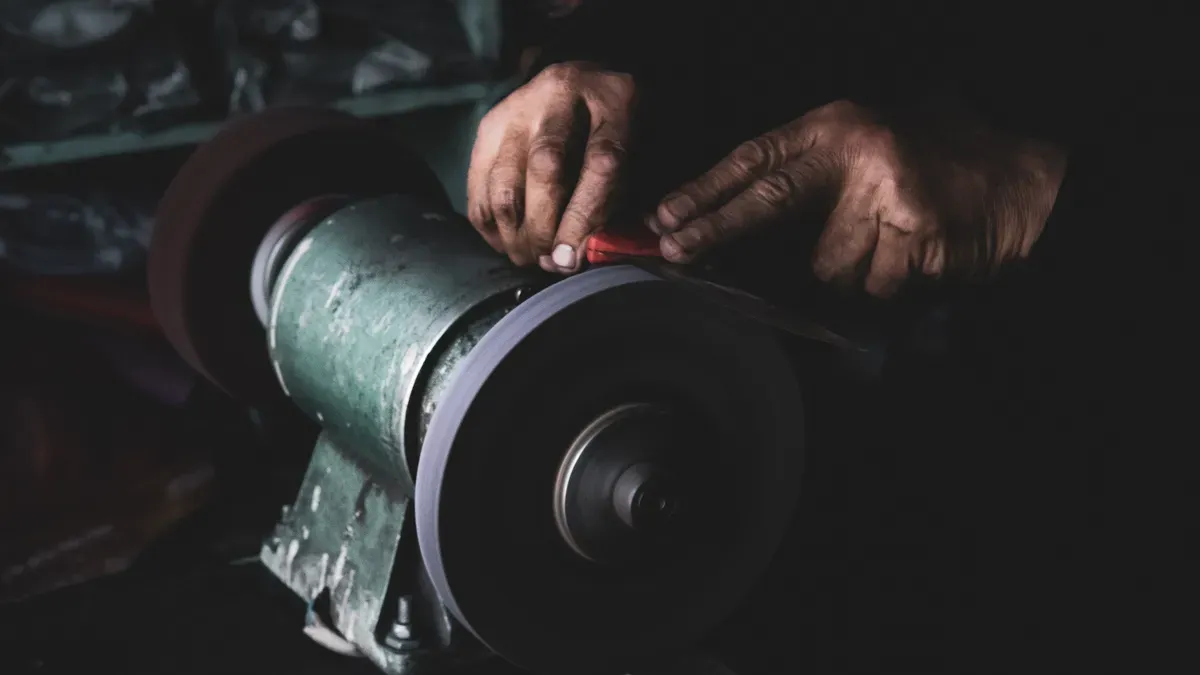
When you use self-sharpening grinding wheels, you see a special process at work. Each time you press the wheel against a material, the abrasive grains on the surface start to wear down. Instead of becoming dull, these grains break apart. This action exposes new, sharp edges that keep the grinding wheel cutting smoothly.
- The build-up of flat, worn spots on the wheel is limited. As you keep grinding, the pressure increases until the grains fracture. This micro-fracture creates fresh cutting points.
- Sintered alumina abrasives, like seeded gel types, are designed to break at the micron level. This design gives you a longer-lasting wheel and faster material removal.
- Micro-fracture is a good thing in a self-sharpening tool. It keeps the wheel sharp, even under high stress.
You can see how different abrasive grains affect the process. Small grains packed closely together give you a smoother finish but may increase the force needed. Large grains with more space between them create a rougher surface but lower the grinding force. The sharpness of each grain changes as it wears, which affects how much energy you use and how much force you need.
As you grind, the wheel releases dull grains. Fresh grains take their place, starting the next cycle. This predictable wear keeps your grinding performance steady.
Bond and Structure Role
The bond and structure inside the grinding wheel play a big part in how well the self-sharpening effect works. The bond holds the abrasive grains in place until they need to break away. The structure, including the spaces or pores in the wheel, helps control how grains shed and how chips move out.
- Good porosity stops the wheel from clogging. If the wheel clogs, grinding forces rise quickly. This extra stress makes grains break off in a sudden way, which is part of the self-sharpening process.
- The type of bond—metal, ceramic, resin, or hybrid—changes how hard the wheel is and how easily it lets go of grains. For example, resin and hybrid bonds use hot pressing to hold grains tightly. When you grind, the bond releases grains at the right time to keep the wheel sharp.
- Additives in the wheel can change its properties. For example, chromium oxide in sintered alumina makes the grains break more easily. Titanium oxide makes them tougher.
Here is a table showing how different materials and additives affect abrasive properties:
| Material | Additive | Effect on Abrasive Properties |
|---|---|---|
| Brown Alumina | N/A | Good for rough grinding |
| Sintered Alumina | Chromium Oxide | Grains break more easily (friability) |
| Sintered Alumina | Titanium Oxide | Grains become tougher |
| Seeded Gel Abrasive | N/A | Micro-fracture for self-sharpening |
You also need to know about failure modes and how to avoid them. If grains do not break, you get flat, worn spots. Using friable grains, like white aluminum oxide, helps prevent this. If the bond is too strong, heat can build up. You should choose the right bond strength and porosity to keep the wheel cool. Picking the right grain type helps the wheel cut into the material and avoid thermal damage.
Recent innovations in bond technology make self-sharpening grinding wheels even better. Some wheels now use nano-crystalline ceramic grains and special bonds that last longer and cut cooler. These new types of grinding wheels give you better finishes and need less dressing.
When you understand how the bond and structure work, you can choose the best wheel for your job. This knowledge helps you get the most out of your self-sharpening tool and keeps your grinding process efficient.
Materials and Technology in Self-Sharpening Wheels
Super Hard Abrasives from Aimgrind
You want your grinding wheel to last longer and cut better. Super hard abrasives from Aimgrind help you achieve this. These wheels use advanced materials like diamond and cbn. Aimgrind designs each wheel to match your specific needs, whether you work with metals, ceramics, or glass. You can choose from different bond types, such as resin bonded grinding wheels, metal bonds, or ceramic bonds. Each type gives you unique benefits for your grinding tasks.
Aimgrind’s superabrasive wheels stand out because they keep their sharpness for a long time. You spend less time changing wheels and more time working. These wheels also help you get a smoother finish on your workpieces. You can use them for many jobs, from cutting tools to polishing glass. Aimgrind’s grinders and tools give you reliable results every time.
Here is a table showing common materials used in self-sharpening grinding wheels and why you might choose them:
| Material | Properties | Use Case |
|---|---|---|
| Diamond | Highest hardness, excellent wear resistance | Precision and super-precision grinding |
| Cubic Boron Nitride (CBN) | High hardness, great at high temperatures | High-speed, high-precision machining |
| Resin Bond | Good elasticity, less likely to burn workpiece | Precision grinding |
| Metal Bond | High strength, long service life | High-efficiency grinding |
| Ceramic Bond | High-temperature resistant | High-speed grinding |
Diamond and CBN Grains
You see the difference when you use diamond or cbn grains in your wheels. Diamond grinders work best for non-ferrous and non-metallic materials. You use them for tungsten carbide, ceramics, and glass. Cbn wheels are perfect for grinding hardened steels and superalloys. These grains keep your grinding wheel sharp and efficient.
Diamond grains give you the hardest cutting surface. You get excellent wear resistance and a long-lasting wheel. Cbn grains offer high hardness and stay stable at high temperatures. This makes them ideal for high-speed grinding of tough metals.
Here is a quick comparison:
| Feature | Diamond Abrasive | CBN Abrasive |
|---|---|---|
| Best For | Non-ferrous, non-metallic materials | Ferrous metals, hardened steels, superalloys |
| Why? | Highest hardness | High hardness, stable at high temperatures |
| Common Uses | Carbide, ceramics, glass | Tool steels, HSS, bearing steels |
You get the most value when you match the right wheel to your job. Aimgrind helps you choose the best diamond grinders or cbn wheels for your needs. With the right tools, you improve your grinding results and save time.
Benefits and Applications

Performance and Longevity
You want your grinding wheel to give you the best performance every time you use it. Self-sharpening grinding wheels help you reach this goal. These wheels keep their cutting ability because they shed worn grains and reveal new sharp edges. You do not need to stop often to dress or replace the wheels. This means you spend more time working and less time on maintenance.
Self-sharpening grinding wheels maintain their efficiency by using a controlled wear process. This prevents glazing and keeps the wheel sharp. You get steady performance, even during long grinding jobs. Standard wheels can glaze over and lose their cutting power. You must stop to dress them, which slows down your work. Self-sharpening wheels last longer because they always show fresh abrasive material. You can do the work of several standard wheels with just one self-sharpening wheel.
You also save money in the long run. These wheels may cost more at first, but they give you a lower cost-per-cut. You use fewer wheels and spend less on replacements. You get a consistent finish on your workpieces, which improves the quality of your products.
Tip: Choose self-sharpening wheels for high-use jobs on steel, stainless steel, and other tough materials. You will see better performance and cost savings.
Industrial Uses with Aimgrind Solutions
You find self-sharpening grinding wheels in many industries. Aimgrind designs tools and wheels for a wide range of grinding wheel applications. You see these wheels in aerospace, automotive, woodworking, and glass processing. Each industry needs reliable performance and long service life.
- In aerospace, you use surface grinding wheels to shape and finish hard metals.
- In automotive, you use different types of grinding wheels to make engine parts and cutting tools.
- In woodworking, you use grinders to sharpen saw blades and other tools.
- In glass processing, you use wheels to edge, polish, and cut glass for buildings and cars.
Aimgrind’s super hard abrasives give you the edge in these industries. You get wheels that match your machines and your materials. You see better performance, less downtime, and smoother finishes. Aimgrind helps you choose the right wheels for your job, so you get the most out of your grinding process.
Practical Tips for Selection and Use
Choosing the Right Wheel
You want the best results from your grinding wheel. Start by matching the wheel to your material and job. Look at these important factors:
- Abrasive grain: The type, hardness, and sharpness of the grain decide how well the wheel works on different materials.
- Bond: The bond holds the grains together and affects how the wheel self-sharpens.
- Grade (hardness): The bond’s strength controls how long grains stay in place or break away.
- Grit size and concentration: These affect how fast the wheel cuts and how smooth the finish looks.
- Coolant: Using coolant helps manage heat and keeps the grinding wheel from glazing.
Here is a table to help you compare key factors:
| Factor | Description |
|---|---|
| Hardness and Ductility | Hard materials need special abrasives to avoid glazing. |
| Bond Type | Changes how the wheel wears and cuts. |
| Grit Size and Concentration | Impacts cutting speed and risk of clogging. |
| Role of Coolant | Helps control heat and bond hardness. |
Tip: Always check the wheel’s maximum RPM and make sure it matches your grinders. This keeps you safe and protects your tools.
Maintenance Best Practices
You can make your grinding wheel last longer with good care. Follow these steps:
- Store wheels flat in a dry, cool place to prevent warping and moisture damage.
- Avoid dropping or hitting wheels. Even small cracks can cause failure.
- Inspect each wheel before use. Look for chips, cracks, or warping.
- Use a dressing stick to clean the wheel if it becomes glazed or loaded.
- Mount wheels carefully. Do not over-tighten, as this can cause cracks.
- Hold the grinder at the right angle. For grinding wheels, a 30-degree angle works best.
- Use light pressure. Let the wheel and grinders do the work.
- Wear safety gear like goggles, gloves, and hearing protection.
Common mistakes include using the wrong grit size or bond, forcing the cut, and over-speeding. You should always choose the right wheel for your tools and application. This helps you get the best results in grinding and polishing jobs.
You see how self-sharpening grinding wheels keep your grinding wheel sharp by shedding worn grains and revealing new edges. When you understand this process, you improve your grinding results. You notice smoother surfaces and lower grinding forces. You also get stable, defect-free finishes, even at high speeds. Choosing Aimgrind’s super hard abrasives helps you match the right tool to your job. Informed choices lead to better productivity and less downtime.
FAQ
What makes a grinding wheel “self-sharpening”?
You see a self-sharpening wheel when worn grains break away and new sharp edges appear. This keeps your wheel cutting well without stopping for frequent dressing.
Can you use self-sharpening wheels on any material?
You can use these wheels on many materials. Choose diamond wheels for glass or ceramics. Pick CBN wheels for steel or hard metals. Always match the wheel to your material.
How do you know when to replace a self-sharpening grinding wheel?
You should replace the wheel if you see cracks, chips, or if it no longer cuts well. Listen for unusual sounds or feel for vibration. Safety comes first.
Why choose Aimgrind’s super hard abrasives?
You get longer life, less downtime, and smoother finishes with Aimgrind’s super hard abrasives. Aimgrind helps you pick the right wheel for your job and supports you with expert advice.