

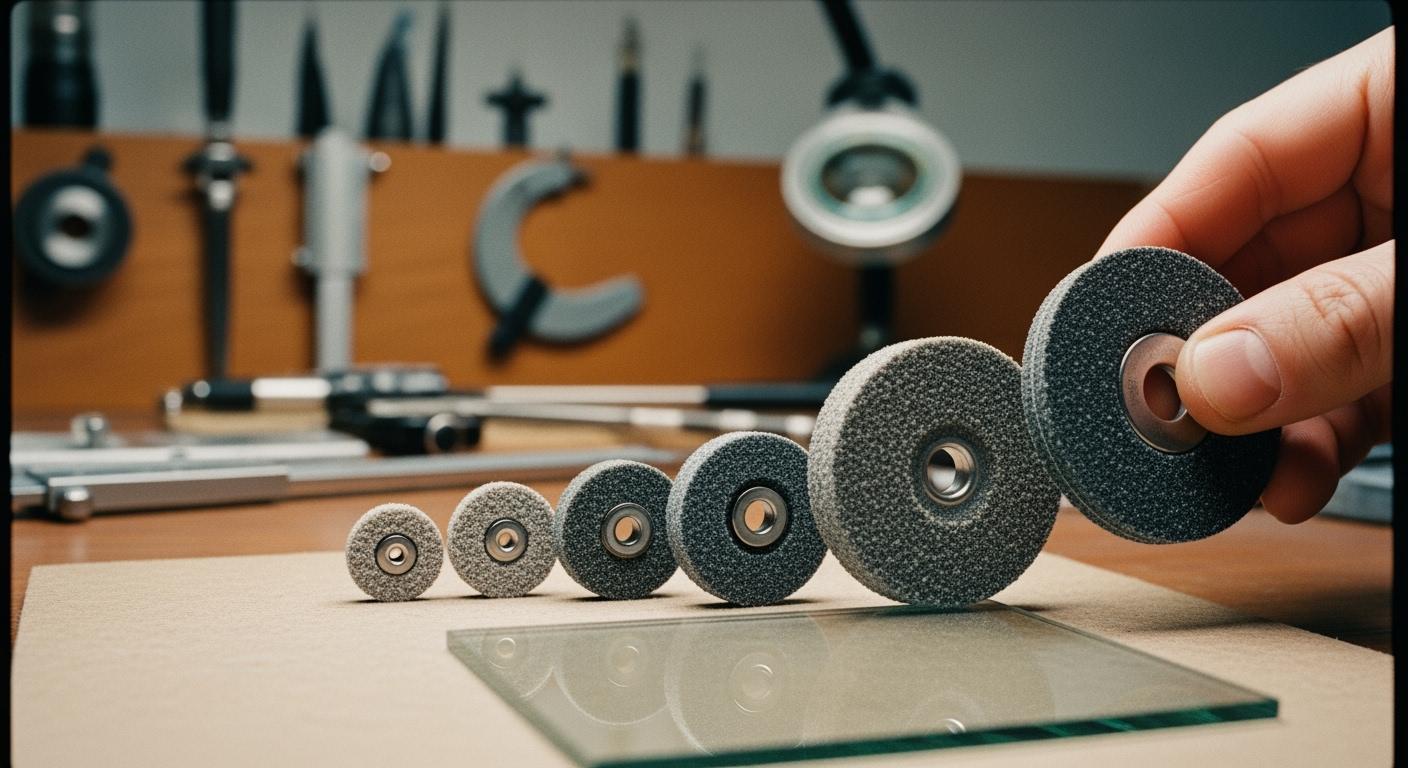
The best grinding wheel for optical glass depends on the processing stage and the results you want. You need to choose the right wheel type, grit, and bond for each step in optical glass work. Many professionals use diamond grinding wheels for edge finishing and cup wheels for other tasks. Machines like straight edge, beveling, and rounding machines help you get precise results. Aimgrind offers customized grinding solutions for optical glass, making sure you get the best match for your needs. You can trust these tools to support your Optical Glass Grinding projects.
Key Takeaways
- Choose the right grinding wheel type, grit, and bond for each stage of optical glass processing to achieve the best results.
- Pay attention to material sensitivities and surface quality; improper settings can lead to scratches and uneven surfaces.
- Use coarse-grain wheels for roughing, medium-grit wheels for semi-finishing, and ultra-fine wheels for finishing to ensure a smooth, clear edge.
- Select the appropriate bond type based on your application; resin bonds are ideal for finishing, while metal bonds work well for roughing.
- Regularly inspect your grinding wheels and machine settings to maintain precision and avoid costly mistakes.
Challenges in Optical Glass Grinding
Material Sensitivities and Surface Quality
When you work with optical glass, you face unique challenges. The material is sensitive and reacts to even small changes in your grinding process. For example, glassy carbon and other optical glasses can show different surface qualities based on how you grind them.
- Material sensitivity plays a big role in the final surface quality.
- Cutting speed, feed rate, and diamond grain size all affect how smooth the glass becomes.
- Higher cutting speeds usually give you a better surface finish.
- Larger diamond grains or faster feed rates can make the surface rougher.
You need to pay close attention to these factors. If you use the wrong settings, you might see scratches or uneven surfaces. This can lower the quality of your finished product.
Tip: Always match your grinding wheel and machine settings to the type of glass and the finish you want. This helps you avoid costly mistakes.
Common Issues in Glass Machining
Grinding optical glass is not just about skill. You also deal with industry-wide challenges that can affect your work every day.
- High initial investment costs for machines and tools
- Technical complexity that requires ongoing training
- Need for regular maintenance and equipment upgrades
- Compliance with safety and environmental standards
You may also notice that defects and flaws often appear on the edges of processed glass. These defects can weaken the glass and reduce its bending strength. Even top-quality glass like BK7 needs careful handling. Small defects can hurt its optical performance, so you must control every step of the process.
Choosing the right polishing tools and grinding wheels is key. This helps you reduce defects and get the best possible results for your optical glass projects.
Identifying Stages in Optical Glass Grinding
When you grind optical glass, you move through three main stages. Each stage has a different goal and needs a special grinding wheel. If you match your wheel to the stage, you get better results and avoid problems.
Roughing Stage Overview
You start with the roughing stage. Here, you remove extra material from the glass edge. You use coarse-grain diamond wheels, usually between 120 and 220 grit. These wheels cut fast and shape the glass quickly. The edge looks flat and dull after this step. It also becomes safer to handle and stronger.
| Stage | Description | Tools Used | Result |
|---|---|---|---|
| Roughing | Removes excess material from glass edge | Coarse-grain diamond wheels (120-220 grit) | Flat, opaque edge; improved safety and strength |
Tip: Always check your wheel grit before you start. Coarse wheels work best for fast material removal.
Semi-Finishing Stage
Next, you move to the semi-finishing stage. This step smooths out the rough edge left by the first stage. You use a medium-grit diamond wheel. The edge starts to look clearer and feels smoother. This stage prepares the glass for the final polish. If you skip this step, you may see scratches or chips in the finished product.
- Medium-grit wheels help you balance speed and surface quality.
- You get a cleaner edge that is ready for finishing.
Finishing Stage
The finishing stage gives the glass its final look. You use ultra-fine diamond wheels, usually between 400 and 800 grit. These wheels polish the edge until it shines and becomes transparent. You can reach a surface roughness as low as 0.1 micrometers (μm) for ultra-fine optical surfaces. High-end optical parts often need a roughness below 0.5 μm.
| Surface Type | Surface Roughness (Sa) |
|---|---|
| Ultra-fine optical surfaces | < 0.1 μm |
| High-end optical components | < 0.5 μm |
| Grinding and polishing | 0.2 ~ 0.8 μm |
Note: The right finishing wheel helps you achieve a brilliant, clear edge with true optical quality.
Choosing the correct wheel for each stage makes your work easier and your results better. You protect the glass and get the best finish possible.
Diamond Grinding Wheel Types by Aimgrind
When you choose a diamond grinding wheel for optical glass, you need to know the differences between bond types. Aimgrind offers several options. Each type helps you reach your goals at different stages of grinding. You can select the right diamond grinding wheel for roughing, semi-finishing, or finishing. The bond type, diamond size, and grit all play a role in how your glass turns out.
Electroplated Diamond Wheels
Electroplated diamond wheels use a single layer of diamond attached to the wheel surface. You get sharp cutting edges and fast material removal. These wheels work well for roughing and shaping optical glass. You can use them when you need high precision and want to keep the shape of the wheel. Electroplated wheels handle intricate profiles and tight spaces. You can rely on them for tasks that need a strong diamond bond and consistent grit exposure.
- You get quick cutting action.
- You can use them for detailed shapes and edges.
- The diamond stays sharp for longer periods.
Metal Bond Diamond Wheels
Metal bond diamond wheels use a metal matrix to hold the diamond. You get high durability and precision. These wheels are perfect for heavy-duty grinding and tight tolerances. You can use them for roughing and semi-finishing stages. The metal bond keeps the diamond in place even at high speeds and temperatures. You can expect long tool life and less frequent dressing.
| Advantage | Description |
|---|---|
| High Wear Resistance | Suitable for heavy-duty glass grinding tasks where long tool life is essential. |
| Precision Grinding | Excels in precision grinding applications, ensuring tight tolerances. |
| High-Speed Applications | Can operate at higher speeds for efficient material removal rates. |
| Form Retention | Maintains shape and cutting ability under high-temperature conditions. |
- You achieve precise dimensions and tolerances.
- You remove material quickly and efficiently.
- You get a diamond grinding wheel that lasts longer.
- You spend less time on wheel maintenance.
Resin Bond Diamond Wheels
Resin bond diamond wheels use a resin matrix to hold the diamond. You get a softer bond and a smoother finish. These wheels are ideal for finishing and polishing optical glass. You can use them for delicate work and fine grit sizes. Resin bond wheels help you reach a high-quality surface finish. You can polish glass edges and intricate shapes with ease.
| Application Type |
|---|
| Optical glass lenses and mirrors |
| Quartz and borosilicate glass tubes |
| Sapphire finishing |
| Fused silica components |
| Precision glass polishing preparation |
- You use resin bond wheels for lighter work.
- You get a smooth, polished surface.
- You can handle glass edge polishing and complex shapes.
When you select a diamond grinding wheel from Aimgrind, you match the bond type, diamond size, and grit to your process. You get the best results for optical glass at every stage.
Selection Factors for Optimal Glass Grinding
Choosing the right grinding wheel for optical glass is a process that requires careful selection at every step. You need to consider several factors to achieve the best results for your application. Each factor affects how well your grinding process meets your surface finish requirements and production goals.
Grit Size and Surface Finish
Grit size plays a major role in the selection of your grinding wheel. You must match the grit size to your surface finish requirements and the stage of your process. Larger grit sizes remove material quickly but leave a rougher finish. Smaller grit sizes work slower but give you a smoother, clearer surface. If you want a fine polish on optical glass, you should use a wheel with a small grit size. For roughing, a larger grit size helps you shape the glass faster.
You need to balance material removal rate and surface finish requirements. If you use a wheel with the wrong grit size, you may not meet your application needs. Always check the grit size before starting your process. This selection step ensures you get the right surface finish for your optical glass.
Bond Type and Application
The bond type of your grinding wheel affects its performance and suitability for each application. You have several options for bond types, and each one fits a different stage or requirement. Resin bond wheels are best when you need a smooth, low-damage finish. These wheels help you meet strict surface finish requirements for delicate optical glass. Metal bond wheels are better for heavy-duty grinding. They last longer and keep their shape, even under tough conditions.
When you make your selection, think about the type of glass, the grinding operation, and your application goals. The right bond type helps you achieve the desired surface finish and extends the life of your wheel. You should always match the bond type to your application for the best results.
Wheel Shape and Profile
Wheel shape and profile are important in the selection process. The shape of your wheel affects the accuracy and quality of your grinding. If you need to grind complex profiles or edges, you must choose a wheel with the right shape. Profile grinding wheels help you achieve high precision in your application. You can use special dressers to keep your wheel sharp and maintain its profile.
Precision matters in industries like aerospace and automotive. Even small errors in wheel shape can cause problems in your finished product. You should inspect your wheel regularly and use the correct profile for your application. This selection step ensures you meet your surface finish requirements and avoid costly mistakes.
Cooling and Lubrication
Cooling and lubrication are key factors in the selection of your grinding process. You need to control heat to protect your optical glass from damage. Flood cooling systems provide a steady flow of fluid to remove heat and debris. Spray cooling or mist lubrication works well for precision grinding. These methods help you avoid thermal cracks and keep your surface finish clear.
You should use ultra-pure grinding fluids for specialty glass. These fluids prevent contamination and help you meet strict surface finish requirements. In industries like electronics and construction, you need specialized fluids to maintain the integrity of your material. Good cooling and lubrication improve your wheel’s performance and extend its life.
Tip: Always check your cooling and lubrication system before starting your grinding process. Proper selection and maintenance help you achieve the best results for your application.
When you follow these selection factors, you improve your grinding efficiency and product quality. You also reduce costs and extend the life of your wheel. Careful selection at each step ensures you meet your surface finish requirements and achieve success in every application.
Optimal Choices for Ceramic and Glass Grinding
Matching Wheel to Process Goals
You need to match your grinding wheel to your process goals for the best results. Ceramics and glass are brittle, so they break instead of bending. This means you must choose your wheel carefully. Start by looking at the material properties. For ceramics, metal bond wheels work well because they resist wear. For glass, resin bond wheels help you get a smooth finish. Many experts use a two-step process. First, rough with a metal bond wheel. Then, finish with a resin bond wheel. Always check the run-out of your wheel. This helps prevent edge chipping.
| Media Type | Key Advantage | Application Area |
|---|---|---|
| Alumina | High purity (≥99% Al₂O₃) | Pigment and ceramic raw material milling |
| Zirconia | Exceptional toughness and fracture resistance | High-purity applications |
| Silicon Nitride | Maintains hardness at high temperatures (>1,000 °C) | High-temperature processes |
| Glass Beads | Minimizes contamination in optical coatings | Delicate dispersions |
| Plastic Media | Reduces mill wear for soft polymers | Ink milling |
| Tungsten Carbide | Ensures sub-micron grinding of ultra-hard ceramics | Precision grinding |
Balancing Quality, Efficiency, and Cost
You want to balance quality, efficiency, and cost when you select a grinding wheel. Choose the right grit size. Coarse wheels remove material fast, but they do not give a fine finish. Fine wheels make smooth surfaces, but they work slower. Diamond concentration also matters. High concentration means longer wheel life, but too much can slow cutting. Pick the right bond type. Metal bonds are best for tough ceramics. Resin bonds are better for fine glass finishes. Coolant use is important. Wet grinding lets you use harder bonds. Dry grinding needs softer bonds to avoid overheating.
- Select grit size based on your finish needs.
- Adjust diamond concentration for wheel life and speed.
- Match bond type to your material.
- Use coolant to control heat and improve results.
Troubleshooting Common Problems
If you see problems during grinding, follow these steps:
- Inspect your abrasives and other consumables.
- Check your machine setup and make sure the workpiece is secure.
- Look at your process fluids and make sure they are clean.
- Review your grinding steps and edge handling.
- Use measurement tools to check your results and adjust as needed.
Proper fixturing is key. If your glass moves or vibrates, you may get chipped edges. Always make sure your machine settings match your glass type. By following these tips, you can achieve the optimal choices for ceramic and glass grinding and avoid common issues.
You improve the finish and quality of optical glass when you select the right grinding wheel for each stage. You achieve high surface finish and high precision by using diamond metal bond wheels. These wheels help you reach high-speed grinding and maintain performance. You get high precision and quality in every step.
- Diamond wheels give you high surface finish and high precision for lens preparation.
- The right abrasive type boosts performance and finish.
Aimgrind supports you with custom solutions for high-speed grinding, finish, and quality. Follow these steps to reach high precision and finish in your work.
FAQ
What is the most important factor when selecting a grinding wheel for optical glass?
You should focus on the stage of grinding and the desired surface finish. The hardness and ductility of the glass matter. Always consider practical selection scenarios. The right wheel helps you achieve the best surface quality and efficiency.
How does coolant affect grinding results?
Coolant keeps the grinding area cool and clean. You prevent thermal cracks and improve surface finish. Coolant in wheel selection is important. Always use the right coolant for your material. This step helps you avoid damage and get a clear surface.
Why do I need different wheels for roughing and finishing?
You need different wheels because each stage of grinding has unique goals. Roughing removes material quickly. Finishing creates a smooth surface. The hardness and ductility of the glass change how you choose your wheel. Practical selection scenarios help you decide.
What is surface grinding, and why is it important?
Surface grinding shapes and smooths the glass surface. You use it to get flat, even surfaces. This process improves the optical quality. Surface grinding also helps you remove small defects and prepare the glass for polishing.
How do I handle glass with low ductility during grinding?
You must use a gentle approach. Select a wheel that matches the ductility of your glass. Use plenty of coolant. This reduces the risk of cracks. Always check your grinding speed and pressure. Careful grinding protects the surface and keeps it clear.
Contact Us
For More Grinding Solution or Customized Abrasive Tools