

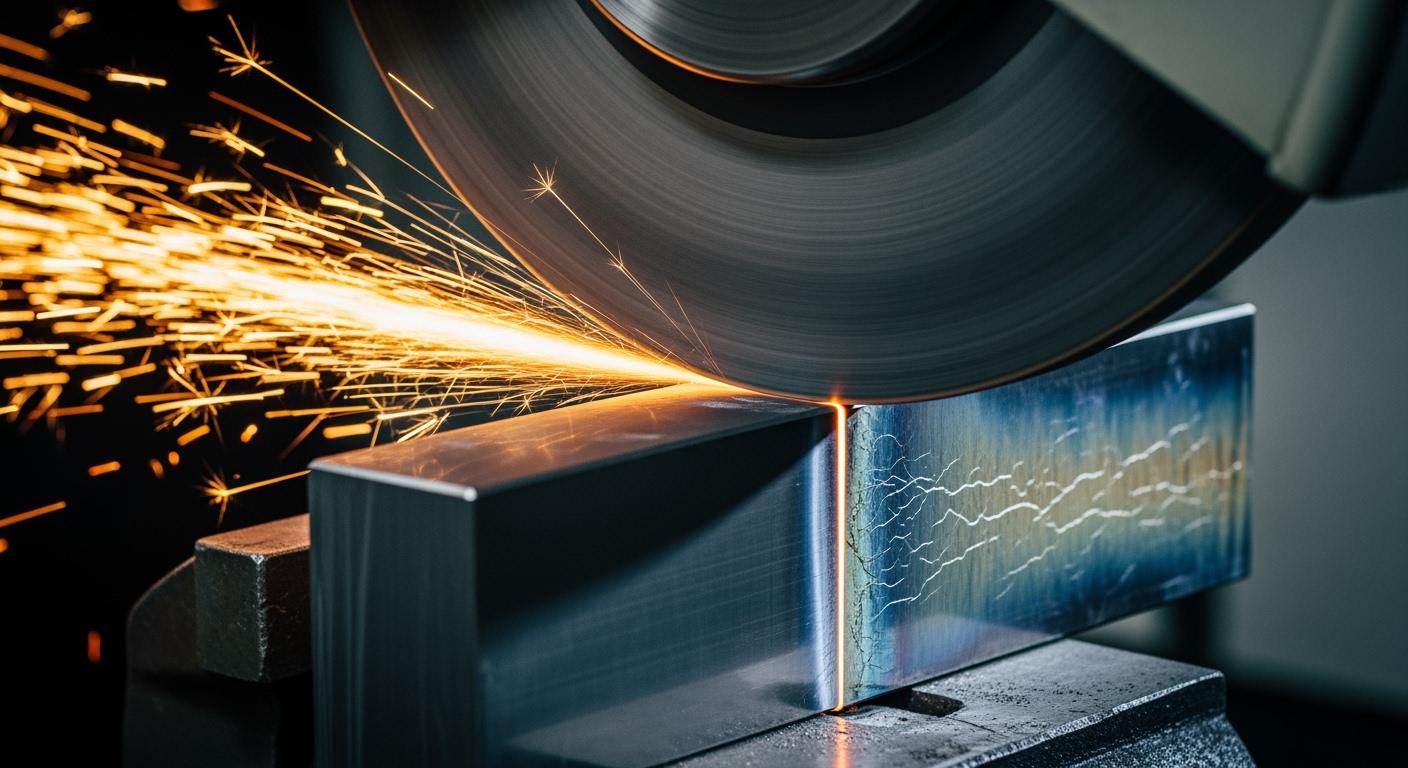
Creep-feed grinding is a high efficiency deep grinding method. It delivers a superior finish and high material removal rates. This makes the technique ideal for difficult-to-machine materials. However, the powerful benefits of creep-feed grinding come with challenges.
This grinding process demands significant investment, advanced cooling, and expert process control.
This guide helps you evaluate if creep-feed grinding justifies the cost for your specific application and materials.
Key Takeaways
- Creep-feed grinding removes a lot of material quickly. It makes parts faster than other methods.
- This grinding method creates very smooth surfaces. It also makes parts with high accuracy.
- Creep-feed grinding works well for hard materials. It is good for complex shapes.
- This method needs special machines. These machines are expensive.
- Controlling heat is very important. Too much heat can damage the part.
Advantages of the Creep-Feed Grinding Process
Creep-feed grinding offers significant advantages over conventional grinding methods, especially for demanding applications. Its unique approach of using a slow traverse speed and a large depth of cut unlocks major gains in productivity and part quality. This grinding process excels where others fall short.
High Stock Removal Rates
A primary benefit of creep-feed grinding is its exceptional efficiency. The process achieves a very high stock removal rate in a single pass. This capability dramatically reduces cycle times and boosts overall throughput. Productivity can be three to five times higher than ordinary grinding. The deep cut removes large volumes of material at once, combining roughing and finishing into one streamlined operation.
The difference in metal removal rate is substantial when compared to traditional reciprocating grinding.
| Grinding Method | Typical Material Removal Rate (mm³/mm/s) |
|---|---|
| Reciprocating Grinding | 0.1 – 10 |
| Creep-feed Grinding | 1 – 20 (up to 30) |
This high stock removal makes the technique a powerful choice for high-volume production environments.
Excellent Surface Finish and Accuracy
Despite its aggressive material removal, creep-feed grinding produces an outstanding surface finish and high dimensional accuracy. The slow, stable movement of the workpiece minimizes vibration. This controlled motion ensures a smooth and consistent surface. The process consistently achieves excellent grinding accuracy and precision tolerances. The final surface is often superior to what multi-pass methods can deliver. This level of accuracy is critical for components in the aerospace and medical industries. The final surface quality and part accuracy depend on a stable machine and a well-chosen grinding wheel. A superior surface is a hallmark of this method, ensuring both form and functional accuracy.
Reduced Mechanical Stress on Parts
Conventional grinding can introduce significant heat and mechanical stress into a workpiece. These forces can cause surface damage, micro-cracks, and residual tensile stress, compromising part integrity. Creep-feed grinding, when properly controlled, minimizes this damage.
The process typically operates at low grinding temperatures, often below 130°C. This low thermal load means mechanical interaction is the main factor influencing the final surface stress.
A burn-free part from this process consistently shows beneficial compressive stress on its surface. This compressive state enhances fatigue life and durability. In contrast, a burned part can exhibit harmful tensile stress on its surface. Maintaining a pristine surface is key to part performance, and this method provides excellent control over surface integrity and accuracy.
Ideal for Complex Profiles and Hard Materials
Creep-feed grinding truly shines when machining complex geometric forms into difficult materials. It is the preferred method for creating intricate shapes in superalloys, ceramics, and other high toughness materials. Examples include:
- Fir-tree turbine blade roots in Inconel 718
- Single crystal nickel-based superalloy blade roots
- Complex slots and grooves in hardened tool steels
Success in these applications depends entirely on using the right grinding wheel. Specialized wheels are crucial for achieving a fine surface finish and high accuracy on these materials. The choice between diamond and Cubic Boron Nitride (CBN) is critical.
- CBN wheels are ideal for ferrous materials like steel and superalloys. They are chemically stable with iron at high temperatures, ensuring a long wheel life and excellent surface accuracy.
- Diamond wheels are the best choice for non-ferrous materials, composites, and ceramics due to their extreme hardness.
Maximizing performance requires more than just selecting the right abrasive type; it demands optimization. Partnering with a specialized provider like Aimgrind allows for the development of custom-formulated super hard abrasives. These tailored solutions ensure the wheel’s bond and grain structure are perfectly matched to the material and process parameters, unlocking maximum efficiency, superior surface quality, and exceptional accuracy.
Limitations of the Grinding Process
While creep-feed grinding offers compelling advantages, it is not a universally applicable solution. The process introduces significant technical and financial challenges. Manufacturers must carefully weigh these limitations against the potential benefits before committing to this advanced manufacturing method. The primary drawbacks revolve around thermal management, equipment costs, and process complexity.
High Thermal Load and Burn Risk
The most significant challenge in creep-feed grinding is managing the immense heat generated at the grinding zone. The long arc of contact between the wheel and the workpiece creates a continuous, intense heat source. Without exceptional cooling, this thermal load can cause catastrophic failure.
A primary point of failure in the creep-feed grinding process is an inadequate coolant system. High-pressure, high-volume coolant delivery is not just recommended; it is essential to prevent thermal damage and maintain workpiece integrity.
The temperatures in the grinding zone can vary dramatically depending on the setup:
- Ideal conditions may keep temperatures below 135°C.
- Typical operations can see temperatures from 380–410°C.
- Poor cooling can cause temperatures to exceed 900°C, leading to immediate workpiece burn.
Common issues stemming from poor thermal management include:
- Workpiece Burn: This is especially common when grinding slots or vertical faces where coolant struggles to penetrate.
- Wheel Clogging: Grinding debris and worn abrasive grits can embed in the wheel, increasing friction and heat.
- Harmful Residual Stress: Inadequate cooling leaves high tensile stress on the workpiece surface, reducing its fatigue life. Optimized cooling has been shown to reduce these stresses by over 46%.
Specialized and High-Cost Machinery
Traditional creep feed grinding cannot be performed on standard grinding machines. The process generates substantial forces that demand exceptionally robust and powerful equipment. This requirement represents a significant capital investment.
Key machinery characteristics include:
- High Spindle Power: Creep-feed applications require much higher power spindles compared to conventional surface grinding to handle the high material removal rates.
- Extreme Machine Stiffness: Machines and fixtures must be robustly engineered to withstand high grinding forces without deflection, ensuring dimensional accuracy.
- Advanced Monitoring: A power monitor connected to the spindle is strongly recommended to accurately track forces and prevent overloads.
This specialized equipment comes with a high price tag. The initial purchase price, coupled with very high equipment and maintenance costs, makes the financial barrier to entry steep. While a CNC grinder’s cost can be amortized over a long lifespan (e.g., 15 years), the upfront investment and ongoing expenses for high-precision components are considerable.
Complex Wheel Dressing and Loading Issues
Maintaining the grinding wheel’s condition is critical and complex. The wheel must remain sharp and open-pored to cut efficiently and allow coolant to reach the grinding zone. This involves two main challenges: wheel dressing and wheel loading.
Wheel Dressing is the process of sharpening the wheel and restoring its profile. In high-volume production, this is often done with advanced techniques:
- Rotary Diamond Dressing: A synchronized diamond tool reshapes the wheel at high speed, maintaining complex profiles with precision.
- Continuous Dressing (CD): The wheel is dressed continuously during the grinding cycle. This technique keeps grinding power low and prevents form loss, but it adds another layer of process complexity.
Wheel Loading occurs when workpiece material clogs the grinding wheel’s pores. This creates a “duller wheel,” which has a contradictory effect. While it can produce a smoother surface finish, it also blocks coolant flow and dramatically increases the risk of thermal damage. Effective wheel cleaning is crucial, as it can increase the material removal rate by up to 100% and decrease the required energy by 33%.
High Sensitivity and Process Control Demands
The creep-feed grinding process is highly sensitive to small variations in operating parameters. Unlike forgiving conventional methods, minor deviations can lead to scrapped parts or damage to the machine. Success depends on establishing and maintaining a very precise and stable process window.
Key parameters that require strict control include:
- Grinding wheel surface speed (
vc) - Workpiece feed rate (
vfa)
The ratio between these two speeds is a critical factor that directly influences surface finish and process stability. To manage this sensitivity, modern creep-feed systems rely on sophisticated in-process monitoring. These systems use an array of sensors to provide real-time feedback, allowing for automated adjustments or emergency shutdowns. Common sensor technologies include:
- Acoustic emission sensors
- Force and power sensors
- Vibration signal monitors
This high level of required control means that operators must be highly skilled, and the process must be meticulously engineered to avoid common failure modes like grinding burn and high wheel wear.
Creep-feed grinding presents a clear trade-off. It offers unmatched quality for complex parts but requires significant investment. Success depends on analyzing your material, geometry, and production volume. For companies ready to manage its demands, creep-feed grinding offers a decisive manufacturing advantage. Partnering with a specialist like Aimgrind for optimized wheels is key to maximizing production efficiency.
Industry experts predict an increasing use of creep-feed grinding. This trend is driven by the demand for tighter tolerances and the growing use of harder materials where traditional milling is limited.
FAQ
What materials are best for creep-feed grinding?
This process excels with difficult-to-machine materials. It is ideal for grinding hardened steels, nickel-based superalloys like Inconel, and advanced ceramics. The method handles their toughness and hardness effectively, making it a top choice in aerospace and tool manufacturing for achieving precise results.
How can I prevent grinding burn?
Preventing thermal damage is critical. Success requires two key elements. First, use a high-pressure, high-volume coolant system to extract heat. Second, maintain a sharp, open-pored grinding wheel to reduce friction and allow coolant to reach the cutting zone effectively.
When should I choose creep-feed over conventional grinding?
Choose creep-feed grinding for high-volume production of parts with complex profiles or deep slots. It is superior for hard materials where high stock removal and excellent surface finish are needed in a single pass. The process combines roughing and finishing, dramatically reducing cycle times.
Why are specialized grinding wheels so important?
Specialized wheels are essential for success. Abrasives like CBN and diamond are required for hard materials. The correct wheel, such as a custom-formulated one from Aimgrind, ensures efficient cutting, manages heat, and holds its form. This directly impacts part accuracy and prevents costly errors.
Contact Us
For More Grinding Solution or Customized Abrasive Tools