You know the frustration of carbide grinding. A tiny crack or chipping on your carbide tool’s cutting edge means costly tool wear. Understanding the chipping causes and the causes of wear is the first step to reduce chipping. You need effective solutions of tool chipping to protect your investment.
The cycle of poor cutting performance looks like this: A dull cutting tool leads to more tool wear. This tool wear ruins another cutting tool. Your next cutting tool and the cutting tool after that face the same fate. This guide helps protect every cutting tool and tool edge.
Key Takeaways
- Choose the right grinding wheel. Use a finer grit and a softer bond. This helps prevent damage to your carbide tools.
- Set up your machine correctly. Reduce how deep you cut and how fast you feed. Make sure your machine does not vibrate. Use proper coolant flow.
- Improve your grinding skills. Grind into the tool’s edge. Use a backing material. Apply steady, medium pressure. Avoid coolants that harm the tool.
- Regularly dress your grinding wheel. This keeps it sharp. A sharp wheel works better and protects your tools.
- The wrong coolant can damage your tools. Use coolants made for carbide. This stops chemicals from weakening the tool.
Select the Right Grinding Wheel to Reduce Chipping
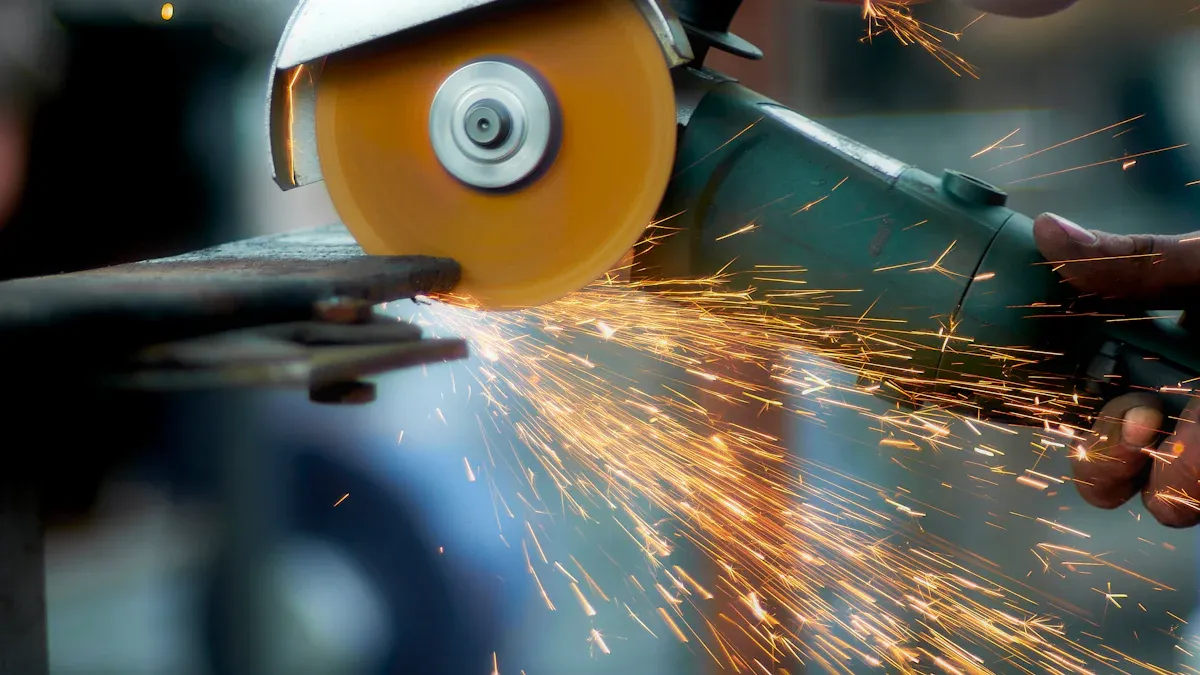
Your grinding wheel is your first and most important tool for preventing damage. The wrong wheel applies too much pressure or heat, leading to micro-cracks and chipping on the tool’s cutting edge. A well-chosen wheel ensures a clean, sharp cutting action that preserves the integrity of your carbide tool.
Use a Finer Grit for a Less Aggressive Cut
You should use a wheel with a finer abrasive grit for finishing operations. A coarse grit removes material quickly but creates deeper scratches and higher stress, increasing the risk of a crack. A finer grit takes a smaller, less aggressive bite out of the material. This gentle cutting action produces a smoother surface finish and a sharper cutting edge, which is essential to reduce chipping.
Tip: For precision finishing on tungsten carbide, consider using fine grits to minimize chipping.
- Grit Sizes: 270/325 or 325/400 mesh
- Effect: A smaller grit size generally results in a smaller cutting edge radius and less tool wear.
Choose a Softer Bond for Better Friability
The bond holds the abrasive particles together. For hard materials like carbide, a softer bond is often better. A soft bond allows dull abrasive grains to break away more easily, exposing fresh, sharp cutting points underneath. This self-sharpening action prevents the wheel from becoming “glazed,” which would increase grinding pressure and heat, a common cause of tool wear and chipping.
| Hardness Category | Letter Codes | Application |
|---|---|---|
| Soft | H, J, K | Hard metals, such as carbide |
| Medium | L, M, N | Hard and soft metals |
| Hard | P, Q, R, S | Soft metals |
Ensure a Sharp Wheel with Regular Dressing
Over time, your wheel can become loaded (clogged with material) or glazed (the abrasives become dull). A dull wheel requires more force, which can damage the delicate edge of your tool. You must dress the wheel regularly to maintain a sharper wheel. Dressing removes the loaded layer and exposes new, sharp abrasives for optimal cutting. For high-precision carbide grinding, dressing the wheel every 2–3 hours of use is a good practice to prevent excessive wear.
Consider Aimgrind’s Custom Diamond Grinding Wheels
Selecting the perfect wheel can be complex. As a specialist in customized grinding solutions, Aimgrind can help. Aimgrind’s diamond grinding wheels are engineered specifically for hard materials like carbide, offering the precision needed to prevent chipping. Features like advanced resin bonds and fine diamond grits ensure a smooth cutting action and superior surface finish.
Aimgrind works with you to diagnose issues and match the perfect wheel formula to your specific carbide grinding application. This ensures your wheel has controlled wear, exposing fresh diamonds for consistent cutting performance and protecting your tool from damaging wear.
Optimize Machine Parameters for Stable Carbide Grinding
Your grinding wheel is only one part of the equation. You must also optimize your machine’s settings for stable carbide grinding. The right parameters reduce stress on the carbide tool, preventing premature wear and breakage. Stable cutting conditions are key to protecting your tool from damage.
Reduce Infeed Rates and Depth of Cut
Aggressive cutting creates high stress and heat, which can crack the delicate cutting edge of your tool. A deep cut generates excessive heat, leading to subsurface damage and increased tool wear. You should reduce your infeed rates and depth of cut, especially for finishing passes. This gentler approach minimizes pressure and thermal stress, reducing the risk of tool breakage.
| Pass Type | Depth of Cut | Speed (IPM) |
|---|---|---|
| Roughing | 0.08” | 100 |
| Finishing | 0.08” | 100 (with smaller step-over) |
Slower, shallower passes protect the tool from excessive wear and help you achieve a better finish.
Mitigate Vibration to Prevent Tool Breakage
Vibration is a major cause of tool breakage. It creates tiny impacts that chip and weaken the cutting edge, leading to catastrophic failure. You can take simple steps to prevent tool breakage and reduce this harmful wear.
- Secure Your Machine: Place anti-vibration pads under your machine to absorb and dissipate energy.
- Check Your Spindle: Ensure your spindle is properly balanced for smooth rotation.
- Firm Workholding: Use secure fixtures to hold your workpiece firmly, preventing any movement during cutting.
A stable setup is crucial for avoiding unexpected breakage and unnecessary wear.
Control Thermal Shock with Proper Coolant Flow
Thermal shock happens when your tool heats up during cutting and then cools too quickly. This rapid temperature change causes stress, leading to micro-cracks and wear. Proper cutting fluid application is your best defense.
A high-pressure cutting fluid flow is essential. It ensures the coolant reaches the cutting zone, preventing the tool from overheating and then rapidly quenching. This steady temperature control minimizes thermal stress and the associated wear.
Make sure your coolant nozzles are aimed directly at the point of contact. Consistent cooling is vital for extending tool life and preventing breakage.
Balance the Wheel On-Machine for Smooth Contact
An unbalanced wheel causes inconsistent force during cutting. This leads to chatter, poor surface finish, and extreme wheel wear. Balancing your wheel directly on the machine ensures it spins true. This smooth contact provides even cutting pressure across the tool‘s surface. A balanced wheel not only improves part quality but also reduces wheel wear and the risk of tool breakage, saving you from extra dressing costs and downtime. Your cutting conditions will be much more stable.
Refine Grinding Technique for Edge Chipping Solutions
Your technique is the final piece of the puzzle. Even with the best wheel and machine setup, poor grinding habits can cause excessive edge-chipping and tool wear. You can refine your approach to protect the delicate cutting edge of every tool. Proper technique minimizes stress and prevents the kind of wear that leads to failure.
Grind Into the Cutting Edge, Not Away From It
You should always direct the grinding force into the body of the tool. This method, known as climb grinding, provides support for the fragile cutting edge. Grinding away from the cutting edge pulls material off the edge, creating tensile stress that easily causes edge chipping. By grinding into the tool, you apply compressive force, which the carbide can handle much better. This simple change in direction protects the cutting edge from breaking away during the cutting process and reduces wear.
Use a Backing Material to Support the Exit Edge
When the grinding wheel leaves the tool, the unsupported exit edge is highly vulnerable to edge chipping. You can prevent this damage by using a backing material. Place a piece of scrap steel or another firm material against the back of your tool. This simple trick provides the support needed for the cutting edge as the wheel finishes its pass. The backing material absorbs the force, preventing the final, unsupported edge of the tool from fracturing and reducing wear.
Apply Consistent, Moderate Grinding Pressure
Finding the right grinding pressure is critical for preventing edge chipping. Applying too much force increases the material removal rate but also causes significant surface damage and excessive edge-chipping. A sudden change in cutting force often signals that the tool has fractured. However, using too little pressure causes the wheel to rub instead of cutting, which accelerates wear. You must apply consistent, moderate pressure to maintain stable cutting conditions and protect the tool’s cutting edge.
Avoid Coolants That Leach Cobalt
The wrong cutting fluid can chemically attack your tool. Certain chemicals weaken the carbide structure by leaching out the cobalt binder, leading to premature wear and edge chipping.
Chemicals to Avoid in Your Cutting Fluid:
- Amines and alkalis, which can dissolve cobalt over time.
- Contaminants like chlorides from handling or bacteria.
You should use a high-quality synthetic cutting fluid designed for carbide. These formulations are chemically inert. They prevent cobalt leaching, protect your tool from corrosion, and help you maintain a sharp cutting edge under optimal cutting conditions. This protects the tool from chemical wear.
Preventing chipping in carbide grinding requires a three-part strategy: the right wheel, a stable machine, and correct cutting technique. This approach reduces tool wear and prevents a crack on your tool’s cutting edge.
You can significantly reduce wear and improve part quality. Your cutting process protects the tool from damaging wear. This protects the tool edge. Proper cutting avoids wear. This protects the carbide tool from wear. Your cutting tool avoids wear. Your cutting tool has less wear.
Review your cutting process and consider how a custom solution from Aimgrind can enhance your results.
FAQ
Why does my carbide tool keep chipping?
Your carbide tool chips from excessive stress. This often comes from aggressive cutting parameters or an incorrect grinding technique. A dull wheel also increases pressure on the tool. These factors create micro-cracks that lead to chipping during the cutting process.
What is the best grinding wheel for carbide?
You should use a diamond grinding wheel for carbide. A wheel with a fine grit and a softer bond provides the best cutting action. This combination reduces pressure on the tool. It creates a sharp cutting edge and prevents damage to your valuable tool.
How often should I dress my grinding wheel?
You should dress your wheel when you notice a drop in cutting performance. For high-precision cutting, dressing every 2–3 hours is a good starting point. Regular dressing keeps the wheel sharp and ensures a clean cutting action.
Can the wrong coolant damage my tool?
Yes, the wrong coolant can harm your carbide tool. Some fluids contain chemicals that leach the cobalt binder from the tool. This weakens the material. It makes the cutting edge brittle and prone to chipping during any cutting operation.