

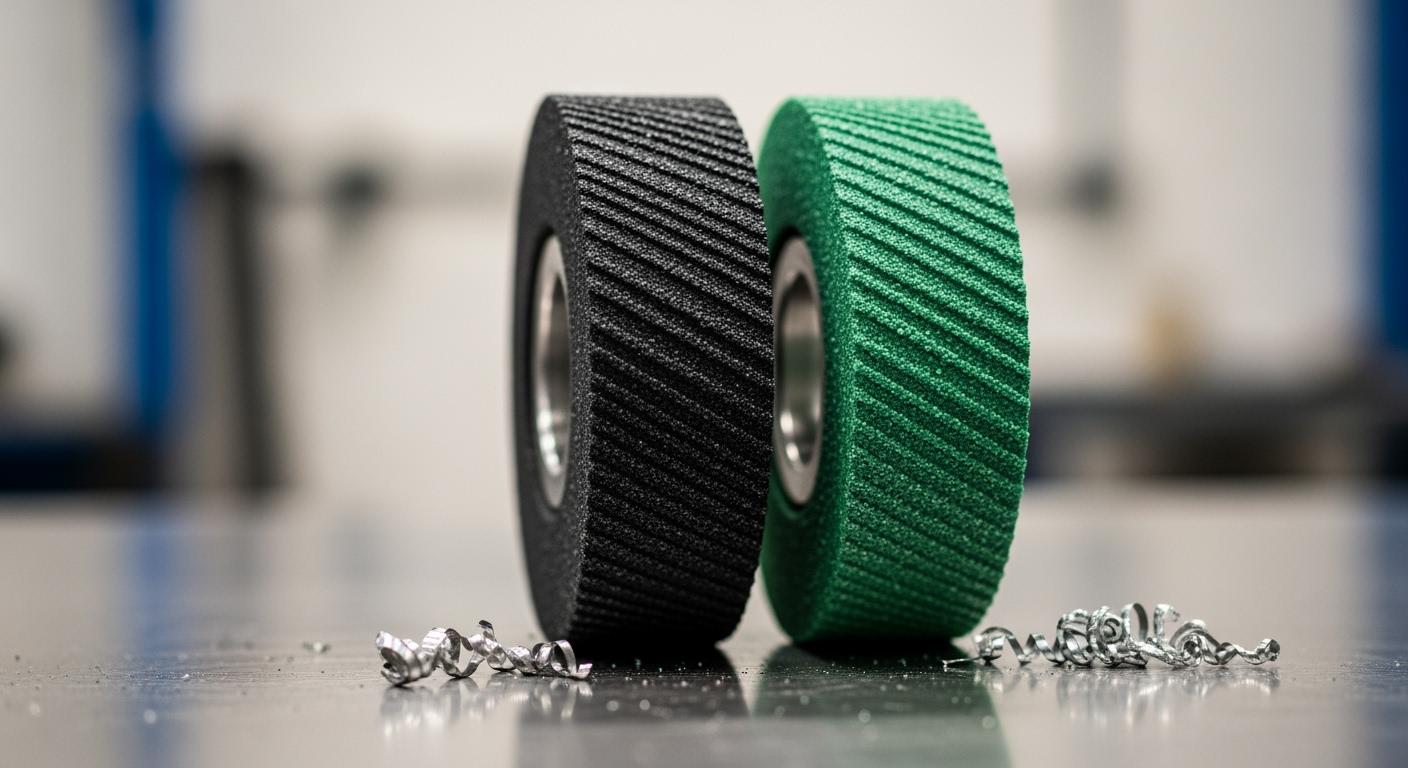
When selecting a silicon carbide grinding wheel, your material dictates the choice. You use green silicon carbide for hard, brittle materials that require a fine finish. Black silicon carbide grinding wheels are your solution for softer, non-ferrous metals where stock removal is the main goal. This guide will help you understand these essential grinding wheels. The right choice between the two silicon carbide grinding wheels ensures quality and efficiency.
Key Takeaways
- Choose green silicon carbide wheels for hard, brittle materials. They are best for precision finishing.
- Select black silicon carbide wheels for softer, non-ferrous metals. They are good for removing a lot of material quickly.
- Green wheels are purer and self-sharpen. This helps them cut cool and fast.
- Black wheels are tougher and last longer. They are good for heavy work.
- Match the wheel to your material and goal. This ensures the best results.
Key Differences: Black vs. Green SiC
You can see the main differences between black and green silicon carbide grinding wheels at a glance. The choice you make directly impacts your project’s outcome. Each wheel offers unique advantages for specific tasks.
| Attribute | Black Silicon Carbide | Green Silicon Carbide |
|---|---|---|
| Primary Use | Softer, non-ferrous metals; stock removal | Hard, brittle materials; precision finishing |
| Purity (SiC %) | 97–99% | 99–99.9% |
| Hardness & Friability | Tougher, less friable, impact-resistant | Harder, more friable, self-sharpening |
| Cost | Lower | Higher |
Abrasive Purity and Hardness
The manufacturing process creates the first major difference. Green silicon carbide is purer, with a SiC content of 99% to 99.9%. This higher purity makes it slightly harder, rating around 9.2 on the Mohs scale. Black silicon carbide has a purity of 97-99% and a Mohs hardness of about 9. This small difference in hardness significantly affects the performance of the grinding wheels. The higher purity of green wheels gives them advantages over alternative grinding wheels for specific applications.
Friability vs. Toughness
Friability is an abrasive’s ability to fracture and create new, sharp cutting edges. Green silicon carbide is more friable. This self-sharpening action prevents the wheel from glazing and allows for a cool, fast cut on hard materials. In contrast, black SiC is tougher and more impact-resistant. Its grains withstand higher pressure without breaking down. This toughness makes it excellent for heavy stock removal where durability is more important than a fine finish.
Key Takeaway: Choose green for its self-sharpening ability on hard materials. Choose black for its toughness in demanding, high-pressure jobs.
Cost and Application Value
Your budget and application goals also guide your choice. The higher purity of green SiC makes it more expensive to produce. This results in a higher price for the final product. However, its superior sharpness and efficiency in precision polishing can lead to a lower cost per piece, justifying the initial investment. For general-purpose grinding, the lower cost and excellent durability of black silicon carbide grinding wheels provide better overall value. The key is to match the wheel’s advantages to your specific grinding needs.
When to Use Green Silicon Carbide Wheels
You should select green silicon carbide grinding wheels when your project demands precision and a superior finish on very hard materials. The unique properties of green silicon carbide give it distinct advantages for specific, challenging tasks. Its higher purity and hardness make it the expert’s choice for jobs where a standard wheel would fail.
Ideal Materials for Green Silicon Carbide
You will achieve the best results with green silicon carbide on materials that are both hard and brittle. Its structure is perfectly suited for grinding substances that can fracture or chip easily. This makes it an excellent tool for working with cemented carbides and other tough materials.
Consider using a green wheel for:
- Advanced Ceramics: This includes materials like alumina and zirconia, which require a sharp abrasive to cut cleanly.
- Titanium Alloys: These alloys are known for being difficult to grind, but green wheels can produce a fine surface finish.
- Tungsten Carbide: You can use it for rough shaping and sharpening of tungsten carbide tools.
Note: While excellent for shaping tungsten, you might need a diamond wheel for the final, ultra-fine edge. The green wheel does the heavy lifting, and the diamond wheel provides the ultimate polish.
Best Applications and Finishes
You can rely on green silicon carbide for applications where the final surface quality is critical. Its ability to cut coolly and cleanly minimizes damage to the workpiece. This makes it a go-to choice in high-precision industries. The wheel’s performance is evident in the smooth, polished surfaces it creates.
The following table shows where these wheels are commonly used:
| Industry | Specific Application |
|---|---|
| Tool & Die Making | Sharpening and shaping cutting tools and dies |
| Aerospace & Defense | Finishing turbine blades and composite parts |
| Automotive | Grinding hard metal and ceramic engine components |
| Electronics | Grinding silicon wafers and other hard substrates |
[Studies show the impressive finish you can achieve](Grinding of Ti2AlNb intermetallics using silicon carbide and alumina abrasive wheels: Tool surface topology effect on grinding f…). For example, when grinding titanium alloys, green wheels significantly reduce surface roughness and other defects.
| Study Focus | Titanium Alloy | Surface Roughness (Ra) | Key Finding |
|---|---|---|---|
| Current Study | Ti2AlNb | Better surface finishing | Reduced white layer compared to other abrasives. |
| Bentley et al. | Ti-48Al-2Cr-2Nb | Improved from 1.4 to 0.6 µm | Showed significant surface quality improvement. |
| Hood et al. | Ti-45Al-8Nb-0.2C | 2.3 µm (mean) | Achieved a crack-free surface at low speeds. |
The Role of Friability
The friability of green silicon carbide is one of its greatest advantages. Friability means the abrasive grains are brittle and fracture under pressure. This might sound like a weakness, but it is actually a key feature.
As you grind, the grains on the wheel’s surface break away. This action constantly exposes fresh, sharp cutting edges. This self-sharpening process prevents the wheel from becoming clogged with material (loading) or smooth and dull (glazing). The result is a consistent, fast, and cool cutting action throughout the life of the wheel.
This self-renewing cutting surface ensures your silicon carbide grinding wheels maintain their effectiveness, giving you a high-quality finish from start to finish.
When to Use Black SiC Wheels
You should choose black silicon carbide wheels when your main goal is aggressive material removal on softer metals and certain non-metallic materials. These wheels are the workhorses of the grinding world, prized for their durability and cost-effectiveness. Their unique properties make them the right tool for jobs where toughness matters more than a mirror-like finish.
Ideal Materials for Black SiC
You will find that black silicon carbide excels at grinding softer, ductile materials that would otherwise load up a harder wheel. Its toughness allows it to handle the demands of grinding these materials without breaking down prematurely.
You can confidently use these wheels on:
- Non-Ferrous Metals: This is where black silicon carbide truly shines. It is specifically made for grinding materials like brass and bronze. Foundries often use these wheels to clean castings.
- Cast Iron: The toughness of the abrasive grains makes them ideal for shaping and cleaning cast iron parts.
- Aluminum: You can effectively grind aluminum, as the wheel resists loading up with the soft metal.
- Plastics and Rubber: While these wheels can grind plastics and rubber, their primary advantages are seen on harder materials.
Pro Tip: When working with non-ferrous metals, a black SiC wheel provides excellent performance without the higher cost of a green wheel. It gets the job done efficiently and economically.
Best Applications for Stock Removal
You should reach for a black SiC wheel when you need to remove a lot of material quickly. This process is known as high stock removal. The wheel’s tough abrasive grains can withstand high pressure, allowing you to grind aggressively without worrying about rapid wheel wear. This makes it perfect for foundational work before any finishing steps.
Common applications include:
- Snagging: Cleaning up rough edges, gates, and risers from metal castings in a foundry.
- Rough Grinding: Quickly shaping a workpiece to its basic dimensions.
- Weld Removal: Grinding down weld beads to create a smooth, flat surface.
- Tool Conditioning: Removing significant amounts of material from tools before final sharpening.
These applications prioritize speed and material removal over fine surface quality. The goal is to get the part to the right shape and size efficiently, and this is where you will see the key advantages of these silicon carbide grinding wheels.
The Benefit of Toughness
The standout feature of a black silicon carbide wheel is its toughness. Unlike the friable nature of green SiC, the abrasive grains in a black wheel are more impact-resistant. This durability is a major benefit in demanding applications.
This toughness translates directly into longer wheel life. Because the grains resist fracturing, the wheel wears down more slowly, especially under heavy pressure. This means you spend less time changing wheels and more time working. The extended durability reduces maintenance costs and minimizes downtime in any industrial or workshop setting. For any task involving high stock removal, the superior wear resistance of black silicon carbide grinding wheels ensures long-lasting, reliable performance.
Choosing Your Silicon Carbide Grinding Wheel
Making the right choice is simple when you follow a clear process. This three-step guide will help you select the perfect silicon carbide grinding wheel for your job, ensuring you get the best results every time.
Step 1: Identify Your Material
Your first step is to look at the material you need to grind. This is the most important factor. You should match the wheel directly to the workpiece.
- For hard, brittle materials: Choose green silicon carbide grinding wheels. They work best on cemented carbides, advanced ceramics, and titanium.
- For softer, non-ferrous metals: Select black silicon carbide. It is the ideal choice for aluminum, brass, bronze, and cast iron.
Step 2: Define Your Grinding Goal
Next, you need to know what you want to achieve. Your goal will be either aggressive stock removal or precision finishing. Grinding is a key mechanical process that creates the foundation for other finishing operations.
The table below shows the difference between these two goals:
| Feature | Stock Removal (Rough Grinding) | Precision Finishing |
|---|---|---|
| Primary Function | Remove a lot of material quickly | Achieve high accuracy and a smooth finish |
| Material Removal | High and fast | Slow and gradual |
| Surface Finish | Rough or coarse | Smooth, with low roughness values |
| Accuracy | Not the main priority | Extremely important |
You measure a precision finish using industry standards. A lower number means a smoother surface.
- Ra (Roughness Average): This is the most common measurement for general surface quality.
- Rz (Mean Roughness Depth): This is important for surfaces that need to seal properly.
- Rt (Maximum Height): This measures the total difference between the highest peak and lowest valley.
Step 3: Consider Your Budget
Finally, you should think about your budget. Green wheels cost more upfront due to their higher purity. However, their efficiency on hard materials can save you money in the long run. A black silicon carbide grinding wheel is more affordable. It provides excellent value for general-purpose grinding and high stock removal tasks where durability is key. Your choice should balance initial cost with the performance your application demands.
Finding a Reliable Abrasive Partner
Choosing the right wheel is only half the battle. You also need a supplier who understands your specific needs. A reliable partner ensures you get the most out of your tools and investment.
The Aimgrind Advantage
You can trust Aimgrind‘s expertise in grinding solutions. The brand has nearly two decades of experience creating customized abrasive formulas. This deep knowledge offers you significant advantages. Aimgrind’s team diagnoses your grinding problems and matches the right parameters for your equipment. This comprehensive service process guarantees optimal performance from your tools.
Their product line of conventional bonded abrasives includes both high-purity green silicon carbide and tough black silicon carbide options. This expertise ensures you receive cost-effective silicon carbide grinding wheels that deliver consistent, high-quality results for your specific job.
Custom Solutions for Your Needs
Your project deserves a solution designed just for it. Aimgrind excels at creating custom formulas for a wide range of materials. This capability supports applications in various industries, from aerospace to woodworking. The brand provides high-performance tools that enhance your productivity and efficiency. Whether you need a wheel for precision finishing with green silicon carbide or aggressive stock removal, Aimgrind develops the perfect match. Their commitment to quality ensures every wheel meets your exact requirements for superior performance.
Ready for a perfect match? 🤝
Visit the Aimgrind website to explore their conventional bonded abrasives and get a customized solution for your grinding challenges.
These tailored silicon carbide grinding wheels are engineered to integrate seamlessly into your workflow.
You now have the key information to select the right silicon carbide grinding wheel. Your choice directly impacts your work’s quality and efficiency.
Final Takeaway:
- Green Wheels: Use for precision work on hard, brittle materials.
- Black Wheels: Use for stock removal on softer, non-ferrous metals.
Making the correct decision for your grinding wheels is crucial. Partnering with an expert like Aimgrind ensures you get the perfect silicon carbide grinding wheel for any application, maximizing your results every time.
FAQ
Can I use a green wheel on soft metals?
You should avoid this. A green wheel’s friable grains can wear down quickly on soft metals like aluminum. You will get better performance and a longer wheel life by using a tougher black silicon carbide wheel for these materials.
Why is a green wheel more expensive?
A green wheel costs more because it is purer, containing 99% or more silicon carbide. This higher purity makes it harder and more effective for precision grinding on tough materials. Its performance justifies the price for specialized tasks.
Which wheel is better for sharpening my tools?
Your tool’s material determines the best wheel. You should use a green silicon carbide wheel for sharpening very hard materials like tungsten carbide. For most standard steel tools, other abrasives like aluminum oxide are often a better choice.
Will a black wheel wear out faster?
No, a black wheel is tougher and more wear-resistant, especially for high-pressure jobs. Its grains do not fracture as easily as a green wheel’s. This toughness gives it a longer life during aggressive stock removal tasks.