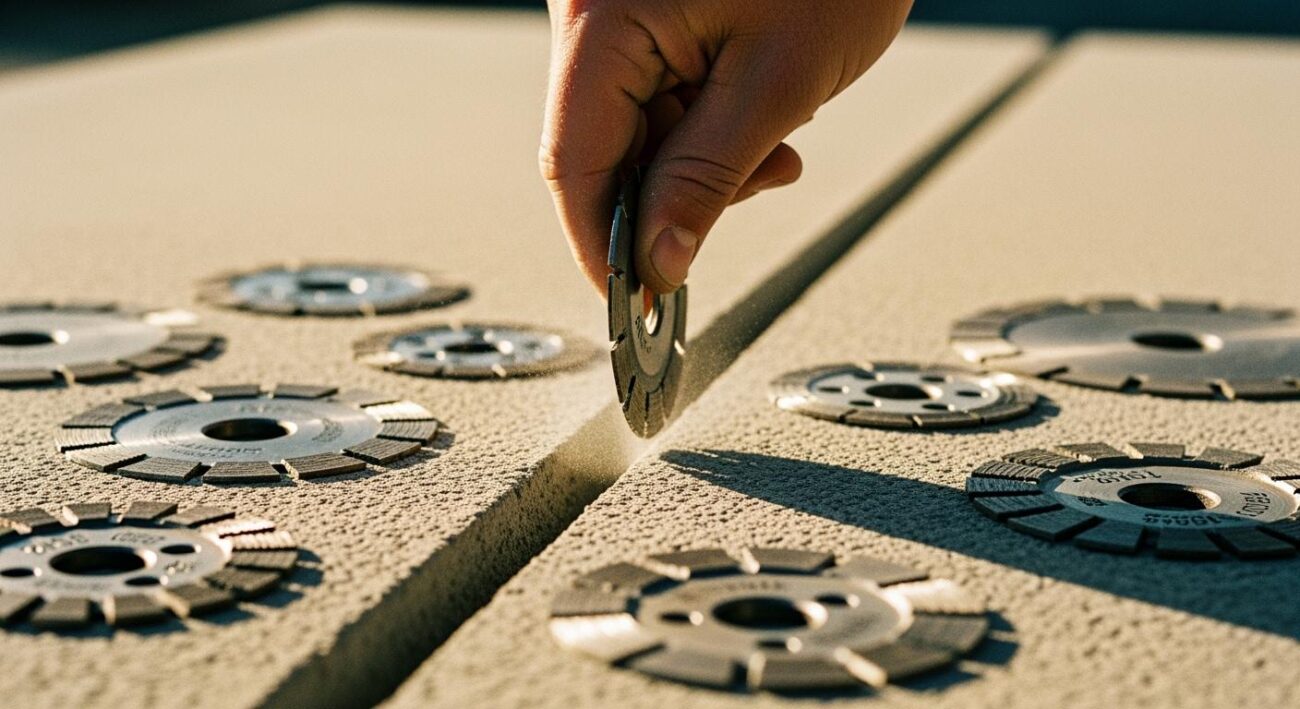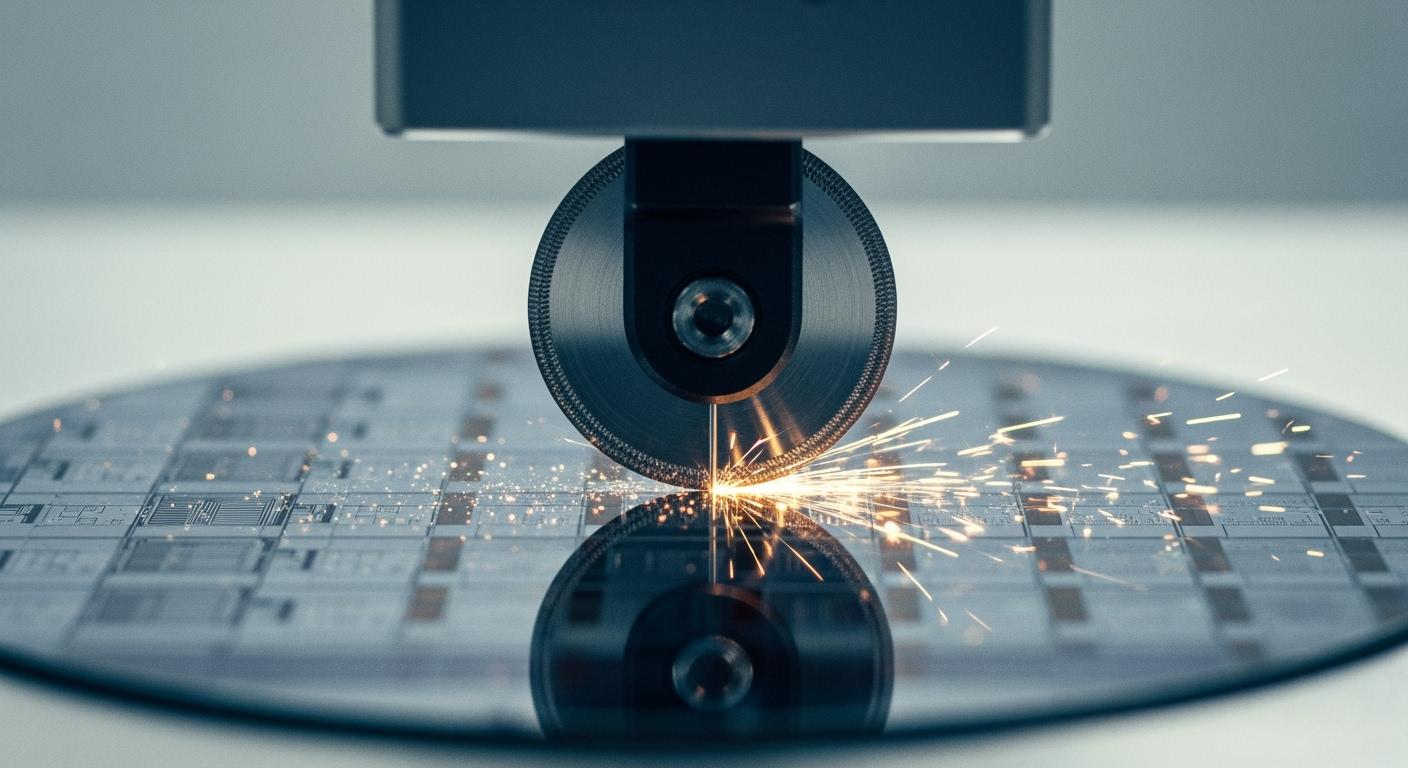
The dicing of a silicon wafer is a high-speed grinding process, not a simple cutting action. This precision dicing process uses ultra-thin diamond blades. A diamond blade, with its diamond edge made of diamond particles, spins at speeds like 22,000 RPM to perform the cutting. This thin blade is essential. The goal of this dicing is the precision cutting of a silicon wafer into chips from the main wafer. This dicing process is a critical cutting step, making dicing a foundational cutting method for a rapidly growing industry.
| Metric | Value |
|---|---|
| Market Size (2025) | $14.6 Billion |
| Market Size (2030) | $20.2 Billion |
| Growth Rate (2025 – 2030) | 6.7% CAGR |
Key Takeaways
- Diamond blades cut silicon wafers into chips. This process is like grinding, not slicing. The blades spin very fast.
- The diamond blade has tiny diamond particles. These particles grind away silicon. A special glue holds the diamonds in place.
- Cool water is very important. It stops the blade and wafer from getting too hot. It also washes away silicon dust.
- Many things affect the cut quality. These include the blade type, machine speed, and water flow. Getting these right prevents damage to the chips.
The Core of Wafer Dicing: A Grinding Process
Wafer dicing is fundamentally a high-speed grinding operation. The process does not slice through silicon like a knife. Instead, it uses an abrasive blade to grind away material, creating precise channels. This method ensures control over a microscopic process where precision is everything. The entire dicing process relies on a delicate balance of speed, force, and material science.
High-Speed Abrasive Action
The dicing action happens when a rapidly spinning blade makes contact with the wafer surface. Each diamond particle on the blade’s edge acts as a tiny cutting tool. It chips away microscopic pieces of silicon. This abrasive action generates significant physical forces that impact the wafer.
Two main types of stress occur during this high-speed process:
- Mechanical Stress: The abrasive diamond particles on the blade create high localized pressure on the wafer surface. This force is essential for material removal.
- Thermal Stress: The friction from grinding generates intense heat. This thermal energy can cause stress within the fragile silicon wafer.
Managing these forces is critical for a successful dicing operation. The grinding mechanism must be efficient enough to remove material without causing fractures or other damage to the delicate wafer.
The Role of Diamond Blades and Binders
The diamond dicing blade is the star of the show. Its design is a sophisticated blend of superhard abrasives and specialized bonding agents. The blade’s effectiveness depends on how these two components work together during the cutting process.
The diamond particles are the primary cutting agents. Their exceptional hardness makes them perfect for the dicing of hard and brittle silicon. Diamond micron powder is the top choice for processing silicon materials.
The Function of Diamond Particles 💎 Diamond particles perform several key jobs in the wafer cutting process:
- Material Removal: They efficiently grind away silicon to create the dicing streets.
- Surface Smoothing: They help produce a smooth cut surface, reducing defects.
- Consistent Performance: Diamond maintains its sharp cutting edges longer than other abrasives, ensuring a stable process.
- Precision: They enable the blade to achieve extremely tight tolerances, protecting the integrity of each chip.
The binder is the matrix that holds the diamond particles in place. The type of binder determines the blade’s characteristics and its suitability for a specific cutting application. Common binder types include:
- Resin Bond: These blades offer a softer, more flexible cutting action. They are ideal for dicing thin substrates and semiconductor wafers where minimal chipping is the top priority.
- Metal Bond: Made with a strong metal matrix, these diamond blades are highly durable. They excel at cutting very hard materials but require more cutting force.
- Nickel Bond (Electroplated): In this type, a single layer of diamond is electroplated onto the blade core. This design creates an extremely sharp and aggressive cutting edge, perfect for ultra-thin dicing.
The binder’s hardness directly impacts the blade’s performance. A harder binder holds diamond particles more securely, which is great for maintaining a sharp edge. However, it can make the blade more brittle. A softer binder provides more toughness and impact resistance, extending the blade’s life in certain applications. Manufacturers carefully balance these properties to optimize the diamond dicing blade for each unique dicing job.
Cooling and Debris Removal
The intense friction generated during dicing produces a tremendous amount of heat and silicon dust. A constant flow of coolant, typically deionized water, is essential to manage these byproducts. The cooling and cleaning process is just as important as the cutting itself.
Coolant serves several vital functions in the dicing process:
- It prevents the blade and wafer from overheating.
- It reduces friction during the cutting action.
- It helps keep the dicing blade sharp.
- It stabilizes the cutting process by maintaining a steady torque.
Beyond cooling, the fluid flow plays a critical role in debris removal. The coolant flushes silicon dust and swarf away from the cutting area. This action prevents the narrow channel from clogging. A clean cutting path ensures the blade can move smoothly, preventing increased friction and heat buildup. This continuous cleaning is fundamental to achieving a straight, precise, and defect-free cut on every wafer.
Key Factors for a High-Quality Cut
Achieving a perfect cut in wafer dicing is a science. It depends on the precise alignment of the blade, the machine, and the operating environment. A high-quality cut is free of defects and ensures every single chip functions as intended. This precision is the result of carefully managing three key areas: blade specifications, machine parameters, and coolant delivery.
Diamond Dicing Blade Specifications
The choice of a diamond dicing blade is the most critical decision in the dicing process. There is no universal blade; the ideal choice depends on the wafer material, its thickness, and the desired cutting quality. Key specifications include diamond particle size, diamond concentration, and the binder formula.
Leading manufacturers offer customized solutions to meet these specific needs. For instance, brands like Aimgrind specialize in creating custom Cutting wheels by designing specific diamond particle sizes and binder formulas. This tailored approach ensures the blade is perfectly matched to the dicing application, whether for standard silicon or harder materials like silicon carbide (SiC). For thin wafers, a fine-grit blade with diamond particles of 2–4 µm is often necessary to minimize damage and achieve superior cutting quality.
The concentration of diamond particles in the blade’s cutting edge directly influences performance:
- Higher Diamond Concentration: More diamond particles lead to faster cutting speeds. This high concentration also produces a smoother cut surface because more cutting edges are working at once.
- Lower Diamond Concentration: A lower concentration slows the cutting process. This provides better control, which is essential for preventing chipping in delicate materials.
The type of diamond dicing blade also plays a major role. Different blades are engineered for specific materials and dicing challenges.
| Types of Dicing Blades | Features | Common Applications |
|---|---|---|
| Electroformed Blade | Excellent chip removal and cooling; reduces snake-like cutting and damage. | IC wafers, gallium arsenide, silicon carbide (SiC), ceramic substrates. |
| Resin Bond Blade | High processing quality for hard, brittle materials; reduces chipping. | Glass, quartz, sapphire, BGA/QFN packages. |
| Metal Bond Blade | High rigidity that minimizes wavy and slanted cutting; excellent cut quality. | Electronic parts, semiconductor packages, ceramic, glass. |
Ultimately, the right diamond blade optimizes the wafer cutting process, enhances the final quality, and improves overall yield.
Machine and Process Parameters
A high-quality diamond blade can only perform its best when paired with an optimized dicing machine. The dicing machine controls the blade’s speed and the wafer’s movement with incredible precision. Two of the most important parameters are the blade’s rotational speed and the wafer’s feed speed.
Dicing machine spindles typically rotate the blade at speeds between 30,000 and 40,000 RPM. This high speed is necessary for the diamond abrasives to grind material away efficiently. However, speed alone is not enough. It must be perfectly synchronized with the feed speed—the rate at which the dicing machine moves the wafer into the blade. Finding this “sweet spot” is crucial for balancing cutting quality with throughput. Advanced dicing machine systems use high-precision servo controls to manage this synchronization and ensure a stable dicing process.
An imbalance between these two speeds can ruin the quality of the cut and damage both the wafer and the blade.
- If the feed speed is too high for the blade speed, the load on the blade increases, causing chipping or edge breakage on the wafer.
- If the blade speed is too high for the feed speed, the blade can become dull or “passivated,” losing its cutting ability and increasing friction.
Controlling these parameters is fundamental to the dicing operation. A well-tuned process ensures each cut is clean, straight, and meets the required quality standards.
Coolant Flow and Pressure
Constant cooling is non-negotiable in wafer dicing. The friction from cutting generates intense heat that can cause thermal damage to the fragile wafer. A continuous flow of high-purity deionized (DI) water is used to cool the blade and wafer, flush away silicon dust, and stabilize the cutting process.
Insufficient coolant flow is a direct cause of dicing defects. Without adequate cooling, a thermal expansion mismatch can occur between different areas of the wafer, leading to stress and cracks. The quality of the coolant is just as important as the flow rate.
💧 The Purity of Water Matters
The industry standard for dicing coolant is deionized water with a high resistivity of around 18 megaohms. This ultrapure water prevents ionic contamination that could ruin the semiconductor devices. In some advanced setups, carbon dioxide (CO2) is bubbled into the water to lower its surface tension and reduce static buildup, further improving cooling and debris removal for a higher quality dicing process.
Proper coolant delivery ensures that heat is managed effectively and the cutting path remains clear. This simple but vital step protects the integrity of the wafer, extends the life of the diamond blades, and is essential for achieving the highest possible cutting quality.
Common Dicing Defects and How They Occur
Even with advanced technology, the wafer dicing process can produce defects. These microscopic flaws can render a chip useless. Understanding how these defects occur is the first step in preventing them. The most common issues are chipping, delamination, and excessive blade wear, each stemming from imbalances in the delicate dicing operation.
Chipping and Cracks in Ultra Dicing Wafer
Chipping refers to small pieces breaking off the edge of a die during the cutting process. These tiny fractures can compromise the structural integrity of the final chip. For an ultra dicing wafer, where components are packed tightly, even a small crack can be a major failure. Several factors can cause chipping during the dicing of a wafer.
- Process Speed: Pushing the wafer into the diamond blade too quickly increases the cutting force and raises the risk of chipping.
- Blade Condition: A new diamond blade that is not perfectly round or has not been properly prepared can cause initial chipping.
- Workpiece Stability: If the wafer moves or vibrates during the cutting process, it can lead to abnormal edge collapse.
- Blade Choice: Using a diamond blade with particles that are too large or a binder that is too soft for the material can increase backside chipping.
Surface Delamination
Surface delamination is another critical defect where thin layers of the wafer material peel or separate from the surface. This happens when the stress from the dicing process exceeds the bond strength between the wafer’s layers. A dull diamond blade can drag or pull on the material instead of making a clean cutting pass. This action creates immense stress. Incorrect dicing parameters, such as excessive cutting pressure, can also cause the layers of the wafer to separate, ruining the delicate circuitry.
Excessive Blade Wear
The diamond blade is a consumable tool that wears down over time. However, excessive or premature wear hurts both production costs and cutting quality. A worn blade loses its sharpness and efficiency, leading to other defects.
Key Causes of Rapid Blade Wear ⚙️
A blade wears out too fast when the dicing parameters are not correct. Running the blade at the wrong speed, applying too much cutting pressure, or providing insufficient coolant all generate excess heat. This heat can soften the binder holding the diamond particles, causing them to fall out prematurely.
When a diamond blade becomes dull, it stops cutting cleanly. Instead, it hammers and rubs against the wafer, increasing mechanical stress. This inefficient action leads to rough edges and a poor quality finish on each die, directly impacting the final yield of the dicing process.
Successful silicon wafer dicing is a precision process. It depends on the synergy between the diamond blade’s design, machine settings, and the cooling process. Achieving a defect-free diamond cutting result requires managing microscopic forces to protect each chip. This precision diamond dicing is a foundational cutting step in electronics, directly impacting device performance. While diamond blade cutting is key, new dicing methods like stealth dicing and plasma dicing are advancing the future of silicon dicing and precision cutting. The diamond dicing process remains a cornerstone of manufacturing.
FAQ
What is the main goal of wafer dicing?
The primary goal of wafer dicing is to separate a large silicon wafer into many individual chips. This precision cutting process is a critical step. The dicing must be perfect to ensure each chip functions correctly after the dicing is complete.
Why are diamonds used for the cutting blade?
Diamonds are extremely hard, making them the ideal material for the dicing blade’s cutting edge. This hardness allows for a clean and efficient cutting action. It ensures the dicing process can handle hard materials like silicon with minimal wear and high precision.
Are there other methods besides blade dicing?
Yes, other dicing methods exist. A common alternative is laser dicing. This technology uses a focused laser beam for the cutting. A laser dicing machine offers a non-contact dicing process, which can reduce mechanical stress on the wafer during dicing.
What happens if the dicing process fails?
A failed dicing process creates defects like cracks or chips. These flaws can damage the delicate circuits on the semiconductor devices. Poor dicing ultimately leads to lower production yields, as many of the chips from the wafer may not work properly.
Contact Us
For More Grinding Solution or Customized Abrasive Tools