

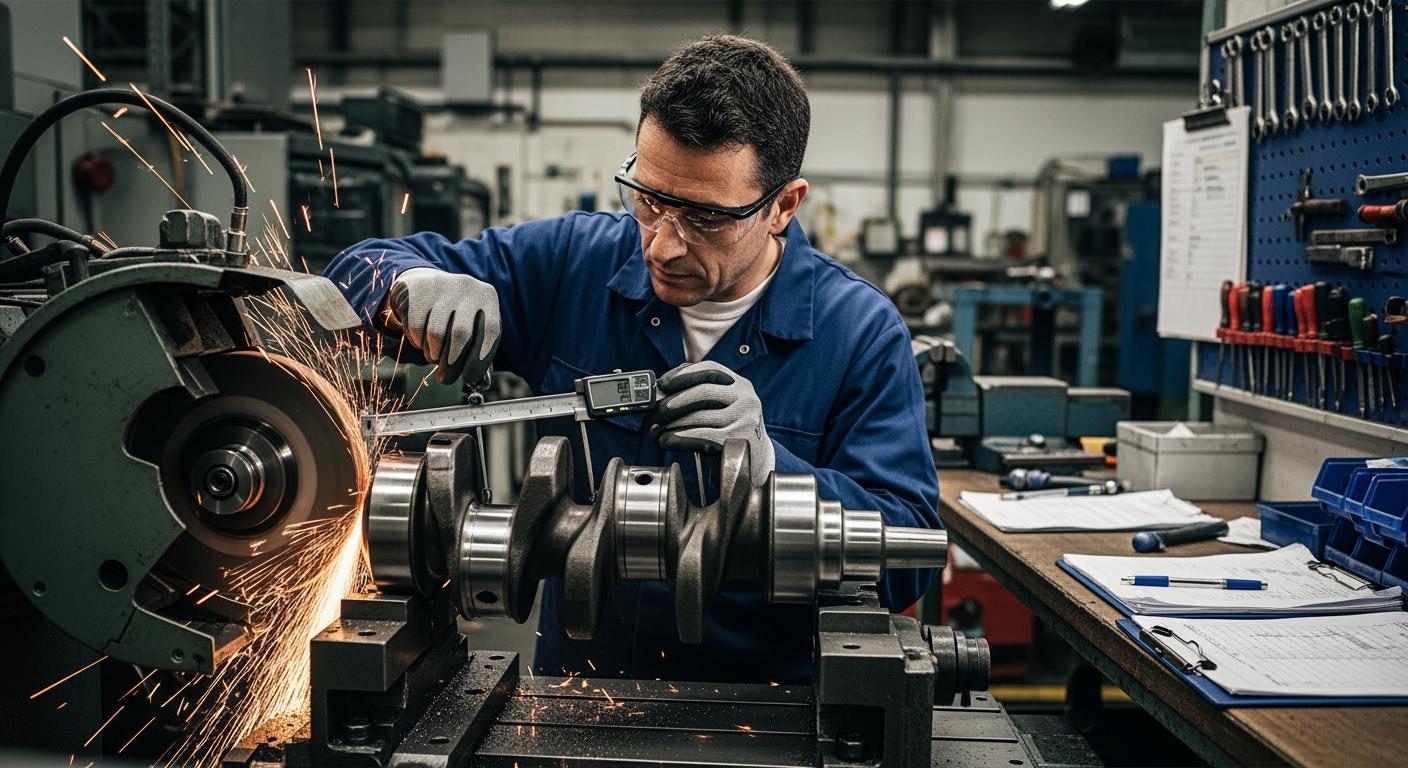
You need to focus on quality and efficiency when grinding crankshafts. Precision matters because it keeps the contour of crankshaft journals intact, which helps engines run reliably and last longer. Small errors in axis position control can cause big performance problems. Grinding restores the crankshaft to its original size, protecting the engine’s stroke and displacement. Using advanced equipment and careful process control improves efficiency. Aimgrind offers specialized grinding solutions that help you reach high levels of quality and efficiency.
Key Takeaways
- Focus on precision during crankshaft grinding to maintain engine performance and longevity.
- Conduct thorough inspections and measurements before grinding to identify defects and ensure readiness.
- Choose the right grinding wheel based on crankshaft material and desired outcomes for optimal results.
- Implement regular maintenance and troubleshooting to prevent downtime and enhance grinding efficiency.
- Utilize advanced techniques and automation to improve quality control and reduce production costs.
Crankshaft Grinding Fundamentals
What Is a Crankshaft?
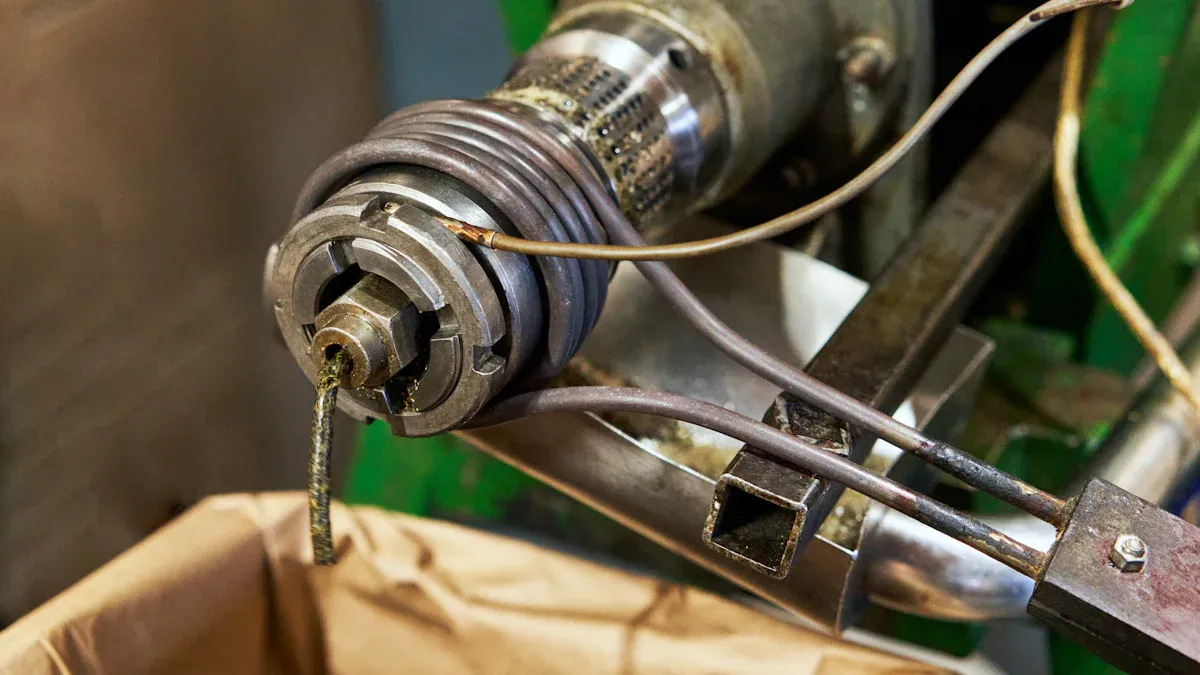
You find the crankshaft at the heart of every engine. This part turns the up-and-down motion of pistons into rotation. The crankshaft connects to the engine block and helps drive the vehicle’s wheels. You see it as a long, heavy metal shaft with several journals and counterweights. Each journal must stay smooth and round for the engine to work well. If you look closely, you notice that the crankshaft needs careful attention during crankshaft grinding to keep its shape and strength.
Why Crankshaft Grinding Matters
Crankshaft grinding keeps the engine running smoothly. When you grind the crankshaft, you restore its surface and remove wear or damage. If you skip proper crankshaft grinding, you risk engine failure. You may see small cracks form from heat during grinding. These cracks can cause journal bearings to wear out quickly. Damaged bearings can weaken the crankshaft and lead to costly repairs. Over-grinding can make the journals too thin, which reduces the minimum diameter and weakens the crankshaft. Misalignment during grinding can also cause problems. You protect the engine’s performance and lifespan by focusing on quality crankshaft grinding.
Tip: Always check the journal thickness and alignment before and after crankshaft grinding. This step helps you avoid weakening the crankshaft and keeps the engine safe.
Common Grinding Challenges
You face several challenges during crankshaft grinding. Uneven wear on the journals is a frequent issue. Cracks may appear in the crankshaft if you use improper grinding techniques. Sometimes, the grinding wheel does not align correctly, which leads to poor results. You must watch for these defects:
- Uneven journal wear
- Cracks in the crankshaft
- Improper grinding wheel alignment
You improve quality and efficiency by identifying and solving these challenges early. Careful inspection and precise grinding help you avoid costly mistakes and keep the crankshaft strong.
Preparation for Quality and Efficiency
You improve crankshaft grinding results when you prepare carefully. Preparation starts with inspection, measurement, machine setup, and choosing the right grinding wheel. Aimgrind helps you diagnose grinding problems and match parameters to your equipment. You get reliable services that support precision and efficiency.
Inspection and Measurement
You need to inspect and measure the crankshaft before grinding. This step helps you find defects and confirm the crankshaft is ready for precision grinding. ISO standards recommend several techniques:
- Dimensional verification checks the size and shape of the crankshaft.
- Crack detection uses non-destructive testing to find internal flaws.
- Runout measurement ensures the crankshaft rotates without wobbling.
- Hardness testing with Rockwell or Brinell methods confirms material properties.
- Bearing clearance verification with Plastigage checks oil film thickness.
- Case depth measurement for nitrided or induction-hardened crankshafts checks the hardened layer thickness.
You use these methods to protect the crankshaft and avoid mistakes. Aimgrind offers services that help you select the right inspection tools and techniques. You get expert advice to ensure precision and quality.
Tip: Always record your measurements and compare them to manufacturer specifications. This practice helps you track changes and maintain precision.
Machine Setup and Wheel Balancing
You set up the grinding machine with care to achieve proper balance and accuracy. Leading manufacturers suggest these best practices:
- Position the tailstock on an unworn section of the table. This step avoids measuring table wear instead of spindle bearing alignment.
- Secure the headstock and tailstock as if you are preparing to grind a crankshaft.
- Insert test bars into each chuck. Grip them with only one jaw tooth for precise alignment.
- Use the machine’s setup indicator to zero the test bars.
- Move the setup indicator along the test bars repeatedly to check alignment.
You also mount the grinding wheel on an offset spindle. Dress it and run it off-center to match the crankshaft throw dimension. Isolate the machine from the floor to allow slight movement and prevent structural damage. Always wear safety glasses and protect personnel in case the crankshaft or wheel fails. Replace the grinding wheel immediately if it explodes. Perform test runs and adjust the crankshaft throw in small increments if the engine shows signs of improper compression. Announce “stand clear” before starting the machine or test engine.
Improper wheel balancing causes vibrations during grinding. These vibrations leave marks on the crankshaft and increase surface roughness. You see defects in roundness and flatness. Aimgrind provides services that help you achieve proper balance and avoid these problems. You get support for machine setup and wheel balancing to ensure precision.
Note: Use simplified human-machine interfaces with graphical aids. This approach makes crankshaft grinding machines easier to operate and reduces setup errors.
Choosing the Right Grinding Wheel
You select the grinding wheel based on the crankshaft material and grinding conditions. Material science literature suggests you consider the physical and mechanical properties of the crankshaft. Proper grinding conditions help you retain favorable compressive residual stresses in the hardened surface layer. This step is crucial for achieving desirable surface quality after induction hardening and fine grinding.
Aimgrind diamond grinding wheels offer precision and durability. You use these wheels for precision grinding of hard alloys, ceramics, and composites. Aimgrind helps you match the wheel type and bond to your crankshaft material and application. You get customized services that optimize grinding performance and efficiency.
Callout: Aimgrind diamond grinding wheels maintain their shape and sharpness. You achieve consistent results and reduce downtime.
You improve crankshaft grinding quality and efficiency when you prepare with careful inspection, accurate machine setup, and the right grinding wheel. Aimgrind supports you with expert services and advanced grinding solutions.
Grinding Methods and Wheel Selection
Main Grinding Techniques
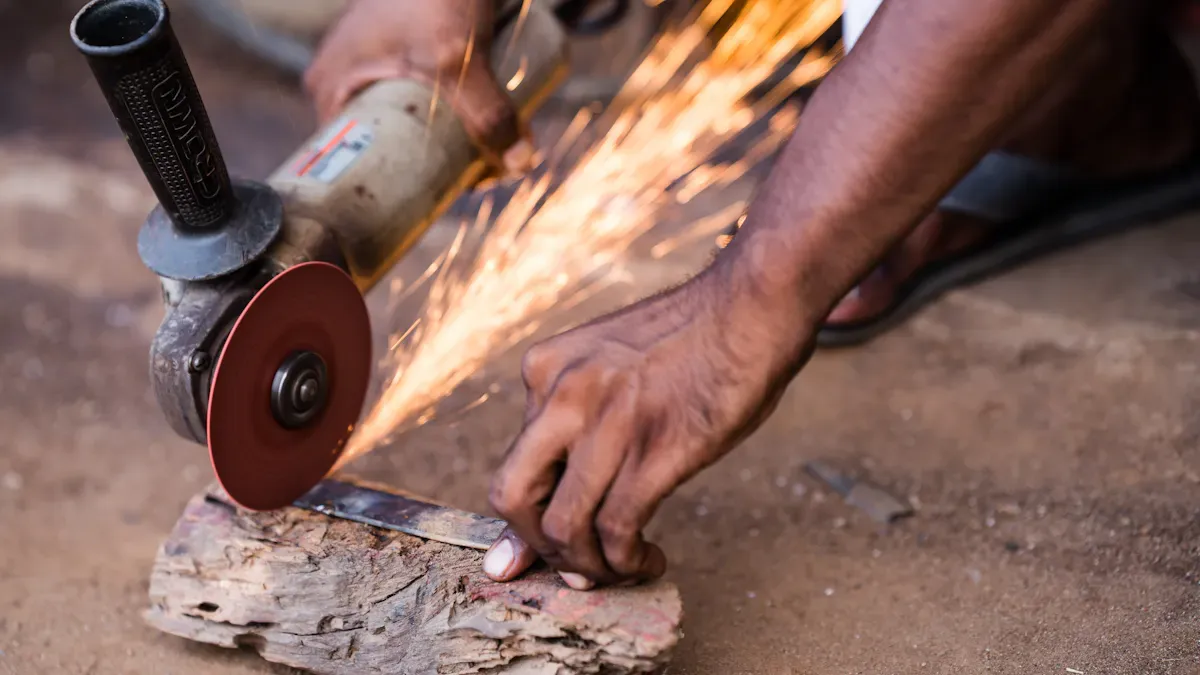
You can choose from several grinding methods for crankshaft grinding. Each method affects quality and efficiency. Plunge grinding moves the wheel straight into the crankshaft journal. This method works well for simple shapes and gives you a consistent finish. Vector grinding follows the shape of the crankshaft, which helps you reach complex contours. Creep feed grinding combines multiple steps into one operation. You remove more material in less time. This method can be up to 40% faster than traditional grinding. You also get a smoother surface finish, which is important for high-performance engines. Surface grinding helps you achieve a smooth surface finish on crankshaft journals. This reduces vibration and improves power transfer. Racing teams use advanced grinding techniques to boost engine torque and horsepower.
- Continuous dress creep feed grinding increases efficiency.
- High material removal rate is important for harder crankshaft materials.
- Surface grinding improves engine performance and reduces vibration.
- Creep feed grinding reduces cycle time and improves finish quality.
Selecting Diamond Grinding Wheels
You need to select the right grinding wheel for crankshaft grinding. Aimgrind diamond grinding wheels offer many advantages. These wheels last much longer than traditional wheels. You change wheels less often, which saves time and lowers costs. Diamond wheels use less raw material and reduce pollution during dressing. You also get a better finish and longer crankshaft life. Aimgrind diamond grinding wheels help you achieve sustainable production and improve efficiency. You can rely on professional crankshaft grinding services to match the right wheel to your needs.
- Longer lifespan than ordinary wheels
- Lower raw material consumption
- Less frequent dressing and reduced pollution
- Shorter production cycles and lower costs
- Improved workpiece life and finish
Optimizing Wheel Performance
You must match the wheel type and bond to the crankshaft material and grinding goals. The table below shows key factors to consider:
| Consideration Category | Key Question(s) to Ask | General Implication for Bond Choice |
|---|---|---|
| Workpiece Material | What is the material? Hardness? Toughness? Thermal sensitivity? | Hard/Brittle: Vitrified, Metal. Soft/Ductile: Resinoid, Rubber. Heat Sensitive: Porous Vitrified, Rubber. |
| Grinding Objective(s) | High stock removal? Fine surface finish? Tight accuracy? | High Stock Removal: Resinoid, Vitrified. Fine Surface Finish: Rubber, Shellac. Tight Tolerance: Vitrified, Metal. |
| Machine & Conditions | Machine power? Rigidity? Spindle speed? Coolant? | High Speed: Resinoid. Low Power: Softer bonds. Precision: Vitrified. Dry Grinding: Cool cut bonds. |
| Abrasive Type | Conventional or superabrasives? | Conventional: Vitrified, Resinoid. Superabrasives: Metal, Vitrified. |
| Economic Factors | Wheel life vs. cost? | Long life: Metal. Cost-effective: Vitrified, Resinoid. |
You also need to set the right process parameters. Wheel and workpiece velocity, depth of grinding, dressing variables, and feed rates all affect surface finish and efficiency. Regular dressing keeps the wheel sharp and maintains its shape. You get consistent results and longer wheel life. Aimgrind uses advanced technology to help you optimize these factors. You can trust professional crankshaft grinding services for expert support.
Tip: Always monitor wheel performance and adjust parameters for the best results in crankshaft grinding.
Process Control for Consistent Results
Setting Grinding Parameters
You control the grinding process by setting the right parameters. These settings help you achieve consistent crankshaft grinding results and improve engine performance. You must choose the correct abrasive for the crankshaft material. Industry standards recommend different abrasives for different materials. The table below shows the best choices:
| Crankshaft Material | Recommended Abrasive | Key Reason | Ideal Scenario |
|---|---|---|---|
| Hardened Forged Steel (>55 HRC) | CBN (Cubic Boron Nitride) | Unmatched hardness and thermal stability | High-volume automotive OEM, performance engine manufacturing |
| Chilled or Ductile Cast Iron | Ceramic Alumina | Excellent cutting action and surface finish at lower cost | Aftermarket parts, engine rebuilding, lower-volume production |
You adjust feed rate and wheel speed to control dimensional accuracy. Work speed affects the Barkhausen Noise Analysis value in crankshaft grinding. Wheel speed reduces surface roughness. Spark-out time minimizes form error and improves accuracy. Lower work speeds with higher depths of cut can cause thermal damage and reduce crankshaft performance. You must balance these factors to protect the crankshaft and ensure high-performance results.
Tip: Start with manufacturer-recommended settings. Make small adjustments and monitor the results. This approach helps you optimize the grinding process for enhanced performance.
In-Process Inspection
You monitor the crankshaft grinding process with in-process inspection tools. These tools help you catch defects early and maintain engine efficiency. You use several technologies to check quality:
- Magnetic Particle Inspection (Magnaflux) detects surface and subsurface defects before machining.
- Precision measurement tools like micrometers and dial indicators analyze journal dimensions.
- Hardness verification with Rockwell testing confirms surface hardness after grinding.
- Automated quality inspection systems provide real-time monitoring.
- Automated coordinate measuring machines (CMMs) verify dimensions and support process control.
You benefit from real-time measurement during crankshaft grinding. This practice lets you detect tool wear immediately. You replace or adjust tools before defects occur. Tool wear can cause downtime and increase scrap rates. Vibration sensors help you spot tool wear early and prevent defective parts. Automated CMM verification systems measure part dimensions and provide real-time inspection results. These systems help you maintain consistent quality and crankshaft performance.
Note: The IATF 16949 compliant crankshaft automated production line uses high-precision CNC machine tools and online measurement. You get multi-parameter inspection and real-time quality monitoring. This setup ensures the grinding process meets strict standards and supports overall performance goals.
Maintenance and Troubleshooting
You keep the grinding process efficient with regular maintenance and troubleshooting. Maintenance routines prevent machine downtime and protect engine performance. You follow these steps:
- Stick to oil change intervals and use the specified oil grade. This practice prevents abrasive sludge from damaging the crankshaft.
- Monitor oil pressure readings to catch early signs of bearing wear.
- Address coolant leaks quickly to avoid acidic sludge formation.
- Avoid prolonged operation at or above maximum load ratings. This step prevents excessive heat and metal fatigue.
- Inspect the crankshaft during any engine teardown to catch wear early.
- Keep filtration systems in top condition to prevent debris from damaging crankshaft bearings.
Clean coolant extends fluid, tool, and wheel life. It provides consistent processes and helps you meet tight tolerance manufacturing. You see fewer part rejections and better form and finish. Coolant maintenance reduces machine maintenance and decreases cycle times and downtime. Coolant lubricates abrasive grains and flushes away metal chips. This action prevents wheel loading and preserves the wheel’s cutting structure.
You troubleshoot surface finish issues by checking the chucks. Make sure you have double groove chucks and check for runout. Remove chucks to inspect the faceplate flange and jaws for proper centering. Attach an indicator to the grinding wheel and check for wear on the table by moving it back and forth. Focus on the front edge for accurate results.
Callout: Aimgrind supports continuous improvement and operator training. You learn best practices for crankshaft grinding and process optimization. Aimgrind helps you achieve overall performance and engine efficiency with expert guidance.
You improve crankshaft performance and engine efficiency by controlling the grinding process, inspecting during grinding, and maintaining your equipment. Regular crankshaft grinding and process optimization lead to high-performance results and enhanced performance for your engine.
You achieve quality and efficiency in crankshaft grinding by following industry best practices. The table below shows key steps:
| Best Practice | Description |
|---|---|
| Advanced Machining Techniques | Use precision grinding methods to improve results. |
| Automation | Apply automated systems to save time and boost quality. |
| Quality Control Systems | Use sensors and AI to detect defects and keep accuracy high. |
| Specialized Tooling | Choose custom tools for better precision and faster setup. |
You benefit from ongoing operator training and new technology. Regular training improves efficiency and keeps standards high. New alloys, coatings, and nanotechnology help crankshafts last longer and perform better.
Checklist:
- Inspect and measure crankshafts
- Set up machines and balance wheels
- Select Aimgrind diamond grinding wheels
- Monitor grinding parameters
- Maintain equipment and train operators
You keep your process strong by focusing on control and care every day.
FAQ
What materials can you grind with Aimgrind diamond grinding wheels?
You can grind hard alloys, ceramics, and composites. These wheels work well for crankshafts made from tough metals. You get precise results and a smooth finish.
How do you choose the right grinding wheel for your crankshaft?
You check the crankshaft material and grinding goals. Aimgrind helps you match the wheel type and bond. You get expert advice for the best performance.
Why does wheel balancing matter in crankshaft grinding?
You prevent vibration and surface defects by balancing the wheel. Proper balance keeps the crankshaft journals round and smooth. You improve grinding quality and efficiency.
How often should you inspect your crankshaft during grinding?
You inspect before, during, and after grinding. Frequent checks help you catch defects early. You protect the crankshaft and keep your engine running strong.