

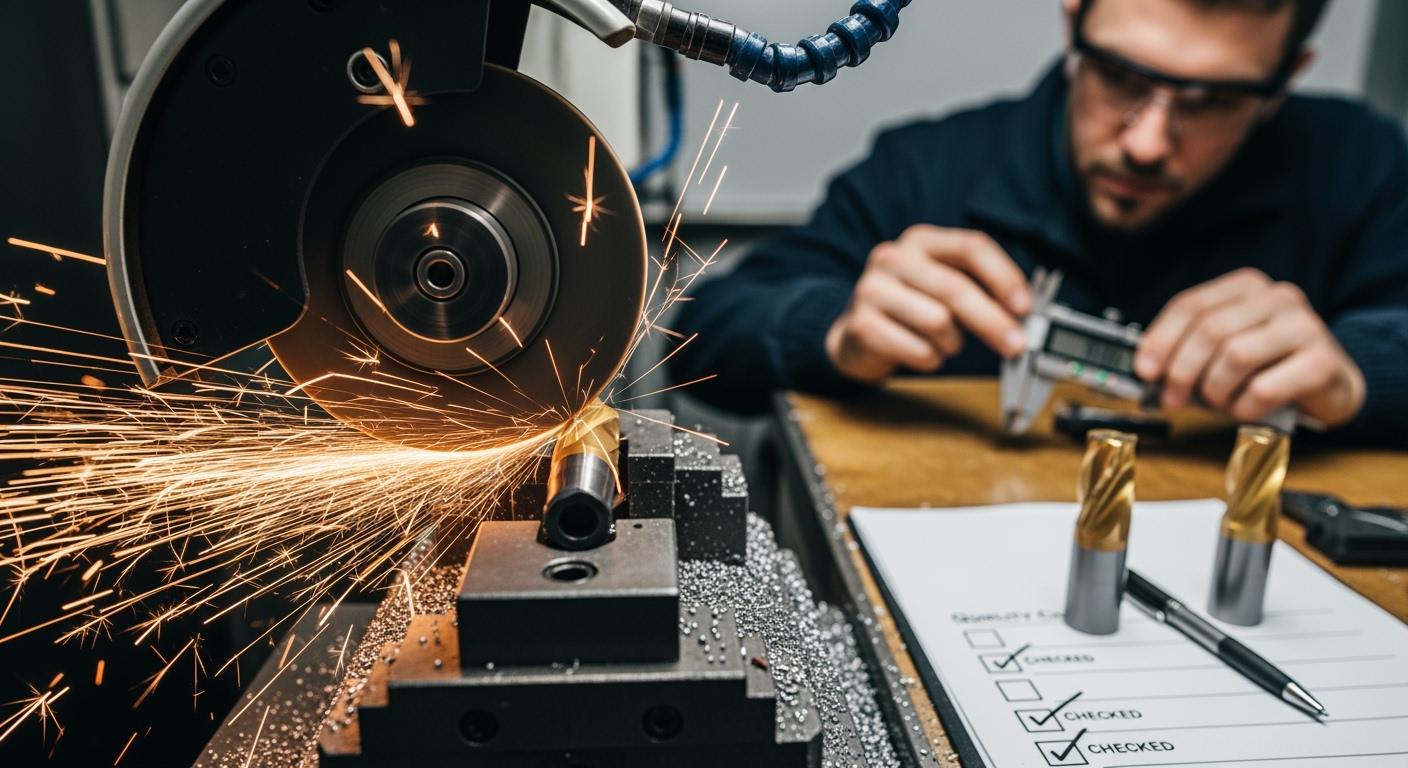
You need high precision when you work with carbide cutting tools. Precision grinding helps you achieve high precision in your daily operations. This process improves tool performance by shaping materials with exact detail and accuracy. You can trust advanced grinding wheels, such as CBN grinding wheels from Aimgrind, to deliver superior results. These wheels give you dramatically longer wheel life and reduce the need for frequent dressing. They also help you create high precision parts with sub-micron tolerances and excellent surface finishes.
| Benefit | Description |
|---|---|
| Dramatically Longer Wheel Life | CBN wheels can last 50 to 200 times longer than conventional wheels, enhancing tool longevity. |
| Reduced Dressing Frequency | Less frequent dressing leads to more production time and less downtime for maintenance. |
| Higher Quality Parts | CBN wheels enable the production of components with sub-micron tolerances and superior surface finishes. |
You can rely on effective Quality Control Methods to maintain precision and consistency throughout your grinding process.
Key Takeaways
- Precision grinding enhances tool performance by achieving high accuracy and excellent surface finishes.
- CBN grinding wheels significantly extend wheel life and reduce maintenance, leading to increased productivity.
- Implementing in-process monitoring helps detect defects early, minimizing waste and improving accuracy.
- Post-process inspection ensures tools meet exact specifications, enhancing reliability and customer satisfaction.
- Integrating grinding and quality control creates a seamless workflow, reducing errors and optimizing production efficiency.
Precision Grinding Techniques
Surface Grinding
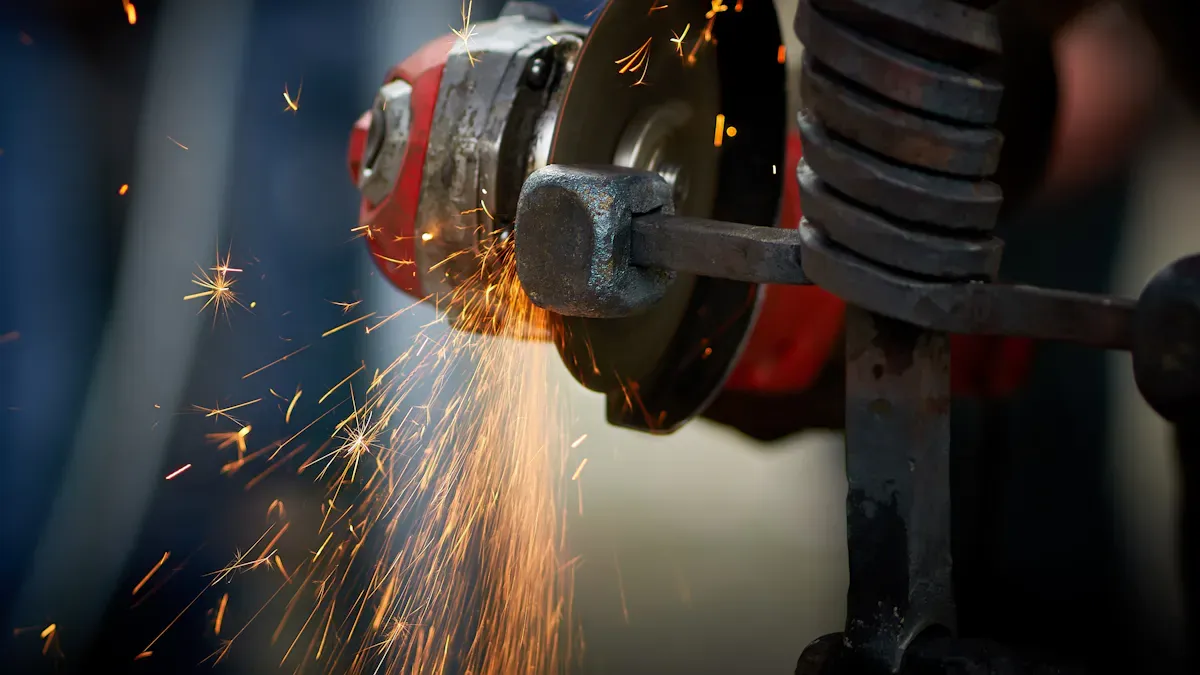
You use surface grinding to create flat, smooth surfaces on carbide cutting tools. This technique removes material and improves the surface finish. You can choose from several methods, each with unique benefits:
| Technique Type | Description | Effectiveness Evidence |
|---|---|---|
| Mechanical | Grinding, honing, and lapping to remove material and improve surface quality | Reduces surface roughness and boosts tool performance. |
| Chemical | Etching, pickling, and passivation to eliminate impurities | Improves surface quality and integrity. |
| Electrochemical | Electro-polishing and electrochemical grinding for precision surfaces | Creates refined, uniform surface textures, increasing tool longevity and performance. |
| Laser Treatment | Ultrafast laser-induced processes for surface property tailoring | Raises surface roughness and hardness, improving tool performance. |
You can see that coolant selection, machine rigidity, and grinding wheel characteristics all affect the surface finish and dimensional accuracy. For example, water-based coolants remove heat, while oil-based coolants improve lubrication. Feed rate has the biggest impact on surface roughness, and spindle speed affects accuracy.
Cylindrical & Centerless Grinding
Cylindrical grinding helps you achieve tight tolerances and smooth finishes on round carbide cutting tools. You use this method for high-speed, efficient material removal. Centerless grinding lets you produce many parts quickly because you do not need to hold each workpiece. This method is perfect for high-volume production and keeps part dimensions consistent.
| Specification | Tolerance |
|---|---|
| ID / OD Grinding | ± 0.00007″ (±0.002mm) |
| Roughness | Ra 0.08mm |
| Roundness | ±0.0002″ (±0.005mm) |
| Cylindricity | ±0.0002″ (±0.005mm) |
You can rely on these techniques to deliver the precision and surface finish needed for carbide cutting tools.
CNC Tool Grinding
CNC tool grinding gives you absolute repeatability and high precision. You can create complex shapes and maintain tight tolerances. Automated wheel dressing keeps your grinding wheels in top condition. CNC grinding also speeds up large production runs and ensures every carbide cutting tool matches your specifications. Automated processes and precise control over machining parameters help you achieve uniformity and high-quality surface finishes.
Role of CBN Grinding Wheels
CBN grinding wheels from Aimgrind give you a major advantage in precision grinding. These wheels deliver exceptional surface quality, reduce grinding force, and keep temperatures low. You get faster material removal and shorter grinding cycles, which means higher machine throughput and reduced lead times. Aimgrind customizes CBN grinding wheels for your specific carbide cutting tool applications, matching the wheel to your equipment and process. This approach ensures you achieve the best possible precision, surface finish, and tool performance.
Quality Control Methods
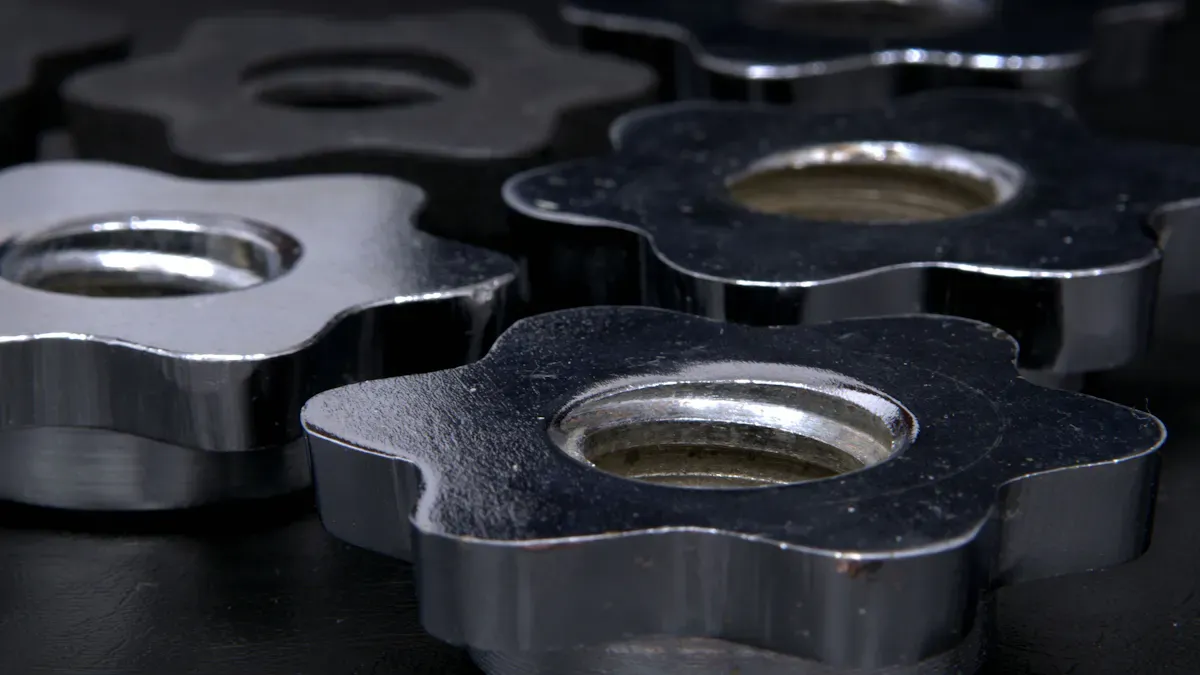
You need strong quality control methods to produce carbide cutting tools that meet exact specifications. These methods help you catch problems early and keep your grinding process on track. You can use several strategies to ensure accuracy and reliability at every stage.
In-Process Monitoring
You can monitor your grinding process in real time to spot defects before they become serious. In-process monitoring uses sensors and data analysis to check for changes during grinding. For example, you can measure cutting forces and look for sudden jumps in amplitude. These jumps often signal microcracks or other defects.
Here is how statistical indicators change when you use in-process monitoring:
| Indicator Type | Value Change (%) | Description |
|---|---|---|
| RS Indicator | +100% | Increased value indicating defect presence. |
| Standard Deviation (SD) | +80% | Reflects signal spikes, indicating defects. |
| Coefficient of Variation (CV) | +40% | Shows stability in values before and after defects. |
You can use these indicators to detect problems quickly. This approach reduces waste and improves the accuracy of your grinding. You also benefit from new technology, such as predictive models and digital twins. These tools help you forecast tool performance and plan for maintenance. Some systems even use artificial intelligence to adjust grinding parameters automatically. This keeps your process stable and your tools in top condition.
- You can optimize machining parameters like cutting speed and feed rate to balance productivity and tool life.
- You can use digital twins to predict when a tool will wear out.
- AI-powered systems can adjust grinding settings based on material properties.
Post-Process Inspection
After grinding, you need to check each tool to make sure it meets your standards. Post-process inspection uses advanced measuring machines, such as Zoller, to verify tool geometry and surface finish. These machines give you automated inspection, which reduces human error and increases consistency.
| Feature/Benefit | Description |
|---|---|
| Automated Inspection | Zoller systems enable automated inspection, reducing human error and increasing consistency. |
| Documented Measurement Workflows | The systems provide documented workflows that enhance traceability and reliability of measurements. |
| Verification of Tool Geometry | Stronger verification of critical geometry, such as rake angle and concentricity, ensures precision. |
| Improved Tool Life | Enhanced inspection leads to longer tool life and more stable performance during production. |
| Consistency Across Reorders | More consistent performance across reorders reduces variability and improves customer trust. |
You can rely on these machines to measure every detail with high accuracy. This step ensures that your tools match exact specifications. You also improve tool life and reduce the chance of defects reaching your customers. Aimgrind uses these advanced systems to guarantee that every grinding job meets strict quality control methods.
Standards & Certifications
You need to follow international standards to show your commitment to quality control methods. The best manufacturers use a quality management system that meets ISO 9001:2015 standards. This certification proves that your grinding and inspection processes meet global requirements. It also helps you deliver reliable products every time.
You can also use Six Sigma DMAIC methodology to find and fix the root causes of defects. This approach helps you control process variations and minimize rejections. When you train your team and follow these standards, you build a culture of improvement. Your customers notice the difference in product quality and consistency.
Tip: Continuous training and strict quality control methods reduce defects and boost customer satisfaction.
You can see that quality control methods impact every part of your grinding process. They help you reduce waste, improve accuracy, and deliver tools that meet exact specifications. Aimgrind follows these methods to ensure consistency and reliability in every order.
Grinding & Quality Control Integration
Workflow Overview
You can achieve the best results in carbide cutting by integrating grinding and quality control into one seamless workflow. This approach helps you keep every step connected, from the first grinding pass to the final inspection. You start by selecting the right grinding wheel for your carbide tools. Aimgrind offers CBN grinding wheels that match your specific cutting tool application. These wheels help you remove material efficiently and keep your grinding process stable.
During grinding, you use real-time sensors to monitor the process. These sensors detect any changes in the surface or geometry of your carbide cutting tools. If a problem appears, you can adjust the grinding parameters right away. This reduces errors and keeps your tools within tight tolerances. Automation in centerless grinding also helps you maintain consistent quality and reduces human error.
After grinding, you move to quality control. Advanced measuring machines check every detail of your carbide cutting tools. Automated data collection and analysis help you spot trends and make improvements. You can use statistical process control to track performance and reduce defects. This workflow saves you time and lowers production costs.
- Integration of grinding and quality control leads to:
- Consistent precision in carbide cutting tools
- Fewer production errors
- Better use of equipment and resources
Best Practices with Aimgrind Solutions
You can follow several best practices to get the most from Aimgrind’s grinding wheels and quality control methods. First, always choose the right CBN grinding wheel for your carbide cutting needs. The correct wheel improves productivity and extends the life of your grinding machine. Next, use integrated measurement tools during CNC grinding. These tools give you real-time feedback on surface quality and help you adjust settings automatically.
Tip: Custom tools designed for multiple cutting operations reduce setup time and boost efficiency.
You should also streamline your production process. Standardized approaches in custom carbide tooling make it easier to manage production and reduce variation. Automation and predictive maintenance minimize downtime and keep your grinding line running smoothly.
| Best Practice | Description |
|---|---|
| Select the Right Grinding Wheel | Choose CBN wheels that fit your carbide cutting tool application. |
| Optimize Production Processes | Streamline grinding and inspection for better quality and lower costs. |
| Use Real-Time Monitoring | Apply sensors and analytics to catch defects early and adjust quickly. |
You can see that Aimgrind’s integrated approach supports high-quality carbide cutting tools. This method improves tool performance, reduces costs, and helps you deliver reliable results every time.
You can achieve quality carbide cutting tools by combining precision grinding with strong quality control methods. Advanced grinding techniques help you keep your tools sharp and balanced, which extends their service life. Quality control stops defects before they cause tool failure. When you use Aimgrind’s CBN grinding wheels, you support the accuracy and durability of every carbide cutting tool. Future trends will bring more automation and AI, making your process even more reliable. Choose innovative solutions to stay ahead in producing quality carbide cutting tools.
FAQ
What are CBN grinding wheels used for?
You use CBN grinding wheels to grind hard materials like carbide, hardened steel, and superalloys. These wheels help you achieve high precision and smooth finishes in tool manufacturing and other industries.
How do you check the quality of carbide cutting tools?
You check quality using advanced measuring machines, such as Zoller. These machines measure tool geometry, surface finish, and size. You can also use in-process monitoring to catch defects early.
Why should you choose Aimgrind’s CBN grinding wheels?
You get longer wheel life, faster cutting, and cooler operation with Aimgrind’s CBN grinding wheels. Aimgrind customizes each wheel for your needs, which helps you achieve better results and higher productivity.
How does in-process monitoring help you?
You use in-process monitoring to watch the grinding process in real time. Sensors alert you to problems, so you can fix them quickly. This reduces waste and keeps your tools accurate.