

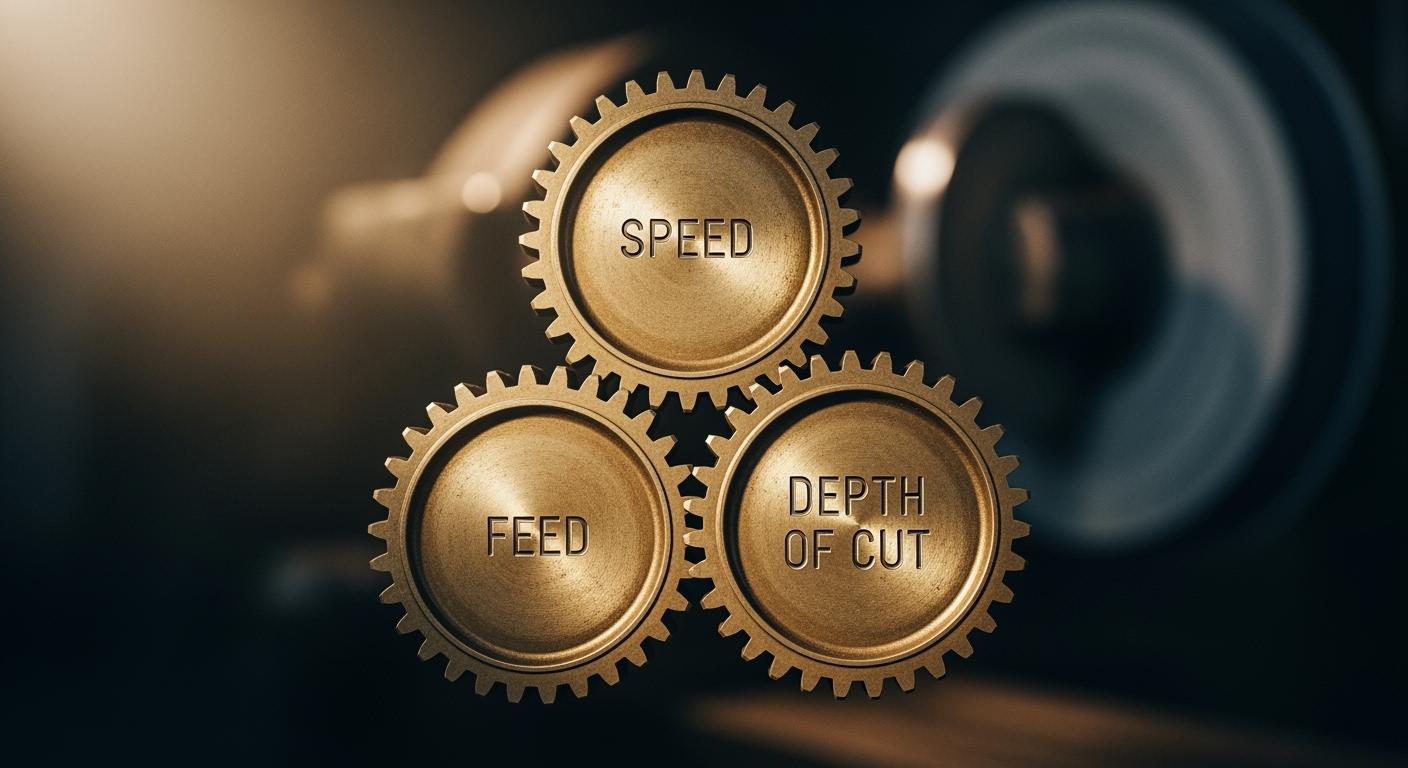
You boost grinding results when you master the grinding triad: speed, feed, and depth of cut. Industries like aerospace and tool manufacturing rely on precise control of speed to achieve high efficiency and surface quality. Studies show that adjusting speed can lower resultant force and improve surface finish, while feed and depth of cut play key roles in material removal. Aimgrind’s expertise in custom super hard abrasives ensures you match the right abrasive, grit size, and wheel structure to your process. How can you maximize performance and surface quality by balancing speed, feed, and depth of cut?
Key Takeaways
- Master the grinding triad: speed, feed, and depth of cut to enhance grinding performance and surface quality.
- Adjust speed carefully; higher speeds can improve surface finish but may also cause roughness and tool wear.
- Use lower feed rates for finishing cuts to achieve smoother surfaces, while higher rates can boost productivity during roughing.
- Select the right grinding wheel based on material type and cutting needs to prevent damage and ensure efficiency.
- Regularly monitor and adjust grinding parameters to maintain quality and prevent issues like chatter and burn.
Understanding the Grinding Triad
Speed, Feed, and Depth of Cut Basics
You need to understand the grinding triad to achieve the best results in precision grinding. The grinding triad includes speed, feed, and depth of cut. Each parameter plays a unique role in the grinding process.
Here is a table that shows the definitions and units for each parameter:
| Parameter | Definition | Units |
|---|---|---|
| Cutting Speed | The speed difference between the cutting tool and the workpiece surface. | sfm (surface feet per minute) or m/min (meters per minute) |
| Feed Rate | The relative velocity at which the cutter is advanced along the workpiece. | in/rev (inches per revolution), mm/rev (millimeters per revolution), in/min, mm/min |
| Depth of Cut | The thickness of material removed in one pass of the cutting tool. | Inches or millimeters |
You measure speed as the rate at which the grinding wheel moves against the workpiece. Feed is the distance the tool travels during each revolution or per minute. Depth of cut is the amount of material removed in one pass. These three parameters form the foundation of the grinding triad.
Individual Impact on Precision Grinding
Each part of the grinding triad affects your results in a different way. When you increase speed, you may expect a smoother finish. However, higher speeds can sometimes cause more surface roughness and imperfections. For example, at speeds of 30 meters per second, you may see more chipping and roughness on the workpiece. The size of the abrasive grain also matters. Smaller diamond grains, like those in Aimgrind’s super hard abrasives, can help you achieve a finer surface finish.
Feed rate controls how quickly you move the grinding wheel across the workpiece. A higher feed rate can boost productivity, but it may reduce surface quality. If you want a smooth finish, you should use a lower feed rate. Depth of cut decides how much material you remove in one pass. A larger depth can speed up the process, but it may also increase tool wear and affect precision.
You can see the typical speed ranges for different grinding types in the chart below:
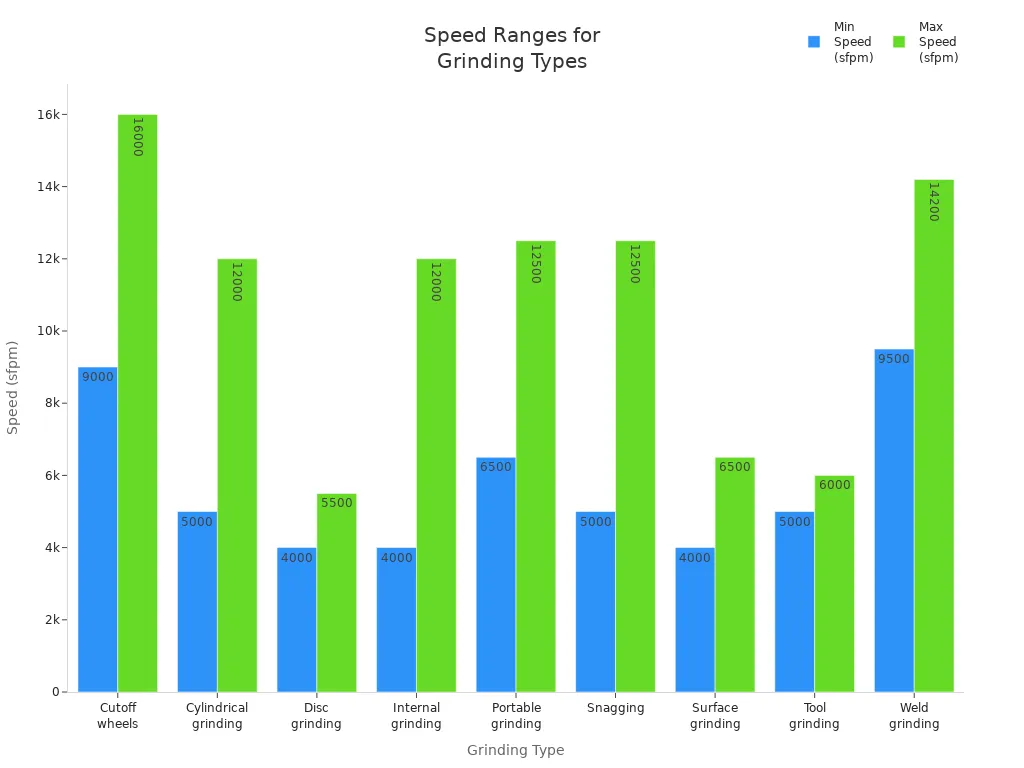
When you use Aimgrind’s super hard abrasives, you get tools that maintain sharpness and deliver consistent results. These abrasives help you balance the grinding triad for high precision and excellent surface quality.
Synergy in CNC Grinding Operations
Parameter Interaction in CNC Systems
You work with cnc every day. You see how speed, feed, and depth of cut interact in cnc machines. These parameters shape the grinding process. You adjust speed to match the material and the grinding wheel. You set feed to control how fast the wheel moves across the workpiece. You choose depth of cut to decide how much material you remove in one pass. In cnc, you must balance these factors.
- Depth of cut interacts with speed and feed rate. You keep stability in cnc by managing these parameters.
- Lower speed lets you make deeper cuts without too much heat. Higher speed produces thinner chips but can create more heat if the cut is deep.
- Deeper cuts need lower speed or feed to control heat and stress. Shallower cuts allow faster speed and higher feed rates.
- Increased depth of cut raises cutting forces. You may see vibrations or chatter in cnc machines. This affects surface finish and strains machine parts.
You use real-time monitoring in cnc. The system checks grinding parameters. It adapts to changes in material hardness, wheel wear, or machine vibrations. You get consistent quality and fewer scrap parts.
Achieving Consistent Results with Aimgrind Solutions
You follow best practices in cnc. You select the right grinding wheel for the material, grit size, and bonding agent. You maintain grinding wheels by dressing and resharpening. You use coolant to manage heat and improve surface finish.
- You choose a mill bit diameter that fits the material and cut type.
- You adjust the number of cutting edges for the feed rate and finish quality.
- You select the shape of cutting edges for the complexity of the cut and surface finish.
Aimgrind super hard abrasives help you achieve precision in cnc. You get tools that stay sharp and last longer. You see stable performance in cnc machines. You rely on Aimgrind for consistent results and efficient grinding.
Optimizing for Performance and Damage Prevention
Balancing the Grinding Triad for Minimal Damage
You want to prevent damage and achieve high performance in grinding. You must balance speed, feed, and depth of cut. You start by choosing the right grinding wheel. Aimgrind super hard abrasives help you avoid damage and boost efficiency. You select the wheel based on the material and the type of cut you need.
You follow these steps to adjust parameters and prevent damage:
- You set the cutting speed. You match the speed to the hardness of the workpiece and the tool material. You know that reducing cutting speed by 50% in shaping with high-speed steel can increase tool life by three to five times. You increase cutting speed for lower strength materials to improve efficiency and performance.
- You choose the feed rate. You use a lower feed rate for finishing cuts. You use a higher feed rate for roughing cuts. You avoid damage by not pushing the feed rate too high.
- You set the depth of cut. You use different depths for roughing, semi-finishing, and finishing. You check the table below for recommended ranges:
| Pass Type | Depth of Cut | Purpose |
|---|---|---|
| Roughing | 0.5-2mm | Rapid stock removal |
| Semi-finishing | 0.2-0.5mm | Approaching final dimensions |
| Finishing | 0.05-0.15mm | Achieving target quality grades |
You avoid common pitfalls by following these tips:
- You do not use excessive depth of cut. This causes damage and reduces performance.
- You do not use too high a feed rate. This lowers surface quality and increases damage.
- You do not use too high a speed for hard materials. This causes damage and reduces tool life.
- You do not use too low a speed for soft materials. This lowers efficiency and performance.
You use Aimgrind’s expertise to match the grinding wheel to your process. You get help with parameter selection and sample optimization. You achieve high efficiency and prevent damage.
Tip: You always check the grinding wheel for wear. You dress the wheel regularly. You use coolant to control heat and prevent damage.
Monitoring and Adjusting for Optimal Results
You monitor grinding parameters to maintain performance and prevent damage. You use advanced methods to check the process in real time.
- You use the Barkhausen Noise Method. This method detects residual stresses and microstructure changes. You spot damage early and keep quality high.
- You use probing and sensing technologies. These systems measure the workpiece during grinding. You stop the wheel when you reach the right diameter. You avoid damage and improve efficiency.
- You use force monitoring systems. These systems track grinding forces. You see tool wear and excessive heat. You adjust parameters to prevent damage and boost performance.
- You use statistical process control. You collect data and analyze it in real time. You make proactive adjustments to keep efficiency and performance high.
- You use in-process measurement control. You integrate real-time measurement systems. You maintain precision and prevent damage.
You adjust parameters based on feedback. You lower speed if you see signs of damage. You reduce feed rate if surface quality drops. You decrease depth of cut if you see excessive tool wear. You rely on Aimgrind’s support to optimize your process.
Note: You keep records of each grinding session. You track changes in speed, feed, and depth of cut. You use this data to improve future performance and prevent damage.
You achieve high efficiency and performance by balancing the grinding triad. You prevent damage by monitoring and adjusting parameters. You use Aimgrind super hard abrasives for consistent results and minimal damage. You follow best practices to optimize your grinding process.
Precision Case Studies with Super Hard Abrasives
Real-World Success in Aerospace and Tooling
You see how precision shapes every step in aerospace and tooling. In aerospace, you need parts that fit perfectly. Even a small mistake can cause big problems. You use Aimgrind super hard abrasives to keep every part within tight limits. You grind turbine blades for jet engines. You make sure each blade has the right shape and smooth surface. You use these abrasives to keep the process stable and fast. You finish more parts in less time. You keep the quality high.
In tooling, you want sharp edges and exact shapes. You use Aimgrind wheels to grind cutting tools. You get the right edge every time. You keep the tools sharp for longer. You reduce the time you spend changing tools. You keep your production line moving. You see how precision helps you make better tools. You use these tools to make more products. You keep your customers happy.
You can look at the table below to see how Aimgrind’s customized abrasive solutions help different industries:
| Product Type | Key Features | Applications |
|---|---|---|
| Worm Grinding Wheels | Precision-formed abrasive profiles Excellent form retention & stability Minimal vibration for smooth operation Superior surface finish & tight tolerances Available in Aluminum Oxide & CBN options | Automotive Aerospace Industrial machinery |
| SG Grinding Wheel | Extremely durable & wear-resistant High removal rate with precise control Excellent self-sharpening performance Low heat generation – reduced burn risk | Gear & worm gear grinding Tool & cutter grinding Hardened & unhardened steels |
| CBN Serration Grinding Wheels | Long service life with high-grade body materials Excellent serration shaping Superior sharpness and tool shape retention High stability and consistent performance | Knife blades Surgical instruments Household scissors |
Lessons Learned from Aimgrind Applications
You learn that precision is not just about the tools. You need the right solution for your job. You see that every industry has its own needs. In aerospace, you need high precision for safety. In manufacturing, you want fast production and low waste. In tooling, you want sharp edges and long tool life. You use Aimgrind’s custom wheels to match your needs. You talk to experts who help you pick the right wheel. You test samples and see what works best.
You find that using the right abrasive saves you time. You make fewer mistakes. You keep your machines running longer. You see less downtime in your production. You notice that your products look better. You meet your production goals faster. You see how precision and efficiency go together. You trust Aimgrind to help you reach your goals in every step of manufacturing and production.
Troubleshooting Common Grinding Issues
Addressing Chatter, Burn, and Surface Damage
You face many challenges when you balance speed, feed, and depth of cut on conventional machines. Chatter, burn, and surface damage can lower quality and reduce consistency. You see vibration when the feed speed is too fast. You notice excessive heat when you grind hard materials. You find wheel loading when you work with softer materials. You want to keep production efficiency high and avoid downtime.
Here is a table that shows common issues and solutions:
| Issue | Description | Solution |
|---|---|---|
| Chatter | Vibration ruins surface finish and accuracy | Balance spindle and workpiece; use Aimgrind high-quality wheels |
| Burn | Excessive heat causes cracks and surface burns | Use vitrified bonded wheels; ensure proper coolant delivery |
| Wheel Loading | Wheel pores clog with swarf | Choose open structure wheels; apply effective dressing |
| Surface Damage | Poor finish from parameter imbalance | Adjust speed, feed, and depth of cut; use Aimgrind support |
You improve quality by using optimized wheel composition and dynamic balancing. You prevent burns with vitrified wheel bonds and uniform heat dissipation. You use real-time vibration sensors to adjust speed. You control infeed rates to stop glazing and material smearing. You rely on Aimgrind’s technology for flexibility and consistency.
Tip: You always check the grinding wheel for wear. You dress the wheel often. You use coolant to manage heat and protect quality.
Fine-Tuning for Consistent Precision
You want consistent results on conventional machines. You fine-tune grinding parameters to boost quality and production efficiency. You monitor vibration and heat. You adjust speed if you see chatter. You lower feed rate if you notice surface damage. You reduce depth of cut if you see tool wear.
You use Aimgrind’s technology to match the wheel to your material. You get support for parameter selection and sample optimization. You keep flexibility in your process. You use real-time sensors to track changes. You make quick adjustments for consistency.
You check material feed size and moisture content. You inspect grinding media and liners for wear. You balance loading ratios and circulation loads. You keep quality high and production efficiency steady. You trust Aimgrind’s technology to help you solve problems and maintain flexibility.
Note: You record each grinding session. You track changes in speed, feed, and depth of cut. You use this data to improve quality and consistency.
You achieve consistent precision by troubleshooting issues and fine-tuning parameters. You rely on Aimgrind’s technology and support for flexibility and quality on conventional machines.
You gain a real advantage when you balance speed, feed, and depth of cut with Aimgrind’s super hard abrasives. You see competitive results in every grinding session. You use adaptability to adjust parameters and maintain precision and consistency. You build a competitive advantage by choosing the right wheel and monitoring your process. You check for burn, vibration, and wear. The table below shows why ongoing monitoring and adjustment matter:
| Description | Importance |
|---|---|
| In-process detection of grinding burn using machine learning | Ensures surface quality and component life |
| Acoustic emission signals for condition monitoring | Gives real-time feedback for quick changes |
| Studies on chatter, spindle damage, and wheel wear monitoring | Show the need for constant adjustment |
You use adaptability to respond to changes and keep your process competitive. You trust Aimgrind for every advantage in grinding. You stay ahead with Aimgrind’s expertise and support.
FAQ
What makes Aimgrind super hard abrasives a boon for precision grinding?
You get a boon when you use Aimgrind super hard abrasives. These tools help you build better results. You see less wear and more consistent finishes. You notice how they boost your market adaptability. You trust them for every grinding job.
How do I build the right grinding process for my material?
You start by choosing the correct wheel. You set speed, feed, and depth of cut. You test and adjust. You build a process that fits your needs. You see a boon in quality and efficiency. You keep improving with each session.
Why is balancing speed, feed, and depth of cut a boon in grinding?
You build control over your results. You avoid damage and get smooth surfaces. You see a boon in tool life and part quality. You save time and money. You keep your process stable and reliable.
Can Aimgrind help me build solutions for unique grinding challenges?
You reach out to Aimgrind for support. You get custom wheels and expert advice. You build a process that solves your problems. You see a boon in productivity and precision. You trust Aimgrind for every challenge.
How does market adaptability affect my grinding process?
You need to build flexibility into your process. You use tools that offer a boon in many applications. You adapt quickly to new materials or requirements. You stay ahead in the market with Aimgrind’s solutions.