

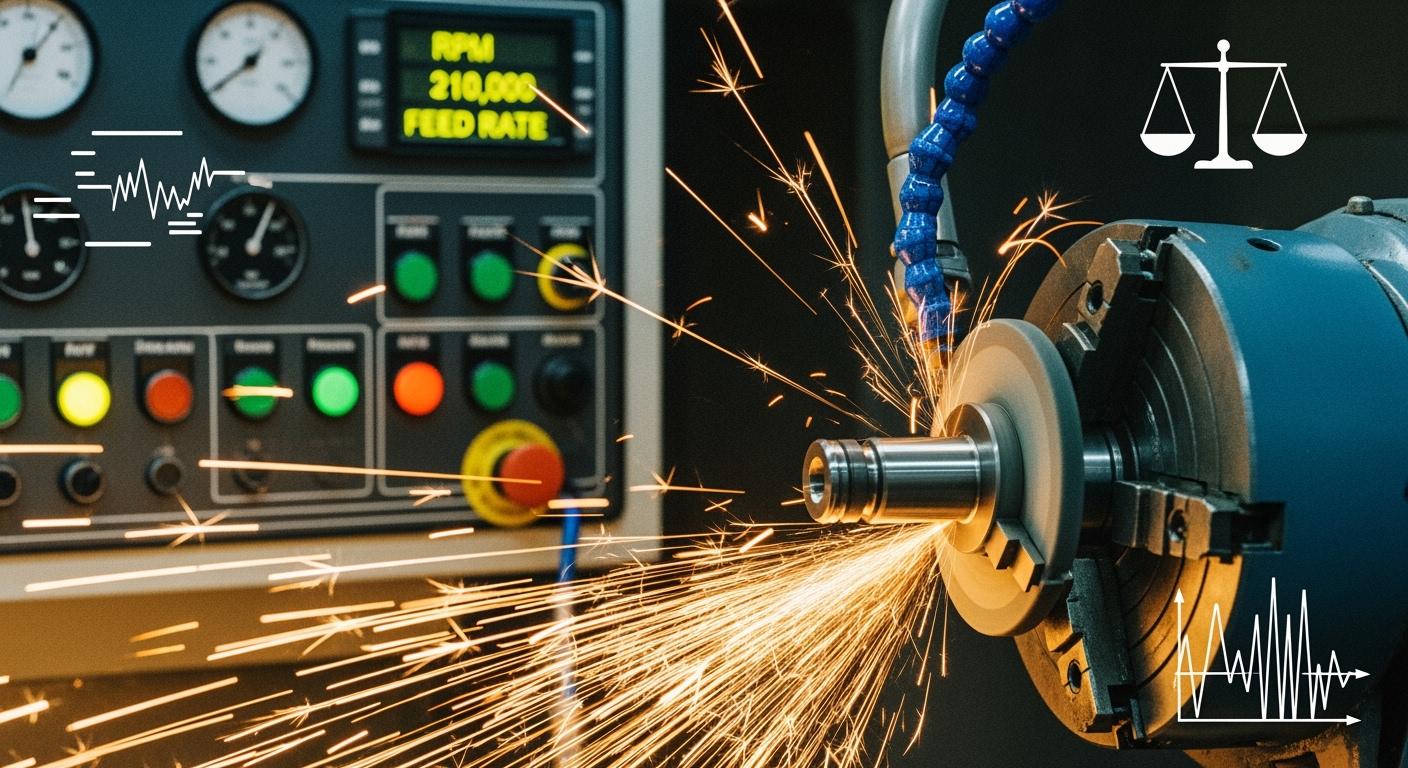
You achieve optimal grinding wheel selection for precision shaft grinding by matching the wheel’s abrasive type, grit, and bond to the shaft material and grinding process. Proper wheel choice improves accuracy and efficiency. Statistical models show that selecting the right wheel increases longevity and prediction accuracy, with an R² value above 93%. Aimgrind offers customized grinding solutions and high-performance CBN grinding wheels. You gain step-by-step guidance to help professionals and advanced hobbyists achieve stable, precise results.
Key Takeaways
- Select the right grinding wheel based on the shaft material and application to improve accuracy and efficiency.
- Adjust the work rest blade height and angle to enhance stability and achieve better surface finishes during grinding.
- Implement regular maintenance routines for grinding wheels and machines to ensure consistent performance and high-quality results.
- Manage coolant effectively to cool the grinding area, reduce wear, and maintain a stable surface finish.
- Utilize Aimgrind’s CBN grinding wheels for longer life and improved precision in your grinding operations.
Grinding Wheel Selection Essentials
Material and Application Assessment
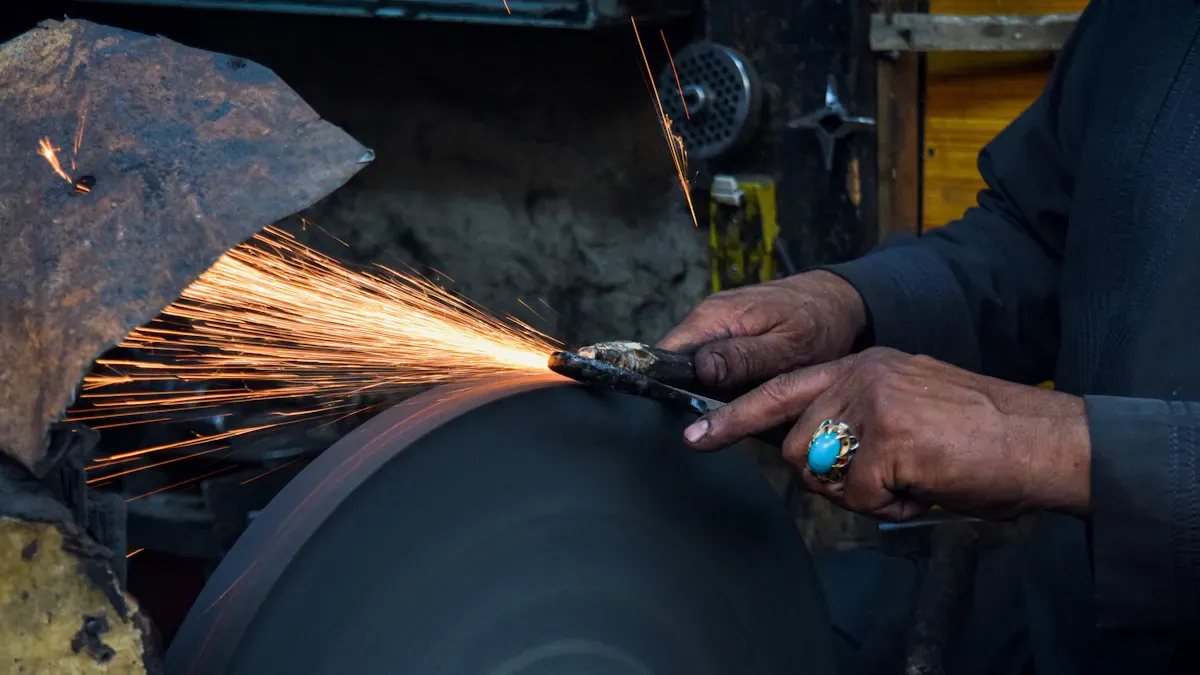
You start grinding wheel selection by examining the shaft material and its intended use. Each material has unique properties that affect your selection. For precision shaft grinding, you often encounter:
- Hardened steels: These materials have high hardness levels. You need wheels that match their hardness for efficient grinding.
- Tool steels: Used for cutting tools. You require wheels that sharpen effectively and maintain shape.
- Superalloys: Nickel or cobalt-based alloys. These demand high-performance wheels, such as CBN, for reliable results.
- Cast iron: Abrasive and hard. You must select wheels that withstand their toughness.
Chemical reactivity also influences your grinding wheel selection. For example, you avoid diamond abrasives for ferrous materials at high temperatures. Hardness, toughness, and thermal conductivity guide your selection. Harder materials need harder bonds. Tough materials require strong bonds to handle grinding forces. Materials with poor thermal conductivity benefit from wheels that promote cooler cutting.
Aimgrind uses a personalized approach for grinding wheel selection. You receive formula design tailored to your shaft material and grinding process. This ensures your wheel matches the demands of your application.
Tip: Always assess the shaft material and grinding requirements before making your grinding wheel selection. This step prevents premature wheel wear and improves accuracy.
Abrasive Type and Grit Choice
You choose the abrasive type based on the shaft material and desired finish. Aluminum oxide and silicon carbide are common for softer materials. For hardened steels and superalloys, CBN grinding wheels offer superior performance. CBN maintains hardness and stability at high temperatures, allowing aggressive grinding without rapid wear.
The grit size affects both material removal and surface finish. Coarse grits remove stock quickly. Fine grits deliver smooth finishes and tight tolerances. For precision shaft grinding, you select fine grit sizes (100 or above) for excellent finishes. Creep-feed grinding uses coarse grits for rapid removal, while superfinishing requires finer grits.
| Requirement | Details |
|---|---|
| Grit Size | Fine grits (100+) for precision; coarse grits for heavy removal |
| Bonding Material | Vitrified bonds for precision; resin bonds for good surface finish |
Aimgrind helps you match abrasive type and grit size to your shaft material and grinding goals. You benefit from expert guidance and sample optimization, ensuring your grinding wheel selection meets your needs.
Bond Type and Wheel Structure
You select the bond type and wheel structure to match your grinding operation. The bond holds the abrasive grains and affects wheel performance. Vitrified bonds are strong and rigid. They maintain shape and deliver tight tolerances. Resin bonds offer toughness and good surface finishes. Shellac and oxychloride bonds provide softer touches for finer finishes.
| Bond Type | Advantages | Disadvantages |
|---|---|---|
| Vitrified | Strong, rigid, maintains shape; excellent for tight tolerances | May not withstand high mechanical stresses |
| Resinoid | Good strength and toughness; suitable for demanding operations | Less rigid, may affect precision |
| Shellac | Softer bond, finer finish | Not for high stock removal rates |
| Oxychloride | Softer touch for specific applications | Limited use in high-performance tasks |
You consider material hardness, grinding operation type, and desired surface quality during grinding wheel selection. Rigid bonds like vitrified are essential for precision shaft grinding. Aimgrind offers a range of bond types and wheel structures, including CBN wheels with vitrified and resin bonds. You receive wheels that match your equipment and process, improving efficiency and accuracy.
Note: Matching bond type and wheel structure to your grinding application is crucial. Aimgrind’s comprehensive service ensures your grinding wheel selection delivers optimal results.
Cylindrical Grinding Wheel and Centerless Grinding Performance
Choosing the Right Cylindrical Grinding Wheel
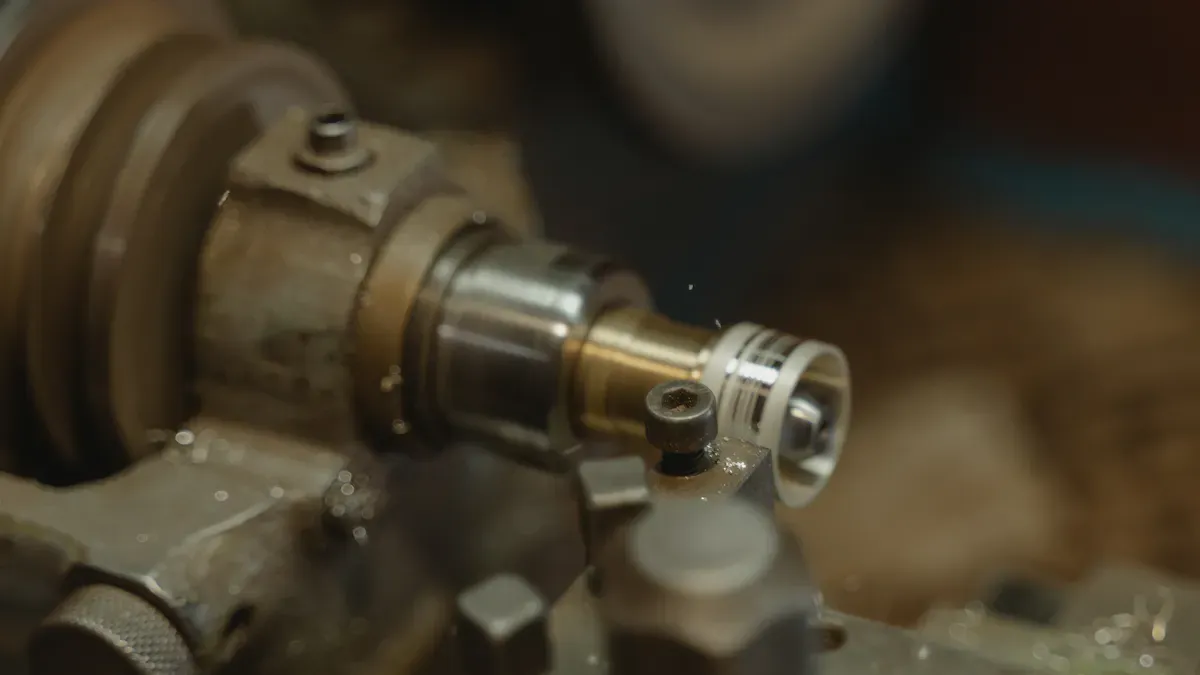
You must select the right cylindrical grinding wheel for each cylindrical shaft. The choice depends on the shaft material, the required tolerance, and the surface finish. You need to match the cylindrical grinding wheel to the hardness and toughness of the shaft. For hardened steel or tool steel, you should use a CBN cylindrical grinding wheel. This wheel gives you excellent heat resistance and stable wear. For carbide or ceramics, you need a diamond cylindrical grinding wheel.
You also need to consider the tolerance and surface finish. If you want a very fine finish, you should choose a finer grit size and a vitrified bond. If you need a rougher finish, you can use a coarser grit. The table below helps you match the cylindrical grinding wheel to your needs:
| Criteria | Recommendations |
|---|---|
| Dimensional Tolerances | Finer grit sizes, rigid bonds (vitrified), optimized concentration for precision |
| Surface Roughness (Ra) | Finer diamond grit sizes for lower Ra values, resin bonds for better finishes |
| Machine Capability | Match wheel speed and spindle power; check machine rigidity for precision |
| Material Properties | Choose bond types for hardness and toughness; manage heat with proper bonds |
| Grinding Type | Adjust wheel for OD or ID cylindrical grinding |
You can see that the right cylindrical grinding wheel improves accuracy and surface quality.
Factors Affecting Centerless Grinding Performance
You must pay attention to several factors to get the best centerless grinding performance. The choice of cylindrical grinding wheel is the most important. You need to match the wheel to the shaft material and the finish you want. The angles of the grinding and regulating wheels also matter. If you set the angles wrong, you can get chatter or out-of-round parts.
Coolant management is another key factor. You must keep the cylindrical grinding wheel cool and remove heat from the contact zone. Good coolant flow prevents thermal damage and helps you keep tight tolerances. The setup of the work rest blade also affects stability. If you adjust the blade height, you can improve part stability and surface finish.
Aimgrind CBN Wheels for Enhanced Stability
You get many benefits when you use Aimgrind CBN cylindrical grinding wheels. These wheels last much longer than regular wheels. You do not need to dress them as often, so you have less downtime. The long life and predictable wear of CBN wheels help you plan your production and keep your process stable.
CBN cylindrical grinding wheels also support automated systems. You can use them with robotic dressing and lights-out machining. This means you need less operator intervention. You get more consistent results and better part-to-part quality. The stable process helps you achieve high centerless grinding performance in your shop.
Tip: Use Aimgrind CBN cylindrical grinding wheels to improve your cylindrical grinding process. You will see better stability, less downtime, and higher quality in your parts.
Process Stability Control
You need to focus on process stability control to achieve the best grinding performance in precision shaft grinding. Aimgrind supports you with a comprehensive service process. You get help with machine setup, parameter matching, and ongoing optimization. This approach gives you consistent results and high-quality parts.
Machine Setup and Dynamic Balancing
You start with a proper machine setup. This step is the foundation for stability and grinding performance. You must check several parameters before you begin grinding. The table below shows the most important setup factors for dynamic balancing:
| Parameter | Description |
|---|---|
| Rotor Rigidity | The rotor must stay rigid without bending at balancing speed. |
| Machine Support | The machine must have firm support, allowing only spring deflection. |
| Independent Deflection | Each support spring should deflect on its own for better control. |
| Calibration Tracking | You need to track calibration data for consistent grinding performance. |
| Dynamic Balancing Tests | Run tests on fixtures to reduce vibration and improve stability. |
You can also use a hydraulic dual-jaw clamping system. This system gives you stable clamping and reduces vibration during high-speed grinding. Self-adjusting features help prevent misalignment. One jaw touches the workpiece first, so you get secure clamping every time.
Dynamic balancing is key for process stability. When you optimize balancing, you see big improvements. For example, the amplitude of the spindle can drop by over 30%. Maximum amplitude can fall by 50%. Balancing time also gets shorter. These changes mean less vibration and more control over your grinding process.
Tip: Always check your machine setup and run dynamic balancing tests before you start grinding. This step helps you control vibration and keeps your grinding performance stable.
Work Rest Blade and Support Adjustment
You must pay close attention to the work rest blade in centerless grinding. The blade supports the shaft during grinding. It sits between the grinding wheel and the regulating wheel. This support is vital for stability and accuracy.
If you want to control grinding performance, you need to adjust the blade height and angle. The blade height should place the shaft centerline just above the centerline of the grinding wheels. The angle usually sits between 25° and 30°. If you set the blade too low or too high, you can get poor geometry. If the angle is wrong, you may see chatter or a rough finish.
| Key Consideration | Description |
|---|---|
| Blade Height | Set so the shaft centerline is slightly above the grinding wheels’ centerline. |
| Blade Angle | Keep between 25° and 30° for best stability. |
| Material Selection | Use hardened steel or carbide for longer blade life. |
| Documentation | Record your settings to keep grinding performance consistent across shifts. |
You should use durable materials for the blade, like hardened steel or carbide. This choice reduces wear and keeps your setup stable. Always document your blade settings. This habit helps you repeat good results and control quality.
Note: Mastering work rest blade adjustment gives you better grinding accuracy and process stability.
Coolant Management and Delivery
You must manage coolant well to keep grinding stable and protect your parts. Coolant does three main jobs:
- Cooling: It removes heat and prevents thermal damage.
- Lubrication: It lowers friction and improves surface finish.
- Flushing: It clears away chips and keeps the grinding area clean.
You should use flood coolants for the best results. Place two nozzles at the cutting zone to deliver enough coolant. Make sure you align the nozzles for even coverage. Clean and replace coolant often to avoid contamination. A dirty system can hurt grinding performance and reduce stability.
Routine maintenance of the coolant system is important. You need to check for blockages and keep the system clean. Good coolant management helps you control temperature, reduce wheel wear, and get a better surface finish.
Aimgrind’s service process includes advice on coolant delivery and system setup. You get support to optimize every part of your grinding process. This support helps you maintain control and achieve stable, high-quality results.
Callout: Good coolant management is a simple way to boost grinding performance and process stability.
Maintenance Best Practices
Aimgrind believes that regular maintenance is the foundation of high-quality grinding operations. You can achieve better accuracy, surface finish, and consistency by following a few essential routines. These best practices help you meet tight tolerances and deliver reliable results every time.
Wheel Dressing and Conditioning
You must keep your grinding wheel in top condition to maintain surface finish and accuracy. Regular dressing removes dull grains and exposes sharp ones, which improves both quality and consistency. Follow these steps for effective wheel dressing:
- Inspect the grinding wheel for any damage or uneven wear.
- Mount and secure the wheel properly.
- Choose the right dressing tool for your wheel and application. Diamond dressers work well for fine grit wheels, while rotary tools suit coarser wheels.
- Align the dressing tool with the wheel surface.
- Apply steady pressure during the dressing process.
- Check the wheel for evenness and sharpness after dressing.
- Clean the area to remove debris.
You should dress the wheel before each setup in high-precision grinding. For heavy-duty work, dress every few hours. For light use, weekly dressing is enough. This routine keeps your surface finish and accuracy at their best.
Machine and Accessory Care
You need to care for your grinding machine and accessories to ensure quality and accuracy. Regular maintenance prevents breakdowns and extends machine life. Here are some important routines:
- Check coolant levels often to avoid overheating and protect surface finish.
- Replace coolant and clean the tank to prevent contamination.
- Schedule professional inspections every six to twelve months.
- Control dust, humidity, and temperature in your workspace.
- Train operators on safe use and daily cleaning.
| Evidence Type | Description |
|---|---|
| Machine Alignment | Misalignment can cause errors greater than 0.0001 inches, hurting quality. |
| Maintenance Procedures | Routine checks stop small issues from becoming big problems. |
| Cost Efficiency | Good maintenance reduces scrap and boosts productivity. |
You protect your investment and improve grinding quality by following these steps.
Monitoring for Consistent Results
You must monitor your grinding process to keep accuracy and surface finish consistent. Use these techniques to check your results:
| Monitoring Technique | Description |
|---|---|
| In-Process Inspection | Check dimensions and surface finish during grinding to catch defects early. |
| Statistical Process Control | Use charts to track diameter and surface variations for better consistency. |
| Advanced Quality Assurance | Use tools like CMMs and profilometers to measure accuracy and finish. |
You can also track power use and surface roughness trends. Real-time monitoring helps you spot problems fast and take action. Many shops achieve over 90% tool life by using these methods. You get better accuracy, less downtime, and improved quality.
Tip: Aimgrind supports you with expert advice and ongoing service to help you maintain top grinding performance and surface finish.
You can achieve top precision and performance in shaft grinding by following a few key steps:
- Select the right grinding wheel for your material and application.
- Adjust the work rest blade for stability and roundness.
- Maintain your equipment and inspect it often for consistent results.
Aimgrind’s CBN grinding wheels help you reach higher precision, longer wheel life, and better performance. Many companies see first pass yield rise above 99% and save costs. Apply these methods to boost your accuracy, surface quality, and efficiency.
FAQ
What factors should you consider when selecting a grinding wheel for precision shaft grinding?
You should look at material compatibility, precision and application requirements, and the desired surface finish. The right selection helps you achieve tight tolerances and high grinding performance. Always match the wheel to your process efficiency needs and final part quality.
How does proper setup affect grinding performance and consistency?
Proper setup ensures accuracy and stable surface finish. You must check key setup parameters like wheel alignment and machine stability. Good setup leads to better tolerances, improved performance, and long-term production consistency. This step also helps you maintain a high-performance grinder wheel.
Why is coolant management important for achieving a stable surface finish?
Coolant keeps the grinding area cool and clean. It helps you avoid thermal damage and improves the surface finish. Good coolant flow supports process efficiency and consistency. You get better grinding performance and final part quality with proper coolant management.
How do high-performance cylindrical grinding wheels improve final part quality?
High-performance cylindrical grinding wheels give you better accuracy and a smoother surface. They help you meet tight tolerances and achieve a stable surface finish. These wheels also support long-term production consistency and boost overall grinding performance.
What are the key setup parameters for maintaining accuracy in precision grinding?
You should focus on wheel balance, machine alignment, and work rest blade position. These key setup parameters help you keep accuracy, achieve a good finish, and maintain consistency. Proper setup also supports material compatibility and process efficiency.