

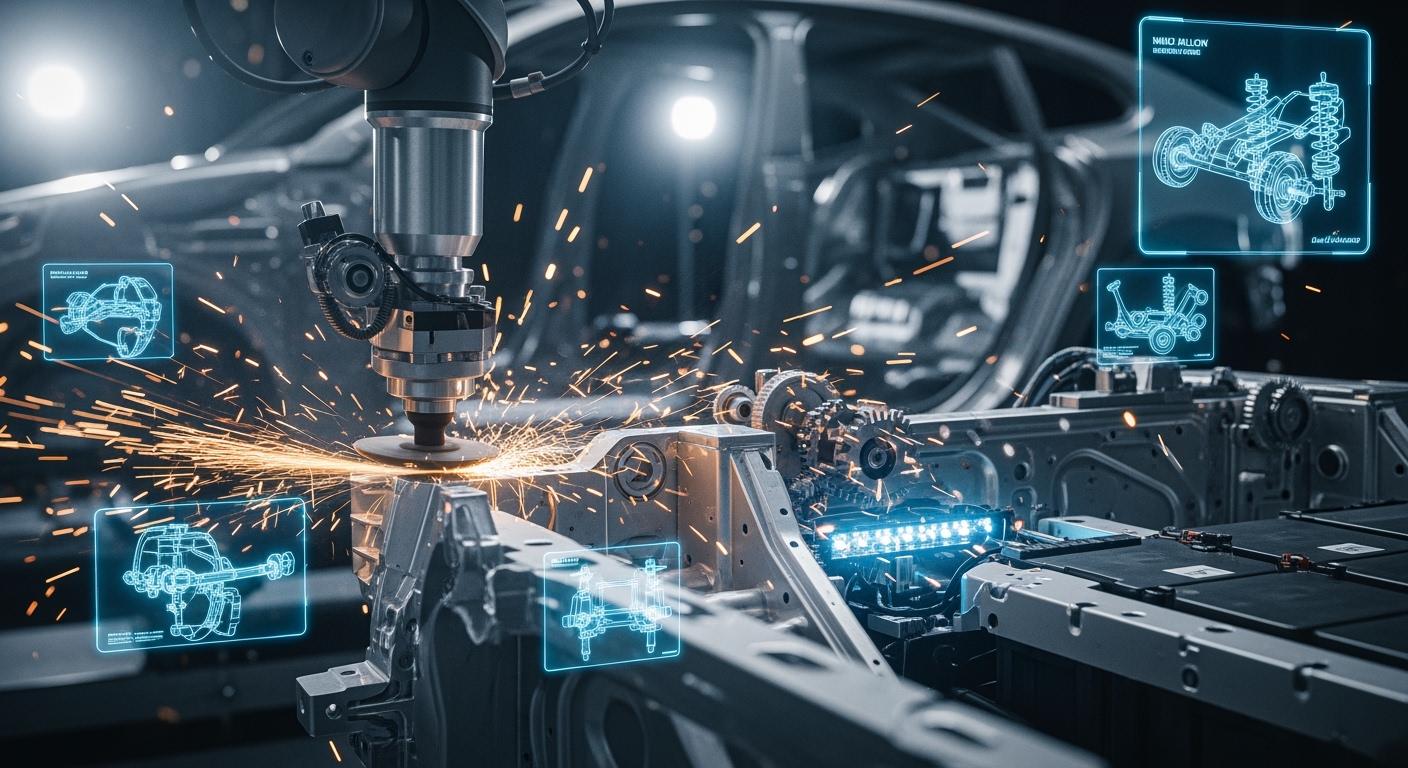
The rise of new energy vehicles increases the need for advanced grinding in aluminum alloy and composite components. You see this trend in precision grinding for drivetrains, where smooth surfaces boost powertrain efficiency and lower noise. Aimgrind’s diamond grinding wheels help you solve unique manufacturing challenges with reliable Grinding Solutions. High-quality grinding ensures correct fitting of parts and reduces the risk of failure, making vehicles safer. When you use advanced grinding, you also gain cost savings and higher productivity.
| Trend | Description |
|---|---|
| Hybrid Manufacturing Processes | You combine additive and subtractive methods for better results. |
| Artificial Intelligence (AI) | You use AI for smarter machines and real-time control. |
| Sustainability and Energy Efficiency | You benefit from efficient drives and coolant systems that lower energy use. |
Key Takeaways
- Advanced grinding technologies enhance the efficiency and safety of new energy vehicles by ensuring high-quality aluminum and composite components.
- Aimgrind diamond grinding wheels provide reliable solutions for machining aluminum alloys, reducing heat and preventing clogging during the process.
- Proper selection of grinding parameters, such as chamfer width and angle, significantly improves surface finish and reduces cutting force.
- Using the right abrasives for composite materials minimizes damage and enhances performance, ensuring durability in automotive applications.
- Regular maintenance and cleaning of grinding equipment extend tool life and improve overall productivity in manufacturing processes.
Grinding Challenges for NEV Materials
Aluminum Alloy Properties and Issues
When you work with aluminum alloys in automotive manufacturing, you face several unique grinding challenges. Aluminum alloys are popular in new energy vehicles because they are lightweight and strong. However, these materials can clog grinding wheels quickly. You often see heat sensitivity during grinding, especially with 7XXX series aluminum alloys. If you do not control the temperature, you risk changing the microstructure of the alloy. This can lower strength, hardness, and corrosion resistance. Uneven cooling can also cause deformation or loss of performance in thick sections.
Grinding aluminum alloys for automotive applications requires careful attention to surface finish. You may notice part deflection or thermal expansion, which makes it hard to keep tight tolerances. Surface smearing is another problem that affects the quality of the finished part. To avoid these issues, you need to select the right grinding wheels and use proper dressing methods. You should also control clamping pressure and support thin or complex parts to prevent deflection. Good thermal management is key to maintaining high performance in your applications.
Composite Material Grinding Difficulties
Grinding composite parts for new energy vehicles brings its own set of challenges. Composite materials combine fibers and resin, which behave differently during machining. You may see delamination, fiber pull-out, or uneven wear rates. These problems can lower the performance and durability of your automotive components.
Here are some common causes of damage during grinding of composite materials:
- High grinding speeds can raise temperatures, causing thermal damage.
- Incorrect feed rates or cut-out angles can increase mechanical stress.
- Weak bonding between resin and fibers leads to cracking or debonding.
- Fibers perpendicular to the tool feed direction are more likely to pull out.
| Cause of Damage | Description |
|---|---|
| Weak Bonding Strength | The resin-fiber interface can crack or debond under stress. |
| Thermal Effects | High temperatures can soften or degrade the resin matrix. |
| Mechanical Damage | The resin matrix may fracture more easily than the fibers. |
| Fiber Orientation | Perpendicular fibers are more likely to experience pull-out or microcracks. |
You need to understand these challenges to choose the right grinding solutions. When you use advanced grinding technologies, you can improve the quality and performance of your automotive applications. Careful selection of grinding parameters and tools helps you avoid common problems and achieve better results in manufacturing.
Grinding Solutions for Aluminum Alloys
Aimgrind Diamond Grinding Wheels
You need reliable grinding solutions when you work with aluminum alloys in automotive manufacturing. Aimgrind diamond grinding wheels help you achieve high-quality results in machining aluminum. These wheels use advanced diamond abrasives that cut through aluminum alloys with precision. You get a smooth surface and consistent performance. The wheels last longer and keep their shape, so you spend less time changing tools.
Aimgrind diamond grinding wheels work well for high-speed grinding. You can use them for machining high-strength aluminum alloys and metal matrix composites. The wheels handle tough jobs in automotive engineering. You see better grinding quality and improved performance in your applications. Aimgrind offers different bond types, such as resin, metal, and vitrified. You choose the right wheel for your manufacturing needs. The wheels fit standard machines and can be customized for special applications.
You benefit from advanced grinding technologies when you use Aimgrind wheels. These wheels reduce heat and prevent clogging during machining. You protect the aluminum from damage and keep the surface clean. Aimgrind diamond grinding wheels support efficient grinding in automotive applications. You get reliable results for drivetrains, body panels, and other aluminum parts.
Grinding Parameters and Techniques
You improve machining results by using the right grinding parameters. You control chamfer width and chamfer angle to get the best surface finish. You also reduce cutting force and temperature. The table below shows optimal values for aluminum alloy grinding in new energy vehicles:
| Parameter | Optimal Value | Effect on Cutting Force and Temperature |
|---|---|---|
| Chamfer Width | 0.17 mm | Higher cutting efficiency and better surface quality |
| Chamfer Angle | 7.3° or 18.3° | Affects cutting temperature and tool wear; optimal for service life |
| Design Parameters | A3B4C2D2 (force), A3B4C2D4 (temperature) | Best combinations for reducing cutting force and temperature |
You select the right tools for aluminum alloys to prevent loading and enhance metal removal. You use calcium stearate wax or grinding aids to improve removal rates and reduce chip binding. You start with finer grit sizes to minimize heating and discoloration. You get a better finish and less post-grinding work.
- You choose abrasives that prevent loading and reduce heat during machining.
- You use grinding aids to boost metal removal and keep the aluminum surface clean.
- You select finer grit sizes for high-speed grinding and improved performance.
You optimize grinding solutions by adjusting feed rates and coolant flow. You keep the temperature low and avoid surface smearing. You support thin or complex aluminum parts to prevent deflection. You use proper clamping pressure for stable machining. You monitor grinding quality and check for deformation or loss of performance.
You see Aimgrind diamond grinding wheels used in automotive engineering for battery housings, structural frames, and lightweight body panels. You achieve high-speed grinding and precise machining in these applications. You get reliable results for metal matrix composites and ceramic matrix composites. You improve manufacturing efficiency and product performance.
Tip: You keep your grinding wheels clean and dress them regularly. You extend tool life and maintain high-quality machining for aluminum alloys.
You apply these grinding solutions to composite machining as well. You use Aimgrind wheels for both aluminum and composite materials in automotive manufacturing. You get consistent results and high performance in your engineering applications.
Composite Component Grinding Solutions
Tool Selection and Abrasive Types
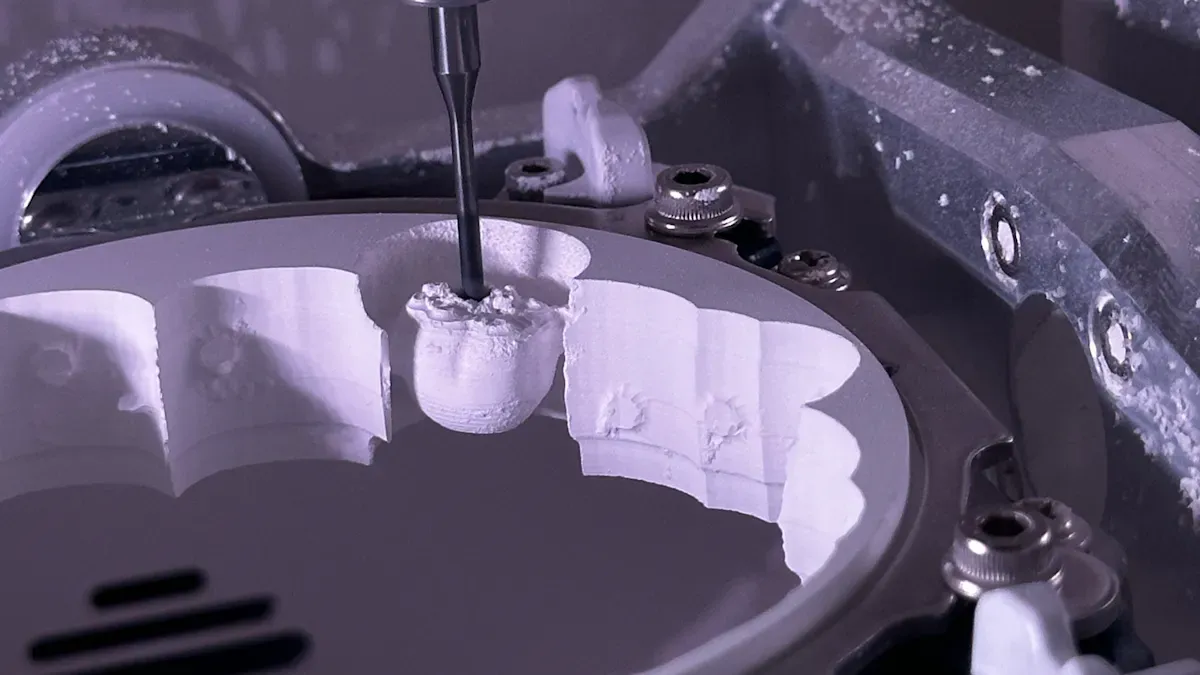
You need the right tools for grinding composite parts in automotive manufacturing. Composite materials, such as carbon fiber, glass fiber, and natural fiber-reinforced composites, are common in automotive and energy applications. You often grind these materials for trimming and surface finishing. Special abrasives help you minimize damage and improve grinding quality.
You can choose from several abrasive types for composite machining:
- Diamond grinding wheels work well for composite materials. You get high-speed grinding and precise results.
- CBN grinding wheels are suitable for automotive applications. You achieve smoother surfaces and better performance.
- Carbon fiber and fiberglass require special abrasives to avoid fiber pull-out and delamination.
You see different abrasive types affect surface integrity. The table below shows how each type improves surface finish:
| Abrasive Type | Surface Improvement | Average Surface Roughness (Ra) |
|---|---|---|
| SiC | High | Comparable to lapping |
| AL2O3 | Moderate | |
| B4C | Highest | Comparable to lapping |
| Garnet | Moderate |
You select the best abrasive for your composite parts based on the material and desired finish. Aimgrind offers diamond grinding wheels that deliver high-speed grinding and consistent performance for composite machining.
Process Adjustments for Quality Finish
You make process adjustments to prevent delamination and ensure dimensional accuracy in automotive manufacturing. Internal coolant through the grinding wheel reduces matrix resin loading and keeps the grinding temperature below the glass-transition point of the epoxy resin. You avoid delamination and improve performance.
You use CBN wheels for high-speed grinding at low depth of cut and high feed. You get smoother surfaces and reduce the risk of delamination. You monitor cutting depth because increased depth leads to brittle behavior and crack propagation in composite materials.
You see Aimgrind grinding solutions used in automotive applications for battery housings, structural frames, and lightweight body panels. You achieve high-quality grinding and reliable performance in metal matrix composites and ceramic matrix composites. You optimize manufacturing by adjusting feed rates, coolant flow, and tool selection.
Tip: You keep your grinding wheels clean and use internal coolant to extend tool life and maintain high grinding quality for composite parts.
You apply these grinding solutions to composite machining in automotive and energy industries. You get consistent results and improved performance in your applications.
Integrated Grinding and Best Practices
Multi-Material Grinding Strategies
You often face mixed-material assemblies in automotive manufacturing. These assemblies combine aluminum alloys, composite materials, ceramics, and metals. You need grinding solutions that handle all these high-performance engineering materials. The table below shows how each material type fits into new energy vehicle applications:
| Material Type | Application in New Energy Vehicles |
|---|---|
| Traditional Metals | Used in various structural components of vehicles |
| Advanced Composites | Essential for carbon fiber-reinforced structures in EVs |
| Ceramics | Utilized in specific components requiring high durability |
You use hybrid tooling to improve machining for multi-material components. Hybrid tooling combines additive and subtractive manufacturing. This approach increases grinding efficiency and flexibility. The final machining step gives you high surface quality for both metal and plastic parts. You benefit from modular robot-based manufacturing cells. These cells let you produce multi-material components in one setup. Interlocking structures on metal surfaces boost joint strength between metal and plastic. This method scales well for different production needs.
| Evidence Point | Description |
|---|---|
| Integration of Processes | Hybrid tooling combines additive and subtractive manufacturing. |
| Surface Quality Improvement | Final machining step ensures high surface quality for all components. |
| Modularity and Flexibility | Robot-based cells allow flexible production in a single setup. |
| Increased Joint Strength | Interlocking structures enhance bonding between metal and plastic. |
| Scalability | Approach offers flexibility for various production volumes. |
You use advanced grinding wheels from Aimgrind for high-speed grinding of aluminum alloys, metal matrix composites, and ceramic matrix composites. These wheels help you achieve precise machining and reliable performance in automotive applications.
Quality Control and Maintenance
You maintain high quality in automotive manufacturing by following best practices for grinding aluminum alloys and composite parts. Start with silicon carbide paper for grinding pure aluminum samples. Use P600 grit for initial grinding, then move to P1200 grit. Soft polishing cloths help you avoid surface deformation. For polishing, use Sigma cloth first, then Zeta cloth for 1 µm polishing, and OMEGA cloth for the final step.
- Use silicon carbide paper to prevent deformation.
- Start with P600 grit, then use P1200 grit.
- Employ soft polishing cloths for minimal surface deformation.
- Use Sigma, Zeta, and OMEGA cloths for different polishing stages.
You keep your grinding equipment in top condition with regular maintenance. Less downtime means higher throughput and better productivity. Proactive maintenance creates digital records for audits and ensures compliance. Preventive maintenance increases uptime and extends equipment life. You allocate 5–10% of the original system cost each year for maintenance. Routine checks prevent costly unplanned downtimes and stabilize operating costs.
Aimgrind supports you with comprehensive service options. You get customized abrasive tool solutions for aluminum alloys, composites, and ceramics. Aimgrind helps you diagnose problems, match parameters, and optimize samples. You also benefit from vibration control, burn prevention, and longer tool life. This support ensures you achieve the best results in automotive engineering and manufacturing.
You improve automotive manufacturing by using advanced grinding for aluminum alloys and composite components. Aimgrind’s diamond grinding wheels give you high-speed machining, precise cutting, and strong performance. You boost quality and efficiency in engineering by adopting automation, real-time monitoring, and flexible grinding solutions. You keep your machining up to date by using digital twin technology and aerospace-grade techniques. You achieve better results in automotive production when you customize grinding for each aluminum part and focus on performance.
- Adopt automation and robotics for consistent grinding.
- Use real-time monitoring to optimize machining and maintenance.
- Customize grinding wheels for each aluminum alloys application.
- Develop nano-structured abrasives for better cutting.
- Collaborate with partners for new manufacturing solutions.
| Key Strategy | Description |
|---|---|
| Advanced Automation | Use automated systems for efficient grinding and machining. |
| Flexible Solutions | Adapt grinding for lightweight aluminum and high-speed performance. |
| Digital Twin Technology | Simulate machining to reduce waste and improve performance. |
Stay open to new materials and technologies. You lead the way in automotive manufacturing by always improving your grinding and machining processes.
FAQ
What is surface integrity in automotive grinding?
Surface integrity means the quality and condition of a part’s surface after grinding. In automotive manufacturing, you must protect surface integrity to keep parts strong and reliable. Good surface integrity helps you avoid cracks, wear, and early failure in your components.
How do you maintain surface integrity when grinding aluminum alloys?
You control grinding speed and pressure. You use the right wheel for aluminum. You keep the temperature low. These steps help you protect surface integrity. You check your parts often to make sure you keep their integrity high.
Why is surface integrity important for composite parts in automotive applications?
Surface integrity affects how long your composite parts last. You need strong surface integrity for polymer matrix composites, metal matrix composites, and ceramic matrix composites. Good surface integrity keeps your automotive parts safe and working well.
What problems can poor surface integrity cause in automotive grinding?
Poor surface integrity can cause cracks, weak spots, and fast wear. You may see parts fail early. In automotive grinding, you must protect surface integrity to keep your vehicles safe and reliable.
How do you improve surface integrity for ceramic matrix composites in automotive grinding?
You use the right grinding wheel. You keep the grinding area cool. You check your work often. These steps help you keep surface integrity high for ceramic matrix composites. You get better integrity and longer-lasting automotive parts.