

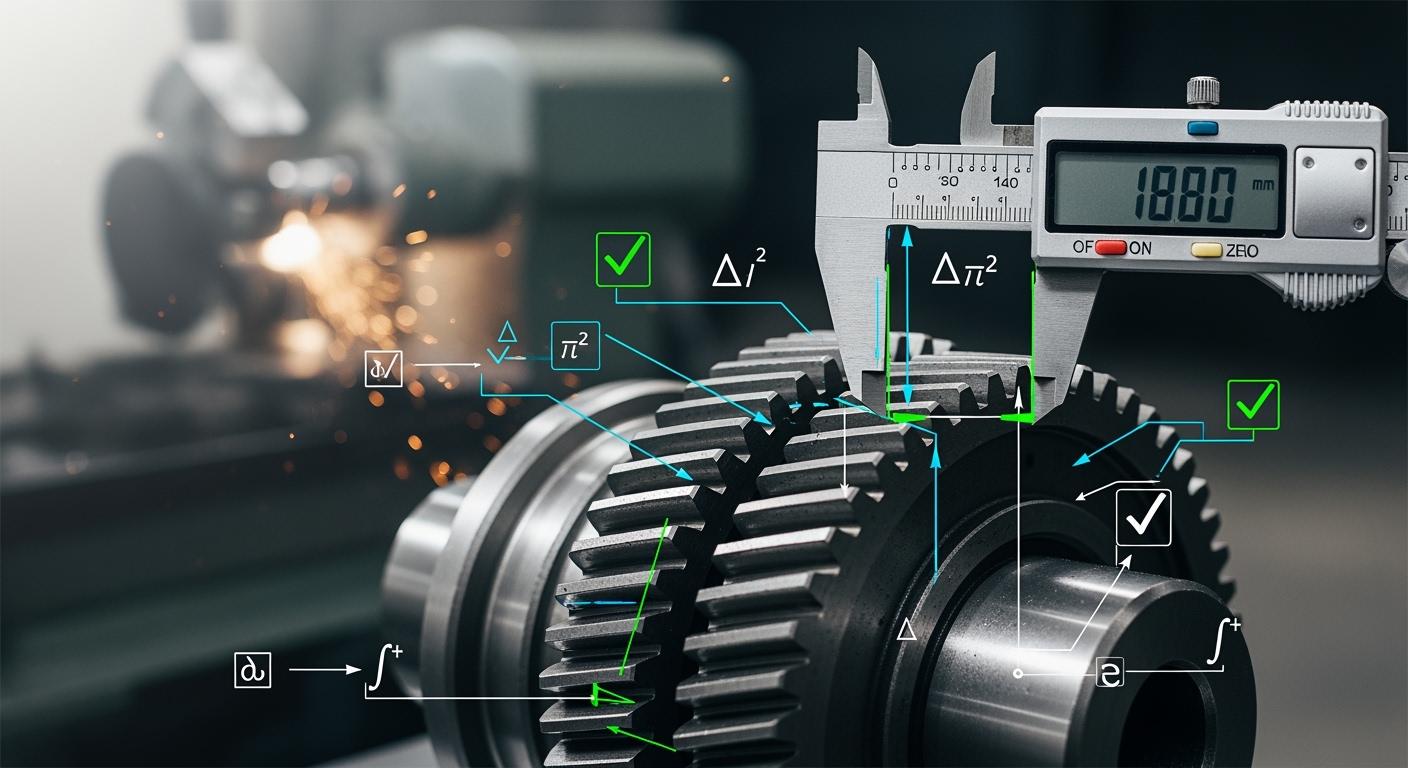
You play a key role in improving gear performance through grinding process optimization. When you optimize the grinding process, you can achieve outstanding double-flank meshing accuracy. For example, you can reach total cumulative pitch deviations as low as 0.02 mm and control radial runout tolerance to 0.017 mm. Aimgrind’s diamond grinding wheels help you maintain high precision even with challenges like machine vibration or temperature changes. With the right tools and process control, you can deliver reliable gears for advanced applications.
Key Takeaways
- Optimize your grinding process to achieve double-flank meshing accuracy, reducing pitch deviations to as low as 0.02 mm.
- Select Aimgrind diamond grinding wheels for high precision and consistent results, even under challenging conditions.
- Regularly monitor grinding parameters and machine conditions to maintain stability and improve gear quality.
- Implement real-time monitoring systems to quickly detect deviations and make adjustments for better grinding outcomes.
- Calibrate your machines and train staff to ensure repeatability and accuracy in gear form grinding.
Double-Flank Meshing Accuracy in Gear Form Grinding
Definition and Role in Gear Performance
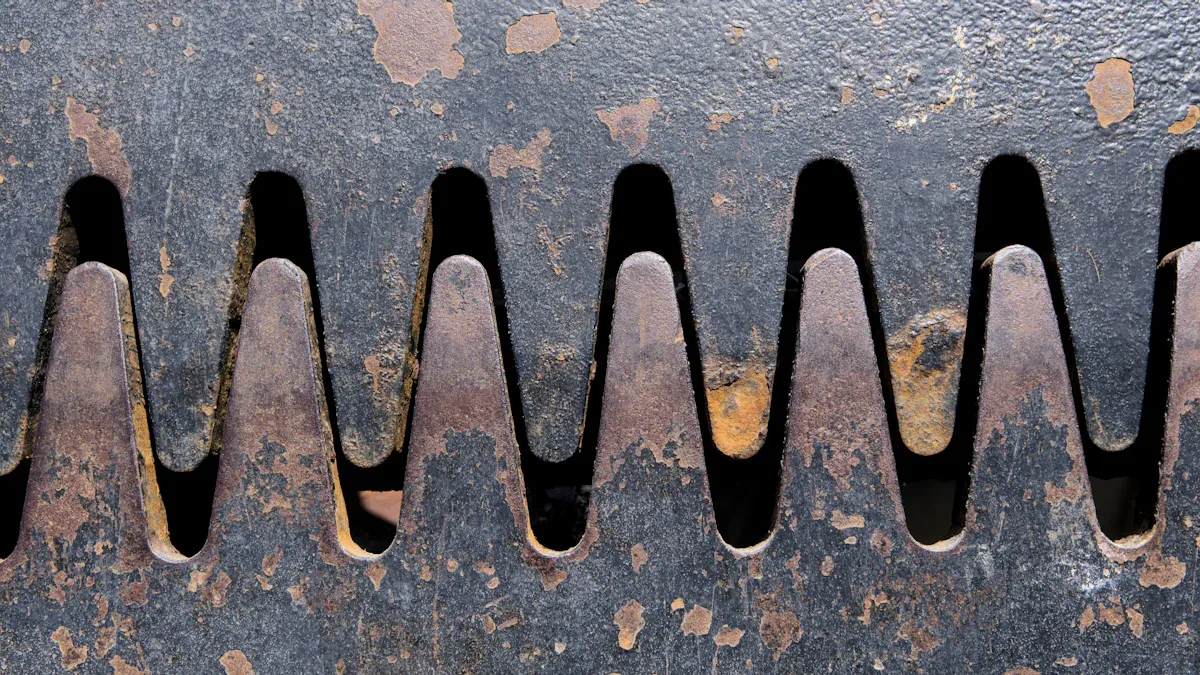
You need to understand what double-flank meshing accuracy means before you can control it. Double-flank grinding checks how well two gear flanks fit together as they rotate. This process measures the total error between the gear teeth. You can use this measurement to judge the quality of the gear’s surface and its shape. When you achieve high double-flank meshing accuracy, you increase the measurable area on the gear flank. This means you have fewer errors and better contact between the teeth.
Here is how double-flank meshing accuracy influences gear transmission performance:
- The measurable area on the gear flank gets larger when you reduce gear errors.
- If you keep profile deviations small in both the front and rear teeth, you increase the measurable area.
- The type of profile deviation does not change the measurable area if the error size stays the same.
- The shape of the error does not affect the measurable area when you keep the same accuracy grade.
You can see that controlling tooth double-flank accuracy helps you get better gear quality and smoother operation.
Impact on Transmission Reliability
You want your transmission to work reliably under different loads and speeds. High double-flank meshing accuracy reduces vibration and noise. It also lowers the risk of early gear failure. When you keep the errors small, you make sure the gears share the load evenly. This prevents damage and extends the life of the gear set.
Tip: Regularly check double-flank grinding results to catch problems early and keep your gear system running smoothly.
By focusing on double-flank meshing accuracy, you improve the reliability and performance of your gear systems. This leads to better results for every application that depends on precise gear movement.
Key Factors in Grinding Process Optimization
Grinding Wheel Selection with Aimgrind Diamond Wheels
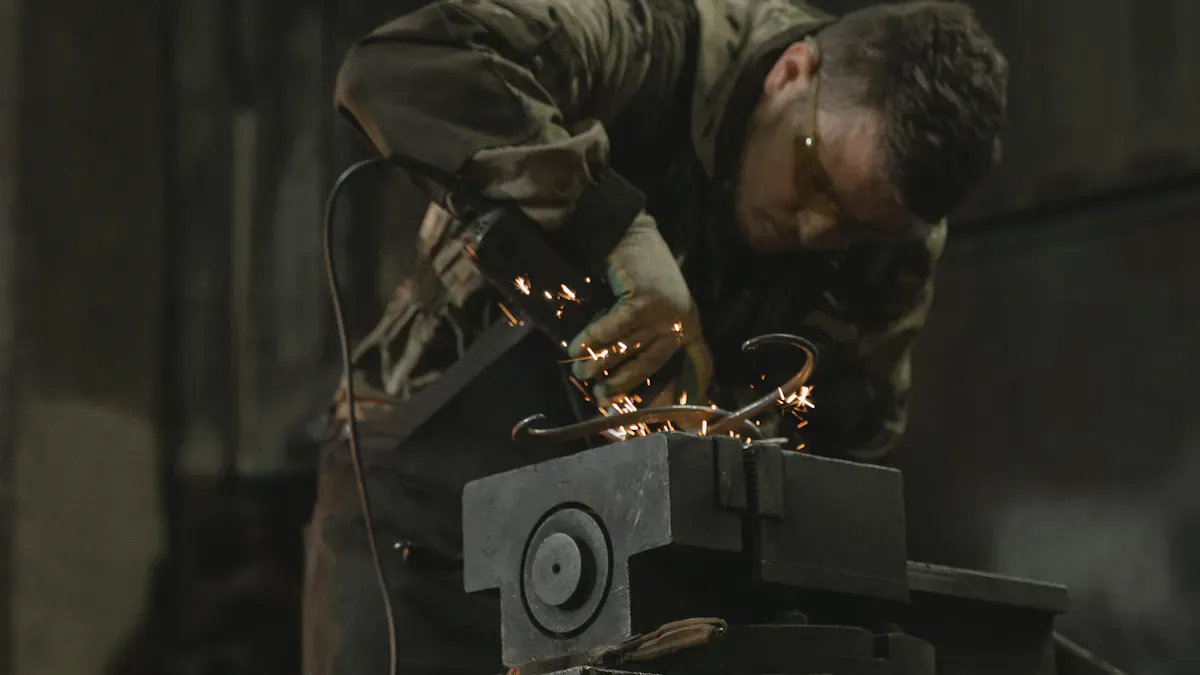
You need the right grinding wheel for gear form grinding. Aimgrind diamond grinding wheels give you high precision and long life. These wheels keep their shape and sharpness, so you get a steady grinding force on every tooth. You can use them for hard alloys and ceramics. The diamond layer helps you control the grinding process and reach tight tolerances. When you use Aimgrind wheels, you reduce tool wear and keep your gear form grinding results consistent. This helps you manage residual stress evolution and improve the finish of each gear.
Machine Rigidity and Fixture Precision
You must use a rigid machine for gear form grinding. Machine rigidity keeps the grinding force steady and stops deflection. This means the spindle and axes stay in place, even under heavy loads. If your machine is rigid, you get better gear form grinding results. The fixture must also hold the gear tight. Good fixture precision keeps the gear from moving, so you avoid errors in the tooth shape. Machine rigidity and fixture precision help you control thermal-mechanical coupling and keep the gear geometry correct.
Note: Even a small machine deflection can change the tooth contact pattern and lower double-flank meshing accuracy.
Grinding Parameters and Coolant Application
You need to set the right grinding parameters for gear form grinding. These include speed, feed rate, and depth of cut. The grinding force depends on these settings. If you set them well, you get a smooth surface and good accuracy. Coolant is also important. It lowers the grinding temperature distribution and helps with heat source optimization. When you use enough coolant, you keep the workpiece cool and avoid burns. At high speeds, air flow can stop the coolant from reaching the gear. You must adjust the coolant flow to match your grinding parameters. This keeps the thermal-mechanical coupling under control and gives you a better finish.
Process Stability and Environmental Factors
You must keep the grinding process stable for gear form grinding. Check the temperature often to keep the process steady. Watch for media wear, as worn tools can change the grinding force. Use the same raw materials to avoid changes in grind time. Calibrate your equipment to keep your measurements correct. Stable conditions help you get the same results every time and keep your gear form grinding quality high.
- Monitor temperature to prevent changes in viscosity.
- Manage tool wear for uniform grinding.
- Control material quality for steady results.
- Calibrate machines for accurate readings.
When you focus on these key factors, you improve gear form grinding and control double-flank meshing accuracy.
Strategies for Precision Control in Gear Form Grinding
Optimizing Grinding Parameters
You can improve gear form grinding by tuning grinding parameters. This step helps you achieve better gear flank modification and higher accuracy. Follow these steps to optimize your grinding process optimization:
- Extend cutting time between dress intervals. Train operators and select wheels with the right grain and bond technology. This improves form holding and reduces errors during gear form grinding.
- Choose cooler cutting wheels. Make sure your coolant system works well. This prevents burning and material damage, so you can grind faster and safer.
- Maximize cutting volume before form loss. This increases wheel life and reduces dressing frequency. You save time and keep gear form grinding consistent.
- Adjust stock amount and wheel feed rate. Use the formula Q’w = (ae * vw)/60 to increase material removal rates. This reduces cycle time and boosts grinding process optimization.
Tip: Aimgrind’s diamond grinding wheels help you maintain steady grinding parameters and support gear flank modification for every gear form grinding operation.
In-Process Monitoring and Feedback
You need real-time monitoring to keep gear form grinding under control. Modern systems use AI and cloud-based analytics to check machine performance. This helps you spot deviations quickly and make better decisions. You can use Automatic Component Diagnosis to evaluate machine states in real time. This feature allows preventive maintenance and reduces downtime.
- Continuous monitoring improves gear form grinding accuracy.
- AI analyzes large data sets and refines algorithms for precision control.
- Immediate detection of changes leads to faster maintenance and better grinding process optimization.
Modern grinding process systems use sensors to track cutting forces, thermal conditions, and dimensional measurements. In-process gauging systems check dimensions without stopping the machine. Laser interferometry and touch probes help you make corrections right away. Adaptive control algorithms adjust grinding parameters based on real-time data. This keeps gear form grinding results consistent, even when materials or tools change.
Note: Aimgrind’s customized solutions support in-process monitoring and feedback, making gear flank modification easier and more reliable.
Machine Calibration and Setup
You must calibrate your machine and set up your gear form grinding process carefully. This step ensures repeatability and supports gear flank modification. Use best practices for calibration and setup:
| Best Practice | Description |
|---|---|
| Trained Staff | Certified staff prevent equipment drifts and measurement errors. |
| Structured Schedule | Regular calibration keeps instruments precise and extends equipment life. |
| Calibration Software | Software helps manage assets and records calibration details. |
| Documentation | Keep records of calibration, validation, and maintenance for compliance. |
| Continuous Monitoring | Ongoing checks identify inefficiencies and maintain long-term precision. |
Setup procedures influence the repeatability of double-flank meshing accuracy. You must align the work piece and master gear precisely. Fix one gear and adjust the other. This setup can cause radial and tangential displacements due to gear errors. These displacements affect measurement repeatability and the accuracy of gear form grinding.
| Action | Contribution to Uncertainty |
|---|---|
| Initial Calibration | Individual errors quantified |
| Displacement to Nominal Position | Variability introduced |
| Assembly of Gears | Impact on repeatability |
| Execution of Test | Measurement reliability |
Callout: Aimgrind’s grinding process optimization services include machine calibration and setup support. You can achieve consistent gear flank modification and maintain high precision control.
You can use these strategies to optimize your grinding process, improve gear form grinding, and control double-flank meshing accuracy. Aimgrind’s customized solutions help you reach your precision goals and deliver reliable gears for every application.
Quality Assurance and Data-Driven Adjustments
Double-Flank Testing Methods
You need to check gear quality after double-flank grinding. This step helps you control the final accuracy of your transmission gears. Several methods help you measure how well the gear teeth fit together. The most common methods include:
- Using a double flank gear tester. This tool puts two gears in tight mesh and measures the total error from all gear teeth.
- Working with a Parkinson gear tester. Many gear labs and factories use this device for double-flank testing.
- Choosing manual or automated testing. Modern systems often use electronic measuring tools and software to help you analyze the data.
These methods let you see if your grinding process meets the standards for gear accuracy. You can spot errors early and make changes before the gears go into service.
Tip: Regular double-flank testing helps you find problems fast and keep your gear quality high.
Process Adjustment Based on Measurement Data
You can use measurement data to control and improve your grinding process. When you track vibration patterns on the grinding wheel, you can see how they affect the surface of your gears. High vibration in certain spots often means rougher gear surfaces and more noise in the transmission. By watching these patterns, you can remove rough parts and adjust your grinding parameters.
You should also use tools like coordinate measuring machines to check gear profile, lead, pitch, and runout. These checks help you meet AGMA or ISO standards. If you find a problem, you can tune your process settings right away. Nital-etch testing helps you spot thermal damage that you cannot see with your eyes. This test lets you stop bad parts from moving forward.
- Real-time monitoring with sensors helps you catch wheel wear or process instability.
- You can change grinding speed, feed, or coolant flow based on what you find.
- Keeping good records links your process settings to inspection results, so you can spot trends and make smart changes.
Operator training helps you read the data and take action. When you track defect rates, you can find root causes and improve your process. This feedback loop keeps your gear quality high and helps you control double-flank grinding for every batch.
Case Study and Common Challenges in Grinding Process
Practical Example of Process Optimization
You can achieve remarkable improvements in double-flank meshing accuracy by optimizing your gear grinding process. In one real-world case, engineers focused on controlling meshing backlash through tooth flank modification. They adjusted machining process parameters, such as the tool path during hobbing, to modify the lead along the flexspline tooth width. This change reduced the maximum contact pressure by over 30% during both rated and start-stop torque. As a result, you can see smoother gear operation and longer gear life.
You can also adopt several process changes to boost gear accuracy:
- Use “green grinding” for roughing gear teeth. This method keeps machine programming consistent and reduces variability.
- Choose a 5-axis vertical-spindle machine. This setup handles larger gears and cuts down setup time with a zero-point workholding system.
- Integrate a first part checking probe. This tool automates alignment and reduces human error during setup.
These steps help you achieve better gear quality and more reliable double-flank meshing accuracy.
Tip: Aimgrind’s diamond grinding wheels support these advanced processes by delivering consistent performance and precise tooth modification.
Troubleshooting and Solutions
You may face several challenges during gear grinding process optimization. Common issues include:
- Noise caused by gear tooth meshing
- Surface roughness that leads to vibrations
- Profile waviness that affects meshing behavior
- Difficulty in monitoring and analyzing the grinding process
You can address these challenges with the right tools and strategies. Aimgrind’s diamond grinding wheels help you achieve a smoother surface finish and reduce profile waviness. Their durability ensures stable grinding forces, which lowers noise and vibration. You can also use in-process monitoring systems to track grinding conditions and make quick adjustments.
Note: When you combine Aimgrind’s customized grinding solutions with careful process monitoring, you can overcome common obstacles and maintain high double-flank meshing accuracy.
You can optimize gear grinding for double-flank meshing accuracy by following these steps:
- Set up precise experiments with specialized machines.
- Measure and simulate residual stress under different grinding parameters.
- Develop prediction models for stress evolution.
- Analyze results to find the best processing range.
Aimgrind diamond grinding wheels and tailored solutions help you achieve reliable results and adapt to changing demands. Ongoing process evaluation, such as real-time monitoring and dimensional checks, ensures sustained precision. Advanced technologies like AI-driven controls and digital manufacturing platforms support future improvements and keep you competitive.
FAQ
What is double-flank meshing accuracy?
Double-flank meshing accuracy shows how well two gear teeth fit together. You measure the total error between the teeth. High accuracy means smoother gear movement and less noise.
Why should you use Aimgrind diamond grinding wheels for gear grinding?
You get high precision and long life with Aimgrind diamond grinding wheels. These wheels keep their shape and sharpness. You can grind hard metals and ceramics with less tool wear.
How do you improve gear grinding results?
- Choose the right grinding wheel.
- Set correct grinding parameters.
- Use enough coolant.
- Calibrate your machine often.
Tip: Regular checks help you spot problems early.
Can you use Aimgrind diamond wheels for both wet and dry grinding?
Yes, you can use Aimgrind diamond grinding wheels for both wet and dry grinding. They work well in many conditions and help you get a smooth finish.