

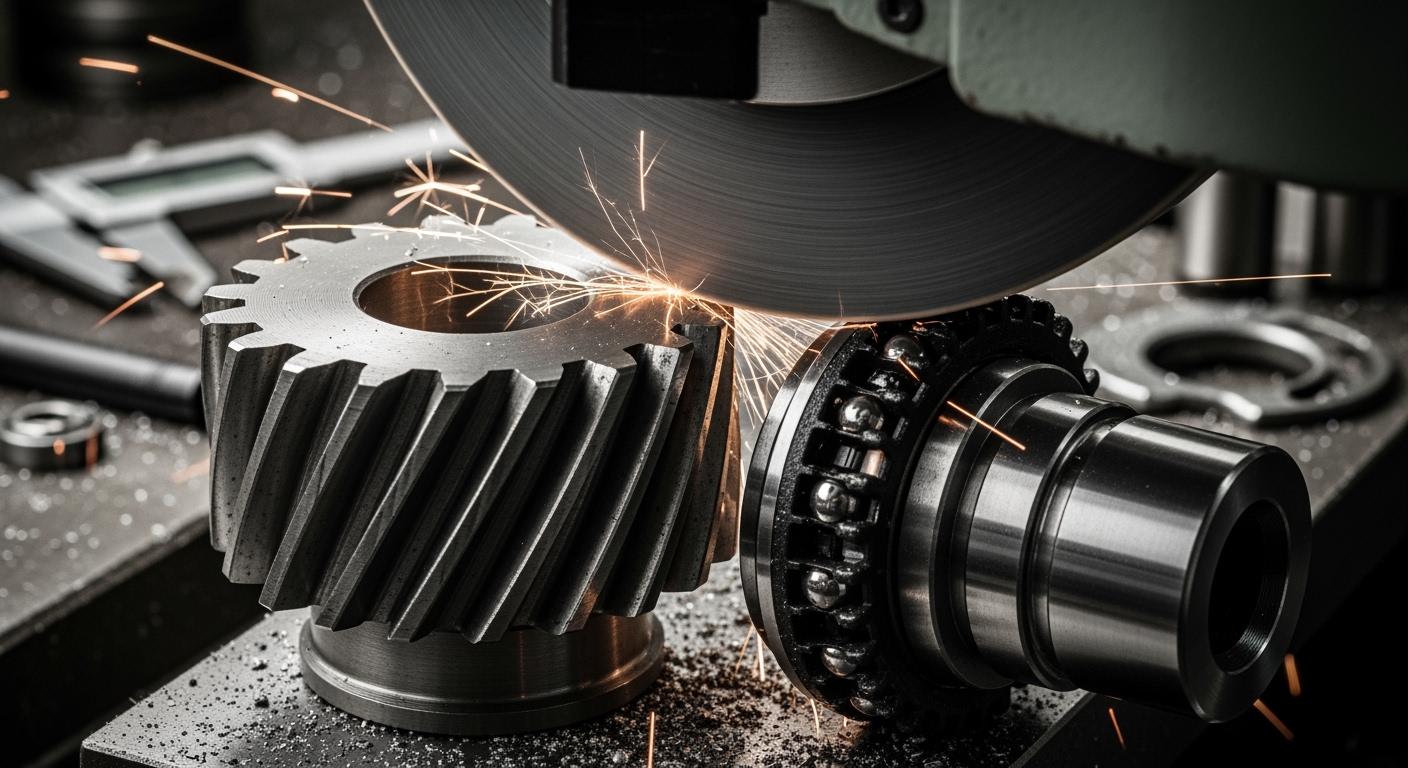
You want your CVJ ball tracks and helical gears to perform at their best. Efficient Grinding helps you achieve high quality, speed, and cost savings. Precision matters in every step, from choosing the right abrasive tools to optimizing your process. Innovative grinding methods and strong material removal rates make a difference. Aimgrind gives you customized grinding solutions, including diamond grinding wheels that boost your results.
Key Takeaways
- Achieve high precision in grinding CVJ ball tracks and helical gears to ensure optimal performance and longevity.
- Use Aimgrind’s diamond grinding wheels for better surface finishes and longer tool life, enhancing overall grinding efficiency.
- Monitor and adjust grinding parameters to minimize heat and tool wear, which helps maintain quality and reduces defects.
- Implement automation and advanced machines to streamline your grinding process, leading to higher throughput and fewer errors.
- Regularly maintain coolant systems and grinding wheels to prevent overheating and extend the life of your equipment.
Grinding Challenges for CVJ Ball Tracks and Helical Gears
Unique Needs of CVJ Ball Tracks
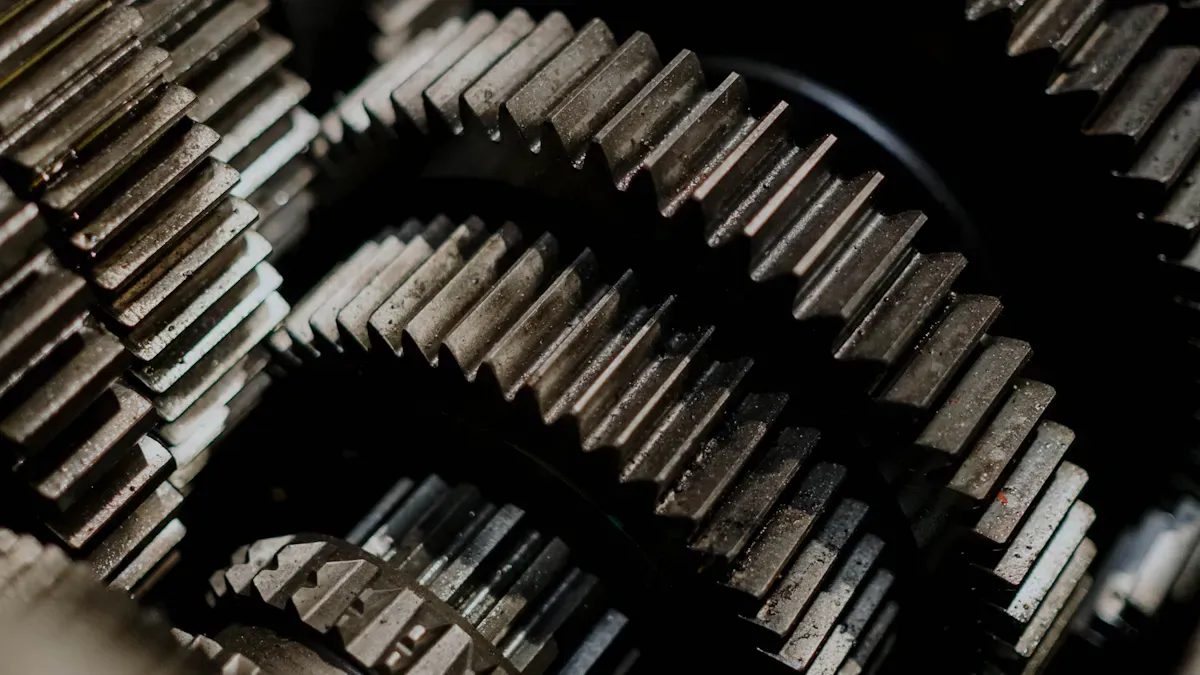
You face strict requirements when grinding CVJ ball tracks. These parts must have a perfect shape and a very smooth surface. Even a small mistake can cause noise or reduce the life of the joint. You need to reach a dimensional accuracy of ±0.001 mm. This level of precision ensures that the ball tracks stay round and smooth. The surface finish should be Ra 0.2 µm. This mirror-like finish helps reduce friction and wear. When you achieve these standards, the CV Joint works better and lasts longer.
Efficient Grinding becomes important because you must remove material quickly but keep the surface perfect. You cannot let heat build up, or the part may warp. You also need to use the right grinding wheel to avoid scratches or uneven spots. If you use advanced diamond grinding wheels, you can reach these high standards more easily. You get a better finish and keep your process stable.
Helical Gear Grinding Demands
Grinding helical gears brings its own set of challenges. You must keep the gear teeth accurate and smooth. Many things can cause errors during grinding. The table below shows the main sources of dimensional errors:
| Source of Error | Description |
|---|---|
| Equipment Condition | The state of the grinding equipment can significantly impact the quality of the gears produced. |
| Process Parameters | Incorrect settings can lead to profile inaccuracies and deviations in gear dimensions. |
| Material Inconsistencies | Variations in material hardness can cause uneven grinding forces, leading to form errors. |
| Operator Setup | Improper setup can create spacing errors and affect the overall geometry of the gears. |
You must check your machines often and set your process parameters carefully. You also need to watch for changes in material hardness. If you pay attention to these details, you can avoid common problems and keep your gears working smoothly. Efficient Grinding helps you save time and money while keeping your gears at top quality.
Core Principles of Efficient Grinding
Precision and Consistency
You need precision and consistency to produce high-quality CVJ ball tracks and helical gears. When you keep your grinding process consistent, you avoid problems in later assembly steps. Consistent grinding helps you control dimensional stability and surface finish. You also reduce the risk of tolerance errors. If you let grinding consistency vary, you may see geometry changes, more scrap, and higher rework costs. You can face misalignment, noise, and assembly defects. These issues can lead to functional failures and higher warranty expenses.
- Double-disk grinding keeps parts parallel and uniform in thickness. This is important for stacking parts in assemblies.
- You must control edge break and burr height to prevent assembly problems.
- Centerless grinding supports high-volume production and gives good consistency for cylindrical parts.
- Controlled grinding processes help you maintain thickness and flatness, which improves assembly fit and performance.
Aimgrind’s diamond grinding wheels help you achieve consistent results. These wheels keep their cutting edge longer than traditional wheels. You get stable grinding cycles and fewer interruptions. You can rely on Aimgrind’s customized solutions to match your equipment and process needs.
Surface Finish and Dimensional Accuracy
You must focus on surface finish and dimensional accuracy to ensure your gears and ball tracks perform well. High-quality surface finish reduces friction and wear. Dimensional accuracy keeps parts within tight tolerances. If you miss these targets, you may see noise and vibration in finished gears.
| Aspect | Description |
|---|---|
| Role of Gear Quality | The quality of gears affects vehicle Noise, Vibration, and Harshness (NVH) performance. |
| Grinding Process Importance | Grinding is a key finishing process that ensures high precision. |
| Monitoring Techniques | New monitoring methods help you detect abnormalities in real time during manufacturing. |
Grinding parameters like speed and feed rate change tooth surface waviness. This waviness links to gear noise. You can use new approaches to evaluate tooth surface geometry and confirm processing quality. Experiments show that changes in grinding parameters affect tooth surface characteristics.
Aimgrind’s diamond grinding wheels deliver excellent surface finishes. These wheels remove material quickly and keep the surface smooth. You can reach tight tolerances and improve NVH performance in your products.
Minimizing Heat and Tool Wear
You must minimize heat and tool wear to keep your grinding process efficient. High-speed grinding of hardened steel can generate a lot of heat. Too much heat can damage parts and reduce quality. You can manage heat by choosing the right grinding wheel, applying coolant properly, and adjusting grinding parameters.
- Select wheels designed for heat control. This reduces friction and manages heat.
- Apply coolant with good flow and delivery for thermal management.
- Adjust feed rate, material hardness, bond system, dressing frequency, and cutting parameters to reduce heat buildup.
You can also manage temperature by lowering feed rates and making shallower cuts. This reduces heat but may slow material removal. You need to balance these parameters for effective temperature control.
- Keep wheel speeds between 25–35 m/s to prevent thermal damage and improve surface finish.
- Reduce workpiece speed from 0.5 m/min to 0.2 m/min to decrease surface roughness.
- Lower feed rate from 0.1 mm/rev to 0.02 mm/rev to improve surface finish by up to 20%.
Aimgrind’s diamond grinding wheels offer much longer tool life than traditional wheels. Diamond wheels maintain their cutting edge and handle more grinding cycles. You spend less time replacing wheels and more time producing quality parts. You also reduce maintenance costs and keep your process stable.
Tip: Efficient Grinding depends on balancing speed and quality. You must monitor material removal rates (Q-prime) and adjust your process to get the best results. Aimgrind’s diamond grinding wheels help you reach high material removal rates without sacrificing precision or surface finish.
Technologies and Methods for Efficient Grinding
Advanced Machines and Automation
You can boost your grinding process with advanced machines and automation. Modern grinding machines use CNC controls to help you set precise parameters. Automated feeding and unloading systems make your workflow smoother. You see fewer defects and higher throughput when you use automation.
- Automation enhances throughput and reduces defect rates in gear and CVJ ball track grinding.
- Automated feeding and unloading systems increase consistency and reduce labor needs.
- Real-time monitoring and predictive maintenance improve operational efficiency and reduce downtime.
You get consistent results because machines handle parts the same way every time. You spend less time on manual tasks. You also reduce mistakes that come from human error. Automation lets you focus on quality and speed.
Aimgrind Diamond Grinding Wheels Selection
You need the right grinding wheel for each job. Aimgrind offers diamond grinding wheels that match your specific needs. You can choose wheels based on material, shape, and grinding method. Aimgrind helps you select the best wheel for your equipment and process.
| Feature | Description |
|---|---|
| Precision-formed abrasive profiles | Ensures accurate grinding of complex shapes. |
| Excellent form retention & stability | Maintains shape during grinding for consistent results. |
| Minimal vibration | Reduces disturbances for smoother operation. |
| Superior surface finish | Achieves high-quality finishes with tight tolerances. |
| Tailored solutions | Customizable options for specific grinding needs. |
You see better results when you use customized abrasive solutions. Aimgrind designs wheels that fit your gear profiles and ball tracks. You get accurate shapes, stable grinding, and smooth surfaces. You also reduce vibration and improve the finish. Aimgrind’s expertise in parameter matching helps you reach your goals faster.
Process Monitoring and Adaptive Control
You can improve your grinding process with real-time monitoring and adaptive control. Sensors track feed rates, wheel wear, and surface quality. Automated systems adjust grinding parameters as needed. You see fewer defects and less rework.
Real-time adjustments in grinding parameters, such as feed speed and tool grain size, have been shown to significantly enhance the surface quality of components produced during CNC grinding. This improvement directly correlates with reduced scrap rates and lower rework frequency, as the ability to monitor vibrations and forces in real-time allows for immediate corrections that optimize the grinding process.
You benefit from several measurable improvements:
- Improved surface finish (Ra)
- Extended wheel life by 15-20%
- Reduced dressing frequency by 25-40%
- Increased productivity
- Enhanced process stability
- Reduced burn marks
- Improved part-to-part repeatability
You also gain predictive maintenance capabilities. These systems forecast maintenance needs accurately. You see less unplanned downtime and more production capacity. Energy consumption drops by 15-30% while throughput stays high.
- Consistent feed rate and material characteristics for stable operation
- Automated quality control systems that detect deviations in real-time
- Energy efficiency improvements with capacity doubling and 30% energy reduction
You achieve Efficient Grinding by combining advanced machines, Aimgrind’s customized wheels, and adaptive control. You get stable, high-quality results and save time and resources.
Best Practices for Process Optimization
Setup and Alignment
You need to start every grinding job with careful setup and alignment. This step helps you get repeatable results and avoid costly mistakes. Follow these best practices:
- Make sure the ‘X’ and ‘Z’ slides move smoothly and stay rigid.
- Align the centerlines of the workhead and grinding wheel spindles in the same plane and parallel with the ‘Z’ axis.
- Check that the truing or dressing device contact point matches the plane of both spindles.
- Inspect slide movement often, following your machine tool builder’s advice.
- After changing grinding wheel spindles, confirm the spindle centerline height matches the work spindle and dress system.
Misalignment can lead to dimensional errors, surface quality defects, and inconsistent cuts. These problems cause tool wear and increase part rejection rates.
Coolant and Wheel Maintenance
You must keep your coolant and grinding wheels in top condition to get the best results. Good maintenance routines help you avoid overheating, extend tool life, and improve surface finish.
- Check coolant viscosity and pH levels to prevent overheating and corrosion.
- Clean the coolant system by draining and replacing the fluid on a regular schedule.
- Monitor coolant levels and filter out contamination.
- Clean the coolant tank to remove sediment and debris.
- Use water-based emulsions for heat removal or synthetic coolants for high-speed grinding.
- Place coolant nozzles correctly and keep fluid at the right temperature for thermal control.
Proper coolant selection and delivery protect your workpiece and grinding wheel. You prevent micro-cracks, burns, and thermal damage. You also keep your grinding machine running longer.
Quality Assurance and KPIs
You need to measure your grinding process to keep quality high. Track these key performance indicators (KPIs):
| KPI | Description |
|---|---|
| Throughput | Shows how many parts you process in a set time. |
| Product fineness | Measures how fine or smooth your finished parts are. |
| Specific energy consumption | Tells you how much energy you use for each part, helping you control costs. |
| Wear rate | Tracks how fast your grinding wheels and parts wear out. |
| Operational availability | Measures how often your machine is ready and available for production. |
You should also check incoming part quality and troubleshoot issues early. Aimgrind’s comprehensive service process helps you with problem diagnosis, parameter matching, and sample optimization. This support ensures your grinding wheels and machines work together for Efficient Grinding every time.
You can achieve Efficient Grinding by following clear steps. Start with careful setup and alignment. Choose the right diamond grinding wheels from Aimgrind for your needs. Maintain your coolant and monitor your process. Use advanced machines and automation to improve results. The future of grinding looks bright, with new technologies and smart systems leading the way.
| Trend/Aspect | Details |
|---|---|
| Market Growth | Gear grinding market expects strong growth through 2033. |
| Smart Technology | Automated and digital systems will boost efficiency and quality. |
| Sustainability | Eco-friendly methods will become more important. |
Stay ready to adopt new solutions and keep your process at the top.
FAQ
What makes diamond grinding wheels better for CVJ ball tracks and helical gears?
Diamond grinding wheels give you faster material removal and a smoother finish. You get longer tool life and less downtime. These wheels help you keep tight tolerances and improve part quality.
How do you choose the right grinding wheel for your application?
You should consider the material, shape, and grinding method. Aimgrind helps you match the wheel to your needs. You can ask for custom solutions for special requirements.
Why is coolant important during grinding?
Coolant keeps your parts cool and prevents overheating. You avoid burns and cracks. Coolant also helps remove debris and extends the life of your grinding wheel.
How can you improve grinding efficiency?
You can improve efficiency by:
- Using advanced machines
- Choosing the right diamond grinding wheel
- Keeping your setup aligned
- Monitoring your process with sensors
Where can you get support for grinding process optimization?
You can contact Aimgrind for help. The team offers problem diagnosis, parameter matching, and sample optimization. You get expert advice for your grinding challenges.