


When you choose your first diamond blade for marble and granite, you help ensure clean cuts and safe operation. You need to match the blade type to the material and your specific cutting needs. Many people make mistakes, such as using the wrong blade for the material, ignoring tool compatibility, or choosing only by price. Understanding these factors helps you avoid wasted time and money. Aimgrind supports you with high-quality cutting wheels and expert advice, making your first selection stress-free.
Key Takeaways
- Understand the differences between marble and granite. Marble is softer and more porous, while granite is harder and more durable. Choose the right blade based on these properties.
- Select the correct diamond blade bond for your material. Use a soft bond for granite and a hard bond for marble to ensure better cutting performance and blade longevity.
- Match the blade size to your tool and project needs. Ensure the diameter fits your saw to avoid poor performance and safety hazards.
- Choose between wet and dry cutting methods based on your project. Wet cutting cools the blade and reduces dust, while dry cutting is faster but requires safety precautions.
- Always wear safety gear and maintain your blade properly. This includes cleaning after use, checking for damage, and storing it correctly to extend its life.
How to Choose the Right Diamond Blade for Marble & Granite
Identify Marble vs. Granite
You need to know the difference between marble and granite before you pick a diamond blade. Marble and granite look similar, but they have different properties. Marble is softer and more porous. Granite is much harder and more durable. These differences affect how you cut each stone.
Here is a table that shows the main differences:
| Property | Granite | Marble | Implication for Strength |
|---|---|---|---|
| Mohs Hardness | 6 – 7 | 3 – 4 | Granite is highly resistant to scratches; marble is easily scratched. |
| Compressive Strength | 19,000 – 30,000 PSI | 10,000 – 15,000 PSI | Granite can withstand much higher crushing forces. |
| Water Absorption Rate | 0.1% – 0.6% | 0.5% – 2.0%+ | Granite is less porous and less susceptible to staining and water damage. |
| Acid Resistance | High | Very low | Granite resists etching from common acids; marble will etch immediately. |
Granite has a hardness rating of 6-7 on the Mohs scale. This makes it very hard and tough to scratch. Marble has a hardness rating of 3-4. You can scratch marble more easily. Granite can handle more pressure and is less likely to stain or get damaged by water. Marble needs more care because it is softer and more porous.
Why Material Matters in Blade Selection
When you learn how to choose a diamond blade, you must think about the hardness and structure of the stone. The mineral composition of granite makes it much harder to cut than marble. You need a blade that matches the material.
- Granite is very hard and durable. You need a blade with a softer bond. This type of bond lets the diamonds stay exposed and sharp while cutting hard stone.
- Marble is much softer. You need a blade with a harder bond. This helps the blade last longer and keeps the diamonds in place.
The way you match the blade bond to the stone matters for performance and blade life. If you use the wrong bond, you might see problems like glazing or fast wear. Here is a simple guide:
- Hard stone like granite needs a soft bond blade. This keeps the blade cutting well and stops it from overheating.
- Soft stone like marble needs a hard bond blade. This helps the blade last longer and keeps the diamonds from falling out too soon.
The right blade will cut faster, last longer, and give you a cleaner finish. If you use the wrong blade, you might waste time and money. You could also damage your stone or your tool.
Aimgrind offers specialized cutting wheels for both marble and granite. You can find blades with the right bond and diamond quality for your project. Aimgrind helps you learn how to choose the best blade for your needs. Their team can guide you to the right product, so you get clean, safe, and efficient cuts every time.
Tip: Always check the label or product description before you buy a diamond blade. Make sure it matches the stone you plan to cut.
Diamond Blade Types Guide

Choosing the right diamond saw blade type helps you get the best results for marble and granite. This guide shows you how each blade works and which one fits your project.
| Blade Type | Description |
|---|---|
| Continuous Rim Blades | Ideal for softer stones like marble, providing a clean, chip-free cut. |
| Turbo Rim Blades | Faster and more efficient for hard materials like granite, balancing speed and smoothness. |
| Segmented Blades | Aggressive cuts for dense materials, ideal for granite, but may result in rougher finishes. |
Continuous Rim Blades
You use continuous rim blades when you want smooth, chip-free cuts. This diamond saw blade type works best for marble because it handles delicate materials without causing damage. The uninterrupted edge gives you a polished finish. You often use water with this blade, which keeps it cool and reduces dust. Continuous rim blades have a softer bond, making them perfect for marble. Aimgrind cutting wheels offer this type for projects where you need precision and a clean edge.
Tip: Continuous rim blades help you avoid chips and cracks in marble. Use them for detailed work and polished finishes.
Segmented Blades
Segmented blades cut fast and aggressively. You choose this diamond saw blade type for granite and other dense materials. The segments improve cooling and remove debris, so you can slice through thick granite slabs quickly. Segmented blades are the standard for slab cutting on bridge saws. They work well for general-purpose jobs where finish quality is not the main concern. Aimgrind cutting wheels provide segmented blades that boost efficiency and speed for heavy-duty tasks.
- Segmented blades are ideal for speed and aggressive cutting.
- They handle thick granite slabs and tough materials.
- You use them when you need to finish big jobs fast.
Turbo Blades
Turbo blades combine features from both segmented and continuous rim blades. The serrated rim increases cutting speed and keeps edges smooth. You use this diamond saw blade type for both marble and granite. Turbo blades balance speed and finish quality, making them a smart choice for many projects.
Turbo blades combine features of both segmented and continuous rim blades. They have a continuous rim with serrated edges, creating a hybrid design. The serrated rim improves cutting speed while maintaining smooth edges.
Aimgrind cutting wheels include turbo blades that help you finish jobs quickly and with precision. You get efficient cuts and a smooth surface, even on hard stone.
This guide helps you pick the right diamond saw blade type for your material. Aimgrind offers blades for every need, so you can work with confidence and achieve great results.
Choose Your First Diamond Blade Size & Compatibility
When you choose your first diamond blade, you need to match the blade size to your tool and your project. The right size helps you cut safely and get the best results. Aimgrind offers a wide range of cutting wheels, so you can find the perfect fit for your needs.
Matching Blade Diameter to Your Tool
You must always check your saw or grinder before you choose your first diamond blade. Each tool has a specific blade diameter it can handle. Using the wrong size can cause poor performance or even damage your equipment. Here is a table to help you see which blade sizes work best for different jobs:
| Blade Size | Application Description |
|---|---|
| 4-7 inch blades | Best for handheld saws and detailed work like sink cutouts. |
| 7-12 inch blades | Suitable for circular saws and medium-sized projects. |
| 14 inches and above | Ideal for bridge saws, allowing deep cuts into large slabs. |
Smaller blades spin faster and give you more control for detailed work. Larger blades cut deeper and work well for thick granite or marble slabs. Always make sure the blade diameter matches your tool’s specifications. This keeps your cuts stable and reduces vibration.
Tip: If you use a blade that is too large or too small for your tool, you risk poor results and possible safety hazards.
Cut Depth and Project Needs
When you choose your first diamond blade, think about how deep you need to cut. Larger blades can cut deeper, which is important for thick materials. Smaller blades are better for thin tiles or detailed shapes. You should also consider the size of your project. For big jobs, a larger blade saves time. For small or tight spaces, a smaller blade works best.
Here are some things to keep in mind when you choose your first diamond blade:
- Match the blade width and height to your material and job size.
- Use a wider blade for large volumes or wide cuts.
- Pick a smaller blade for better control in tight or uneven areas.
- Think about how much material you need to move or cut.
- Make sure the blade type fits your project, whether you need speed, precision, or both.
Aimgrind cutting wheels come in many sizes and blade types. You can find options for every tool and project, from small handheld saws to large bridge saws. When you choose your first diamond blade, Aimgrind helps you get the right size and type for safe, efficient, and clean cuts.
Wet vs. Dry Cutting Guide
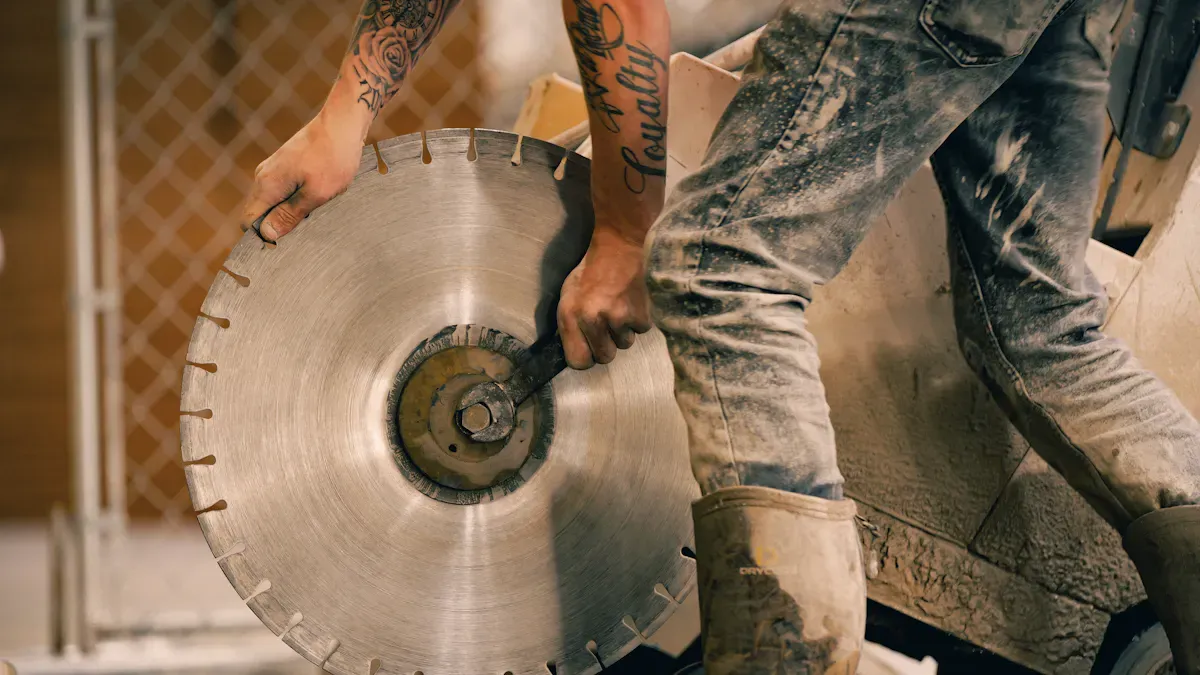
Choosing between wet and dry cutting changes how you work with marble and granite. Each method affects blade performance, safety, and the quality of your cuts. You need to know when to use each method and how it impacts your project.
Benefits of Wet Cutting
Wet cutting uses water to help you cut marble and granite. This method gives you many advantages:
- Water cools the blade and the stone during cutting. This keeps the temperature low and prevents overheating.
- Water lubricates the cutting area. This reduces friction and helps the blade move smoothly through the stone.
- Water captures and suppresses dust. This keeps the air cleaner and protects your lungs from harmful particles.
Wet cutting helps your blade last longer. The water reduces wear and keeps the diamonds sharp. You get smoother cuts and less chipping on the stone. Wet cutting also makes cleanup easier because the water collects most of the dust. Many professionals choose wet cutting for large projects or when working indoors.
Aimgrind offers cutting wheels designed for wet cutting. These blades handle water well and give you clean, precise results on both marble and granite.
When to Use Dry Cutting
Dry cutting does not use water. You might choose dry cutting when you work outside or in places where water is not available. Dry cutting is faster to set up because you do not need hoses or water tanks. You can use dry cutting for small jobs or quick repairs.
However, you must know the risks of dry cutting:
Dry cutting any silica-containing stone generates respirable crystalline silica particles that become airborne immediately. OSHA’s permissible exposure limit for crystalline silica is 50 micrograms per cubic meter of air as an 8-hour time-weighted average. Dry cutting granite or engineered quartz with no dust control can expose an operator to silica concentrations hundreds of times above this limit within minutes of starting. Silicosis — the irreversible, progressive, and potentially fatal lung disease caused by inhaled silica particles — is not a theoretical risk.
Always wear a mask and use dust control tools when dry cutting. Work in open spaces to keep dust away from your breathing zone. Dry cutting can make your blade heat up quickly. You should cut in short bursts and let the blade cool between cuts.
Aimgrind cutting wheels work for both wet and dry cutting. You can choose the right blade for your method and stay safe while getting the best results.
Wet and dry cutting each have a place in stone work. You should pick the method that fits your project, your safety needs, and your equipment. Aimgrind supports you with cutting wheels that perform well in any cutting situation.
Safe and Effective Use Tips
Safety Gear & Setup
You need to protect yourself every time you use a diamond blade for marble or granite. Always wear the right safety gear. This keeps you safe and helps you focus on the job. Here is what you should use:
- Safety glasses shield your eyes from flying chips.
- Hearing protection guards your ears from loud noise.
- A dust mask or respirator protects your lungs, especially if you cut dry.
- Gloves give you a better grip and protect your hands.
- Use the blade guard that comes with your saw.
Before you start, check the blade for cracks or missing segments. Make sure the blade fits your tool and matches the correct RPM. Always mount the blade securely. For granite, use water to control dust and keep the blade cool. Silica dust from cutting stone can cause lung problems like silicosis. You must keep your workspace clean and well-ventilated. These steps help you work safely and keep your tools in good shape.
Tip: Many workers have developed lung disease from breathing in silica dust. Always use water or dust control when cutting granite or engineered stone.
Blade Maintenance for Longevity
Proper care extends the life and performance of your diamond blade. You want your blade to last and cut well every time. Follow these steps to boost durability and performance:
- Clean your blade after each use. Remove debris and use a solvent for tough spots.
- Avoid overheating. Use water to cool the blade and reduce friction.
- Store blades upright and cover them to prevent damage.
- Inspect the blade for wear or damage before each use.
- Rotate or flip double-sided blades for even wear.
- Replace the blade if it struggles to cut, stalls, or shows heavy wear.
Choose the right blade for your material. Operate at the recommended speed to keep performance high. Clean blades cut better and last longer. If you notice the blade getting dull after a month, check for signs of wear. A high-quality blade can last up to 12 weeks with good care. Aimgrind offers customer support and resources to help you get the best durability and performance from your cutting wheels. You can contact their team for advice on safe use and maintenance.
Note: Good maintenance means better durability, safer work, and top performance every time you cut.
When you choose your first diamond blade for marble or granite, focus on matching the blade to the material. Pick the right blade size for your tool and project. Use the correct cutting method for the best results. Beginners often struggle with bond hardness and risk using the wrong blade, which can cause chipping or fast wear. Always inspect your blade for damage, use protective gear, and follow safety steps. Choosing the right blade gives you better cutting performance, saves money, and improves quality and durability. Aimgrind offers high-quality blades and expert support to help you work safely and achieve top quality every time.
FAQ
What is a diamond blade and how does it work?
A diamond blade uses synthetic diamond particles bonded to its edge. You use diamond blades to cut hard materials like marble and granite. The diamond particles grind through stone, giving you smooth, precise cuts. This design improves cutting performance and blade life.
How do I choose between different diamond blades for marble and granite?
You need to match the diamond blade to your material. For marble, use a continuous rim diamond blade for smooth cuts. For granite, select a segmented or turbo diamond blade for faster, aggressive cutting. Always check the label for the right application.
How often should I replace my diamond blades?
You should replace diamond blades when you notice slow cutting, excessive vibration, or visible damage. A sharp diamond blade gives you better cutting performance and safety. Inspect your diamond blades before each use to ensure the diamond edge remains exposed and effective.
Can I use the same diamond blade for both wet and dry cutting?
Some diamond blades work for both wet and dry cutting. Always check the manufacturer’s instructions. Wet cutting with diamond blades reduces dust and heat. Dry cutting with diamond blades works for small jobs. Use water whenever possible to extend diamond blade life.
Why do diamond blades sometimes stop cutting well?
Diamond blades may glaze over if you use the wrong blade for the material. The diamond edge can become dull or clogged. You can restore cutting performance by dressing the diamond blade or switching to the correct diamond blade for your stone.